DSPM vs DLP: Key Differences and Which One You Need
Learn the key differences between DSPM and DLP, how they work together, when to use each, and which data security approach fits your business needs.
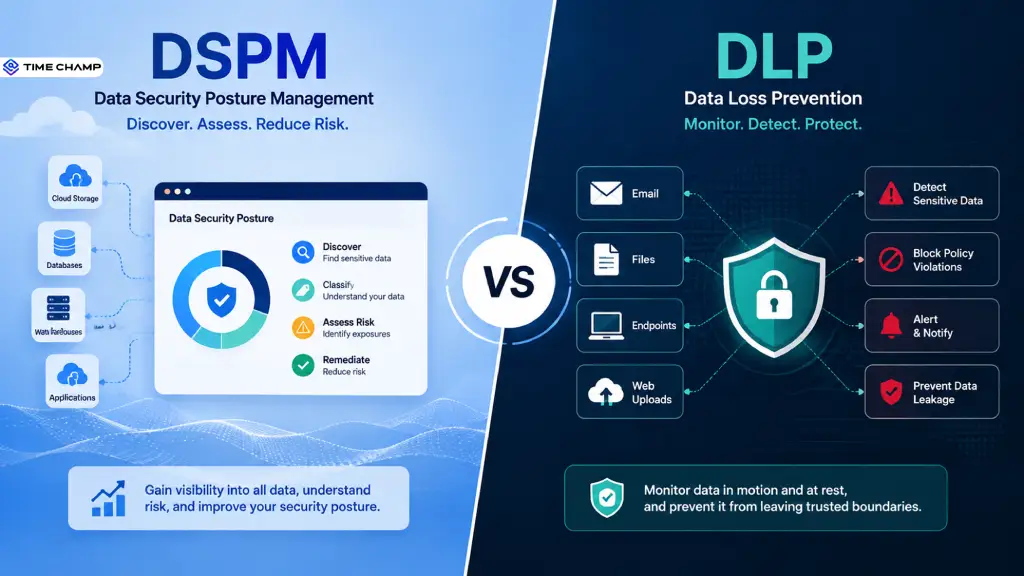
If protecting sensitive data were easy, your security team would spend more time drinking coffee than responding to alerts. But as your business grows, the amount of data spread across cloud platforms, SaaS applications, databases, and employee devices. That's why the DSPM vs DLP debate has become more relevant than ever. While both solutions protect sensitive data, they solve different security challenges.
To help you choose the right solution, we've broken down the key differences between DSPM and DLP, when to use each, and whether your organization needs one or both.
What Is DSPM (Data Security Posture Management)?
Data Security Posture Management (DSPM) is a security solution that helps you discover, classify, and protect sensitive data across cloud environments, SaaS applications, databases, and storage systems. It identifies where your sensitive data resides, who has access to it, and potential security risks, helping you strengthen your overall data security posture.
Key Capabilities
- Discovers sensitive data across your environment
- Classifies data based on sensitivity
- Identifies misconfigurations and security risks
- Monitors data access and permissions
- Prioritizes risks for faster remediation

Did You Know?
Gartner recognized DSPM as a new security category, highlighting the growing need for organizations to protect sensitive data across cloud environments.
What Is DLP (Data Loss Prevention)?
Data Loss Prevention (DLP) is a security solution that helps you prevent sensitive data from being lost, shared, or accessed without authorization. It monitors and controls data across endpoints, email, cloud applications, and networks, enforcing security policies to stop accidental or intentional data leaks.
Key Capabilities
- Detects and blocks unauthorized data transfers
- Monitors data across endpoints, email, and cloud apps
- Enforces data protection policies
- Prevents accidental and insider data leaks
- Alerts security teams to policy violations
Looking for a practical way to protect sensitive data?
Time Champ gives you the visibility and controls to reduce data leaks and insider threats.
What Are the 7 Key Differences Between DSPM and DLP?
Both DSPM and DLP help you protect sensitive data, but they serve different purposes. DSPM helps you discover and reduce data risks, while DLP prevents sensitive information from leaving your organization. Here are the seven key differences you should understand before choosing between them.
1. Approach: Proactive vs. Reactive
DSPM takes a proactive approach by continuously scanning your environment to identify sensitive data, security gaps, and misconfigurations before they lead to a breach. It helps you fix risks early.
DLP, on the other hand, is reactive. It monitors data movement and steps in only when someone attempts to perform an action that violates your organization's security policies, such as emailing confidential files or copying them to a USB drive.
2. Focus: Discovery vs. Enforcement
DSPM is designed to help you discover, classify, and assess the risk of sensitive data across your organization. It gives you complete visibility into where your critical information is stored and who can access it.
DLP focuses on enforcing security policies. Instead of finding sensitive data, it determines whether users are allowed to share, copy, upload, or transfer that data and blocks unauthorized actions.
3. Environment: Cloud-First vs. Endpoint and Network-First
DSPM is built for today's cloud-first environments. It protects sensitive data across cloud storage, SaaS applications, databases, and hybrid infrastructures, making it ideal for organizations with distributed data.
DLP traditionally protects endpoints, email, and network traffic by monitoring data as it moves between systems. While modern DLP solutions also support cloud environments, their primary strength remains controlling data movement.
4. Timing: Continuous vs. Event-Based
DSPM continuously monitors your data environment, updating your security posture whenever new data appears, permissions change, or risks emerge. This gives you ongoing visibility into your data security.
DLP works only when specific events occur, such as sending an email, uploading a file, printing a document, or copying data to external storage. At that moment, it decides whether to allow or block the action.
5. Action: Visibility vs. Prevention
DSPM helps you understand your security posture by providing insights, risk assessments, and remediation recommendations. It enables you to prioritize and resolve vulnerabilities before attackers exploit them.
DLP takes direct preventive action. When it detects a policy violation, it can block, quarantine, encrypt, or alert administrators to stop sensitive data from leaving your organization.
6. Coverage: Data-Centric vs. Channel-Centric
DSPM protects sensitive data wherever it exists, whether it's stored in cloud databases, SaaS platforms, file storage, or other repositories. It focuses on securing the data itself.
DLP protects the channels through which data moves, including endpoints, email, web browsers, USB devices, cloud applications, and networks. Its goal is to secure data during transmission or use.
7. Maturity: Emerging vs. Established
DSPM is a relatively new security category that has gained significant adoption with the rapid growth of cloud computing. Many DSPM platforms also use AI and automation to improve data discovery and risk prioritization.
DLP is a mature and widely adopted technology with years of proven deployment across enterprises. It offers robust policy libraries, compliance templates, and integrations that help organizations prevent data leaks effectively.
DSPM vs DLP: Side-by-Side Comparison
Here is a quick side-by-side view of DSPM and DLP so you can compare them at a glance:
| Dimension | DSPM (Data Security Posture Management) | DLP (Data Loss Prevention) |
|---|---|---|
| Primary Purpose | Discovers sensitive data and identifies security risks | Prevents sensitive data from being shared or leaked |
| Approach | Proactive and discovery-driven | Reactive and policy-driven |
| Primary Focus | Data discovery, classification, and risk visibility | Data protection through policy enforcement |
| Key Question It Answers | Where is my sensitive data, and is it secure? | Should this data be allowed to leave? |
| Deployment Environment | Cloud, SaaS, hybrid, databases, and on-premises | Endpoints, email, networks, cloud apps, and USB devices |
| Monitoring Style | Continuous monitoring and risk assessment | Real-time monitoring during data movement |
| Actions Taken | Identifies risks and recommends remediation | Blocks, alerts, encrypts, or quarantines sensitive data |
| Best Use Case | Finding exposed, forgotten, or over-permissioned sensitive data | Preventing accidental or intentional data leaks |
| Technology Maturity | Emerging security category | Well-established security technology |
| Ideal For | Organizations with cloud-first or hybrid environments | Any organization that needs to prevent data loss and meet compliance requirements |
When Should You Use DSPM vs DLP?
The choice between DSPM and DLP depends on the security challenge you're trying to solve. If you need better visibility into where sensitive data is stored and the risks surrounding it, DSPM is the better choice. If your priority is preventing sensitive data from being shared or leaked, DLP is the right solution. In many cases, organizations benefit from using both together.
Use DSPM If You Want To
- Discover where sensitive data is stored across your environment.
- Identify exposed, over-permissioned, or forgotten data.
- Secure cloud, SaaS, and hybrid environments.
- Prioritize and remediate data security risks.
- Strengthen your overall data security posture.
Use DLP If You Want To
- Prevent employees from sharing sensitive data without authorization.
- Block risky uploads, downloads, emails, and file transfers.
- Protect endpoints, email, cloud apps, and networks.
- Enforce data protection and compliance policies.
- Reduce the risk of accidental and insider data leaks.
Use Both DSPM and DLP If You Want To
- Gain complete visibility into your sensitive data.
- Identify security risks before they become incidents.
- Prevent unauthorized data sharing in real time.
- Build a layered data security strategy that protects data throughout its lifecycle.
- Meet compliance requirements while reducing the risk of data breaches.
Choosing the right solution depends on your security needs.
See how Time Champ helps you reduce data leaks and insider threats with a stronger DLP strategy.
How Do DSPM and DLP Work Together?
Rather than choosing DSPM or DLP, many organizations achieve the best results by using both. Together, they provide end-to-end data protection by combining visibility with enforcement.
Here's how the process works:
Step 1: DSPM Discovers Sensitive Data
DSPM scans your cloud environments, SaaS applications, databases, and storage systems to locate sensitive data, even if you weren't aware it existed.
Step 2: DSPM Identifies Security Risks
Once the data is discovered, DSPM classifies it based on sensitivity and highlights risks such as excessive permissions, exposed storage, or misconfigurations.
Step 3: Remediate Critical Risks
Using DSPM's recommendations, your security team can remove unnecessary access, fix misconfigurations, and secure high-risk data before it becomes a problem.
Step 4: DLP Enforces Protection Policies
After sensitive data has been identified and classified, DLP applies security policies to control how that data can be used, shared, or transferred.
Step 5: DLP Prevents Data Leaks
If someone tries to email confidential files, upload them to an unauthorized cloud service, or copy them to a USB device, DLP detects the action and blocks it based on your security policies.
Result
DSPM gives you complete visibility into what data you have and where it's at risk, while DLP ensures that the same data can't be shared or leaked without authorization. Together, they provide end-to-end protection for your organization's sensitive information.
Can Small Businesses Use DSPM? Or Is DLP Enough?
The answer depends on how your business stores and handles sensitive data.
If your business mainly relies on endpoints, email, and file sharing, a DLP solution is often enough to prevent employees from accidentally or intentionally leaking sensitive information. It provides strong protection by enforcing policies that block unauthorized data transfers.
However, if your business stores sensitive data across cloud platforms, SaaS applications, databases, or hybrid environments, DSPM becomes increasingly valuable. It helps you discover where sensitive data resides, identify security risks, and fix vulnerabilities before they lead to a data breach.
Read This: For many small businesses, DLP is a practical starting point because it helps prevent data leaks. As your organization grows and your data becomes more distributed across cloud environments, adding DSPM gives you the visibility needed to strengthen your overall data security strategy.
How Do DSPM and DLP Handle AI and GenAI Risks?
As AI tools become part of everyday work, employees can unintentionally expose sensitive business information by entering confidential data into AI applications. DSPM and DLP help reduce these risks at different stages.
| AI & GenAI Risk | How DSPM Helps | How DLP Helps |
|---|---|---|
| Sensitive data uploaded to AI tools | Identifies and classifies sensitive data before it's exposed | Blocks or restricts uploads to unauthorized AI applications |
| Excessive access to confidential data | Detects over-permissioned users and exposed data | Prevents authorized users from sharing data inappropriately |
| Unknown sensitive data in cloud storage | Discovers hidden or forgotten sensitive data | Applies protection policies to discovered data |
| Compliance risks | Highlights data that requires stronger protection | Enforces policies to meet compliance requirements |
How Can Time Champ Strengthen Your DLP Strategy?
While DSPM helps you discover and assess data risks, Time Champ helps you prevent those risks from turning into data leaks. As an employee monitoring and DLP solution, Time Champ gives you real-time visibility into how employees access, use, and share sensitive information across endpoints.
It combines workforce intelligence with data protection controls to reduce insider threats, strengthen compliance, and protect your organization's critical data.
Here's How Time Champ Strengthens Your DLP Strategy:
Monitor File Activity
Time Champ tracks file creation, access, modifications, and transfers across employee devices. Real-time alerts and activity logs help you detect suspicious behavior, investigate incidents, and maintain audit-ready records.
Control USB and External Devices
Prevent sensitive data from leaving your organization through removable media. Time Champ lets you block or restrict unauthorized USB devices, reducing the risk of accidental or intentional data exfiltration.
Monitor Websites and Cloud Applications
Track app and website usage to understand which applications and websites employees use during work hours. Identify unauthorized or risky applications, spot unusual usage patterns, and reduce potential data security risks.
Detect Insider Threats
Time Champ provides continuous endpoint visibility to identify unusual employee activity that could indicate insider threats. This helps you respond quickly before sensitive data is exposed.
Simplify Compliance and Audits
Detailed audit trails record who accessed sensitive data, when, and what actions they performed. This makes it easier to support compliance with regulations such as GDPR, HIPAA, CCPA, and PCI DSS.
Ready to strengthen your data protection strategy?
See how Time Champ helps you prevent data leaks, detect insider threats, and protect sensitive data with real-time endpoint visibility.
Conclusion
DSPM and DLP each play a different role in protecting your organization's data. DSPM helps you find and fix data security risks, while DLP prevents sensitive information from being shared without authorization. Using both gives you better visibility, stronger protection, and greater confidence that your critical data stays secure.

Guna Lakshmi

Table of Content
 What Is DSPM (Data Security Posture Management)?
- What Is DLP (Data Loss Prevention)?
- What Are the 7 Key Differences Between DSPM and DLP?
- When Should You Use DSPM vs DLP?
- How Do DSPM and DLP Work Together?
- Can Small Businesses Use DSPM? Or Is DLP Enough?
- How Do DSPM and DLP Handle AI and GenAI Risks?
- How Can Time Champ Strengthen Your DLP Strategy?
- Conclusion
Instant Signup
Thank you for your request!
We have received your signup request and our team will get back to you soon. In the meantime, you can book a demo to see Time Champ in action.
Book a DemoFree trial. No credit card required. Prefer a walkthrough? Book a demo.
Related Blogs
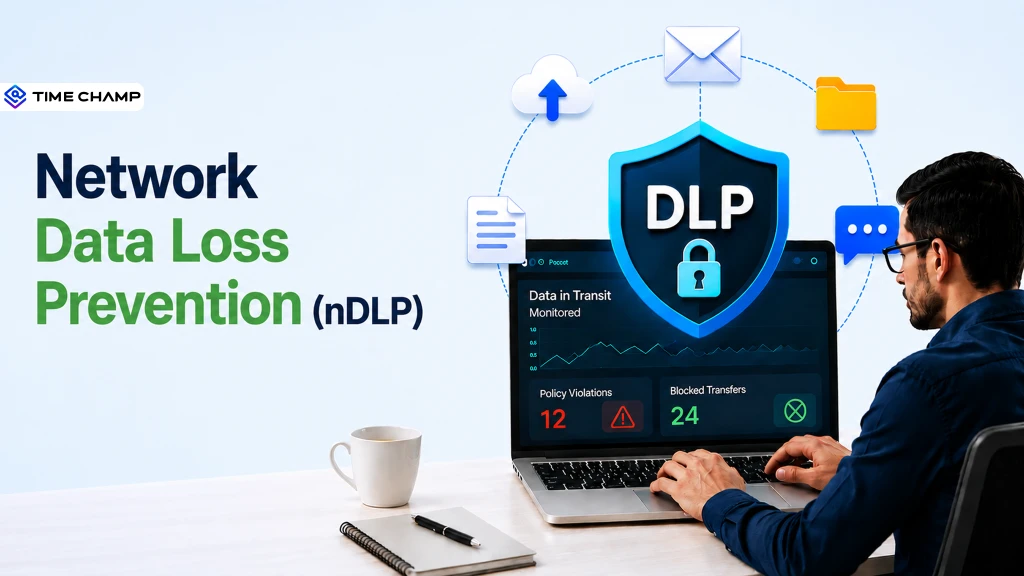
Concerned about sensitive data leaving your network? See how network data loss prevention helps to reduce risks with the right features and practices.
Anjali | Aug 26, 2026
Implement data loss prevention practices to protect sensitive data, reduce security risks, prevent breaches, and strengthen your organization's security.
Thasleem Shaik | Aug 24, 2026
Data loss prevention helps protect sensitive business data from leaks, theft, and misuse. See how DLP works, its benefits, challenges, and best practices.
Thasleem Shaik | Aug 21, 2026
Protect sensitive business data in hybrid work environments with strong security controls and practical strategies to prevent data breaches.
Guna Lakshmi | Jun 10, 2026
Learn how to ensure data privacy in productivity tracking with key controls, vendor evaluation, and setup steps that reduce risk and protect employee data.
Guna Lakshmi | May 02, 2026
Protect your business from insider risks with insider threat prevention best practices for monitoring, access control, employee security, and data protection.
Guna Lakshmi | May 08, 2026


 4.7/5 avg.
Ready to Manage Your Workforce Smarter?
Join our family of 1500+ companies using smart insights to redefine workforces!

Free Trial
No Credit Card Required