12 Simple and Effective Business Cost Optimization Strategies
Business cost optimization helps reduce unnecessary spending, improve efficiency, and increase profits with practical strategies that deliver lasting results.

Are you spending more without seeing better business results?
If your answer is yes, it may be time to rethink where your money goes. Business cost optimization helps you eliminate unnecessary expenses, allocate resources wisely, and reduce waste without sacrificing quality or growth. In this article, you'll discover practical business cost optimization strategies that help you control costs and get more value from every investment.
What Is Business Cost Optimization?
Business cost optimization means finding smarter ways to reduce unnecessary expenses while keeping your quality, productivity, and growth on track. Instead of simply cutting costs, you review how your business spends money and improve the areas that do not deliver enough value.
With business cost optimization, you can analyze spending patterns, remove waste, improve resource use, and make better financial decisions. It helps you control costs without weakening daily operations, customer experience, or long-term business performance.
Cost Optimization vs Cost Cutting: What's the Difference?
Although these terms often sound similar, they do not mean the same thing. Cost-cutting focuses on reducing expenses quickly, while business cost optimization focuses on making smarter spending decisions that improve efficiency and support long-term growth. The table below highlights the key differences.
| Aspect | Business Cost Optimization | Cost Cutting |
|---|---|---|
| Purpose | Improves efficiency while increasing the value of every dollar you spend. | Reduces expenses as quickly as possible. |
| Approach | Follows a long-term, strategic plan. | Focuses on short-term savings. |
| Decision Making | Uses business data and performance insights to identify unnecessary costs. | Relies on immediate budget reductions without evaluating long-term impact. |
| Focus | Eliminates waste while protecting high-value investments. | Reduces spending across selected areas to lower costs quickly. |
| Business Impact | Supports sustainable growth, profitability, and operational efficiency. | May affect performance, customer experience, or future growth if applied aggressively. |
| Investment | Continues investing in initiatives that deliver long-term value. | Often delays or reduces investments to lower current expenses. |
| Results | Creates continuous improvements and lasting savings. | Delivers immediate savings that may not last over time. |
Why Is Business Cost Optimization Important for Your Business?
Rising expenses can reduce profits even when your revenue continues to grow. Instead of reacting with frequent budget cuts, you need a smarter way to control spending and improve efficiency. Business cost optimization helps you reduce waste, allocate resources wisely, and create more value from every investment. Here are the key reasons why it matters.
- Improves Profitability Without Reducing Quality: Cost optimization helps you identify unnecessary expenses and eliminate waste instead of reducing the activities that drive results. This approach improves your profit margins while maintaining the quality of your products, services, and customer experience.
- Helps You Make Better Financial Decisions: When you understand where your money goes, you can invest with greater confidence. A well-planned cost optimization strategy helps you prioritize high-impact initiatives instead of spending on low-value activities.
- Increases Operational Efficiency: Inefficient processes, duplicate tools, and manual work often increase operating costs without adding value. Optimizing cost encourages you to simplify workflows, automate repetitive tasks, and use resources more effectively across your business.
- Creates More Room for Business Growth: Every dollar you save through strategic cost optimization can support new opportunities. You can invest those savings in technology, product development, customer experience, or market expansion instead of letting them disappear into avoidable expenses.
- Makes Your Business More Resilient: Economic conditions, market demand, and operating costs can change quickly. Cost optimization helps you build a flexible cost structure that allows you to respond to challenges without making rushed decisions or sacrificing long-term goals.
Want to improve team productivity without adding more resources?
Use Time Champ to understand how your team works and eliminate productivity bottlenecks.
12 Most Effective Business Cost Optimization Strategies
Reducing expenses does not always mean making budget cuts. The best business cost optimization strategies help you remove waste, allocate resources wisely, and get more value from every investment. Start with the areas that deliver the biggest impact, measure the results, and continue improving over time.
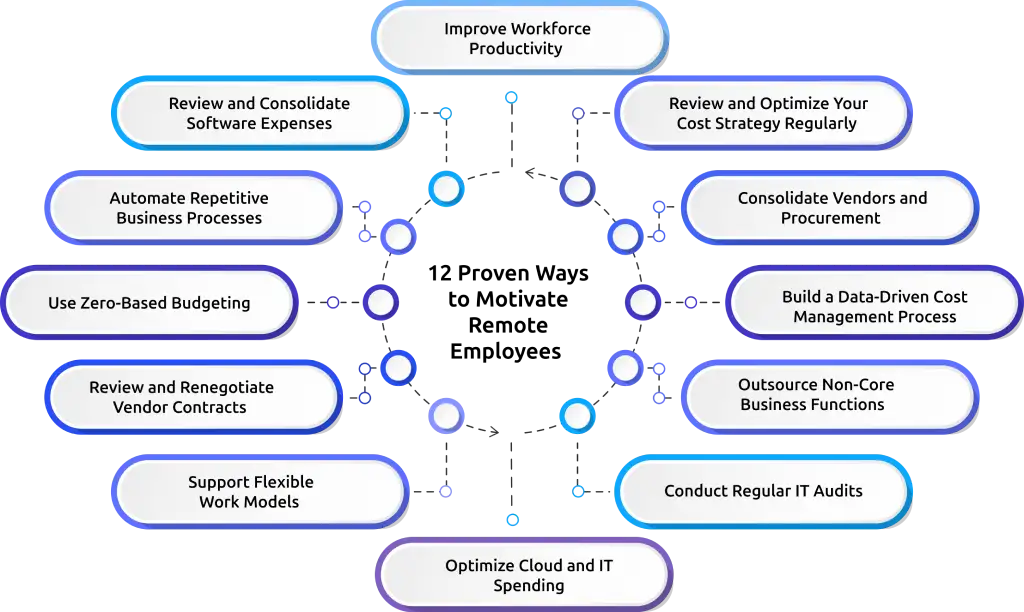
1. Improve Workforce Productivity
Employee-related expenses make up the largest share of operating costs. Unnecessary meetings, repetitive tasks, and inefficient workflows increase labor costs, yet a Paycor survey found that HR professionals spend 15% of their time managing labor costs.
Start by understanding how work happens across your team. Identify tasks that consume time but add little value, remove workflow bottlenecks, and simplify routine tasks wherever possible. Improving productivity helps you complete more work with the same resources, making it one of the most effective business cost optimization strategies.
2. Review and Consolidate Software Expenses
Many businesses continue paying for software that no one uses regularly. Duplicate applications, inactive licenses, and overlapping features can quietly increase monthly expenses.
Review every subscription your business pays for and check whether each tool still delivers value. Remove unused licenses, replace overlapping applications with a single solution, and regularly audit your software stack. This simple review can significantly reduce ongoing costs while keeping your technology easier to manage.
Looking to reduce software costs?
Try Time Champ and replace multiple tools with one.
3. Automate Repetitive Business Processes
Manual tasks consume valuable time that your team could spend on higher-value work. In fact, 49% of CFOs say automating processes to free employees for higher-value work is their top finance talent priority. Activities like data entry, invoice processing, reporting, approvals, and scheduling often slow down operations and increase labor costs.
Look for routine processes that follow the same steps every time and automate them using suitable business or AI tools. For example, invideo Agent helps businesses automate AI video creation by handling tasks like developing concepts, generating scenes, and preparing complete videos from simple inputs, allowing teams to reduce repetitive production work and create content more efficiently. Automation reduces manual effort, improves accuracy, and allows your team to focus on work that directly supports business growth. It is one of the most practical ways to support optimizing costs without disrupting daily operations.
4. Use Zero-Based Budgeting
Many businesses create new budgets by adjusting last year's numbers. Over time, this approach allows unnecessary expenses to remain because no one questions whether they still provide value.
Zero-based budgeting starts every budgeting cycle from scratch. Instead of assuming every expense deserves funding, evaluate each one based on its current business value and expected outcome. This approach helps you prioritize essential investments, eliminate outdated spending, and build a stronger cost optimization strategy that aligns with your business goals.

Did You Know
Grant Thornton's Q1 2026 CFO Survey found that 68% of CFOs plan to increase spending on IT and digital transformation over the next year. The survey recorded its highest result in 21 quarters, highlighting a growing focus on technology investments that improve efficiency, drive business growth, and deliver long-term value.
5. Review and Renegotiate Vendor Contracts
Vendor costs often increase over time because of automatic renewals, outdated contracts, or services that no longer meet your business needs. Without regular reviews, you may continue paying more than necessary for the same value.
Review your vendor agreements before they renew and compare pricing, service quality, and contract terms. Negotiate better rates, remove services you no longer need, and consolidate vendors where possible. This cost optimization strategy helps you control spending while maintaining reliable business partnerships.
6. Support Flexible Work Models
Hybrid and remote work can create meaningful cost savings when you have the right systems in place. Reducing office space, utility bills, and travel expenses helps lower operating costs while giving your team the flexibility to work where they perform best.
Cascade experienced this after adopting a hybrid work model and using workforce insights to better understand how work happened across its teams. The company improved productivity by 25%, reduced unnecessary office overhead, and expanded hiring beyond a single location while maintaining strong operational performance.
Review which roles work best in a remote or hybrid environment and build a hybrid work policy based on your team's needs. A well-planned policy helps you reduce overhead costs, use office space more effectively, and improve long-term operational flexibility.
7. Optimize Cloud and IT Spending
Cloud services and business software often become more expensive as your business grows. Regularly review your cloud usage, remove resources you no longer need, and choose pricing plans that match your actual usage. If you rely on multiple platforms, consider IT cost optimization services or internal reviews to identify opportunities to reduce unnecessary spending. Small improvements in this area can produce significant long-term savings.
8. Conduct Regular IT Audits
Your IT environment changes as your business grows. Without regular reviews, unused software, inactive licenses, and outdated hardware can quietly increase your operating costs while adding little value.
Schedule regular IT audits to review your software, cloud services, hardware, vendors, and overall IT spending. Identify unused resources, remove duplicate tools, monitor shadow AI, and look for processes that you can simplify or automate. Regular audits help you make informed technology decisions, reduce unnecessary IT expenses, and support long-term IT cost optimization.
Are unnecessary apps affecting your team's productivity?
Use Time Champ to identify low-value applications and improve work efficiency.
9. Outsource Non-Core Business Functions
Not every business function needs an in-house team. Tasks like payroll, IT support, accounting, or customer support can consume valuable time and resources without directly contributing to your competitive advantage.
Identify business functions that support your operations but do not require internal expertise. Outsourcing these activities to trusted service providers can reduce operating costs, improve service quality, and allow your team to focus on work that drives business growth.
Want to learn more before outsourcing your business functions? Check out our what is outsourcing guide for a clear overview of the process, its advantages, and common outsourcing models.
10. Build a Data-Driven Cost Management Process
Making cost decisions without accurate data often leads to unnecessary budget cuts or missed savings opportunities. A data-driven approach helps you understand where your money goes and which expenses create the most value.
Track spending across departments, monitor key business metrics, and review financial reports regularly. Use dashboards, workforce analytics, and employee monitoring tools to identify cost trends, measure the impact of optimization efforts, and make informed decisions based on real data instead of assumptions. This approach strengthens your strategic cost optimization efforts over time.
11. Consolidate Vendors and Procurement
Working with too many vendors often leads to duplicate purchases, inconsistent pricing, and unnecessary administrative work. It also reduces your ability to negotiate better contract terms.
Evaluate your supplier network and identify vendors that provide similar products or services. Consolidating purchases with fewer trusted suppliers can simplify procurement, strengthen your negotiating position, and reduce overall purchasing costs. Keeping track of contract renewals helps you avoid unnecessary expenses and maintain better control over your budget.
12. Review and Optimize Your Cost Strategy Regularly
Business cost optimization is not a one-time project. As your business grows, your expenses, priorities, and technology needs also change, creating new opportunities to improve how you allocate resources.
Schedule regular reviews of your spending, business processes, business optimization tools, and optimization initiatives. Measure the results, identify new areas for improvement, and adjust your cost optimization strategy whenever your business goals change. A continuous review process helps you maintain long-term savings while supporting sustainable growth instead of relying on occasional cost-cutting efforts.
How Does Time Champ Support Business Cost Optimization?
Making the right cost decisions becomes difficult when you cannot see where time, software, and resources go. Without clear insights, unnecessary spending, underused software, and productivity gaps often remain hidden. Time Champ gives you complete visibility into your workforce, software usage, and operational performance, helping you identify cost-saving opportunities and make smarter business decisions. The features below help you reduce waste, improve resource utilization, and control business costs with confidence.
- App and Website Usage Tracking: Displays how much time your team spends across business and non-business applications and websites. This helps you identify unused software, eliminate unnecessary subscriptions, and improve software utilization.
- Tool Usage Analytics: Understand how the team uses software across your business with detailed tool usage reports. You can identify underused applications, monitor software adoption, and spot unused licenses before they become unnecessary expenses.
- License Usage and Waste Report: Track assigned, active, and unused software licenses in one place. This helps you reclaim unused licenses, eliminate software waste, and reduce recurring subscription costs without affecting business operations.
- Tool ROI Analysis: Measure whether every software investment delivers value. ROI reports compare tool costs with actual usage and provide recommendations to continue, review, or discontinue applications that no longer justify their cost.
- Automatic Time Tracking: Automatically records the time spent on projects, tasks, and applications without manual timesheets. This helps you understand where work hours go, identify time-consuming activities, and reduce unproductive effort.
- Workforce Analytics: Provides detailed insights into workload distribution, productivity trends, and work patterns across your team. These insights help you identify underutilized resources, balance workloads, and make better staffing decisions.
- Employee Productivity Tracking: Shows how productive work hours compare with idle time or non-productive time. This visibility helps you identify productivity gaps and improve how your team spends its working hours.
Need complete visibility into software and website usage?
Try Time Champ to understand how your team uses tools, apps, and websites every day.
Conclusion
Business cost optimization is not about cutting every expense. It is about making smarter decisions that reduce waste, improve resource utilization, and ensure every investment supports your business goals. By applying the right strategies consistently, you can control costs while building a stronger and more sustainable business.
If you want better visibility into how time, resources, and software contribute to your operating costs, Time Champ can help. From tracking productivity and software usage to identifying cost-saving opportunities, it gives you the insights needed to make confident business decisions.

Thasleem Shaik

Table of Content
 What Is Business Cost Optimization?
- Cost Optimization vs Cost Cutting: What's the Difference?
- Why Is Business Cost Optimization Important for Your Business?
- 12 Most Effective Business Cost Optimization Strategies
- How Does Time Champ Support Business Cost Optimization?
- Conclusion
Related Blogs

Discover the hidden cost of low productivity in business. Learn how to calculate productivity loss, reduce inefficiencies, and improve profitability in 2026.
Guna Lakshmi | May 13, 2026
Explore employee monitoring software for startup businesses in 2026. Learn how to boost productivity, control costs, and manage remote teams with confidence.
Anjali | Apr 21, 2026
Learn why workforce analytics is essential for process reinvention, how it reinvents key business processes, best practices & how to measure success.
Anjali | Apr 02, 2026
Learn what business intelligence (BI) is, why it matters, how it works, explore key benefits, challenges & how AI is used to enhance business decisions.
Anjali | Feb 11, 2026
Discover business agility, its role in adapting to change, and strategies for staying competitive and resilient in today’s fast-paced market.
Vijaya Lakshmi | Mar 05, 2024
Choose the right employee monitoring tool for your team with this 2026 guide. Explore types, key features, a 5-step framework, and top software options.
Jahnavi Pulluri | Apr 13, 2026


 4.7/5 avg.
Ready to Manage Your Workforce Smarter?
Join our family of 1500+ companies using smart insights to redefine workforces!

Free Trial
No Credit Card Required