How Workforce Analytics Reinvents Key Business Processes
Learn why workforce analytics is essential for process reinvention, how it reinvents key business processes, best practices & how to measure success.

Are your business procedures struggling because you rely on assumptions and lack real workforce data? Do you ever understand why the productivity drops, attrition increases, and decisions take longer than expected? This is exactly where workforce analytics makes a difference. It integrates your workforce data with smarter decisions that change the way your business operates.
In this blog, you’ll explore how workforce analytics helps to transform your key business procedures while enabling complete visibility into performance. You'll also understand why it is important in the process transformation, which areas benefit the most, and how you can use data to enhance the results.
Why Is Workforce Analytics Essential for Process Reinvention?
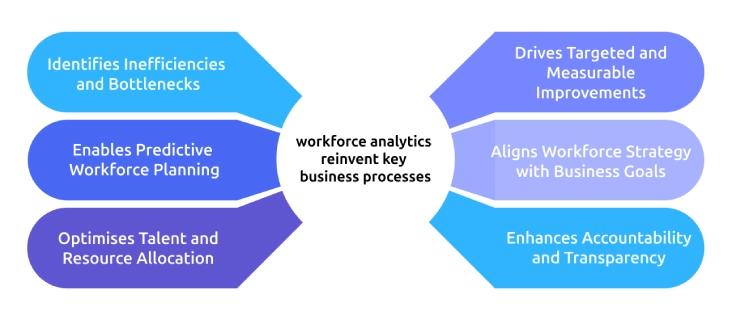
Workforce analytics plays a critical role in reinventing how business processes operate. This section explains why workforce analytics is essential for process transformation and how it helps improve efficiency, accountability, and outcomes.
1. Identifies Inefficiencies and Bottlenecks
Identify the process failures, including workload imbalances, work delays and communication gaps. This helps you find the root causes at an early stage and avoid repeating operational issues.
2. Enables Predictive Workforce Planning
Workforce analytics can forecast the attrition risk, skill shortages, and hiring needs by evaluating the historical and real-time data. Research shows that organizations using advanced workforce analytics gain up to a 25% increase in their productivity. Also, they experience a 50% reduction in employee attrition patterns early by acting on predictive insights.
3. Optimizes Talent and Resource Allocation
You can get complete visibility into your workforce capacity, skills, and performance. This ensures that the right individuals are placed in the right roles to enhance productivity while managing the operational costs.
4. Drives Targeted and Measurable Improvements
Data-driven insights help you support specific actions, such as targeted training, performance interventions, and role adjustments. This leads to more accurate and effective process improvements.
5. Aligns Workforce Strategy with Business Goals
By connecting the workforce metrics and business outcomes, analytics ensures that the operational and HR processes directly support your organizational goals and long-term development.
6. Enhances Accountability and Transparency
Workforce analytics creates clear visibility into performance and responsibilities. This strengthens the ownership, enhances governance, and supports smoother adoption of the process transformations.
How Can Workforce Analytics Reinvent Key Business Processes?
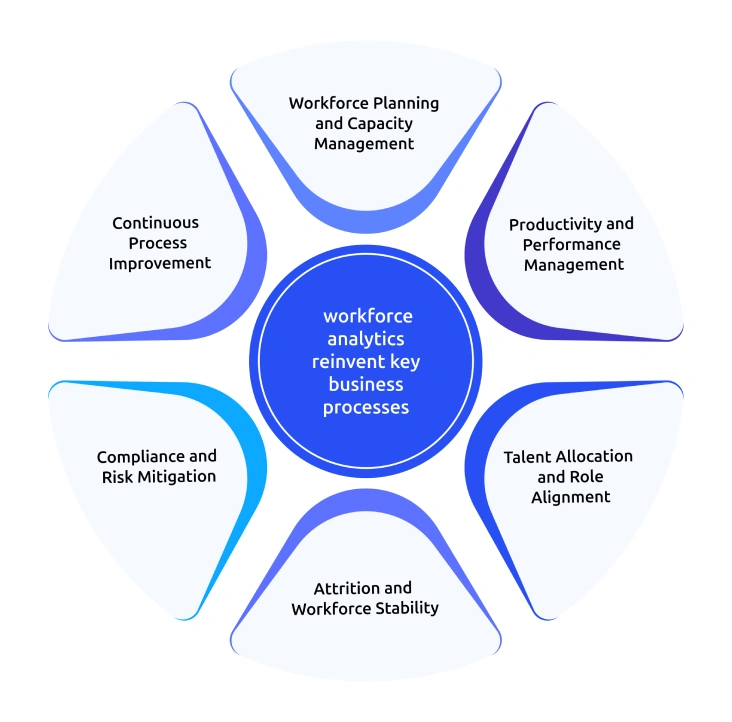
What if you can accurately observe why some of your business procedures slow down while others perform efficiently? Workforce analytics make this possible by transforming everyday workforce information into actionable insights, which reshape your planning, execution, and decision-making across all operations.
1. Workforce Planning and Capacity Management
Workforce analytics helps you align your workforce with the business demands. You can efficiently plan the staffing levels and maintain operational balance in your organization by assessing the attendance patterns, workload distribution, and capacity gaps.
2. Productivity and Performance Management
Analytics provides you with complete visibility into how work progresses across the teams. You can identify performance gaps, productivity trends, and inefficiencies in the workflow, which help you to refine performance procedures and drive consistent outcomes.
3. Talent Allocation and Role Alignment
Workforce analytics uncover whether your workforce efficiently aligns with the appropriate roles, based on their performance, skills, and workload. This helps you to minimize the skill mismatches and ensures that important tasks receive the right expertise.
4. Attrition and Workforce Stability
Identify the attrition patterns associated with employee performance, engagement, and workload. Early visibility allows you to strengthen retention-focused processes and maintain workforce continuity.
5. Compliance and Risk Mitigation
Workforce analytics facilitates compliance by monitoring the accuracy, attendance, work hours, and location-based work activity. This helps you prevent time misuse, minimize payroll errors, and identify the workforce challenges early. This safeguards your business from operational and regulatory challenges.
6. Continuous Process Improvement
Workforce analytics enables continuous monitoring of the workforce behavior and process outcomes. You can easily alter the workflows, policies, and workforce strategies to align with your business changes and ensure that the processes remain efficient, compliant, and resilient.
Want better visibility into productivity, attrition, and workforce trends?
Time Champ helps you track, analyze, and improve your processes with confidence.
How Should Organizations Measure Success in Process Reinvention?
Reinventing business processes with workforce analytics is only effective when you can clearly measure the impact. The right metrics can help you clearly understand what is improving, what requires adjustments, and how the workforce-driven changes contribute towards business outcomes.
This section explains how you can measure the success in a clear, realistic and significant manner.
1. Track Improvements in Productivity and Output
Begin by measuring the productivity patterns. Track the output levels, task completion rates, and efficiency of the team. Compare performance before and after the changes. When productivity increases without increasing the workload pressure, then your process reinvention is delivering value.
2. Monitor Reduction in Process Delays and Bottlenecks
Measure the cycle times and identify the repeated workflow interruptions. Evaluate how often the tasks stall or require rework. If the processes move faster and operate more effectively, you can ensure that earlier inefficiencies have been addressed successfully.
3. Evaluate Workforce Utilization
Assess how effectively you use workforce capacity. Track the idle working time, workload balance, and role alignment. When the teams have a balanced workload and low downtime, it indicates effective workforce planning and operational control.
4. Measure Attrition and Workforce Stability
Evaluate the attrition trends, employee absenteeism, and engagement indicators regularly. If attrition decreases after the process improvements, it shows that your changes support the sustainable performance and healthier work environments.
5. Assess Compliance and Risk Control
Monitor the attendance accuracy, working hours compliance, and policy. Check the accuracy of payroll and audit readiness. Minimized operational risks and compliance issues reflect the fact that your processes reinforce governance.
6. Analyze Decision-Making Speed and Confidence
Measure how quickly the leaders act on the workforce insights. Assess the reporting accuracy and accountability clarity. When decision-making processes are faster and more data-based, it indicates that analytics-driven processes improve organizational confidence.
7. Review Consistency in Continuous Improvement
Do not measure success only once. Monitor the performance trends and behavioral patterns over time. A higher level of improvement in quarters shows that your processes change well with the business changes.
How Can Time Champ Workforce Intelligence Support Process Reinvention?
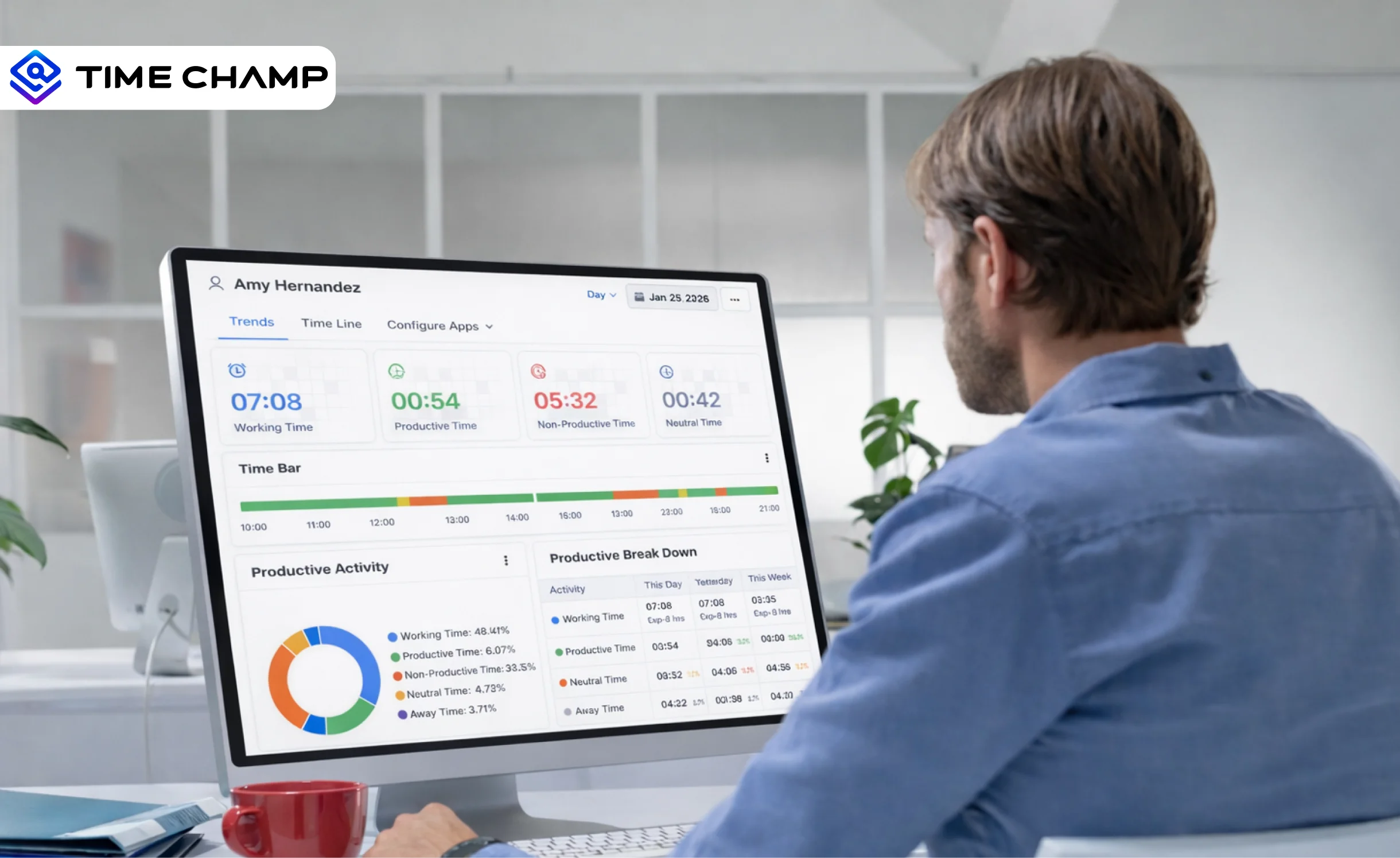
Time Champ workforce intelligence gives you the clarity you need to reinvent business processes with confidence. It brings all your employee data, attendance, productivity, performance and work patterns into a single actionable view. You can have a clear understanding of how work occurs in teams with real-time visibility and predictive insights. This helps you identify inefficiency early and take steps to improve. This helps you transform from reactive decisions to proactive process management.
With the Time Champ workforce intelligence, you can strengthen your workforce planning, enhance productivity, and minimize the attrition levels. Using the platform, you can optimize workforce activities with your business goals, track performance patterns in real-time, and help decision-making at every level based on data. Time Champ helps you ensure that your processes become accurate, efficient, and operationally strong as your business constantly expands.
Still relying on assumptions to manage workforce performance?
Use Time Champ to turn workforce data into clear, actionable decisions.
Conclusion
Workforce analytics has become vital for organizations aiming to transform their business processes and remain competitive. By using actual workforce data, you can achieve complete visibility, which enhances productivity, minimizes costs, increases compliance strength, and helps you make more confident decisions. It transforms the way your operations function daily, whether it is planning, performance management, risk control or continuous improvement.
When you use workforce analytics with the right tools, you can design processes that directly support your business goals. Platforms like Time Champ help you transform workforce data into accurate insights and create a strong foundation for sustainable development. The result is not just about the better processes, but a smarter and stronger organization.
Table of Content
-
 Why Is Workforce Analytics Essential for Process Reinvention?
-
How Can Workforce Analytics Reinvent Key Business Processes?
-
How Should Organizations Measure Success in Process Reinvention?
-
How Can Time Champ Workforce Intelligence Support Process Reinvention?
-
Conclusion
Related Blogs
Discover what workforce intelligence is, why it's critical, real examples, implementation steps, key benefits, challenges & how AI transforms the future.
Guna Lakshmi | Feb 11, 2026
Discover workforce productivity analytics in 2025: what it is, why it matters, key metrics, benefits, and how AI enhances workforce performance
Thasleem Shaik | September 25, 2025
Learn what workforce efficiency means in 2025, why it matters, key factors, how to measure, tips to improve, and what a good workforce efficiency rate is.
Discover workforce analytics: definition, types, and benefits. Explore how workforce analytics tools and metrics improve HR planning, retention & efficiency.
Discover 10 workforce planning models every HR professional should know to align talent with business goals, improve efficiency, and plan for the future.
Thasleem Shaik | September 30, 2025
Workforce management software is a set of tools and processes designed to improve employee productivity in a business.


 4.7/5 avg.
Ready to Manage Your Workforce Smarter?
Join our family of 1500+ companies using smart insights to redefine workforces!

Free Trial
No Credit Card Required