Time Champ > Blog > 7 Ways Workforce Intelligence Improves Workload Distribution > Content
7 Ways Workforce Intelligence Improves Workload Distribution
Discover how workforce intelligence improves workload distribution, balances team capacity, prevents burnout & how to manage it with data effectively.

Workload management across teams can quickly get out of control, with some employees taking on too much work while others remain idle. You may struggle to balance tasks and prevent burnout without actual visibility. Workforce intelligence provides a solution by letting you see the distribution of work across your team, which employees have less work, and where bottlenecks occur.
In this blog, you'll discover 7 ways workforce intelligence improves workload distribution and practical steps to manage tasks efficiently. By the end, you will understand how to improve your team’s performance, prevent overwork, and make smarter decisions that will ensure your operations run smoothly.
What Are 7 Ways Workforce Intelligence Improves Workload Distribution?
One of the leading causes of burnout and reduced productivity is workload imbalance. A Gallup report found that 76% of employees experience burnout at least occasionally, often due to work not being shared in a balanced manner. Team insights helps you clarify who has too much work, who has capacity, and where tasks get stuck so you can fix the imbalance before it affects performance.
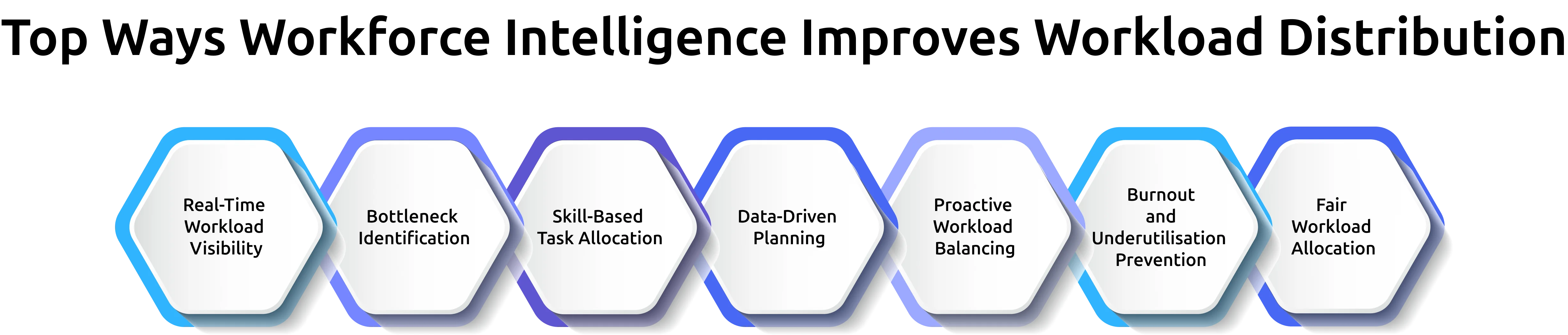
1. Real-Time Workload Visibility
Workforce intelligence shows you the distribution of work across your team in real time. You know who has too much work and who has room to spare. This clarity helps you rebalance tasks early rather than reacting when stress or delays appear. When the workload stays visible, you make decisions with confidence instead of assumptions.
2. Bottleneck Identification
At times, there is a slowdown in work due to process gaps, approvals, or dependencies. Workforce intelligence assists you in identifying the precise location of stalled tasks. After viewing these bottlenecks, you are able to fix workflows or redistribute work before pressure builds up on a small number of individuals. This keeps work moving smoothly across the team.
3. Skill-Based Task Allocation
Not all tasks suit all individuals. Workforce intelligence helps you understand who is working on what and how well they are doing it. You are able to assign tasks according to skills and available capacity rather than overworking the same high performers. This results in faster completion and balanced workloads.
4. Data-Driven Planning
Workforce intelligence substitutes guesswork with actual data. You plan workloads, schedules, and projects according to real team capacity and demand. This helps you avoid last-minute overloads and unrealistic expectations. Better planning ensures that work stays evenly distributed from the start.
5. Proactive Workload Balancing
The priorities of work are constantly shifting. Operational insights assist you in noticing workload changes as they occur. You can redistribute tasks early rather than correcting issues after productivity declines. This keeps workloads stable even when plans change quickly.
6. Burnout and Underutilization Prevention
When work remains unbalanced, some employees burn out while others disengage. Workforce intelligence assists you in identifying both scenarios at an early stage. You can intervene before employees feel exhausted or overlooked. This safeguards morale, performance and long-term retention.
7. Fair Workload Allocation
Workforce intelligence uses clear data to guide decisions about distributing work. This eliminates bias and minimizes reliance on assumptions or favouritism. Fair work builds trust and accountability across teams. When everyone carries a balanced share, teams work better.
Struggling to balance your team’s workload and avoid overwork?
Use Time Champ’s workforce intelligence to assign tasks fairly and keep productivity high
How to Manage Workload Distribution with Workforce Intelligence?
Managing workload effectively requires clear visibility, real data, and timely adjustments. Here is how you can use workforce intelligence to stay in control and keep tasks balanced.
Track workload daily, not occasionally
You can handle the workload better when you review it on a daily basis and not only during reviews. Performance analytics allows you to see the amount of work that each individual does on a routine basis. You notice overload early and find underused capacity before it becomes disengagement. This habit will keep you in control instead of reacting after problems have grown bigger.
Use real capacity data before assigning work
You must know who actually has time before you give new assignments. Team capacity insights show you with actual working capacity rather than planned availability. You assign work on facts, not assumptions. This will help avoid overloading the same individuals and maintain realistic workloads across the team.
Adjust tasks as priorities change
Plans change quickly, and the workload must change with them. Workforce analytics assists you in noticing the changes in priorities quickly as they occur. You rebalance tasks instantly instead of waiting for productivity to drop. This ensures that work does not get stuck even when deadlines change or new requests come in.
Identify and fix workload gaps early
Uneven work puts some team members under stress, while others have too little to do. Capacity reports clearly show each employee’s workload and highlight where gaps exist. You move work where it makes sense and fix minor problems before they can affect delivery. This balances work across the team and helps everyone stay focused on results.
Review workload trends to improve planning
One day of data helps you respond to immediate issues, but workforce insights reveal workload trends that guide future planning. You know where the pressure builds and where the delays repeat. These insights help you to plan your future work better and prevent repeating the same mistakes.
Manage Workload Efficiently with Time Champ
Managing workload across a team can be challenging. Some employees get overworked while others remain underutilised, and it is hard to spot bottlenecks or predict overload without clear workforce intelligence. This imbalance can lead to stress, disengagement, and missed deadlines if not addressed in time.
Time Champ helps you take control of workload distribution effortlessly. You get real-time workforce visibility into who is busy, who has capacity, and where tasks are stuck. You can assign work based on actual capacity, adjust tasks as priorities change, and review workload trends to plan better. With Time Champ, you keep work balanced, make data-driven decisions, and ensure your team stays productive and motivated.
Want to spot bottlenecks and manage work more efficiently?
Take charge with Time Champ to see who’s busy, adjust priorities, and plan smarter
Conclusion
Using workforce intelligence lets you see the distribution of work across your team, spot overloads, and make smarter decisions before problems arise. Workforce intelligence tools like Time Champ help you stay in control of your team’s workload, balance tasks effectively, and plan for the future. This keeps your team productive, prevents burnout, and ensures your operations run smoothly without unnecessary stress

Tarun Kumar Reddy

Table of Content
-
 What Are 7 Ways Workforce Intelligence Improves Workload Distribution?
-
How to Manage Workload Distribution with Workforce Intelligence?
-
Manage Workload Efficiently with Time Champ
-
Conclusion
Related Blogs
Find the 10 best workforce intelligence software for 2026. Compare features, pricing, pros, cons to boost operational clarity and team performance.
Thasleem Shaik | February 11, 2026
Boost team productivity with smart workload analysis. Discover effective strategies to balance tasks, optimize resources, and enhance performance.
Shabana Shaik | June 03, 2025
Learn why trust matters in workforce intelligence, how a privacy-first approach builds it, the key benefits, and how it protects company culture.
Thasleem Shaik | February 11, 2026
Learn what external workforce intelligence is, why it matters for enterprise strategy, real examples, how it shapes strategy & which teams benefit most.
Anjali | February 11, 2026
Learn why filtering workforce data is essential, how to filter data for effective workforce intelligence step-by-step, and how it supports better outcomes.
Guna Lakshmi | February 11, 2026
Learn why workforce intelligence matters for investment & strategy teams, what makes it a strategic asset, how teams use it & how it supports decisions.
Chethana | February 18, 2026


 4.7/5 avg.
Ready to Manage Your Workforce Smarter?
Join our family of 1500+ companies using smart insights to redefine workforces!

Free Trial
No Credit Card Required