Data Security Strategy: How to Build One That Works
Learn how to build a data security strategy that protects sensitive information, reduces risks, ensures compliance, and strengthens your business security.
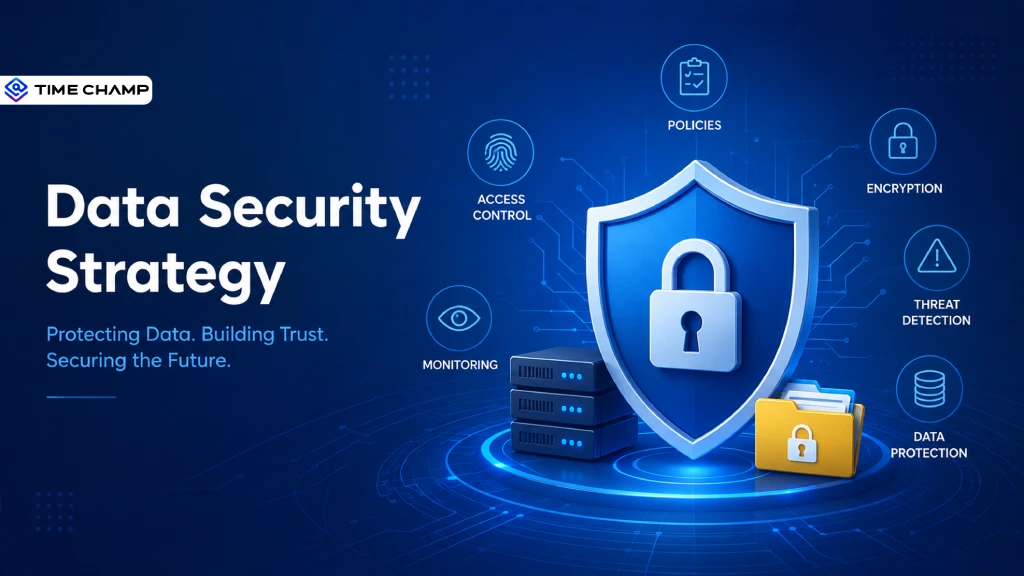
Your data is one of your business biggest assets, and it's also a common target for cyberattacks. Without a clear data security strategy, even one breach can lead to financial losses, damaged trust, and compliance issues. Data security strategies help you identify risks and ensure your security efforts align with your business goals.
To help you strengthen your data security strategy, this guide covers everything you need to protect your valuable data and stay ahead of evolving cyber threats.
What Is a Data Security Strategy?
A data security strategy is a structured plan that defines how your organization protects sensitive data from unauthorized access, data theft, misuse, and cyber threats. It outlines the policies, technologies, processes, and employee responsibilities needed to secure data throughout its lifecycle.
Here, the main goal is to reduce security risks, maintain compliance, and ensure your critical business information remains confidential, accurate, and available when needed.
Why Every Organization Needs a Data Security Strategy
Every organization needs a data security strategy to protect sensitive information and reduce security risks. Here are the key reasons why:
- Protects Sensitive Data: Safeguards customer, employee, and business data from unauthorized access, theft, and misuse.
- Reduces the Risk of Data Breaches: Identifies vulnerabilities early and helps prevent cyberattacks before they cause serious damage.
- Supports Regulatory Compliance: Helps you meet data protection regulations like GDPR, HIPAA, PCI DSS, and other industry standards while reducing the risk of penalties.
- Builds Customer Trust: Shows customers that you take data protection seriously, helping strengthen their trust in your business.
- Minimizes Financial Losses: Reduces the costs associated with data breaches, ransomware attacks, legal fines, and operational downtime.
- Keeps Your Business Running: Helps maintain access to critical data and speeds up recovery during cyber incidents, system failures, or disasters.
- Improves Incident Response: Provides clear procedures for detecting and protecting your business from security incidents quickly.
- Strengthens Your Security Posture: Brings together people, processes, and technology to create a proactive approach to protecting data.
- Protects Intellectual Property: Secures confidential business information, trade secrets, research, and other valuable assets from theft or misuse.
- Prepares You for Emerging Threats: Helps you identify new risks and adapt your security measures as cyber threats continue to evolve.

Did You Know?
IBM's 2025 Cost of a Data Breach Report found that the global average cost of a data breach reached $4.99 million, highlighting why every organization needs a well-defined data security strategy to reduce risks and limit financial impact.
What Are the 8 Core Components of a Data Security Strategy?
A strong data security strategy is built on several key components that work together to protect your organization's sensitive information. If even one component is missing, it can create security gaps that increase the risk of data breaches, compliance violations, and operational disruptions. Here are the eight essential components every data security strategy should include.
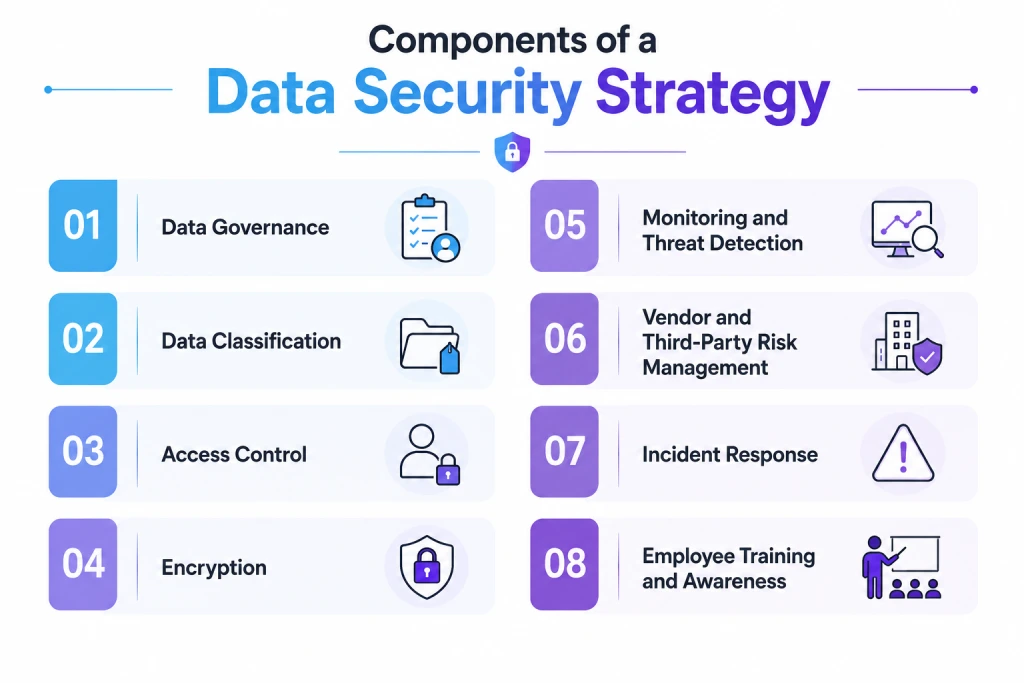
1. Data Governance
Data governance establishes the rules, policies, and responsibilities for managing and protecting data across your organization.
- Defines who owns, manages, and is responsible for different types of data.
- Creates security policies and standards that guide data handling.
- Assigns accountability to roles such as data owners and security teams.
- Provides a strong foundation for your overall data security strategy.
2. Data Classification
Not all data requires the same level of protection. Data classification helps you organize information based on its sensitivity and business value.
- Categorizes data into levels such as Public, Internal, Confidential, and Restricted.
- Applies stronger security controls to highly sensitive information.
- Simplifies compliance with regulations like GDPR, HIPAA, and PCI DSS.
- Helps prioritize security efforts and resource allocation.
3. Access Control
Access control limits who can view, edit, or share sensitive information, reducing the risk of unauthorized access.
- Grants access based on employee roles and responsibilities.
- Uses Role-Based Access Control (RBAC) and Multi-Factor Authentication (MFA).
- Follows the principle of least privilege by giving users only the access they need.
- Includes regular access reviews to remove unnecessary permissions.
4. Encryption
Encryption converts sensitive data into unreadable code, making it unusable to unauthorized users even if it's intercepted or stolen.
- Protects data stored on devices, servers, and cloud platforms.
- Secures data while it is transferred across networks.
- Keeps encryption keys separate from encrypted data.
- Covers backups to prevent data exposure during recovery.
5. Monitoring and Threat Detection
Continuous monitoring helps you identify suspicious activities before they turn into major security incidents.
- Tracks data access, transfers, and unusual user behavior.
- Detects insider threats, ransomware, and unauthorized access attempts.
- Uses tools such as Data Loss Prevention (DLP), SIEM, and endpoint monitoring.
- Maintains audit logs for investigations and compliance reporting.
6. Vendor and Third-Party Risk Management
Third-party vendors often have access to your systems and data, making them an important part of your security strategy.
- Evaluates vendors before sharing sensitive information.
- Includes security and breach notification requirements in contracts.
- Reviews vendor security practices regularly.
- Reduces the risk of third-party data breaches affecting your organization.
Did You Know?
Third-party involvement now accounts for 48% of all data breaches, highlighting why vendor risk management should be a core component of every data security strategy.
7. Incident Response
Even with strong security controls, incidents can happen. An incident response plan helps your organization react quickly and minimize damage.
- Defines the steps to identify, contain, investigate, and recover from security incidents.
- Assigns clear responsibilities to response team members.
- Establishes communication and reporting procedures.
- Reduces downtime and speeds up recovery after a breach.
8. Employee Training and Awareness
Employees are often the first line of defense against cyber threats. Regular training helps them recognize and avoid security risks.
- Educates employees about phishing attacks, social engineering, and secure data handling.
- Promotes safe use of passwords, devices, and collaboration tools.
- Includes guidance for using AI tools and cloud applications securely.
- Reinforces good security habits through regular awareness programs.
Ready to build a stronger data security strategy?
Time Champ gives you the visibility and controls you need to protect sensitive information and stay ahead of evolving cyber threats.
Step-by-Step Framework to Build an Effective Data Security Strategy
Building a data security strategy is about creating a structured plan that protects your data, supports your business goals, and evolves with emerging threats. Follow these seven steps to build a strategy that works.
Step 1: Define Your Goals and Get Leadership Support
Start by defining your data security goals and gaining leadership support for your strategy. Executive backing helps allocate the budget, resources, and authority needed to implement security initiatives successfully.
- Define objectives such as preventing data breaches, meeting compliance requirements, or protecting customer trust.
- Align security goals with your business objectives.
- Assign an executive sponsor, such as the CISO, CIO, or another senior leader.
Step 2: Assess Your Current Security Posture
Understand where your organization stands before making improvements. Assessing your current environment helps uncover security gaps and areas that need attention.
- Identify where sensitive data is stored, processed, and shared.
- Review existing security policies, controls, and technologies.
- Determine who has access to critical data.
- Identify regulatory requirements relevant to your industry.
Step 3: Identify and Prioritize Risks
Every organization faces different security risks. Identifying and ranking them helps you focus on the issues that could have the greatest impact.
- Identify potential threats such as ransomware, phishing, insider threats, and cloud security risks.
- Evaluate the likelihood and business impact of each risk.
- Prioritize high-risk areas before addressing lower-priority issues.
- Create a risk mitigation plan for critical vulnerabilities.
Step 4: Build Your Security Framework
Develop a comprehensive strategy that combines policies, processes, and security controls into a unified framework.
- Establish data governance and ownership.
- Define access control, encryption, employee monitoring, and incident response policies.
- Create documented security procedures and standards.
- Collaborate with IT, security, legal, HR, and business teams.
Step 5: Implement the Right Security Technologies
Choose technologies that support your strategy instead of relying on tools alone to solve security challenges.
- Deploy solutions such as Data Loss Prevention (DLP), encryption, identity and access management, and endpoint security.
- Integrate security tools to improve visibility and reduce security gaps.
- Configure tools based on your organization's risk profile and compliance needs.
Step 6: Train Employees and Build Security Awareness
Technology alone cannot protect your data. Employees need to understand how to recognize threats and handle sensitive information responsibly.
- Provide regular cybersecurity awareness training.
- Teach employees how to identify phishing attacks and social engineering attempts.
- Share best practices for handling sensitive data and using AI tools securely.
- Reinforce security awareness with ongoing updates and practical exercises.
Step 7: Review, Monitor, and Improve Continuously
A data security strategy should evolve as your business and the threat landscape change. Regular monitoring helps you identify weaknesses and improve your defenses over time.
- Monitor security events and user activity continuously.
- Track key metrics such as incident response time and security incidents.
- Review policies and access permissions regularly.
- Conduct periodic security audits and update your strategy to address new risks.
A strong strategy needs the right tools to succeed.
Use Time Champ to gain complete visibility into employee activity, strengthen data protection, and reduce security risks across your organization.
Common Frameworks Support Data Security Strategy
Creating a data security strategy is much easier when you follow a trusted framework. These frameworks provide structured guidance, helping you implement effective security controls and protect your organization's data with confidence.
1. NIST Cybersecurity Framework (CSF)
The NIST Cybersecurity Framework is one of the most widely adopted security frameworks for organizations of all sizes. It helps you identify, protect, detect, respond to, and recover from cybersecurity threats.
- Provides a flexible, risk-based approach to cybersecurity.
- Organizes security activities into six core functions: Govern, Identify, Protect, Detect, Respond, and Recover.
- Suitable for organizations across various industries.
- Helps strengthen your overall security posture.
2. ISO/IEC 27001
ISO/IEC 27001 is an internationally recognized standard for building and maintaining an Information Security Management System (ISMS).
- Helps you establish a structured approach to managing information security.
- Supports continuous risk assessment and improvement.
- Demonstrates your commitment to protecting customer and business data.
- Ideal for organizations seeking international security certification.
3. CIS (Critical Security Controls)
The CIS Controls provide a practical set of prioritized security best practices developed by cybersecurity experts.
- Focuses on the most effective actions to reduce cyber risks.
- Includes controls for asset management, access control, vulnerability management, and monitoring.
- Easy to implement for organizations with limited security resources.
- Helps prioritize security investments based on risk.
4. SOC 2
SOC 2 is a security framework designed for service providers and SaaS companies that store or process customer data.
- Evaluates how organizations protect customer information.
- Covers security, availability, confidentiality, processing integrity, and privacy.
- Builds customer confidence through independent audits.
- Commonly requested by enterprise customers before signing contracts.
5. Industry-Specific Compliance Frameworks
Many industries have regulations that define how sensitive data should be protected. Choosing the right framework depends on your organization's compliance requirements.
- GDPR: Protects the personal data and privacy of individuals in the European Union.
- HIPAA: Establishes security and privacy requirements for healthcare organizations handling patient data.
- PCI DSS: Defines security standards for organizations that process, store, or transmit payment card information.
Choose a framework that aligns with your industry, business goals, and regulatory requirements to build a stronger data security strategy, simplify compliance, and improve your overall security posture.
Common Mistakes to Avoid While Creating a Security Strategy
Even the best data security strategy can fail if common mistakes are overlooked. Avoiding these pitfalls helps you reduce risks and build a stronger security program.
- Making Data Security Only an IT Responsibility: Treating security as an IT task can leave gaps across teams that handle sensitive information.
- Relying Only on Security Tools: Using technology without strong policies, processes, and employee awareness can leave important security gaps.
- Overlooking Insider Threats: Focusing only on external attackers can leave your organization exposed to risks from employees, contractors, and partners.
- Letting Your Security Strategy Become Outdated: Failing to review your strategy regularly can leave you unprepared for changing threats, technologies, and regulations.
- Ignoring Third-Party Security Risks: Overlooking vendor security practices can expose your organization to risks through external partners.
- Giving Employees Too Much Access: Providing unnecessary access to sensitive data increases the risk of unauthorized use or exposure.
- Failing to Classify Sensitive Data: Without proper data classification, you may struggle to determine which information needs stronger protection.
- Skipping Regular Security Training: Infrequent training can leave employees unprepared to recognize phishing attacks or handle sensitive data properly.
- Neglecting Data Backups and Recovery Plans: Without reliable backups and recovery procedures, a security incident can cause longer downtime and greater data loss.
Did You Know?
According to NIST, organizations across the public and private sectors use the NIST Cybersecurity Framework (CSF) to assess cyber risks, align security practices with industry standards, and strengthen their overall cybersecurity programs.
How Can Time Champ Strengthen Your Data Security Strategy?
A strong data security strategy requires visibility into how sensitive data is accessed, shared, and used across your organization. That's where Time Champ comes in. It provides the visibility and controls you need to detect suspicious activities, protect sensitive information, and strengthen your overall security posture.
Key Features of Time Champ
- Endpoint Monitoring: Monitor file access, transfers, application usage, and employee activity across endpoints to detect suspicious behavior before it becomes a security incident.
- Insider Threat Detection: Identify unusual activities such as unauthorized file access, large data transfers, or off-hours activity to reduce insider risks and protect sensitive information.
- USB and Application Control: Restrict unauthorized USB devices, control application access, and prevent data from being copied to unapproved platforms.
- Real-Time Alerts: Receive instant alerts whenever suspicious activities or policy violations occur, allowing your security team to respond quickly.
- Audit Logs and Compliance: Maintain detailed activity logs that simplify audits and support compliance with regulations.
- Supports Remote and Hybrid Security: Extend data protection beyond the office by maintaining visibility into employee endpoints, whether they work remotely, in the office, or in a hybrid environment.
Ready to strengthen your data security strategy?
Time Champ gives you the visibility, controls, and audit trails you need to catch insider threats and protect sensitive data!
Conclusion
A strong data security strategy helps you protect sensitive data, reduce cyber risks, and stay compliant. By combining the right policies and security tools, you can build a strong defense against evolving threats. Solutions like Time Champ further strengthen your strategy with better visibility, insider threat detection, and endpoint protection, helping you keep your data secure with confidence.

Guna Lakshmi

Table of Content
 What Is a Data Security Strategy?
- Why Every Organization Needs a Data Security Strategy
- What Are the 8 Core Components of a Data Security Strategy?
- Step-by-Step Framework to Build an Effective Data Security Strategy
- Common Frameworks Support Data Security Strategy
- Common Mistakes to Avoid While Creating a Security Strategy
- How Can Time Champ Strengthen Your Data Security Strategy?
- Key Features of Time Champ:
- Conclusion
Related Blogs

Protect your business from insider risks with insider threat prevention best practices for monitoring, access control, employee security, and data protection.
Guna Lakshmi | May 08, 2026
Protect your business from BYOD security risks like data breaches and phishing. Learn practical ways to secure employee devices and reduce security threats.
Guna Lakshmi | May 07, 2026
Protect sensitive business data in hybrid work environments with strong security controls and practical strategies to prevent data breaches.
Guna Lakshmi | Jun 10, 2026
Learn how to ensure data privacy in productivity tracking with key controls, vendor evaluation, and setup steps that reduce risk and protect employee data.
Guna Lakshmi | May 02, 2026
Implement data loss prevention practices to protect sensitive data, reduce security risks, prevent breaches, and strengthen your organization's security.
Thasleem Shaik | Aug 24, 2026
Data loss prevention helps protect sensitive business data from leaks, theft, and misuse. See how DLP works, its benefits, challenges, and best practices.
Thasleem Shaik | Aug 21, 2026


 4.7/5 avg.
Ready to Manage Your Workforce Smarter?
Join our family of 1500+ companies using smart insights to redefine workforces!

Free Trial
No Credit Card Required