Insider Threat Mitigation: How to Build a Risk Program
Explore insider threat mitigation strategies to build a risk reduction program with UEBA, response playbooks, KPIs, and recovery plans for modern teams.
Insider incidents can create serious financial and operational damage before you even realize there is a problem in the organization. You may find insider threats difficult to detect because risky behavior often looks similar to normal employee activity. While you may already invest in monitoring tools, access controls, and security platforms, relying only on isolated security measures can still leave major gaps in visibility and response readiness. As hybrid work environments expand access points and sensitive data moves across multiple systems, you need a structured insider threat mitigation program that connects prevention, detection, response, and recovery. Without a clear strategy, you may struggle to identify risks early, contain incidents quickly, and reduce long-term impact.
This blog explains how to build an insider threat mitigation program using a structured lifecycle. You’ll also learn practical mitigation strategies, common mistakes to avoid, and best practices that help to reduce insider risk more effectively.
What Is Insider Threat Mitigation?
Insider threat mitigation is the process of identifying, reducing, and managing risks that come from people who already have access to your organization’s systems, data, or networks. It combines prevention, monitoring, detection, response, and recovery strategies to help you reduce the impact of malicious actions, compromised accounts, or careless employee behavior before serious damage occurs.
Insider threat mitigation is important because insider risks are often harder to detect than external attacks. Employees, contractors, and third-party users already work within trusted environments, which makes suspicious activity more difficult to recognize early. A structured mitigation approach helps you improve visibility, respond faster to incidents, protect sensitive data, and reduce operational, financial, and reputational damage across your organization.
What Are the Key Stages of the Insider Threat Mitigation Lifecycle?
An effective insider threat mitigation program works as a continuous lifecycle that helps you reduce risk before, during, and after an incident occurs. Each stage plays a specific role in helping you improve visibility, respond faster, and strengthen your overall security posture. When you connect these stages together, insider threat mitigation becomes a proactive process.
Stage 1 - Prevent
The prevention stage focuses on reducing insider risks before they turn into security incidents. This stage includes access controls, security policies, employee awareness training, and data protection measures that limit unnecessary exposure to sensitive systems and information.
Preventive controls help you reduce exposure and create stronger security awareness across your organization. A well-planned prevention strategy helps reduce the chances of insider incidents before they can create serious damage.
Stage 2 - Detect
This stage focuses on identifying suspicious activity before it develops into a serious security incident. It uses UEBA, anomaly detection, and behavior baseline to recognize actions that differ from normal employee work patterns.
Early detection helps you to identify warning signs such as unusual logins, abnormal downloads, or unauthorized access attempts before they escalate further. The faster suspicious behavior is detected, the easier it becomes to contain risks and minimize potential business damage.
Stage 3 - Respond
The response stage focuses on controlling the incident and investigating the root cause of the activity. This stage includes threat containment, evidence preservation, and coordination between HR, legal, operations, and security teams to handle the situation carefully and accurately.
A clear response process helps you avoid confusion during high-risk situations and improves decision-making under pressure. Strong response planning allows you to act quickly without disrupting critical operations unnecessarily.
Stage 4 - Recover
The recovery stage helps to restore normal operations after an insider incident occurs. This process may include repairing affected systems, recovering sensitive data, and communicating updates to stakeholders when required.
Recovery also helps you assess the overall business impact and close security gaps exposed during the incident. A structured recovery plan helps you restore stability faster and maintain operational continuity.
Stage 5 - Improve
The improvement stage focuses on strengthening the insider threat mitigation strategy after every incident or review cycle. This stage evaluates what worked well, identifies weaknesses, and updates the controls, workflows, or response procedures where needed.
Regular reviews help you improve detection accuracy, response readiness, and overall program maturity over time. Continuous improvement keeps your insider threat mitigation program effective as risks and workplace environments continue to change.
Struggling to detect insider risks before they turn into serious security incidents?
Time Champ helps you monitor employee activity, identify unusual behavior early, and improve insider threat visibility in real-time.
8 Best Practices for Building an Effective Insider Threat Mitigation Program
Building a strong insider threat mitigation program requires more than deploying monitoring tools or restricting access. You need a structured approach that improves visibility, strengthens response readiness, and continuously reduces insider risk across daily operations. The following insider threat best practices help to create a more proactive, scalable, and resilient security program.
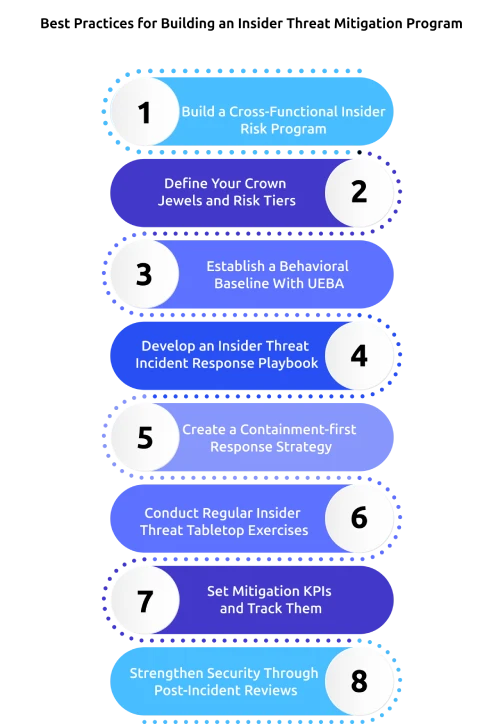
1. Build a Cross-Functional Insider Risk Program
Build an insider risk program that includes HR, IT, security, legal, and operations teams from the beginning. Insider threats often involve behavioral, technical, and compliance-related risks, so relying only on the security team can create blind spots during investigations and response planning. A cross-functional structure improves communication, speeds up decision-making, and helps you respond to insider incidents with greater accuracy and coordination.
2. Define Your Crown Jewels and Risk Tiers
Identify the systems, files, applications, and sensitive information that create the highest business impact if exposed or misused. After identifying these critical assets, classify them into risk tiers such as public, internal, confidential, and restricted. Clear risk classification helps you prioritize monitoring efforts, apply stronger controls to high-risk assets, and respond faster during insider-related incidents.
3. Establish a Behavioral Baseline With UEBA
Use User and Entity Behavior Analytics (UEBA) to understand normal employee activity across systems and devices. Behavioral baselining helps detect unusual actions such as abnormal login times, excessive downloads, unauthorized access attempts, or sudden changes in work patterns. A strong behavioral baseline improves detection accuracy and gives you a better chance to identify insider risks before they create serious damage.
4. Develop an Insider Threat Incident Response Playbook
Create a clear response playbook that explains how insider-related incidents should be handled from detection to resolution. The playbook should define investigation procedures, escalation workflows, communication channels, evidence preservation steps, and the responsibilities of HR, legal, and security teams. A structured response process helps you act faster during critical situations and manage insider incidents with better coordination and control.
5. Create a Containment-first Response Strategy
Prioritize containment during the early stages of an insider incident to prevent further damage to systems, accounts, or sensitive data. Response teams should isolate affected accounts, secure evidence, and assess the scope of the incident before taking major corrective actions. A containment-first strategy helps you control threats quickly while preserving important forensic information for investigations.
6. Conduct Regular Insider Threat Tabletop Exercises
Run insider threat tabletop exercises regularly to test how teams respond during realistic security scenarios. These exercises may include cases involving malicious insiders, compromised credentials, or negligent employee behavior. Regular simulations help you identify response gaps, improve coordination, and strengthen overall incident readiness before real incidents occur.
7. Set Mitigation KPIs and Track Them
Track measurable insider threat mitigation KPIs to understand how effectively the program performs over time. Metrics such as Mean Time to Detect (MTTD), Mean Time to Contain (MTTC), false positive rates, and incident resolution times help you evaluate operational performance and identify areas that need improvement. Consistent KPI tracking supports better decision-making and long-term program maturity.
8. Strengthen Security Through Post-Incident Reviews
Conduct detailed post-incident reviews after every insider-related event to understand what happened and where improvements are needed. Review findings should help refine monitoring rules, update workflows, strengthen controls, and improve response procedures. Continuous review and refinement help you strengthen insider threat mitigation efforts and adapt more effectively to evolving security risks.
Common Insider Threat Mitigation Mistakes to Avoid
Even well-planned insider threat mitigation programs can become ineffective when organizations overlook operational gaps or rely on incomplete processes. Avoiding some common mistakes can help you strengthen detection, improve response coordination, and reduce long-term insider risk.
1. Treating Mitigation as Only a Tool Problem
- Many organizations deploy security tools without building clear workflows, policies, or response procedures around them.
- Treat the insider threat mitigation as a complete program that combines technology, people, and operational processes together.
2. Skipping HR Involvement During Investigations
- Insider incidents often involve employee behavior, workplace policy violations, and legal considerations that security teams alone cannot fully manage.
- Involve the HR early in the process to improve coordination, communication, and investigation handling.
3. Failing To Define Containment Authority
- Security incidents can increase quickly when teams are unsure who has the authority to suspend accounts or restrict system access.
- Define clear containment responsibilities in advance so the response teams can act quickly during critical situations.
4. Creating a Punitive Reporting Culture
- Employees may avoid reporting suspicious behavior when organizations respond with fear-based or overly harsh actions.
- Encourage a supportive reporting environment that helps employees feel comfortable raising security concerns early.
5. Using UEBA Without Tuning Behavioral Baselines
- UEBA systems can generate excessive false alerts when organizations fail to adjust baselines according to normal work behavior.
- Continuously refine behavioral baselines to improve detection accuracy and reduce unnecessary alert fatigue.
How Time Champ Supports Insider Threat Mitigation
Many organizations struggle to identify insider risks early because unusual employee activity often appears similar to normal work behavior. Limited visibility into user actions and delayed investigations can make insider threat mitigation more difficult, especially in hybrid and remote work environments.
Time Champ helps solve these challenges by combining employee monitoring software with a built-in workforce intelligence that improves visibility in work activity and behavioral patterns. Its real-time activity tracking helps security teams detect unusual behavior faster, while anomaly alerts make it easier to identify suspicious actions that may require immediate attention. Time Champ also supports the response stage through detailed audit trails and activity records that help teams investigate incidents, preserve evidence, and improve accountability during security reviews. If you want to strengthen insider threat visibility and improve response readiness, Time Champ can help you build a more proactive security approach.
Worried about insider threats going unnoticed in daily work activity?
Time Champ helps you detect unusual actions early and improve security visibility across your workforce.
Conclusion
Insider threat mitigation works most effectively when you treat it as a continuous security program, not just a monitoring tool. Strong mitigation strategies combine prevention, detection, response, recovery, and continuous improvement to reduce risks across everyday operations. Focusing only on technology often leads to delayed response times, weaker coordination between teams, and limited visibility into insider-related risks and behavior. Building a structured framework first helps you to create clearer processes, stronger accountability, and faster incident management. Once the foundation is in place, security tools and monitoring platforms become far more effective in supporting long-term insider risk reduction.

Anjali

Table of Content
 What Is Insider Threat Mitigation?
- What Are the Key Stages of the Insider Threat Mitigation Lifecycle?
- 8 Best Practices for Building an Effective Insider Threat Mitigation Program
- Common Insider Threat Mitigation Mistakes to Avoid
- How Time Champ Supports Insider Threat Mitigation
- Conclusion
Related Blogs
Your perimeter won't stop insiders. Learn how real-time insider threat monitoring, anomaly detection, SIEM, and response workflows work together to prevent risk.
Jahnavi Pulluri | Apr 14, 2026
Data loss costs more than you think. Learn what causes it, how employee monitoring reduces data exfiltration risk, and how to protect your business.
Thasleem Shaik | Apr 17, 2026
Employee monitoring software can catch insider data breaches early, if you configure it right. See what it catches, what it misses, and how to roll it out.
Jahnavi Pulluri | Apr 16, 2026
Explore 5 core principles of employee monitoring, emerging AI ethics in 2026, and a practical playbook to balance employee productivity, privacy, and trust.
Anjali | May 07, 2026
Find the best Insider Threat Detection Tools for 2026. Compare features, pricing, pros & cons to reduce internal risk and secure workforce activity data.
Tarun Kumar | Apr 02, 2026
Learn why trust matters in workforce intelligence, how a privacy-first approach builds it, the key benefits, and how it protects company culture.
Thasleem Shaik | Feb 11, 2026


 4.7/5 avg.
Ready to Manage Your Workforce Smarter?
Join our family of 1500+ companies using smart insights to redefine workforces!

Free Trial
No Credit Card Required