20 Project Management Methodologies and How They Work
Compare project management methodologies by their approach, flexibility, workflow, and use cases to choose the right method for your project needs.
Choosing how to manage a project can be harder than it looks. You have dozens of project management methodologies, each with its own process, principles, and way of organizing the work. The approach that works well for one project may create problems for another.
So, how do you know which one fits your project?
We’ve listed the most widely used PM methodologies and broken down how they work, what they are suited for, and when each approach makes sense.
What Is Project Management Methodology?
A project management methodology is a structured way of planning, organizing, and completing a project. It gives your team a shared set of principles, processes, and working practices for moving from an idea to a finished result.
Think of it as the project’s playbook. It explains how work will be divided, who will make decisions, how progress will be tracked, and how the team will handle risks, feedback, and changes. Some methodologies follow a fixed sequence, while others allow you to adjust the plan as they learn. The right choice depends on the project’s goals, complexity, deadlines, and how likely its requirements are to change.
20 Popular Types of Project Management Methodologies for Better Project Planning
You can approach the same project in very different ways. The best fit depends on how clearly you know the requirements, how often priorities may change, and how your work needs to move from one stage to the next.
Below, we’ve covered 20 popular project management methodologies, along with simple examples and situations where each approach can work well.
| Methodology | Approach | Best For | Key Focus |
|---|---|---|---|
| Waterfall | Predictive | Fixed-scope projects | Sequential phases |
| Agile | Adaptive | Changing requirements | Iterative delivery |
| Scrum | Agile framework | Product and development work | Sprints and regular reviews |
| Kanban | Agile method | Continuous work | Workflow and WIP limits |
| Scrumban | Hybrid | Planned work with changing priorities | Flow and flexibility |
| Extreme Programming (XP) | Agile | Software development | Code quality and frequent testing |
| Adaptive Project Framework (APF) | Adaptive | Projects with evolving scope | Client feedback and short cycles |
| Lean | Process improvement | Improving existing processes | Removing waste |
| Critical Path Method (CPM) | Predictive | Deadline-driven projects | Task dependencies |
| Critical Chain | Predictive | Resource-constrained projects | Resource capacity and buffers |
| New Product Introduction (NPI) | Structured | Physical product launches | Stage gates and validation |
| Package-Enabled Reengineering (PER) | Structured | Software and process changes | Process redesign and system implementation |
| Outcome Mapping | Adaptive | Development and social impact work | Behavioral outcomes |
| Six Sigma | Process improvement | Quality-focused projects | Reducing defects and variation |
| PMI's PMBOK | Standard | Structured project management | Principles and practices |
| PRINCE2 | Predictive | Governed and complex projects | Stages, roles, and controls |
| Rapid Application Development (RAD) | Adaptive | Fast software development | Prototyping and user feedback |
| Feature Driven Development (FDD) | Agile | Feature-based software projects | Building individual features |
| Dynamic Systems Development Method (DSDM) | Agile | Fixed time and budget projects | Prioritization and iterative delivery |
| Rational Unified Process (RUP) | Iterative | Complex software projects | Architecture, requirements, and iterations |
1. Waterfall Methodology
Waterfall methodology takes a step-by-step approach to project work. You define the requirements, plan the stages, and complete them in sequence. Once one stage ends, the next one begins, so changes later in the project can take more time and effort.
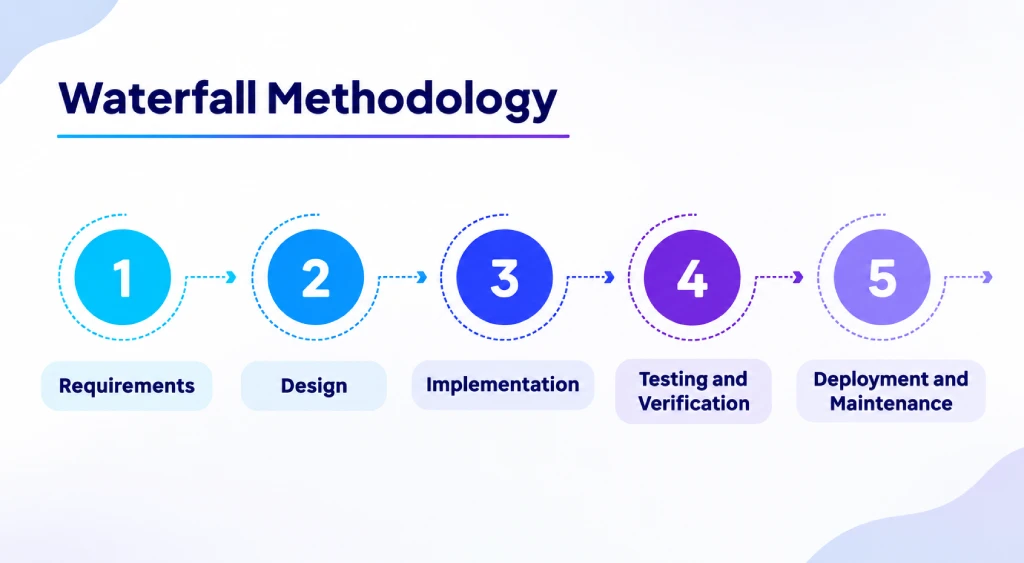
Where it Fits: Waterfall project management works well when the scope is clear, the deliverables are well defined, and you do not expect major changes along the way. It also suits projects where documentation, approvals, and a predictable process matter.
Example: Imagine an architecture team working on a building project. The design needs approval before detailed drawings can begin, and construction cannot start until those drawings are ready. A step-by-step approach fits naturally here.
What to Watch For: Waterfall projects can face challenges when requirements change after the project gets underway. If you need frequent feedback and regular changes, a more flexible approach may suit you better.
2. Agile Methodology
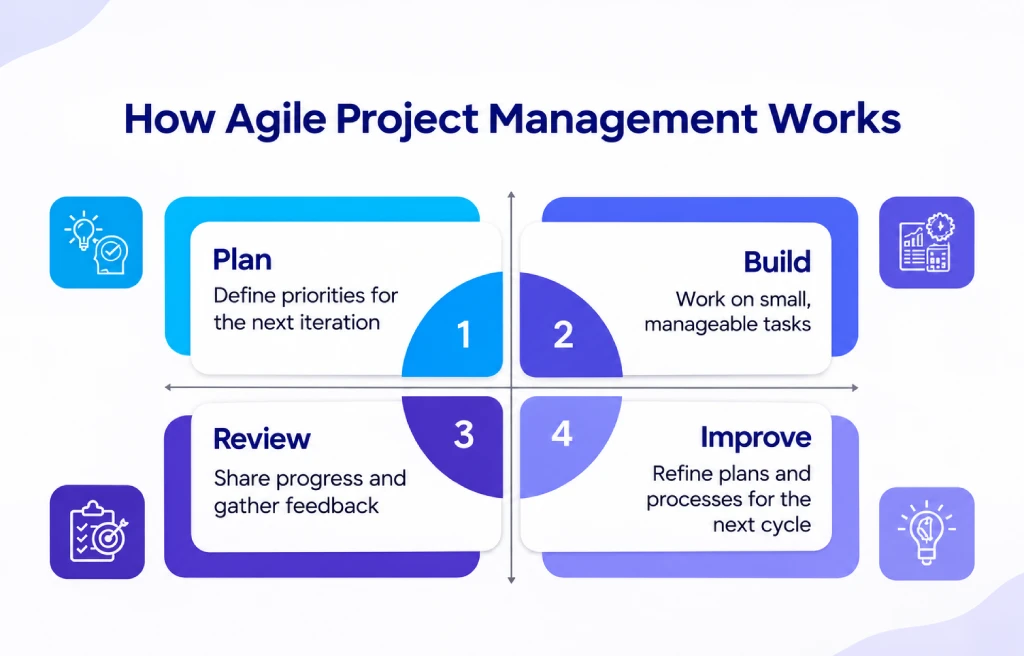
Agile takes a more flexible approach to project work. Instead of planning every detail upfront, you break the work into smaller pieces, deliver them in short cycles, gather feedback, and adjust what comes next.
An Agile project management methodology can help you respond when requirements change or when you cannot predict the final solution at the start. Agile itself is a set of values and principles, while frameworks such as Scrum and methods such as Kanban put those ideas into practice.
Where it Fits: Choose Agile when you expect priorities to shift, want regular feedback, or need to show progress throughout the project.
Example: A product team building a new customer onboarding experience may release one part of the experience, collect feedback, and then decide what to improve next. The team does not have to wait until the entire project ends to learn what works.
What to Watch For: Agile does not mean working without a plan. You still need clear priorities and a visible backlog so the work keeps moving in the right direction.
A Quick Note: Need a quick way to plan your Agile projects? Use our Agile project management templates to organize your work and keep each cycle on track.
3. Scrum Methodology
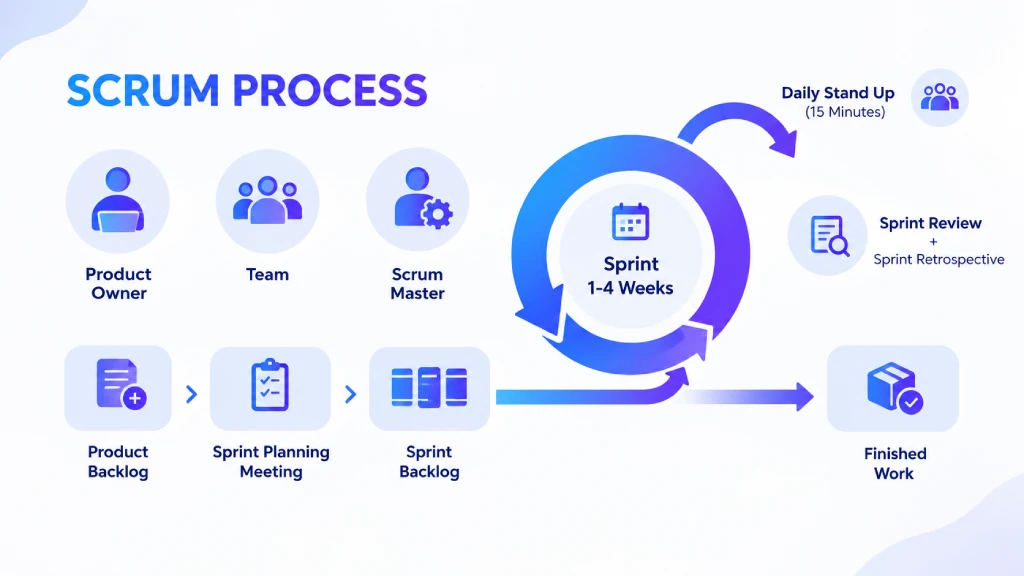
Scrum gives Agile work a more defined structure. You organize work into short periods called Sprints, select a set of work for each Sprint, review what the team completed, and use that feedback to plan the next one.
Scrum is technically an Agile project management framework rather than a complete methodology on its own. It gives your team a clear rhythm for planning, delivering, reviewing, and improving the work.
Where it Fits: Scrum works well when you have changing requirements and need regular checkpoints to review priorities and progress.
Example: A content and design team working on a client retainer can use two-week Sprints to plan and complete their work. At the end of each Sprint, the team reviews the work with the client and uses the retrospective to identify recurring issues, such as delays in getting client approvals. This helps the team adjust its process for the next Sprint.
What to Watch for: Scrum needs active participation from the team and clear decisions about what matters most. Without that commitment, Sprints can turn into routine meetings without meaningful progress.
Finding it hard to know whether your project is staying on track?
Use Time Champ to monitor time, tasks, and resources as work moves ahead.
4. Kanban Methodology
Kanban is an Agile project management method that uses a visual board to show how work moves through different stages. You pull tasks from a backlog as capacity becomes available and move them across the board as they progress, with each column representing a stage of the workflow. WIP limits help control how much work can stay in progress at each stage.
If you want to organize your workflow visually, you can use a Kanban board template to set up columns, track tasks, and see what needs attention at each stage.
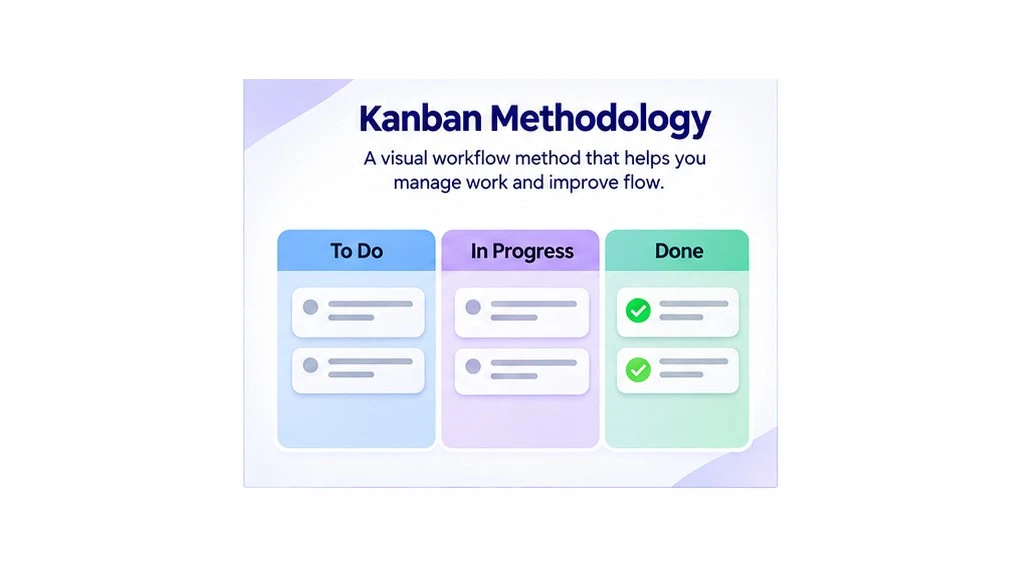
Where it Fits: Kanban suits ongoing work where new requests arrive regularly, and priorities can change throughout the day.
Example: A BPO claims team may receive a steady flow of claims that move through verification, review, approval, and completion. The team can use a Kanban board to track each claim across these stages and set WIP limits to prevent too many claims from piling up in one stage. This helps the team spot bottlenecks and keep claims moving.
tyle="font-weight:bold">What to Watch for: A Kanban board works best when you actively manage the amount of work in progress. Without WIP limits, too many tasks can enter the workflow at once, making it harder to see which work needs attention first.
A Quick Note: If you are deciding between Kanban and Scrum, you can also compare Kanban vs Scrum to see how their workflows, planning styles, and work structures differ.
5. Scrumban Methodology
What happens when Scrum meets Kanban? You get Scrumban, a hybrid approach that brings structure and flexibility into the same workflow.
Scrumban combines Scrum practices such as Sprints, reviews, and retrospectives with Kanban practices such as continuous flow and WIP limits. During project planning, you can define the work you want to complete while still leaving room to pull new tasks from the backlog when capacity becomes available. This gives you a structured plan without making your workflow too rigid.
Where it Fits: Scrumban works well when your project needs clear planning, but priorities can still change along the way. It can help when you have planned work to complete and urgent requests that need attention during the same Sprint.
Example: An internal IT team may plan improvements to an employee portal while handling support requests at the same time. Scrumban lets the team keep planned work visible while allowing urgent requests to move through the same workflow.
What to Watch for: Scrumban gives you room to adapt, but too many incoming tasks can still disrupt your priorities. Set clear WIP limits and review the workflow regularly so urgent requests do not keep pushing planned work aside.
6. Extreme Programming (XP) Methodology
What if your software team could catch problems while the code is still being written instead of finding them near the finish line? That is the idea behind Extreme Programming, or XP.
Extreme Programming (XP) takes a few agile methods and applies them consistently to protect code quality, even when the pressure is high. You work in pairs at one computer, write tests before writing the code, and integrate each change as soon as it is ready instead of letting changes pile up.
Kent Beck developed XP in the late 1990s while working on a payroll project for Chrysler. He created it to help developers feel comfortable changing and rewriting code instead of worrying about breaking it. That idea still shapes XP today, with regular testing and pair reviews helping catch problems as soon as they appear rather than months later.
Where it Fits: XP works well for software projects where requirements can change frequently, and code quality needs constant attention. It suits teams that can work closely together and get regular feedback during software development.
Example: A software team building an online payment feature can use XP to write tests before adding new functionality, work in pairs on complex code, and integrate changes frequently. Instead of waiting until the end to test everything, the team checks the code throughout development and fixes issues as they appear.
What to Watch for: XP relies heavily on collaboration and disciplined engineering practices. If your team cannot maintain regular communication, testing, and integration, following the method can become difficult.
Not sure where your project time goes or which tasks need attention?
Use Time Champ to track time and work across every project in one place.
7. Adaptive Project Framework (APF) Methodology
APF works with a fixed time and budget while allowing the project scope to change as you learn more. You plan at a high level, work through short cycles, review the results with the client, and adjust the next cycle based on what you learn. The client plays an active role in deciding what delivers the most business value at each stage.
Where it Fits: APF can work well for research, product development, process improvement, and other projects where you know the goal but cannot fully define the solution at the start.
Example: Imagine you are developing a new customer research platform, but you do not yet know which features will provide the most value. You can build an initial version, review it with the client, use the feedback to set priorities, and shape the next cycle around what you have learned.
What to Watch for: APF needs regular client involvement and quick decisions between cycles. Without that feedback, the project can lose the flexibility that makes the approach useful.
8. Lean Methodology
Lean asks a simple question that can change how you run a project. Does this step actually add value?
The Lean methodology focuses on identifying customer value, mapping the value stream, removing waste, creating a smooth flow, and improving the process continuously. Instead of adding more steps to fix a slow process, you look for unnecessary approvals, waiting, rework, handoffs, and other activities that slow the work down.
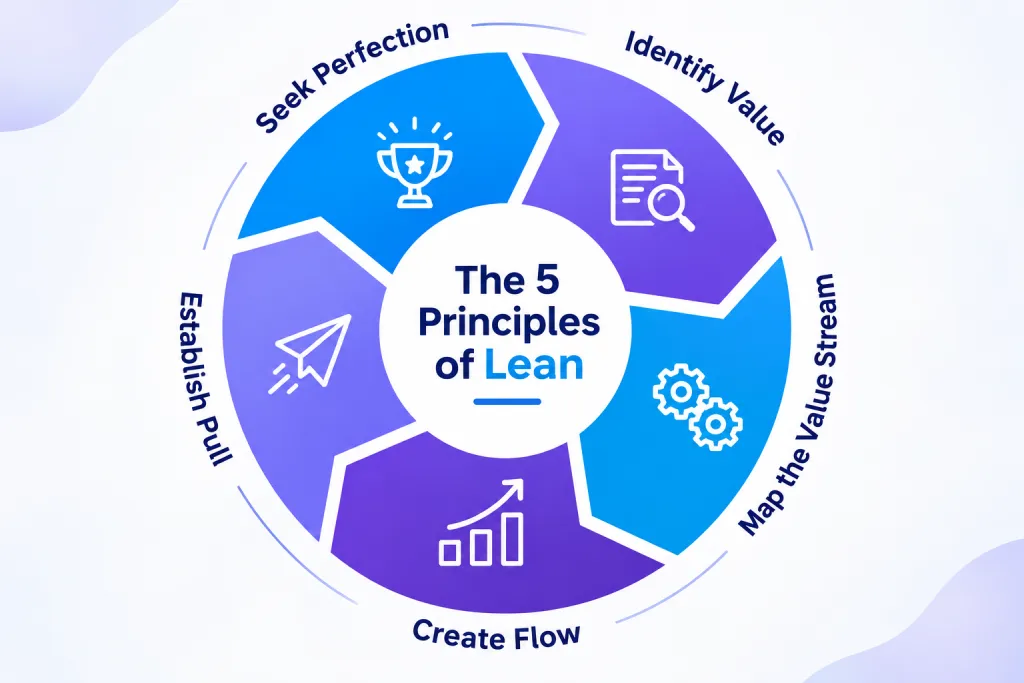
Where it Fits: Lean works well when your goal involves improving an existing process, reducing unnecessary work, or making a repeatable workflow move more smoothly.
Example: An HR team maps its hiring process from posting a job to getting a signed offer. The team finds that most candidates spend their time waiting for interview panels to become available. Instead of hiring more recruiters, the team fixes this bottleneck by improving panel scheduling, helping the entire hiring process move faster.
What to Watch for: Lean is about improving the whole flow, not simply asking your team to work faster. Cutting a step without understanding its purpose can create errors or move the problem somewhere else.
9. Critical Path Method
The critical path method in project management maps each task, its duration, and its dependencies to identify the longest chain of tasks in a project. This chain forms the critical path and determines the earliest possible completion date. If a task on the critical path gets delayed, the entire project can also be delayed. Tasks outside the critical path usually have some flexibility.
Where it Fits: CPM works well for projects with clearly defined tasks and dependencies, especially when the completion date matters and several activities must happen in a specific order.
Example: A retail chain plans to open a new store on a fixed date. Using CPM, the team can see that the electrical work must finish before the flooring can start, and the flooring must finish before the fixtures can arrive. Since this sequence has no extra time, any delay can push back the opening date. The project timeline then shows which contractor needs attention if a task falls behind.
What to Watch for: The critical path can change when task durations, dependencies, or project conditions change. Review the schedule as the project progresses instead of treating the original critical path as permanent.
10. Critical Chain Project Management
Critical Chain Project Management takes CPM a step further by considering resource availability along with task dependencies. Instead of looking only at which tasks need to happen first, CCPM also considers whether the right resources are available when you need them. It uses project and feeding buffers to protect the schedule when unexpected delays occur.
Where it Fits: CCPM can work well when your project depends on scarce or shared resources and several tasks compete for the same specialists, equipment, or other limited capacity.
Example: Suppose three client projects need the same senior developer for testing. A normal schedule may show all three tasks running close together, but the developer cannot work on all three at once. CCPM accounts for that resource constraint, sequences the work around the available capacity, and uses buffers to protect the planned completion date.
What to Watch for: CCPM requires careful resource planning and active buffer management. If shared resources change frequently or priorities keep shifting, you may need to revisit the critical chain as the project develops.
11. New Product Introduction (NPI)
New Product Introduction guides a product from an early idea through design, testing, and full-scale production. Manufacturing teams build this project management methodology around a series of gates. At each gate, leadership reviews the progress and approves the project before it moves to the next stage. This helps catch weak ideas or design problems before they turn into costly production issues.
NPI usually follows six stages, starting with defining the idea and moving through design, validation, prototyping, ramp-up, and a final review. Electronics, medical device, and consumer goods industries rely heavily on this approach because a product recall can cost far more than a delayed launch.
Where it Fits: NPI works well when you are launching a physical product and need to coordinate development, testing, manufacturing, quality checks, and market launch.
Example: A consumer electronics team is preparing to launch a new smart device. The team moves through design, prototype testing, production trials, quality checks, and final launch preparation. NPI gives each stage a clear place in the process and helps the team catch production or quality issues before the launch.
What to Watch for: NPI involves several teams and stages, so unclear responsibilities can create delays. Define who owns each stage and set clear checkpoints before moving forward.
12. Package-Enabled Reengineering (PER)
Package-Enabled Reengineering combines business process redesign with the implementation of a new software package, usually an ERP system. Instead of building custom software around your existing workflows, you redesign those workflows to fit the software you are implementing. You treat both changes as part of the same project rather than handling them separately.
Where it Fits: PER suits any business replacing a core system such as finance, HR, or supply chain software, especially when the new package requires a different way of working. For example, a mid-size manufacturer moving from spreadsheets to a full ERP system may need to redesign its approval process, inventory tracking, and reporting to fit the new system instead of forcing the software to follow old processes.
Example: A finance team replacing its legacy accounting system may discover that several approval steps exist only because of limitations in the old software. With PER, the team can review those processes, align them with the new package, and remove unnecessary steps before the new system goes live.
What to Watch for: Reengineering can affect how your team works day to day. Map the current process carefully and involve the right stakeholders before changing established workflows.
13. Outcome Mapping
Outcome Mapping takes a different view of project progress. Instead of focusing mainly on completed deliverables, it looks at the changes a project creates in behavior and relationships over time.
The approach was developed by the International Development Research Centre (IDRC) and is commonly used in development projects. It focuses on the influence a project creates within a community rather than measuring progress only through traditional project outputs.
Outcome Mapping typically starts with a detailed design phase. You then track and record the changes that happen throughout the project to understand whether your work is creating the intended impact.
Where it Fits: Outcome Mapping can work well for development, social impact, research, and other projects where success depends on changes in behavior, relationships, or practices rather than a single finished deliverable.
Example: A nonprofit launching a digital training program may want participants to apply new skills in their daily work. Instead of measuring success only by the number of training sessions delivered, the team tracks whether participants adopt the skills and how their work changes afterward.
What to Watch for: Completing activities does not automatically mean you achieved the intended outcome. Define measurable outcomes early and review them throughout the project.
14. Six Sigma
Six Sigma is a data-driven approach that helps you reduce defects and variation in a process. Motorola developed it in the 1980s, and the approach follows a five-step cycle called DMAIC, which stands for Define, Measure, Analyze, Improve, and Control. You first define the problem, measure the current process, identify what causes the variation, improve the process, and then put controls in place to maintain the results.
Lean Six Sigma combines Six Sigma with Lean’s focus on reducing waste. This lets you work on process quality and efficiency together instead of focusing on one at the expense of the other.
Where it Fits: Six Sigma works well when you have a repeatable process with measurable problems, such as high error rates, quality issues, delays, or inconsistent results.
Example: A BPO team notices that customer records often contain incorrect information after processing. The team can use DMAIC to define the error, measure how often it occurs, analyze where it starts, improve the process, and monitor the results to prevent the issue from returning.
What to Watch for: Six Sigma depends on reliable data. If you do not have enough accurate information about the process, it becomes harder to identify the real cause of the problem.
15. PMI’s PMBOK
PMI's PMBOK stands for Project Management Body of Knowledge. It is not a step-by-step project management methodology. Instead, it is a standard from the Project Management Institute that brings together principles, practices, and processes used across project management.
PMBOK covers key areas of project work, including initiating, planning, executing, monitoring and controlling, and closing. When a team says it follows PMBOK, it usually means it uses these principles and processes to structure its project rather than following one fixed methodology.
Where it Fits: PMBOK can help when you need a structured reference for planning, managing, and delivering projects across different environments. You can adapt its guidance to your project rather than following it as a rigid step-by-step method.
Example: A project team managing a large software implementation can use PMBOK guidance to structure areas such as planning, risk, stakeholders, resources, and delivery. The team can then combine that guidance with an Agile or predictive approach that suits the project.
What to Watch for: PMBOK provides guidance rather than a single recipe for running every project. You still need to tailor the practices to your project, industry, delivery approach, and specific requirements.
16. PRINCE2 Methodology
PRINCE2, short for Projects IN Controlled Environments, breaks a project into clear stages, and you can't move to the next stage until you've closed out the current one with a formal review. Every stage runs on a documented business case, so you keep proving the project is still worth the money, not just that the work is still moving.
PRINCE2 is a structured project management methodology that organizes projects around seven principles, seven practices, and seven processes. You get named roles, defined tolerances, and a paper trail that shows exactly who approved what and when.
Where it Fits: PRINCE2 works well for projects that need strong governance, clear accountability, risk management, and regular review points. You can also tailor the method to suit the size and complexity of your project.
Example: A company rolling out a new financial system across several departments can use PRINCE2 to define responsibilities, maintain the business case, review progress at key stages, and manage risks before moving to the next stage.
What to Watch for: PRINCE2 gives you structure, but following every process without tailoring it can create unnecessary work. Adapt the method to the size and needs of your project.
17. Rapid Application Development (RAD) Methodology
Rapid Application Development takes a different approach to building software. Instead of finalizing all the requirements before development begins, you create a working prototype early, share it with users, and use their feedback to shape the next version.
You move through requirements planning, user design, rapid construction, and cutover. The key part is the repeated cycle between design and user feedback, where you test the product, make changes, and test it again until it fits the users’ needs.
Where it Fits: Choose RAD when speed matters more than detailed upfront documentation, and your users can provide hands-on feedback throughout the development process. It works well for software and app projects where the user interface plays a major role in defining the requirements.
Example: A fintech team creates a rough version of a new dashboard within a few days and puts it in front of five actual users. Based on their feedback, the team changes the layout twice before writing the final production code.
What to Watch for: RAD depends on regular user involvement and quick feedback. Its focus on speed can also create technical or maintenance problems if your team rushes development without enough attention to architecture and quality.
18. Feature Driven Development (FDD) Methodology
Feature Driven Development organizes your entire project around a running list of features, each one small enough for you to design and build within about two weeks. You start by building an overall model of the system, then break that model into a prioritized feature list, then design and build each feature in short, rotational cycles.
Where it Fits: FDD can work well for larger software projects where you need a clear feature list, defined ownership, and frequent delivery of working functionality.
Example: A banking application may have features such as account transfers, transaction history, bill payments, and account alerts. Instead of treating the application as one huge project, the team can plan and build these features individually, making progress easier to track.
What to Watch for: FDD works best when you can break the product into clear features. It may be harder to apply when the project is highly uncertain or when you cannot define useful features early in development.
19. Dynamic Systems Development Method (DSDM)
DSDM grew from early Rapid Application Development projects that needed more structure around cost, quality, and deadlines. It keeps RAD’s speed and prototyping while fixing time, cost, and quality upfront. You then adjust the scope to fit within those limits using MoSCoW prioritization, which groups requirements into must-haves, should-haves, could-haves, and won’t-haves for the current release.
You move through several phases, starting with feasibility and foundations, then continue through repeated development cycles until the product is ready for deployment.
Where it Fits: DSDM works well when your deadline and budget are fixed, but you still need flexibility in deciding which features make the final release. It can suit government and enterprise IT projects with firm delivery dates.
Example: A team building a new claims intake tool has a fixed March regulatory deadline and budget. The team uses MoSCoW prioritization to decide which features must be ready for launch and which features can move to a later release.
What to Watch for: DSDM depends on active collaboration and clear prioritization. If your stakeholders cannot make decisions quickly, the iterative process can lose momentum.
Quick Note:MoSCoW prioritization is a simple way to decide which requirements matter most when you have limited time or resources. It groups requirements into four categories: Must have, Should have, Could have, and Won’t have this time. This helps you focus on essential features first while moving lower-priority work to a later release.
20. Rational Unified Process (RUP) Methodology
RUP organizes software development into four phases: Inception, Elaboration, Construction, and Transition. Each phase ends with a clear milestone before you move to the next one. Unlike a fully sequential method, RUP uses smaller iterations within each phase, so you continue designing, building, and testing throughout the project. It also places a strong focus on architecture and use cases.
Where it Fits: RUP can work well for complex software projects that need iterative development along with detailed planning, documentation, requirements management, and risk control.
Example: A financial services team developing a large transaction platform can begin with Inception to define the scope and business case. During Elaboration, the team can work through architecture and major risks. Construction focuses on building the system through iterations, while Transition prepares the finished product for users.
What to Watch for: RUP offers a lot of structure, which can be useful for complex projects but excessive for small or simple software work. Tailor the process to the level of complexity you actually need.
How Do You Choose the Right Project Management Method?
The right project management method depends on the work in front of you, not on which methodology is most popular. Look at your requirements, how much change you expect, how involved your stakeholders need to be, and the resources and controls your project requires.
Here are the key factors to consider before you choose a method.
- Clear Project Requirements: If you already know the scope, project deliverables, and final outcome, a predictive method such as Waterfall or CPM can give you a clear sequence to follow. If the requirements may change as the work progresses, Agile, Scrum, or a hybrid approach can give you more room to adapt.
- Cost of Changes: Think about what happens if you need to change direction halfway through the project. If a change could affect contracts, budgets, designs, or production, a structured method can help you control those changes. If changes are easier to make, an adaptive approach may give you more flexibility.
- Stakeholder Involvement: Some projects need regular feedback and decisions from clients or other stakeholders. Agile methods can work well when you need frequent input. Projects with clear requirements and fewer review points may need less ongoing involvement.
- Governance and Compliance: Consider whether your project requires detailed documentation, approvals, audit trails, or formal review stages. PRINCE2, PMBOK-based approaches, and Waterfall can provide more structure when governance and compliance matter.
- Type of Work: Look at how the work actually moves instead of forcing it into a familiar framework. A one-time project with a fixed deadline differs from a continuous stream of support tickets or claims. Kanban and Scrumban can suit ongoing work, while CPM can help when task dependencies control the finish date.
How Time Champ Supports Different Project Management Methodologies
No methodology works on planning alone. Waterfall depends on accurate estimates for each phase, Scrum needs reliable sprint data for the next cycle, and Kanban relies on a clear view of how work moves through the workflow. A project management software can help you plan this work, but you also need visibility into what happens during execution.
Time Champ helps you connect your plans with actual work. Automatic time tracking records the hours spent on tasks, so you can compare actual time with your estimates. Task statuses give you a clear view of work as it moves from one stage to the next. Budget tracking helps you spot cost changes early, while resource allocation shows where workloads may become too high. This gives you the information you need to review progress and adjust your approach based on actual project data.
Struggling to keep project work aligned with your plans and deadlines?
Try Time Champ to track actual work and keep every project on course.
Conclusion
Choosing from different types of project management methodologies becomes easier when you understand what your project actually needs. Look at the scope, level of change, team structure, resources, and delivery requirements before settling on an approach.
If you want that visibility in one place, Time Champ helps you monitor project time, tasks, costs, and resource usage throughout execution. This gives you the information needed to manage your chosen approach with greater clarity.

Thasleem Shaik

Table of Content
 What Is Project Management Methodology?
- 20 Popular Types of Project Management Methodologies for Better Project Planning
- How Do You Choose the Right Project Management Method?
- How Time Champ Supports Different Project Management Methodologies
- Conclusion
Related Blogs

Download free project checklist templates in Excel, Word, and PDF to plan tasks, track progress, and manage projects clearly from start to finish.
Thasleem Shaik | Apr 02, 2026
Discover what a project charter is, its purpose, key components, and examples. Learn how to write an effective charter to start projects with clear direction.
Thasleem Shaik | Apr 02, 2026
Manage your project finances with confidence using this complete project accounting guide covering processes, best practices, software, and cost control.
Anjali | Jul 15, 2026
Learn how to track time on multiple projects without losing billable hours or missing deadlines. Discover common challenges, workflows, and tool features.
Guna Lakshmi | May 21, 2026
Learn how to integrate productivity tracking with project management without broken workflows or manual exports. A practical step-by-step guide.
Guna Lakshmi | May 06, 2026
Project timeline guide: definition, key components, examples, templates, pros & cons, management tips, and software for efficient project tracking and planning.
Guna Lakshmi | Apr 02, 2026


 4.7/5 avg.
Ready to Manage Your Workforce Smarter?
Join our family of 1500+ companies using smart insights to redefine workforces!

Free Trial
No Credit Card Required