What is Project Timeline? A Complete Guide for (2026)
Project timeline guide: definition, key components, examples, templates, pros & cons, management tips, and software for efficient project tracking and planning.
Managing projects without a clear timeline is like driving without a proper map. You may move forward, but you won’t know if you’re heading in the right direction. Many organizations lost billions of dollars every year, mostly because of unclear project planning, missed deadlines, and poor tracking. The detail here sits inside a wider conversation covered in our best project management software guide.
An effective project timeline solves this problem. It helps teams stay organized, improves visibility, and keeps deadlines under control. Whether it is a product launch, software development, marketing campaign, or even HR operations, a clear timeline increases your project delivery, and that too within budget.
In this guide, you will learn what a project timeline is, its key elements, examples, templates, advantages and disadvantages, project management tips and software for efficient project tracking.
Also Read: What is a Timeline? and its Popular Techniques
What is a Project Timeline?
A project timeline is a structured visual representation of tasks, milestones, deadlines, and dependencies arranged in chronological order. It shows the beginning and end date of every task, how each task is connected and a clear path from project planning to successful delivery. In simple terms, it acts like a clear pathway for your project. It informs your team of what should be performed, at what time it should be done, who should do that particular task, and what should be prepared before starting another task.
You know what? McKinsey & Company found that large IT projects run 45% over budget and 7% over schedule, delivering 56% less value than predicted, primarily due to weak planning and poor schedule discipline.
Importance of Project Timeline
A project timeline directly impacts project success, team productivity, and financial performance. When designed properly, it directly influences delivery speed, cost efficiency, and team coordination. Here are the key reasons why it is essential:
1. Creates Clear Project Structure and Direction
It helps everyone understand what needs to be done and when. There is no confusion about tasks, deadlines, or priorities. When the plan is clear, the team works with more focus and confidence.
2. Improves On-Time Project Completion Rates
It keeps deadlines visible and organized. When tasks are arranged in the right order, teams can avoid last-minute pressure. This increases the chances of completing the project on schedule.
3. Prevents Scope Creep and Uncontrolled Changes
It clearly defines what is included in the project. If new tasks are suggested, they can be reviewed before adding them. This prevents unexpected changes to work without adjusting time, budget, or resources.
4. Increases Team Accountability and Ownership
It shows who is responsible for each task. When roles and deadlines are clear, people take ownership of their work. This improves performance and reduces confusion.
5. Identifies Project Risks and Bottlenecks Early
It shows how tasks depend on each other. If one task is delayed, you can quickly see the impact. This allows early action before the problem becomes a serious issue.
6. Enhances Budget Management and Cost Control
An effective project scheduling reduces delays, overtime, and rework. When time is managed properly, cost can also be managed in a better way. This improves overall budget control.
6. Strengthens Stakeholder Communication
It provides a clear picture of project progress. You can easily see what has been completed and what comes next. This builds trust and transparency.
A structured project timeline can directly overcome these risks by enhancing visibility, accountability, and control of execution, while increasing the probability of delivering projects on schedule and within budget.
Also Read: 7 Free Project Timeline Templates (Excel, Word & Pdf)
What Are the Key Components of a Project Timeline?
If you’re creating a project timeline, you might wonder: “What exactly should I include in it?” Here are the key components of it, and learn why each one really matters.
- Project Scope - What Are We Actually Doing?
Before you even think about deadlines, you need clarity. Project scope clearly explains the deliverables and non-deliverables of the project. Timelines do not work without a clear scope, as new tasks are continuously being added.
- Task/Work Breakdown Structure (WBS) - What Needs to Be Done?
Big projects feel overwhelming, right? That’s why just break them into smaller, manageable tasks. This is called a Work Breakdown Structure (WBS). Instead of simply saying “Product Launch”, break it like “Market research, Product design, Development, Testing, Marketing launch”.
Smaller tasks make planning easier, tracking simpler, and execution smoother. It also helps your team avoid confusion.
- Start and End Dates - When Does Each Task Happen?
Now you have clarity on what tasks need to be done, but you need to know when each one starts and when it should finish. Every task must have a clear duration. Without start and end dates, work stretches endlessly. These start and end dates help to create urgency, improve time management, and prevent delays. - Milestones - Are We Moving in the Right Direction?
Milestones are like checkpoints. They don’t represent daily tasks, they represent major progress moments, such as design approval, prototype completion, client sign-off, and final launch, etc. In simple terms, milestones are like moments where you can pause and say, “Okay, we’ve reached an important stage.” - Dependencies - What Must Happen First?
Just think of this:Can testing begin before development is complete?Can marketing start before the product is finalized?Probably not, right? Some tasks depend on others. These are called dependencies. Dependencies help you see, - What must be completed first?
- What can run simultaneously?
- Where delays might affect other tasks
- Resource Allocation - Who Is Doing the Work?
Now comes the human side of the timeline. This resource allocation clearly defines who is responsible for each task. Assigning tasks properly ensures a balanced workload, clear accountability, no overlap or duplication and keeps teams productive and stress-free.
- Deadlines - When Is the Final Delivery?
In any project, there must be a clear end date. This last deadline creates urgency and focus. It helps the team prioritize tasks and stay aligned with the goal, and prevents delays. Without a clear deadline, projects can easily lose direction.
- Progress Indicators - Are We on Track?
Finally, how do you know if things are going well?Progress indicators show the percentage of project completion, task status (Not Started, In Progress, Completed), and delayed tasks. This gives you real-time operational visibility into work, and you can know exactly where the project stands.
When all these components work together, your project moves with control and clarity.
Don’t let poor planning delay your projects!
Use Time Champ to track every task and deadline clearly.
What are the Examples of a project timeline?
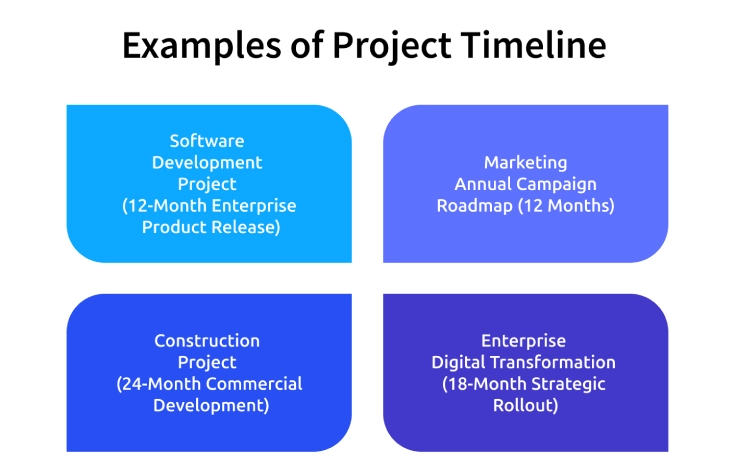
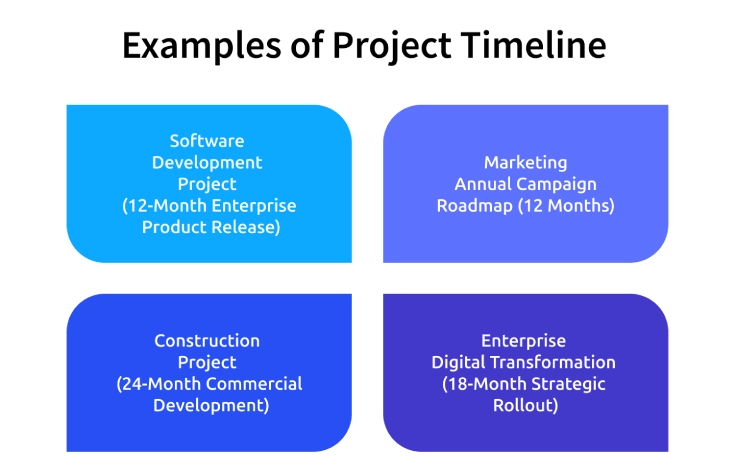
A single project timeline does not follow a one-size-fits-all rule. The structure, duration, and level of detail depend on the industry, project size, risk level, and stakeholder expectations.
To achieve long-term or enterprise-wide initiatives, many organizations will choose a quarterly project timeline template because it aligns with financial planning, board reviews, and performance tracking cycles.
Here are real industry-based examples that help you understand the role of a project template in organizations.
Software Development Project (12-Month Enterprise Product Release)
Duration: 1 Year (Quarter-Based View)
In enterprise software, quarterly planning aligns with Agile release cycles and board-level reporting.
| Quarter | Task / Milestone | Deliverable | Task Owner |
|---|---|---|---|
| Q1 | Market Research, Strategy Definition, Budget Allocation | Annual Marketing Plan | Marketing Director |
| Q2 | Campaign Development & Mid-Year Product Launch | Active Campaign Assets & Lead Funnel | Campaign Manager |
| Q3 | Optimization & Seasonal Promotions | Performance Improvement Report | Digital Marketing Lead |
| Q4 | Major Promotional Campaign & Annual Performance Review | Year-End ROI Report | CMO + Analytics Team |
You know this? One of the biggest causes of project failure is unstructured timelines. A study by McKinsey & Company says that large IT projects run on average 45% over budget and 7% over schedule, while delivering 56% less value than predicted.
Why is Quarter Planning Important in IT
- Aligns with Agile release cycles
- Enables executive performance tracking
- Supports funding approval stages
- Reduces scope creep
Large enterprises typically review product performance every quarter to control budget and risk exposure.
Marketing Annual Campaign Roadmap (12 Months)
Duration: 1 Year (Brand Growth Strategy)
Marketing projects often fail due to poor coordination between content, design, and media teams.
| Quarter | Task / Milestone | Deliverable | Task Owner |
| Q1 | Market Research, Strategy Definition, Budget Allocation | Annual Marketing Plan | Marketing Director |
| Q2 | Campaign Development & Mid-Year Product Launch | Active Campaign Assets & Lead Funnel | Campaign Manager |
| Q3 | Optimization & Seasonal Promotions | Performance Improvement Report | Digital Marketing Lead |
| Q4 | Major Promotional Campaign & Annual Performance Review | Year-End ROI Report | CMO + Analytics Team |
Why Quarter-Based Marketing Timelines Matter
- Align marketing with revenue quarters
- Track ROI at the leadership level
- Adjust strategy mid-year
- Allocate budget based on performance
Quarter tracking helps companies measure performance against annual targets effectively.
Construction Project (24-Month Commercial Development)
Duration: 2 Years (Quarterly Oversight)
Construction projects use quarterly reviews to control costs and manage compliance risks.
| Quarter | Task / Milestone | Deliverable | Task Owner |
| Q1 | Feasibility Study, Site Approval, Budget Finalization | Approved Project Plan | Project Director |
| Q2 | Structural Foundation & Base Construction | Foundation Completion Report | Civil Engineer |
| Q3 | Structural Framework Completion | Structural Certification | Structural Engineer |
| Q4 | Utilities & Roofing | Installed Utility Systems | MEP Team |
| Q5 | Interior Finishing | Interior Completion Milestone | Interior Contractor |
| Q6 | Safety Inspection & Handover | Occupancy Certificate | Compliance Officer |
Why Quarterly Construction Reviews Are Important
- Track costs and control budget accurately
- Assess contractor performance and quality
- Manage project risks early
- Maintain regulatory compliance and safety
Enterprise Digital Transformation (18-Month Strategic Rollout)
Duration: 18 Months (Executive-Level Monitoring)
Digital transformation projects involve multiple departments and require structured quarterly governance.
| Quarter | Task / Milestone | Deliverables | Task Owner |
| Q1 | Vision Alignment & Vendor Selection | Signed Vendor Agreement | CIO + Procurement |
| Q2 | System Design & Initial Implementation | System Architecture Setup | IT Architecture Team |
| Q3 | Integration & Data Migration | Integrated Systems & Clean Data | IT + Data Team |
| Q4 | Employee Training & Change Management | Training Completion Certification | HR + L&D |
| Q5 | Optimization & Performance Monitoring | Performance Dashboard | Business Analytics Team |
| Q6 | ROI Measurement & Strategic Review | Executive Review Report | Executive Leadership |
Digital transformation initiatives often fail without structured timelines. The well-planned project schedule will help in balancing technology, people, and business goals. Quarterly checkpoints reduce financial leakage and scheduling errors.

Did You Know?
According to Deloitte, nearly 70% of digital transformation initiatives fail to meet their stated objectives, often due to weak governance and a lack of structured execution.
Why Quarter-Based Digital Planning Works
- Executive reporting cycles follow quarters
- Budget allocation aligns with the financial year
- Performance KPIs are measured quarterly
- Risk and compliance tracking simplified
Quarter-wise tracking improves transformation success probability. An effective project schedule serves as a control mechanism. It aligns goals, resources and the deadline, which boosts the success rates of projects significantly.
How to Create and Manage a Project Timeline?
Creating a project timeline is about building a structured system that keeps your projects on track from start to finish.
Follow these step-by-step instructions to create and manage a project timeline:
Step 1: Define Clear Goals
Every project schedule starts with a clear understanding of the final objective. You need to define what the project aims to achieve, what success looks like, and what deliverables are expected. Without clear goals, it becomes difficult to estimate timelines or prioritize tasks. When everyone understands the intent of the project, planning becomes more accurate and focused.
Step 2: Break Down the Project into Manageable Tasks
Once goals are clear, divide the project into small and achievable tasks with the help of a work breakdown structure (WBS). Breaking down the tasks helps to assign responsibilities, estimate time, and track progress. This structured approach ensures that no important activity is overlooked.
Step 3: Estimate Task Duration and Identify Task Dependencies
After listing all tasks, estimate how long each one will take and identify which tasks depend on others. Avoid underestimating time just to make the schedule look shorter. It is better to allow extra time for complex tasks than to constantly revise deadlines later.
Step 4: Assign Resources and Use Project Timeline Templates
Assign tasks to team members based on their skills and availability to maintain balanced workloads and keep the project on track. This process is simplified with the help of a project timeline template, which offers a ready-made structure of tasks, dates, milestones and responsibilities, which saves time and makes everything consistent across projects.
Step 5: Create a Visual Timeline Format
Once tasks, durations and dependencies have been completed, convert all this into a visual format. This can be a calendar view, a roadmap or a timeline chart. A visual timeline simplifies for team members and stakeholders to see the project flow visually.
Step 6: Monitor Progress Regularly
A project timeline template needs regular monitoring and updates. Conduct weekly or pre-determined reviews on the progress to ensure that tasks are on track. If delays occur, adjust the timeline accordingly. Consistent progress monitoring helps to detect issues early before they escalate.
Step 7: Manage Risks and Communicate Changes Effectively
Projects often face uncertainties that can impact the timeline. Identifying risks early, adding buffer time, and adjusting plans when needed helps maintain stability. At the same time, communicate any timeline changes clearly to stakeholders to ensure alignment, avoid confusion, and maintain trust.
Stop missing deadlines and losing control over projects!
Smartly manage project timelines with Time Champ today.
What Are the Pros and Cons of Project Timeline?
A project timeline helps organize work and improve clarity, but it also requires proper management. Here is a clear comparison table showing the advantages and disadvantages of a timeline.
| Pros | Cons |
| Improves Clarity: Clearly shows tasks, deadlines, and milestones so everyone understands the project flow. | Requires Regular Updates: If not updated frequently, it can become outdated and misleading. |
| Enhances Accountability: Assigns responsibilities with deadlines, increasing ownership. | Initial Setup Takes Time: Building a detailed timeline requires planning effort at the start. |
| Reduces Delays: Identifies dependencies and prevents bottlenecks in advance. | May Reduce Flexibility: Strict timelines can make it harder to adapt to sudden changes. |
| Improves Resource Planning: Helps distribute workload evenly among team members. | Complex for Large Projects: Large projects may need advanced tools to manage timelines properly. |
| Better Stakeholder Communication: Provides transparency and makes progress easy to track. | Dependency Risks: Delays in one task can impact the entire schedule. |
Is the Project Timeline Different from a Gantt Chart?
Yes, a project timeline and a Gantt chart are related, but they are not the same. A project timeline is a broader concept that shows the sequence of tasks, milestones, and deadlines in chronological order. A Gantt chart, on the other hand, is a special visual tool that helps visualize the timeline in the form of a bar chart. To explain it in simple terms, a Gantt chart is one of the methods to display a project plan timeline.
| Project Timeline | Gantt Chart |
| A broad time-based plan that outlines tasks and milestones in order | A visual bar-chart representation of tasks over time. |
| Can be simple, such as a list or roadmap view. | Follows a structured horizontal bar format. |
| Focuses on overall project flow and deadlines. | Focuses on task duration and task dependencies. |
| Used for planning, communication, and overview. | Used for detailed scheduling and tracking progress. |
| Flexible in format and presentation style. | Has a fixed, standardized visual structure. |
How to Choose the Right Project Timeline Software
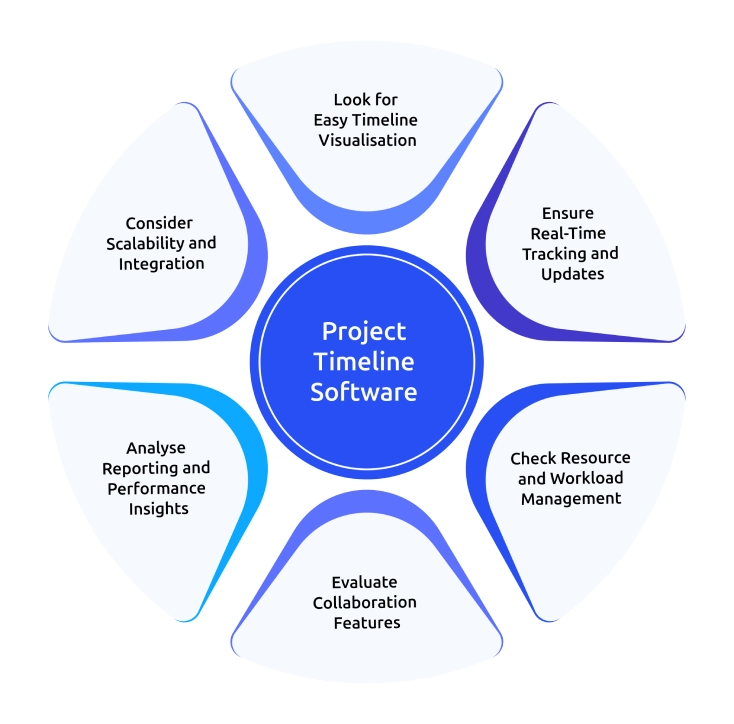
Choosing the right project timeline software is important because the right tool can improve planning accuracy, team coordination, and delivery speed. The wrong tool, however, can create confusion and slow down the process execution.
Here are the most important points to consider before choosing a project timeline software:
Look for Easy Timeline Visualization
Make sure the tasks, deadlines, milestones, and dependencies are clearly visible in a simple timeline view. A clean and easily understandable interface helps teams understand the project flow without needing any technical expertise.
When your team has difficulty understanding the dashboard, this will automatically decrease the adoption and effectiveness.
Ensure Real-Time Tracking and Updates
Select software that will give updates in real-time. This will ensure that everyone can instantly see every change in the task progress, delays or status of completion.
Real-time tracking reduces miscommunication and helps you take quick action when something goes off track.
Check Resource and Workload Management
Good project timeline software should show who is working on what. It should help you balance workloads and avoid overloading specific team members. This improves productivity and prevents burnout.
Evaluate Collaboration Features
The tool must support comments, file sharing, notifications and team conversations. When communication occurs within the timeline system, it ensures that everything is organized within the same place. This reduces dependency on scattered emails or messages.
Analyze Reporting and Performance Insights
Look for project timeline software that provides analytics and reports features. These insights help you understand project performance, identify delays, and improve future planning. Insight-driven decisions lead to better project outcomes.
Consider Scalability and Integration
Ensure that as your business grows, your project management needs will expand. Select software that will support your team size and integrate with other software, such as HR software, communication software, or a productivity platform.
Don’t let the ineffective software slow your projects down!
Switch to smarter timeline management with Time Champ now.
Aligning Project Timelines with Workforce Intelligence Platform
Time Champ is a workforce intelligence platform that goes beyond basic project timeline creation. While many tools focus on creating timelines, it combines timeline management with real-time workforce visibility and performance insights.
With Time Champ, you can:
- Align project timelines with real employee activity data
- Monitor workload distribution across teams
- Track productivity trends alongside project progress
- Identify delays using real-time performance insights
- Improve accountability through transparent reporting
Time Champ gives visibility to what is happening, rather than merely displaying what should happen. This alignment between planning and implementation assists you in enhancing on-time delivery, managing costs and enhancing operational performance. Choosing the right project timeline software is about selecting a system that supports clarity, accountability, and real performance visibility, ensuring your project plans turn into measurable results.
Conclusion
A project timeline is what turns ideas into action. It brings structure to your plans, clarity to your team, and direction to your goals. When tasks, deadlines, and responsibilities are clearly mapped out, then projects move with clear purpose and direction. It helps teams stay aligned, avoid unnecessary delays, and handle changes with confidence. More importantly, it creates accountability and keeps everyone focused on the final outcome.
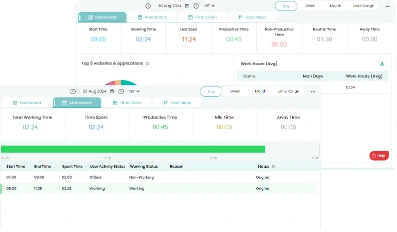
Table of Content
-
 What is a Project Timeline?
-
What Are the Key Components of a Project Timeline?
-
What are the Examples of a project timeline?
-
How to Create and Manage a Project Timeline?
-
What Are the Pros and Cons of Project Timeline?
-
Is the Project Timeline Different from a Gantt Chart? -
How to Choose the Right Project Timeline Software
-
Aligning Project Timelines with Workforce Intelligence Platform
-
Conclusion


 4.7/5 avg.
Ready to Manage Your Workforce Smarter?
Join our family of 1500+ companies using smart insights to redefine workforces!

Free Trial
No Credit Card Required