16 Best Project Management Software for [2026]
Find the 16 best project management software for 2026. Compare features, pricing, pros & cons to streamline workflows and drive smarter decisions.
Managing projects becomes difficult when teams lose visibility into work, timelines slip, and decisions rely on incomplete data. Project management software addresses this problem by centralizing planning, execution, collaboration, and performance tracking in one system.
This guide covers the 16 best project management software for 2026, comparing platforms based on features, pricing, strengths, and limitations. By the end, you will understand which tools align with your workflows, team size, and operational needs, and make informed software decisions with clarity.
What Is Project Management Software?
Project management software helps teams plan, organize, and execute work across projects while maintaining visibility into progress and outcomes. These platforms centralize tasks, timelines, collaboration, and reporting so work stays aligned with priorities.
In practice, project management systems reduce manual coordination, enhance employee accountability, and support consistent delivery as teams and workloads scale.
What Are the 16 Best Project Management Software?
Struggling to pick the right project management software and unsure which features actually matter for daily execution? Many platforms overlap in functionality but deliver value in different ways. This section outlines the 16 best project management software for 2026, helping you clarify where each tool fits across workflows, team sizes, and use cases.
| S.No. | Software | Key Features | Ideal Solution for | Free Trial |
|---|---|---|---|---|
| 1. | Time Champ |
|
Ops-driven teams, hybrid and remote work environments, billable project work, IT managers, small to big enterprises | Yes |
| 2. | Monday.com |
|
Cross-functional teams need visual workflows and flexibility | Yes |
| 3. | Wrike |
|
Complex projects, PMO/enterprise teams requiring governance | Yes |
| 4. | Smartsheet |
|
PMO, enterprise portfolio management, structured planning | Yes |
| 5. | ClickUp |
|
Teams replacing multiple tools, from startups to enterprises | Yes |
| 6. | Zoho Projects |
|
Small–mid teams needing value & built-in time tracking | Yes |
| 7. | Hive |
|
Fast-moving marketing/product teams that need collaboration | Yes |
| 8. | Jira |
|
Software development and DevOps teams | Yes |
| 9. | Asana |
|
Cross-functional teams focused on coordination & clarity | Yes |
| 10. | Celoxis |
|
PMOs and organizations needing portfolio & budget control | Yes |
| 11. | Productive |
|
Agencies and professional services focused on margins | Yes |
| 12. | Trello |
|
Simple workflows, editorial calendars, small teams | Yes |
| 13. | Basecamp |
|
Small teams prioritizing async communication & simplicity | Yes |
| 14. | Microsoft Project |
|
Enterprises, PMOs, engineering, IT, and construction projects | No |
| 15. | Adobe Workfront |
|
Large enterprises and marketing/creative operations | No |
| 16. | ProjectManager |
|
Teams managing structured projects in IT, construction, and engineering | No |
1. Time Champ
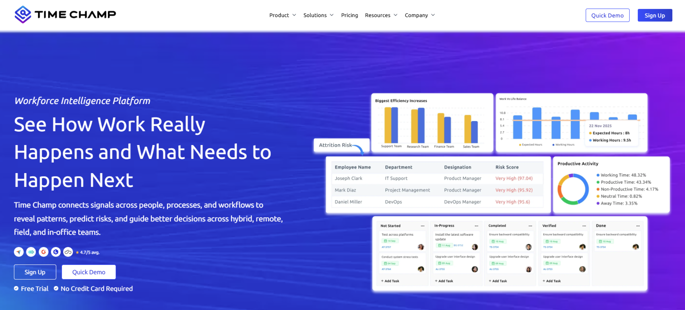
Time Champ is a workforce intelligence-driven project management platform that connects project execution with time, productivity, and capacity data. Instead of limiting visibility to status updates, Time Champ shows managers how teams actually perform across projects. This helps reduce blind spots and improve planning accuracy.
By combining project control with utilization insights and reporting, Time Champ enables teams to make informed decisions based on real performance data. It supports structured workflows while maintaining flexibility, making it suitable for teams that manage multiple projects, shared resources, and time-sensitive deliverables.
Pros
- Strong operational visibility with actionable insights that reduce blind spots across projects
- Improve team accountability through structured workflows and flexible board customization
- Customisable dashboards and reports aligned with business KPIs and performance metrics
- User-friendly interface that supports quick adoption and smooth daily use
- Flexible and scalable platform that adapts to growing teams and evolving workflows
- 24/7 best customer support for quick onboarding and continuous assistance
Cons
- May feel complex for teams with very basic needs
- Requires initial workflow setup
Key Features
- Project and task management with customisable workflows to structure and adapt execution
- Automated time tracking and timesheets that directly connect to project activities
- Real-time visibility into project progress, status, and delivery timelines
- Productivity insights and performance trends to support data-driven decisions
- Resource utilization and capacity insights to optimize team allocation
- Advanced project reports and dashboards for clear performance evaluation
- Client management to organize project communication and deliverables
- Seamless integrations with common collaboration and business tools
Use Cases
- Best for teams handling multiple projects with shared resources
- Ideal for IT services, agencies, and operations-driven teams
- Well-suited for remote and hybrid work environments
- Perfect for time-sensitive and billable project work
- Suitable for managers who need clear visibility into effort and delivery
Pricing
- Free Trial: 7-day free trial with full feature access
- Starter Plan: $3.9 per user per month (billed annually)
- Professional Plan: $6.9 per user per month (billed annually)
- Enterprise Plan: $13.9 per user per month (billed annually)
Reviews
Not sure which project management software fits your team best?
Explore how Time Champ provides clear visibility into project execution, time allocation, and team capacity!
2. Monday.com
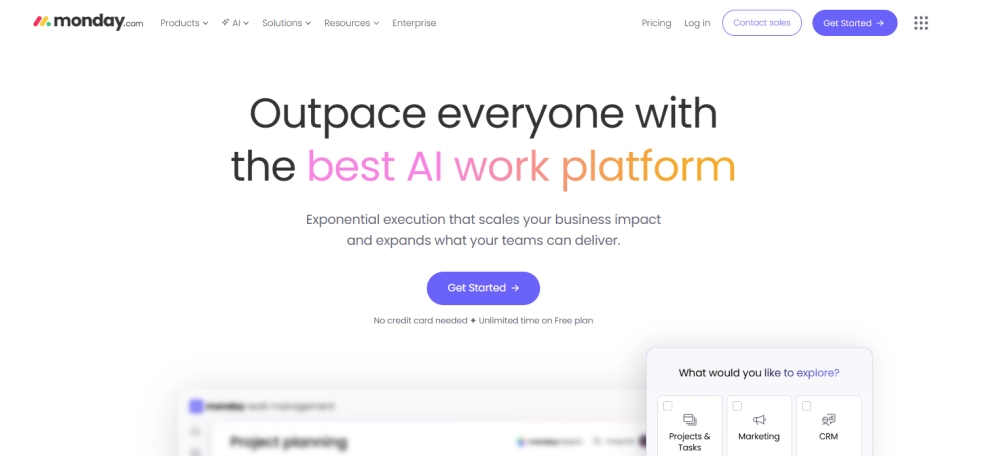
Monday.com is a work management platform built to help teams plan, track, and collaborate on projects through highly customisable boards. It focuses on visual organization and flexibility, allowing teams to shape workflows around their processes rather than following a fixed project structure.
Pros
- Easy-to-use, visual interface
- Highly customisable boards and workflows
- Strong collaboration and team visibility
- Quick onboarding for basic use
- Helpful automations for routine tasks
Cons
- Pricing increases as team size and features grow
- Advanced customization has a learning curve
- Reporting is limited on lower plans
- Boards can feel cluttered without careful setup
Features
- Customisable boards with task status, ownership, and dependencies
- Multiple project views, including timeline and calendar
- Automations to reduce repetitive manual work
- Dashboards for high-level project and team insights
- Collaboration tools with file sharing and integrations
Use Cases
- Best for small to mid-sized businesses and enterprise teams
- Ideal for marketing, sales, product, operations, IT, HR, and PMO teams
- Well-suited for teams managing cross-functional work in one platform
- Suitable for retail, media, construction, and government organizations
Pricing
- Basic Plan: $9 per seat per month (billed annually)
- Standard Plan: $12 per seat per month (billed annually)
- Pro Plan: $19 per seat per month (billed annually)
- Enterprise Plan: Custom pricing (contact sales)
Reviews
3. Wrike
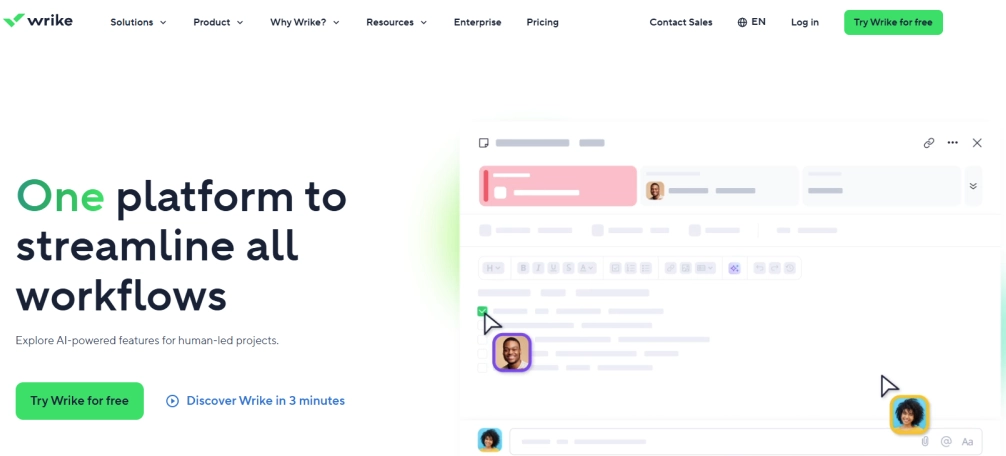
Wrike is a project and work management platform designed for teams that need structured planning, detailed tracking, and strong reporting capabilities. It supports multiple project views and custom workflows, making it suitable for organizations managing complex or cross-functional work. Teams choose Wrike when they need strong control, clear visibility, and scalability, especially for projects with multiple dependencies, stakeholders, and approval layers.
- Handles complex projects well
- Strong task organization and visibility
- Useful dashboards and reporting
- Supports cross-team collaboration
Cons
- Requires a steep learning curve for new users
- Interface can feel complex or cluttered
- Setup and navigation take time
- Advanced features require higher plans
Features
- Project and task management with list, Kanban, and Gantt views
- Custom workflows with automation and approvals
- Dashboards and advanced reporting for project tracking
- Time tracking, resource planning, and workload management
- Collaboration, proofing, and integrations with common work tools
Use Cases
- Best for project, product, and operations teams needing structured work execution
- Ideal for marketing, creative, and cross-functional collaboration workflows
- Well-suited for IT, engineering, and technical delivery teams
- Suitable for industries that require rigorous planning, approvals, and reporting
- Perfect for organizations seeking visibility across teams and work streams
Pricing
- Team Plan: $10 per user per month for small teams (billed monthly)
- Business Plan: $25 per user per month with advanced customization and planning
- Pinnacle Plan: Custom pricing for complex workflows and advanced reporting
- Apex Plan: Custom pricing for enterprise-scale, AI-driven workflows
Reviews
4. Smartsheet
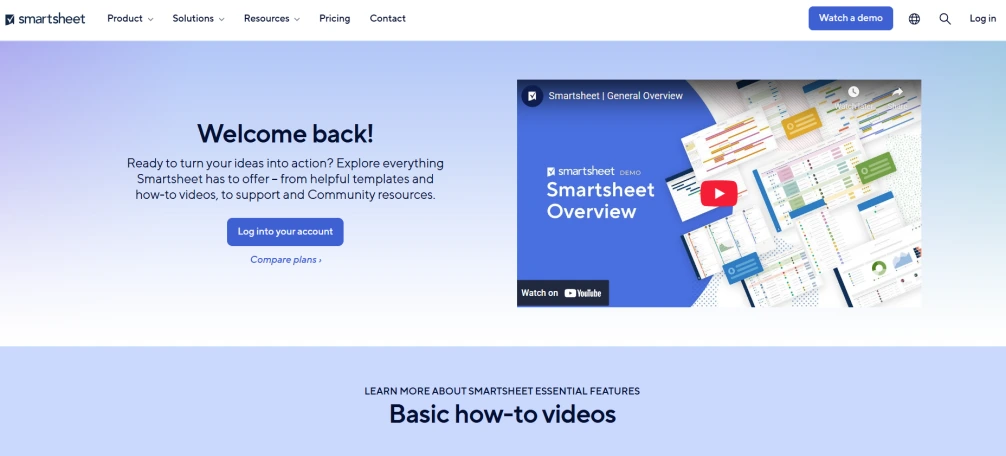
Smartsheet helps teams manage projects using a familiar spreadsheet-style interface combined with planning, tracking, automation, and collaboration tools. It allows teams to organize tasks, manage timelines, and track progress while adding dashboards and workflow automation for better visibility. Teams choose Smartsheet when they want structured project control without losing the simplicity of a grid-based layout.
Pros
- Familiar spreadsheet-style interface
- Strong planning and tracking tools
- Useful automation features
- Custom dashboards and reports
Cons
- Can feel complex for simple use cases
- Learning curve for advanced features
- Pricing is higher for full functionality
- Collaboration feels less intuitive
Features
- Flexible grid (spreadsheet) view with task and project tracking
- Gantt, card (Kanban), and calendar views for different planning styles
- Workflow automation and conditional alerts to reduce manual work
- Dashboards, reports, and scorecards for real-time insights
- Resource management, forms, and integrations with business tools
Use Cases
- Best for project and portfolio management teams (PMO and Enterprise PMO)
- Ideal for IT portfolio management and business operations
- Well-suited for marketing, creative, and service delivery teams
- Suitable for government, construction, financial services, and education sectors
- Perfect for enterprises and growing SMBs managing structured work at scale
Pricing
- Pro Plan: $9 per member per month (billed yearly)
- Business Plan: $19 per member per month (billed yearly)
- Enterprise Plan: Custom pricing
- Advanced Work Management: Custom pricing
Reviews
5. ClickUp
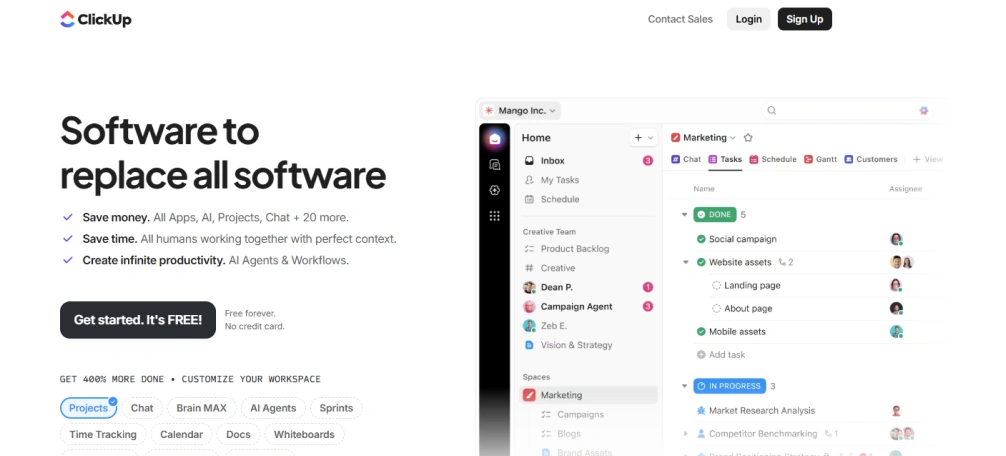
ClickUp is a unified work management platform that combines project planning, task execution, collaboration, time tracking, and reporting in a single system. It aims to replace multiple point tools with a single, configurable workspace, allowing teams to adapt views and workflows to their own working styles rather than conforming to a fixed structure.
Pros
- Easy to use and navigate for many users
- Combines tasks, docs, and collaboration in one platform
- Offers custom workflows and views
- Helpful automations to reduce manual work
- Integrates with many other tools
Cons
- The interface can feel overwhelming with all the options
- Some users report occasional performance issues
- Requires a learning curve for advanced features
- Mobile app experience noted as less intuitive by some users
Features
- Task and project management with multiple views
- Built-in communication and collaboration tools
- Docs, wikis, whiteboards, and forms for knowledge sharing
- Time tracking, scheduling, and automations
- Dashboards and integrations for workflow visibility
Use Cases
- Best for project, product, and operations teams
- Ideal for startups, agencies, and enterprises
- Well-suited for marketing, IT, HR, and sales teams
- Suitable for agile work, campaigns, and client delivery
Pricing
- Unlimited: $7 per user per month (billed yearly)
- Business: $12 per user per month (billed yearly)
- Enterprise: Custom pricing (contact sales)
- Free Forever: Free plan with basic task and project management
Reviews
6. Zoho Projects
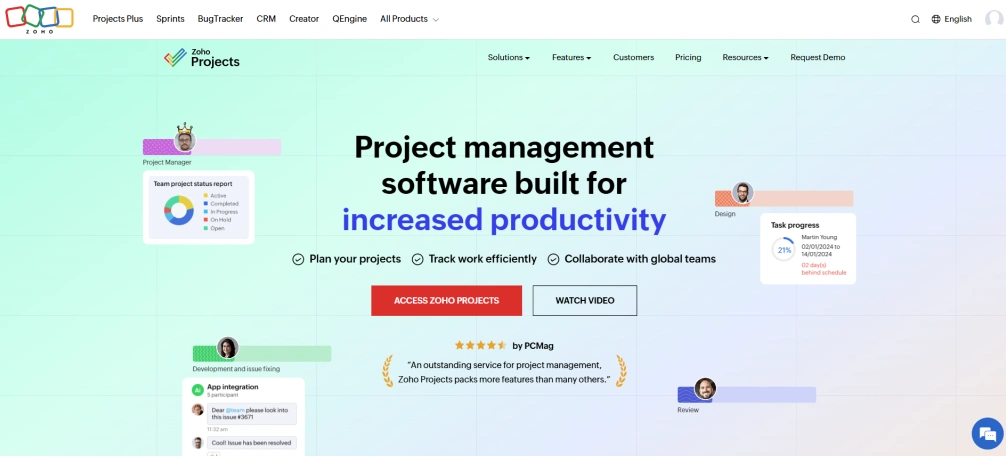
Zoho Projects is a cloud-based project management platform designed to help teams plan, track, and collaborate using structured planning, task control, and reporting. It combines core project management capabilities with document sharing, timesheets, and basic automation, making it suitable for small to mid-sized teams that need project organization without heavy complexity.
Pros
- Easy to set up and use for basic project tracking
- Good for teams with tight budgets
- Built-in time tracking and timesheet support
- Clear task and milestone organization
- Simple collaboration and file sharing
Cons
- Limited reporting and analytics compared to advanced tools
- Some users find the interface less intuitive
- Automation and customization are fundamental
- Fewer integrations available
Features
- Task and milestone planning with dependencies and Gantt charts
- Built-in time tracking, timesheets, and billing support
- Collaboration through feeds, comments, and file sharing
- Workflow automation, alerts, and recurring tasks
- Dashboards, reports, and integrations with other Zoho and third-party tools
Use Cases
- Best for small and mid-sized teams
- Ideal for firms that need project planning with time tracking
- Well-suited for cross-functional and internal projects
- Suitable for teams using the other Zoho apps
Pricing
- Free: $0 for up to 5 users
- Premium: $4 per user/month (billed annually)
- Enterprise: $9 per user/month (billed annually)
- Ultimate: $14 per user/month (billed annually)
- Zoho Projects Plus: Custom Pricing
Reviews
7. Hive
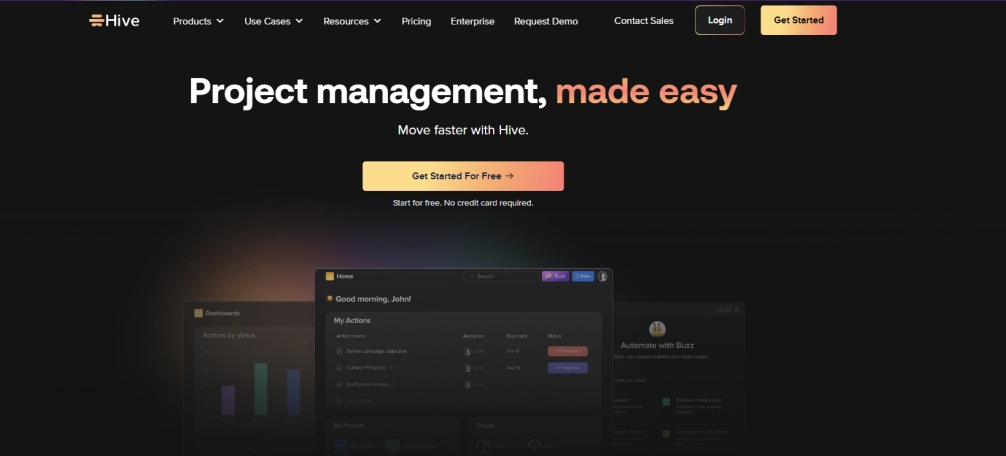
Hive is a collaborative project and work management platform built to support flexible planning, execution, and team alignment. It offers multiple project views, actionable workflows, and built-in collaboration tools designed for teams that need both structure and adaptability. Hive positions itself as a tool that bridges task management with real-time team interaction and visibility.
Pros
- Clean, user-friendly interface
- Multiple project views for flexible planning
- Strong built-in collaboration
- Adapts well to changing workflows
Cons
- Navigation can feel confusing as projects grow
- Limited reporting and analytics for deeper analysis
- Less polished mobile experience than desktop
- Teams may need time to use the workflow structure properly
Features
- Multiple adaptable project views, including Kanban, Gantt, calendar, and table
- Collaboration tools like Hive Notes, proofing, and team chat
- Time management with time tracking, resourcing, and time reporting
- Workflow automation and custom workflows
- Custom dashboards and reporting for project insights
Use Cases
- Best for teams needing project management and collaboration in one place
- Ideal for marketing, product, and operations teams
- Well-suited for fast-moving, cross-functional projects
- Suitable for teams that rely on real-time communication and visibility
Pricing
- Free: $0 for basic project management
- Starter: $1 per user/month (billed annually) for small teams
- Teams: $3 per user/month (billed annually) with advanced capabilities
- Enterprise: Custom pricing for larger organizations
Reviews
Want to reduce blind spots and deliver projects on time with consistency?
Try Time Champ now and gain actionable insights into how work is executed across teams.
8. Jira
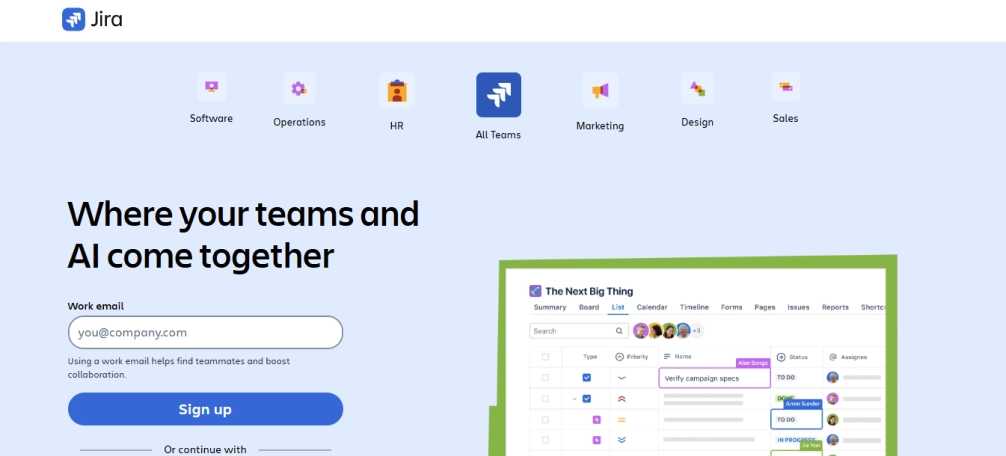
Jira is a work and issue tracking platform built for high-velocity teams, especially in software development. It provides detailed backlog planning, sprint execution, and issue tracking, making it a core tool for agile and DevOps teams. Jira’s strength lies in its ability to scale with development processes, enforce workflow discipline, and provide deep insights into delivery metrics.
Pros
- Strong support for agile workflows (Scrum, Kanban)
- Highly customisable boards and issue types
- Effective integration with dev tools
- Scales well for large technical teams
Cons
- Can be complex and overwhelming for new users
- Setup and configuration take time
- Reporting can feel rigid outside software contexts
- The interface is less intuitive for casual or non-technical users
Features
- Scrum and Kanban boards for agile planning
- Issue and task tracking with custom workflows
- Roadmaps and release planning tools
- Dashboards with real-time reports and metrics
- Integrations with DevOps tools
Use Cases
- Best for software development and engineering teams
- Ideal for agile workflows using Scrum or Kanban
- Well-suited for DevOps, issue tracking, and release planning
- Suitable for organizations needing traceability and control
Pricing
- Free: $0 for up to 10 users
- Standard: ~$7.91 per user/month (billed annually)
- Premium: ~$14.54 per user/month (billed annually)
- Enterprise: Custom pricing
Reviews
9. Asana
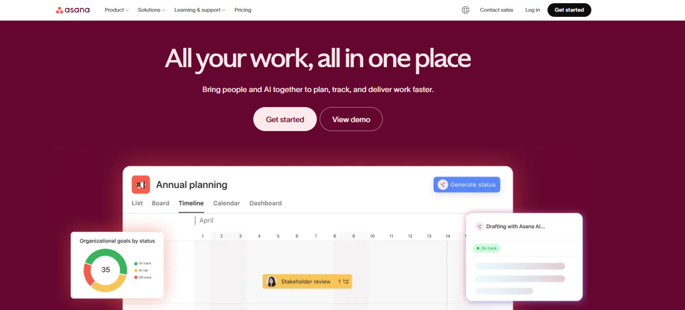
Asana is a work and project management platform that helps teams plan, organize, and track work from start to finish. It focuses on clarity and collaboration across teams, offering multiple ways to visualize work while keeping priorities aligned. Teams choose Asana for its strong cross-functional coordination, simplicity, and flexible workflows. Asana emphasizes task coordination, dependencies, and workflow transparency across business teams.
Pros
- Easy to set up and use, even for non-technical teams
- Clean, intuitive interface that supports quick onboarding
- Strong task coordination and collaboration features
- Reliable for cross-team work and shared visibility
Cons
- Limited advanced reporting compared with enterprise tools
- Some automation and workload features require higher plans
- Less suited for complex project execution needs
Features
- Task and project management with list, board, and timeline views
- Workflow automation to streamline recurring work
- Goals tracking and reporting to track progress against objectives
- Resource and workload management for balanced planning
- Integrations with common work and collaboration tools
Use Cases
- Best for cross-functional team collaboration
- Ideal for marketing and operations workflows
- Well-suited for goal-driven project planning
- Suitable for teams needing clear ownership and visibility
Pricing
- Starter: ~$10.99 per user/month (billed annually)
- Advanced: ~$24.99 per user/month (billed annually)
- Enterprise: Custom pricing
Reviews
10. Celoxis
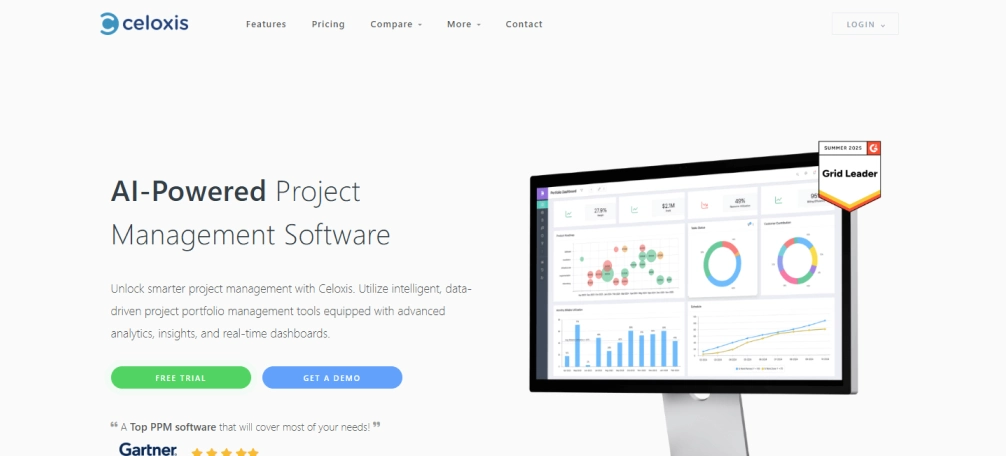
Celoxis is a comprehensive project and portfolio management (PPM) platform that helps organizations plan, execute, and govern strategic initiatives. It helps teams gain portfolio-level visibility, optimize resources, and maintain financial oversight across multiple programs and projects. Celoxis combines scheduling, resourcing, cost tracking, and analytics into a single platform to support both execution and executive reporting.
Pros
- Easy to set up and use, even for non-technical teams
- Clean, intuitive interface that supports quick onboarding
- Strong task coordination and collaboration features
- Reliable for cross-team work and shared visibility
Cons
- Limited advanced reporting compared with enterprise tools
- Some automation and workload features require higher plans
- Can feel basic for complex project execution needs
- Less suited for technical or developer-centric workflows
Features
- Project and task scheduling with Gantt charts and dependency tracking
- Portfolio management with prioritization and what-if analysis
- Resource planning and capacity optimization across teams
- Financial tracking, including budgets, costs, and forecasts
- Custom dashboards and executive reporting with real-time KPIs
Use Cases
- Best for organizations managing multiple projects and portfolios
- Ideal for PMOs and enterprise project management teams
- Well-suited for resource and budget-driven project environments
- Suitable for IT services, operations, and professional services teams
Pricing
- Core: $10 per standard user/month
- Essentials: $25 per standard user/month
- Professional: $35 per standard user/month
- Business: $45 per standard user/month
- Enterprise: Custom pricing
Reviews
H3: 11. Productive
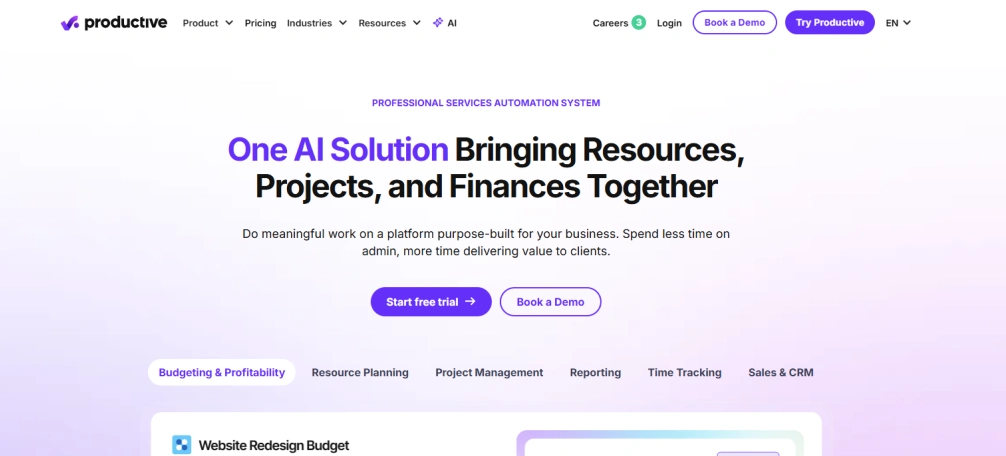
Productive is a project and financial management platform built for agencies and professional services teams that need visibility into both delivery and profitability. It brings projects, time tracking, resource planning, budgets, and invoicing into a single system, making it easier to understand how work translates into revenue and margins. Rather than focusing only on task completion, Productive helps teams evaluate utilization, control costs, and manage client work while directly connecting execution to business outcomes.
Pros
- Strong focus on financial performance and profitability tracking
- Good visibility into resource utilization and billing
- Combines project execution with time and cost tracking
- Clean and organized interface for agency workflows
Cons
- Some users report that a learning curve is required for advanced features
- Reporting options can feel less customisable
- Features are heavily agency-focused, limiting general use
Features
- Project management with Gantt charts and workload views
- Resource planning and time tracking to manage capacity
- Budgeting, profitability, invoicing, and forecasting
- Reports and dashboards with SQL-based and custom reports
- Integrations, automations, and AI tools to streamline workflows
Use Cases
- Best for agencies and consulting teams
- Ideal for IT and software services projects
- Well-suited for finance-driven and billable work
- Suitable for resource-intensive project teams
Pricing
- Essential: $9 per user/month (billed annually)
- Professional: $24 per user/month (billed annually)
- Ultimate: $32 per user/month (billed annually)
Reviews
12. Trello
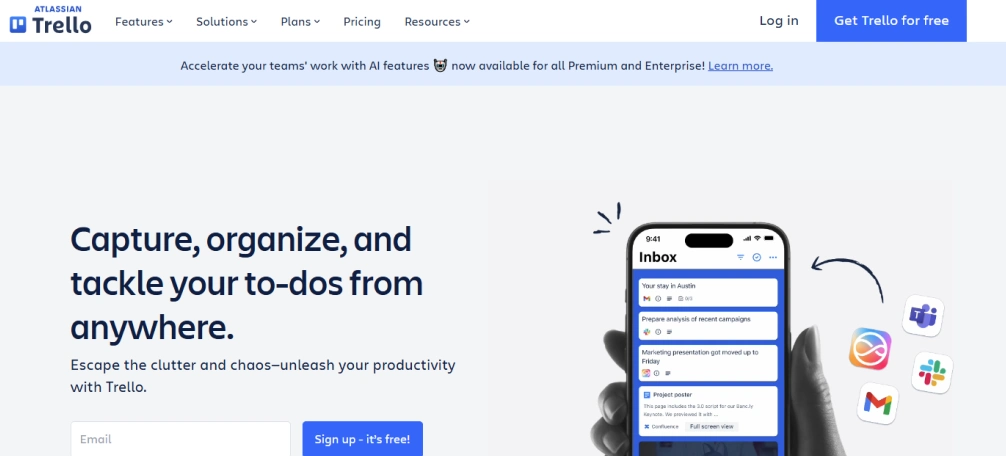
Trello is a visual project management platform, helping teams organize work visually using boards, lists, and cards simply and intuitively. It uses a Kanban-style layout to help teams see tasks and progress at a glance. Teams choose Trello when they prioritize ease of use, quick adoption, and lightweight workflow management over complex project controls.
Pros
- Simple and very easy to use with minimal setup
- Visual board layout makes work status clear at a glance
- Flexible for many basic workflows
- Good for small teams and individual task tracking
Cons
- Lacks advanced project controls and reporting
- Not suited for complex or long-term project management
- Limited built-in resource or workload planning
- Boards and cards can become disorganised without proper structure.
Features
- Kanban boards with cards and lists for visual task tracking
- Butler automation for rule-based tasks and board updates
- Power-ups and integrations to extend board functionality
- Templates to quickly set up common workflows
- Inbox and planner tools to capture and organize work
Use Cases
- Best for simple tasks and workflow tracking
- Ideal for marketing, editorial, and content planning
- Well-suited for personal task organization and small teams
- Suitable for lightweight project coordination
Pricing
- Free: $0 for up to 10 collaborators per workspace
- Standard: $5 per user/month (billed annually)
- Premium: $10 per user/month (billed annually)
- Enterprise: $17.50 per user/month (billed annually)
Reviews
13. Basecamp
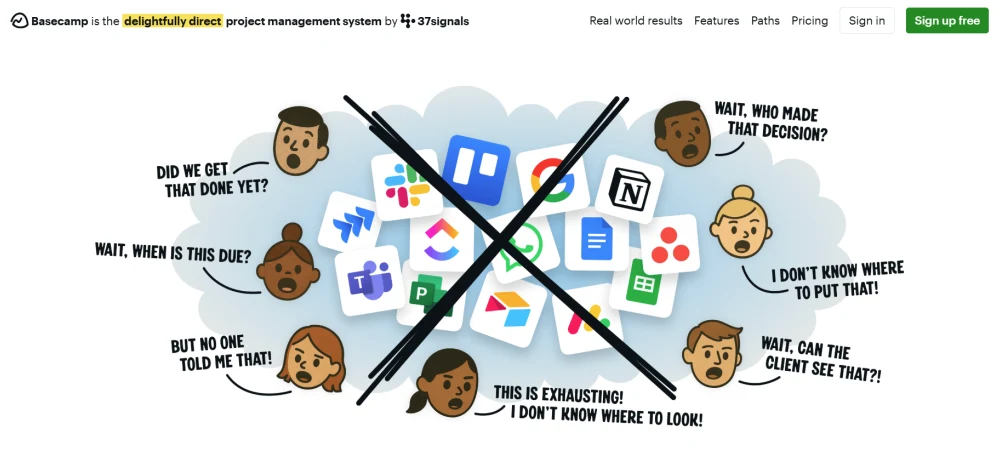
Basecamp is a project and team collaboration tool designed to centralize communication, file sharing, and task coordination in one place. It keeps project organization simple and avoids unnecessary complexity, focusing on clear communication rather than detailed planning. Teams choose Basecamp when they prefer easy collaboration and basic task tracking instead of advanced project controls or reporting.
Pros
- Simple and intuitive interface for team coordination
- Good at reducing email clutter and keeping discussions organized
- Strong for basic task lists and file sharing
Cons
- Lacks advanced project planning and scheduling features
- Very limited resource, time, and workload tracking
- Offers basic reporting and analytics
- Not suited for complex or large-scale project management
Features
- Message boards and group chat for team communication
- To-do lists and simple task assignment
- File storage and document sharing
- Automatic check-ins and schedule tracking
- Hill Charts for high-level project progress
Use Cases
- Best for small teams focused on communication and coordination
- Ideal for simple projects without complex planning needs
- Well-suited for remote teams using asynchronous updates
- Suitable for organizations prioritizing clarity over control
Pricing
- Free: $0 - For one project, up to 20 users with limited storage
- Basecamp Plus: $15 per user/month (billed annually)
- Basecamp Pro Unlimited: $299 per user/month (billed annually)
Reviews
14. Microsoft Project
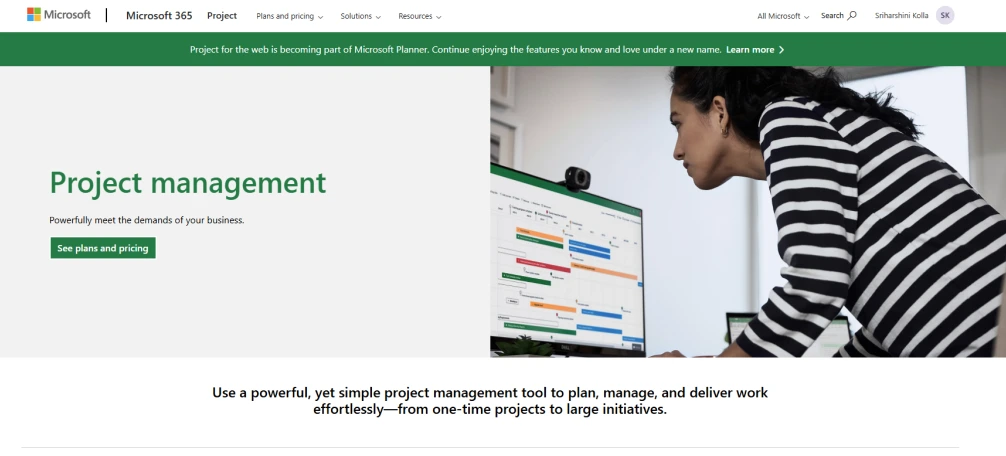
Microsoft Project is a structured project management solution built for detailed planning, scheduling, and resource management. It supports task dependencies, Gantt charts, budgeting, and reporting, making it suitable for organizations that require formal project control and enterprise-level visibility.
Pros
- Easy to use with a clean, visual board layout
- Seamless integration with Microsoft 365 (Teams, Outlook, SharePoint)
- Simple task assignment and progress tracking
- Good for day-to-day team coordination
Cons
- Limited features for complex project management
- No built-in Gantt charts or advanced dependencies
- Basic reporting and analytics
- Lacks advanced resource and time tracking capabilities
Key Features
- Detailed project scheduling with Gantt charts, task dependencies, and milestones
- Resource allocation and capacity planning to balance workloads across teams
- Budget and cost management with forecasting and financial oversight
- Portfolio management with project prioritization and scenario planning
- Advanced reporting and dashboards with integration across Microsoft 365 and Power BI
Use Cases
- Best for enterprise and large organizations
- Ideal for PMOs requiring structured planning and governance
- Well-suited for engineering, IT, and construction projects
- Suitable for teams needing detailed scheduling, budgeting, and resource control
Pricing
- Planner and Project Plan 3: $30 per member/month (billed annually)
- Planner and Project Plan 5: $55 per member/month (billed annually)
Reviews
15. Adobe Workfront
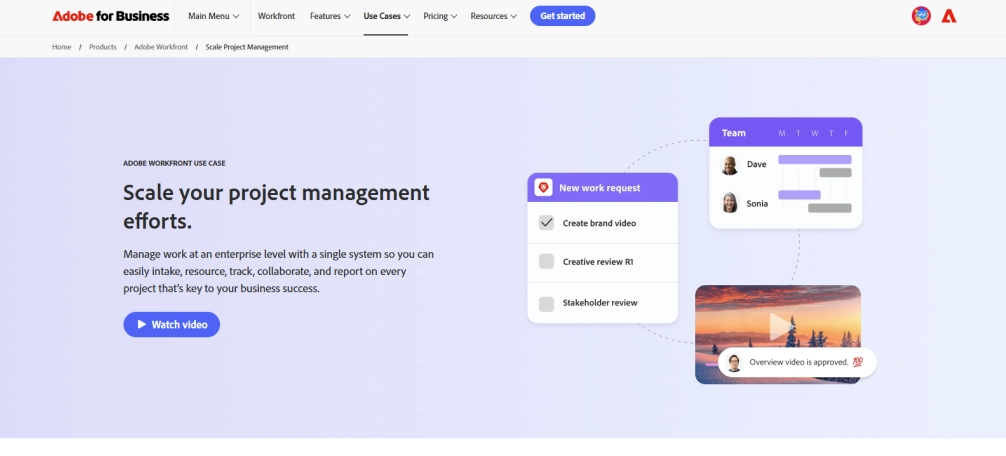
Adobe Workfront is a comprehensive enterprise work management platform built to connect strategy with execution, operational planning, and delivery analytics. It helps organizations manage complex workflows, align teams across departments, and optimize resources, especially where cross-functional collaboration and governance are critical. Workfront integrates deeply with the Adobe ecosystem, making it a common choice for marketing, creative, and digital operations teams that need both execution control and enterprise-level oversight.
Pros
- Strong support for enterprise-level project and work management
- Helpful for resource planning and capacity tracking
- Good at standardizing processes across large teams
- Integrates well with other enterprise systems
Cons
- Can be complex to set up and use for new users
- Some users find the interface less intuitive than modern tools
- Reporting and dashboards can require configuration effort
- May feel high cost and complex for smaller teams
Features
- Enterprise-scale project and portfolio management
- Resource planning and capacity management across teams
- Workflow automation and approvals for business
- Advanced reports and dashboards for cross-team visibility
- Integration with Adobe Creative Cloud and enterprise systems
Use Cases
- Best for scaling project management across departments
- Ideal for cross-functional collaboration
- Well-suited for agencies centralizing client and campaign work
- Suitable for campaign planning and execution
Pricing
Adobe Workfront uses custom, quote-based pricing based on users, modules, and enterprise requirements.
Reviews
16. ProjectManager
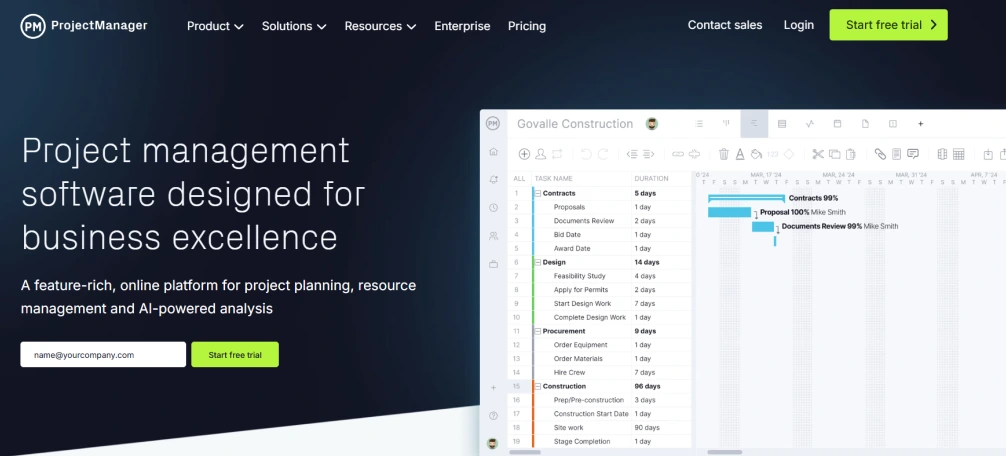
ProjectManager is a cloud-based project management platform that helps teams plan, track, and deliver projects with real-time visibility. It combines task management, Gantt charts, dashboards, resource planning, timesheets, and reporting in one system. The platform supports collaboration and structured scheduling, making it suitable for teams that need control over timelines, workloads, and performance across multiple projects.
Pros
- Easy-to-use interface for planning and tracking projects
- Real-time dashboards and reporting
- Strong Gantt chart and scheduling tools
- Cloud-based access for remote collaboration
Cons
- Learning curve for advanced features
- Occasional performance lag reported
- Limited customization in some areas
- The mobile app is less robust than the desktop version
Features
- Task management with list, Kanban, and Gantt views
- Real-time dashboards and performance reporting
- Resource and workload management
- Time tracking and timesheets
- Collaboration tools and integrations
Use Cases
- Best for teams managing multiple projects with structured timelines
- Ideal for IT, construction, and engineering projects
- Well-suited for teams needing resource and workload visibility
- Suitable for organizations requiring real-time reporting and control
Pricing
- Team: $15/month (billed annually)
- Business: $28/month (billed annually)
- Enterprise: Custom pricing
Reviews
Project Management Software Checklist
How to choose project management software starts with understanding how the tool will support your workflows today while still adapting to future growth. The right platform should not only help manage tasks but also improve visibility, collaboration, and decision-making across teams.
- Cost and Pricing Fit
Evaluate whether the pricing aligns with your team size, usage needs, and long-term budget. Look beyond the base price to understand costs for advanced features, additional users, or integrations, as these directly impact ROI and scalability.
- Tech Stack Compatibility and Integrations
The project management software should integrate smoothly with the tools you already use, such as communication, CRM, accounting, or automation platforms. Strong integrations reduce manual work, improve data flow, and keep teams working within familiar systems.
- Core and Advanced Features
Assess whether the software offers essential features like task tracking, timelines, collaboration, reporting, and automation. Advanced capabilities such as resource planning, workload visibility, and analytics can significantly improve delivery efficiency and planning accuracy.
- Support and Onboarding Experience
Reliable customer support and guided onboarding are critical for adoption. Tools that provide documentation, training resources, and responsive support help teams get value faster and reduce friction during implementation.
- Security and Compliance
Ensure the platform meets your security requirements, including data encryption, access controls, and compliance standards. Strong security protects sensitive project and client data and builds trust across stakeholders.
- Scalability and Future Readiness
Choose a solution that can scale with your organization as projects, users, and complexity increase. Scalable software prevents the need for frequent tool changes and supports long-term operational growth.
Conclusion
Choosing the right project management software plays a crucial role in your team’s success. It gives you clear visibility into how your team plans, executes, and delivers work. By evaluating factors like cost, integrations, core features, support, security, and scalability, you can select a tool that truly supports productivity and long-term growth.
If you’re looking for a platform that goes beyond task tracking and connects projects with time, productivity, and capacity insights, Time Champ is a strong fit. The best step is to start with a free trial or book a demo to see how Time Champ brings operational visibility and workforce intelligence into one system. Explore it and understand how data-driven project management empowers your teams to deliver with precision, move faster, and operate with confidence.
Ready to see how the right project management software fits your workflows?
Try Time Champ to gain actionable insights and clear visibility into projects and team productivity!

Sai Keerthi Uppala

Table of Content
-
 What Is Project Management Software?
-
What Are the 16 Best Project Management Software?
-
Project Management Software Checklist
-
Conclusion
Related Blogs
Track time smarter, not harder! Explore the 10 best time tracking apps to simplify time management and maximize productivity effortlessly!
Sai Keerthi Uppala | 05 December 2023
Find the best HR software solutions for effective human resource management. Automate HR functions, hire employees and manage labor efficiently.
Hima Bindhu Nara | 17 January 2024
Discover the top 10 time management apps to boost productivity, stay organized, and achieve your goals efficiently. Try them today!
Shabana Shaik | 17 September 2024
Discover the top 7 employee attendance management systems for streamlined efficiency. Optimize workforce tracking with these reliable solutions
Mounika Sai | 21 November 2023
Top task management software tools that help organize work, streamline collaboration, improve productivity, enhance clarity, and simplify team workflows.
Thasleem Shaik | 31 June 2025
GPS location tracking apps help monitor employee movement, boost team accountability, and support real-time workforce coordination with ease.
Thasleem Shaik | 24 July 2025


 4.7/5 avg.
Ready to Manage Your Workforce Smarter?
Join our family of 1500+ companies using smart insights to redefine workforces!

Free Trial
No Credit Card Required