Six Sigma in Project Management: DMAIC & How It Works
Learn how Six Sigma in Project Management uses DMAIC, key roles, and methods to reduce errors, improve quality, and deliver better project results.
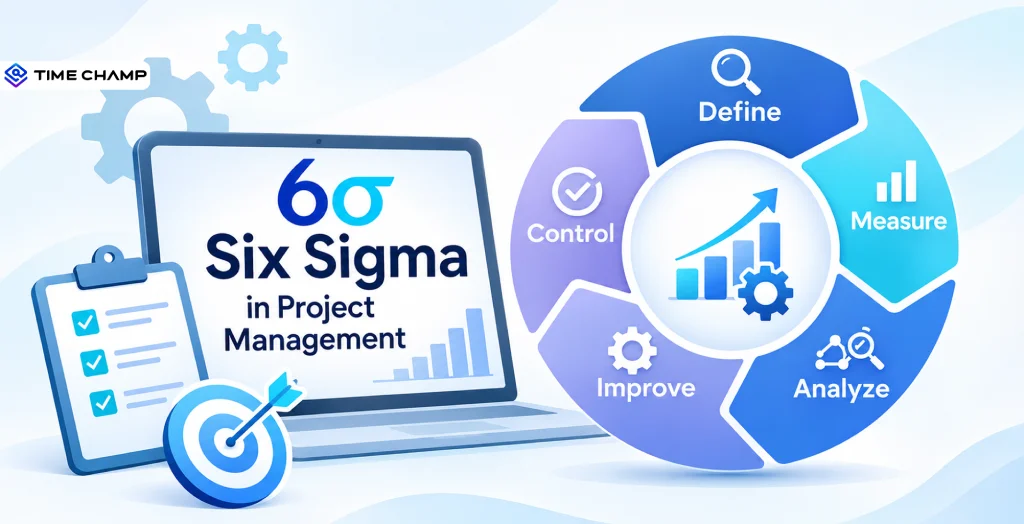
Delays, rework, quality issues, and process inefficiencies can quickly derail a project. Six Sigma in Project Management helps you tackle these challenges using data-driven methods and continuous improvement. It gives project teams a structured way to identify problems, improve processes, and achieve more consistent results.
Let’s explore DMAIC, the roles involved, and how you can apply six sigma to your projects.
What Is Six Sigma In Project Management?
Six Sigma in Project Management is a data-driven approach used to improve project processes, reduce errors, minimize waste, and deliver consistent, high-quality results. It applies structured methods such as DMAIC(Define, Measure, Analyze, Improve, and Control) to identify process problems, find their root causes, and make measurable improvements throughout the project lifecycle.
History of Six Sigma
Six Sigma was developed at Motorola during the 1980s as a way to reduce defects and process variation. Bill Smith and Mikel Harry were among the key figures involved in its development. Motorola formally launched its six sigma quality initiative in 1987.
The methodology gained wider attention after Motorola won the Malcolm Baldrige National Quality Award in 1988. In the early 1990s, companies such as AlliedSignal began adopting six sigma, helping expand its use beyond Motorola.
The methodology gained broader adoption in the 1990s as companies such as General Electric and AlliedSignal applied six sigma beyond manufacturing to improve business performance. GE officially adopted six sigma around 1992, helping expand its use across different business processes.
Over time, six sigma evolved from a manufacturing-focused quality approach into a broader process improvement methodology used across industries. Today, its principles can be applied to areas such as project management, IT, healthcare, finance, and service operations.

Did You Know?
According to PMI's 2018 Pulse of the Profession report, organizations waste an average of 9.9% of every dollar due to poor project performance.
The Five Six Sigma Principles Project Managers Actually Use
Six Sigma gives you a practical framework for improving processes, reducing defects, and delivering consistent results. Its core principles focus on understanding customer needs, using data to identify problems, reducing variation, and making improvements that last.
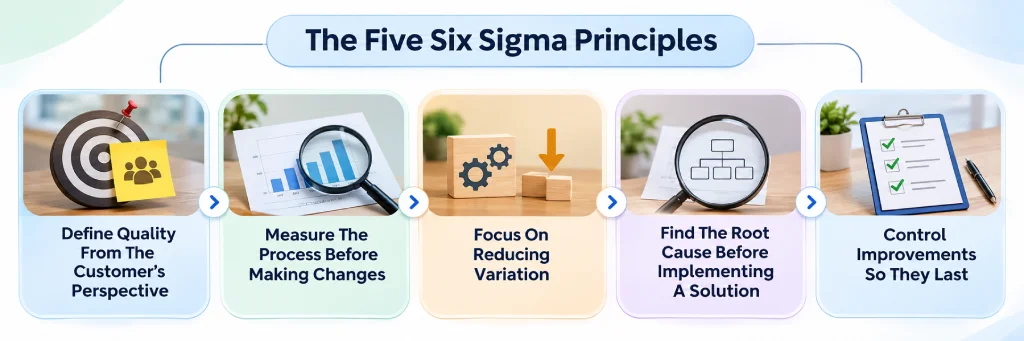
Define Quality From The Customer's Perspective.
Start by understanding what matters most to the customer. Six Sigma calls these Critical to Quality (CTQ) factors. For example, a service desk may focus on resolving an issue during the first interaction rather than simply meeting an SLA. Defining the right CTQs ensures your project improves outcomes that customers actually value.
Measure The Process Before Making Changes.
Establish a clear baseline before introducing improvements. Measuring the current process helps you understand its performance and gives you a reliable way to determine whether your changes are actually working.
Focus On Reducing Variation.
A process can have a good average and still deliver inconsistent results. For example, an invoice process may take two days on average, while some invoices are completed in hours and others take more than a week. Six Sigma focuses on reducing this variation to create more predictable outcomes.
Find The Root Cause Before Implementing A Solution.
Instead of immediately fixing the visible problem, six sigma encourages teams to investigate why it is happening. Structured root-cause analysis helps you address the source of the issue rather than repeatedly treating its symptoms.
Control Improvements So They Last.
Improvement does not end when a new process is implemented. Teams need to monitor performance, establish controls, and maintain the new standard to prevent the process from slipping back to its previous state. This helps ensure that project improvements deliver lasting value.
Struggling to reduce errors and improve project performance?
Use Time Champ to gain workforce visibility, identify inefficiencies, and make data-driven decisions.
How To Use Six Sigma In Project Management: The DMAIC Walkthrough
Six Sigma helps you improve project processes by following a structured, data-driven approach. The DMAIC methodology consists of five phases: Define, Measure, Analyze, Improve, and Control. Each phase helps your team identify problems, understand their causes, implement solutions, and maintain improvements over time.
Practical Example: Reducing Software Defects in an IT Project
To understand how DMAIC works in practice, consider a software development team preparing to launch a new mobile banking application. During testing, the team discovers that 15% of transactions fail during peak usage, leading to customer complaints and repeated development work.
Using DMAIC, the project manager identifies the root causes, improves system performance, and reduces transaction failures before launch.
The Five Phases of DMAIC
| Phase | What the Team Does | Key Tools | Expected Outcome |
|---|---|---|---|
| Define | Identify the problem, customer needs, and project scope. | Project charter, SIPOC, Voice of Customer | A clear problem statement and measurable goal |
| Measure | Collect data to understand current process performance. | Data collection plan, process map, baseline metrics | A validated performance baseline |
| Analyze | Identify and verify the root causes of the problem. | 5 Whys, Fishbone Diagram, Pareto Analysis | Evidence-backed root causes |
| Improve | Design, test, and implement solutions. | Solution selection matrix, pilot testing, before-and-after comparison | A tested improvement with measurable results |
| Control | Standardize the improved process and maintain its performance. | Control plan, SOPs, dashboards, alert thresholds | Sustainable improvements and clear process ownership |
1. Define: Identify the Problem and Set Clear Goals
The Define phase helps you turn a general complaint into a specific problem that your team can address. Instead of saying, "Invoices take too long to process," you need a measurable problem statement.
For Example:
"11% of supplier invoices require at least one rework cycle, adding an average of 3.5 days to processing and delaying month-end close."
Once the problem is clear, the project team creates a project charter that outlines the project goal, customer requirements, scope, and responsibilities.
The team may define the following:
- Problem: 11% of supplier invoices require rework.
- Critical to Quality (CTQ): Invoices should be processed correctly the first time.
- Scope: Supplier invoices only, excluding employee expense claims.
- Goal: Reduce invoice rework and minimize processing delays.
- Key Stakeholders: Project sponsor, finance team, and process owner.
2. Measure: Establish a Baseline
The Measure phase helps the team understand how the process performs today. The invoice team collects data on rework rates, processing time, error locations, and common invoice defects.
The team confirms that 11% of invoices require rework, creating a baseline for comparison. This data helps determine whether future changes actually improve performance.
3. Analyze: Find the Root Cause
The Analyze phase focuses on discovering why problems occur rather than fixing symptoms.
- The team finds that 68% of invoice rework is linked to two causes:
- Non-standard purchase order numbers.
- Approvals assigned to employees on leave.
- Using tools such as Pareto analysis and the 5 Whys, the team discovers that the approval matrix is updated manually and has no clear process owner.
This helps the team address the underlying process issue instead of assuming that employee training alone will solve the problem.
4. Improve: Test Solutions
The Improve phase focuses on developing and testing solutions based on verified root causes.
The team introduces:
- PO Validation: A rule that identifies incorrect purchase order formats.
- Approval Automation: An approval matrix connected to the leave calendar with a fallback approver.
The team pilots these changes with one supplier group for three weeks. Rework decreases from 11% to 3.4% during the pilot, providing a basis for evaluating the improvement.
5. Control: Maintain the Results
The Control phase helps ensure that improvements continue over time.
The team:
- Updates the standard operating procedures (SOPs).
- Uses a dashboard to review rework rates.
- Sets a review trigger if weekly rework exceeds 5%.
- Assigns ownership for maintaining the approval matrix.
- Documents the control plan for ongoing performance reviews.
These steps help prevent the process from returning to its previous state and support long-term improvement.
Want to improve project efficiency?
See how Time Champ helps you identify workflow inefficiencies, improve team productivity, and maintain consistent project performance.
DMAIC Vs DMADV: Which One Your Project Needs
DMAIC is used to improve an existing process that is underperforming, while DMADV (Define, Measure, Analyse, Design, Verify) is used to create a new process or product that must meet quality targets from day one.
Choose DMAIC when a process already exists but has errors, delays, or inefficiencies. Choose DMADV when you are creating a new process or product and need to build quality into its design.
| Criteria | DMAIC | DMADV |
|---|---|---|
| When to use | When an existing process is underperforming | When creating a new process or product |
| Phases | Define, Measure, Analyze, Improve, Control | Define, Measure, Analyze, Design, Verify |
| Baseline | Based on data from the existing process | Based on customer requirements, quality targets, and benchmarks |
| Main goal | Improve an existing process and maintain better results | Design and validate a new process or product |
| Typical outcome | An improved process supported by a control plan | A new process or product that meets defined quality standards |
| Project example | Reducing invoice rework from 11% to 3% | Designing a claims workflow for a new insurance product |
In Simple Terms: Use DMAIC to improve what already exists and DMADV to build something new with quality in mind from the start.
Six Sigma Roles and Belt Levels on a Project Team
Six Sigma uses different belt levels to define responsibilities within a project. Each person has a specific role, from managing the project and analyzing data to supporting process improvements.
A Green Belt usually manages day-to-day improvement activities, while a Black Belt handles complex projects and advanced data analysis. The Champion or Sponsor supports the project by approving resources, removing obstacles, and ensuring the project meets business goals.
| Role | Expertise Level | What They Do |
|---|---|---|
| Champion / Sponsor | Executive | Owns the business goal, approves resources, and removes obstacles. |
| Master Black Belt | Expert | Trains and guides other belts and maintains six sigma standards across projects. |
| Black Belt | Advanced | Leads complex projects, performs data analysis, and supports cross-functional teams. |
| Green Belt | Working practitioner | Manages improvement projects within their department, usually alongside their regular role. |
| Yellow / White Belt | Foundational | Supports projects by sharing process knowledge, providing data, and participating in testing. |
Do You Need Certified Belt Roles?
Not necessarily. Even if your organization does not use formal belt levels, you can still apply six sigma successfully. The key is to assign clear responsibilities:
- Project Owner: Takes responsibility for the project outcome.
- Data and Analysis Lead: Studies the problem and identifies its causes.
- Process Team Members: Share practical knowledge and help test improvements.
The important thing is to involve the people who understand the process and clearly assign responsibility for each part of the project.
Six Sigma in IT And Software Project Management
Six Sigma helps IT and software teams improve repetitive processes, reduce errors, and deliver more consistent results. You can apply it to service desk operations, software testing, release management, deployment, and employee access provisioning.
While Agile focuses on developing and delivering features, six sigma focuses on improving the processes that support development and IT operations.
Practical Applications of Six Sigma in IT
1. Reduce Service Desk Ticket Reopens
You can use six sigma to reduce the number of support tickets that reopen after being marked as resolved. Start by measuring the reopen rate, analyzing ticket categories, and identifying common causes, such as missing knowledge base information or incomplete solutions.
2. Reduce Defects in Software Releases
Six Sigma helps you identify why defects reach production. By comparing testing and production defect data across multiple releases, you can identify process gaps, such as insufficient testing time or missed validation steps, and introduce improvements.
3. Improve User Provisioning
Employee onboarding and access requests often involve multiple approvals and manual handoffs. six sigma helps you map the workflow, identify delays, and reduce unnecessary steps. This can make account setup faster and create a more consistent onboarding experience.
Looking to improve workflows and reduce operational issues?
See how Time Champ helps you identify workflow gaps and improve productivity across IT and software projects.
Six Sigma Vs Lean Vs Lean Six Sigma
Six Sigma, Lean, and Lean Six Sigma help you improve business processes, but each focuses on a different area. Six Sigma reduces errors and process variation, Lean removes waste and delays, and Lean Six Sigma combines both approaches.
| Criteria | Six Sigma | Lean | Lean Six Sigma |
|---|---|---|---|
| Main focus | Reducing defects and variation | Removing waste and improving workflow | Improving quality and efficiency |
| Core question | Why is the process inconsistent? | Why is the process slow? | Why is the process slow and inconsistent? |
| Key tools | DMAIC, statistical analysis, control charts | Value stream mapping, 5S, Kaizen | DMAIC combined with Lean tools |
| Best suited for | Errors, rework, and inconsistent results | Delays, waiting, and unnecessary steps | Processes that are both slow and error-prone |
| Primary outcome | More consistent quality | Faster and more efficient processes | Better quality with less waste and delay |
How to Choose the Right Approach
- Choose six sigma when your process produces frequent errors, rework, or inconsistent results.
- Choose Lean when your process contains unnecessary steps, long waiting times, or workflow delays.
- Choose Lean Six Sigma when you need to reduce defects while also improving process speed and efficiency.
How Time Champ Supports Six Sigma in Project Management
Applying Six Sigma requires accurate data, clear process visibility, and continuous improvement. Time Champ helps you understand how your teams spend their working hours, identify process inefficiencies, and use workforce data to support better project decisions.
While six sigma provides the methodology for identifying root causes and improving processes, Time Champ gives you visibility into work patterns, project progress, and operational performance.
Key Features of Time Champ:
- Automatic Time Tracking: Measure time spent on tasks and projects to establish performance baselines.
- Reports and Analytics: Identify inefficiencies and support data-driven decisions.
- Project Management: Organize activities and improve project visibility.
- Productivity Analytics: Understand work patterns and productivity trends.
- Weekly Timesheets: Compare planned and actual work hours to identify delays.
- Mobile App: Manage work activities and support visibility across remote teams.
How Time Champ Supports the DMAIC Process
| DMAIC Phase | How Time Champ Can Help |
|---|---|
| Define | Identify project inefficiencies and establish clear improvement goals. |
| Measure | Use time records, timesheets, and reports to understand current performance. |
| Analyze | Review work patterns and identify areas that require deeper investigation. |
| Improve | Compare performance data before and after process changes. |
| Control | Use recurring reports and dashboards to review performance and maintain visibility. |
Ready to improve your project performance?
Start using Time Champ today and see how it helps you identify inefficiencies and improve team productivity.
Conclusion
Six Sigma in Project Management helps you move beyond quick fixes and focus on the root causes of project problems. Applying the DMAIC methodology, reducing process variation, and using data-driven insights can improve quality, minimize delays, and deliver consistent results.
Whether you manage software projects, IT operations, or business workflows, Time Champ provides workforce visibility, time tracking, and productivity insights to help you understand how work gets done.

Guna Lakshmi

Table of Content
 What Is Six Sigma In Project Management?
- History of Six Sigma
- The Five Six Sigma Principles Project Managers Actually Use
- How To Use Six Sigma In Project Management: The DMAIC Walkthrough
- DMAIC Vs DMADV: Which One Your Project Needs
- Six Sigma Roles and Belt Levels on a Project Team
- Six Sigma in IT And Software Project Management
- Six Sigma Vs Lean Vs Lean Six Sigma
- How Time Champ Supports Six Sigma in Project Management
- Conclusion
Related Blogs

Learn to create and leverage SMART goals effectively in project management for better planning, execution, and success. Get expert insights now!
Tarun Kumar Reddy | Dec 06, 2023
Learn what a project management framework is, its components, importance, popular methodologies, benefits, and challenges for organizations.
Guna Lakshmi | Apr 08, 2026
Download free agile project management templates in Excel, Word, and PDF formats to plan, track, and manage agile projects with clarity and control.
Thasleem Shaik | Feb 19, 2026
Learn how to integrate productivity tracking with project management without broken workflows or manual exports. A practical step-by-step guide.
Guna Lakshmi | May 06, 2026
Discover the 10 best enterprise project management software for 2026. Compare features, pricing, pros and cons to scale the operations and align strategy.
Anjali | Apr 02, 2026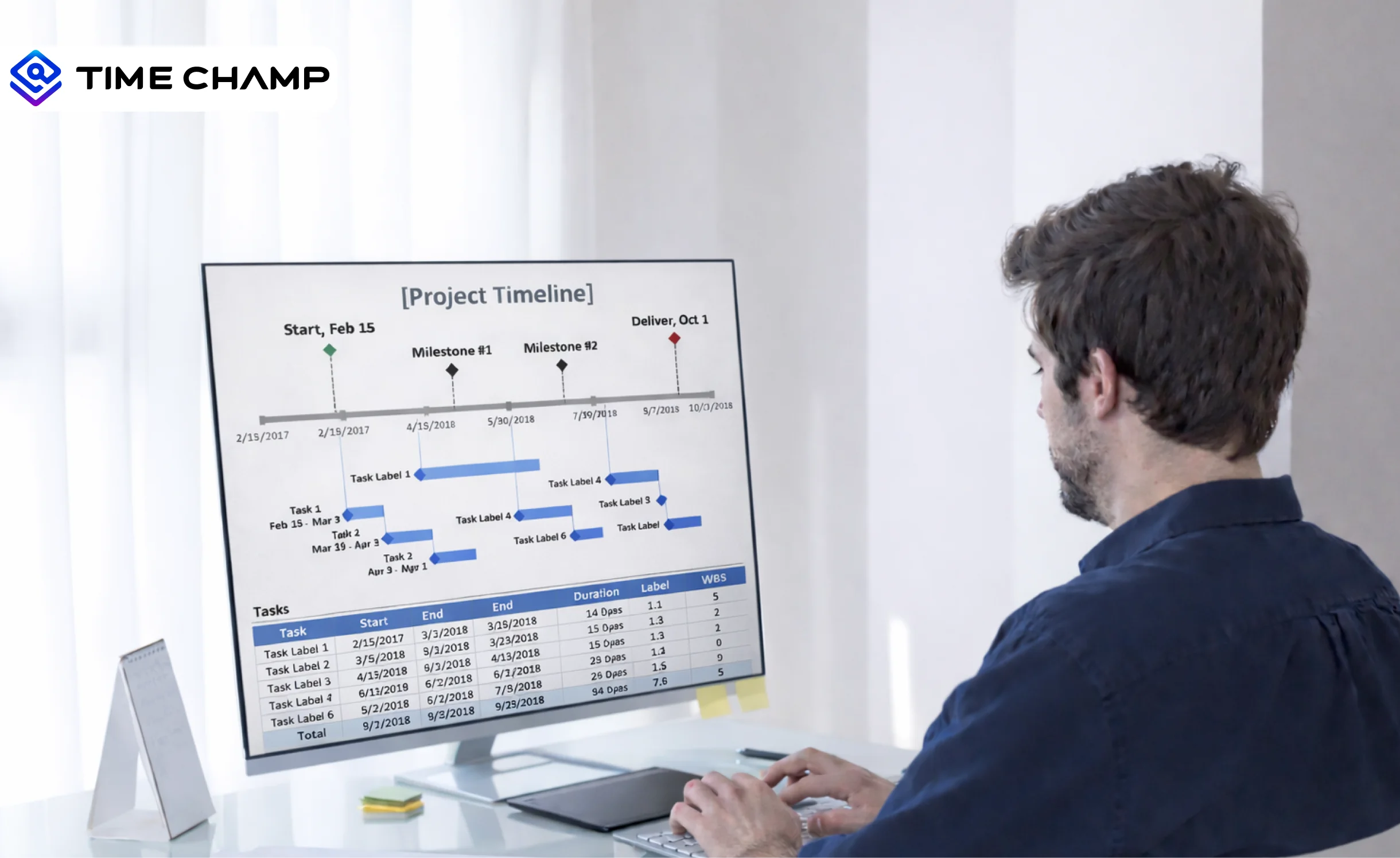
Understand project timelines, key components, examples, benefits, and step-by-step methods to create, manage, and optimize schedules.
Thasleem Shaik | Feb 18, 2026


 4.7/5 avg.
Ready to Manage Your Workforce Smarter?
Join our family of 1500+ companies using smart insights to redefine workforces!

Free Trial
No Credit Card Required