How to Track Time on Multiple Projects Effectively
Learn how to track time on multiple projects without losing billable hours or missing deadlines. Discover common challenges, workflows, and tool features.

Managing a single project may feel simple, but handling multiple projects at the same time can quickly become overwhelming. Without a clear tracking system, you can easily lose visibility into work hours, overload your team, and miss important project updates and deadlines.
That’s why multi-project time tracking is important. It helps you improve visibility across projects, manage workloads more effectively, avoid losing billable hours, and make better decisions.
Here, you’ll understand the biggest challenges in multi-project tracking, the most important features to look for in a time tracking tool, and the common mistakes that lead to missed hours, reporting issues, and workload imbalance.
Why Multi-Project Time Tracking Is Different from Single-Project Tracking
When your team works on multiple projects at the same time, it gets really tough to keep track of time. Employees switch between tasks, workloads become less visible, and reporting accuracy starts to decline without a structured tracking process.
| Single-Project Tracking | Multi-Project Tracking |
|---|---|
| Every hour belongs to one project | Hours are split across multiple projects |
| Reporting is simple and centralized | Reporting requires project-wise breakdowns |
| Team capacity is easier to measure | Workloads become difficult to balance |
| Budget tracking is straightforward | Budgets must be monitored across projects |
| Fewer context switches during work | Employees constantly switch tasks and clients |
| Billable work is easier to classify | Billable and non-billable work often overlap |
| Accurate tracking improves future project estimates | Poor tracking affects future project estimates |

Did You Know?
According to the American Psychological Association (APA), multitasking and constant task switching can reduce productivity by up to 40%.
5 Challenges of Tracking Time on Multiple Projects
Tracking time across multiple projects may seem manageable at first, but small gaps and inconsistencies can quickly create bigger operational problems. Here are the most common challenges you may face while managing time across several projects.
Challenge 1: Frequent Task Switching Causes Missing Hours
One of the biggest challenges in multi-project work is losing time during project switching. Employees constantly move between meetings, messages, tasks, and tools throughout the day. Over time, these missing minutes turn into lost billable hours and inaccurate productivity reports.
- Time gets lost during task switching
- Short meetings and Slack discussions go untracked
- Small gaps reduce billable hours
- Productivity reports become inaccurate
Challenge 2: Tracking Billable and Non-Billable Hours Becomes Confusing
It becomes difficult to separate billable and non-billable work when employees handle several projects at once. Without clear rules, teams may classify work differently, which affects billing and profitability.
- Client work may be marked incorrectly
- Internal meetings create confusion
- Inconsistent tracking affects invoices
- Profitability reports become unreliable
Challenge 3: Employee Workloads Become Difficult to Track
Managing workloads across multiple projects makes it harder to see who is overloaded and who has available time. This often leads to burnout for some employees while others remain underutilized.
- Workloads become uneven
- You’ll struggle to allocate tasks properly
- Burnout risks increase
- Team utilization becomes unclear
Challenge 4: Reporting Across Projects Takes Hours of Manual Work
When project data is spread across spreadsheets and different tools, reporting becomes slow and difficult. You need to spend extra time collecting and organizing information instead of making decisions.
- Reports require manual updates
- Data from multiple tools becomes difficult to combine
- Reporting delays decision-making
- Project visibility decreases
Challenge 5: Poor Time Tracking Leads to Inaccurate Project Estimates
Without accurate historical tracking data, you’ll struggle to estimate future projects correctly. Poor estimates often lead to missed deadlines, overloaded teams, and lower profit margins.
- Future timelines become unrealistic
- Budgets are often underestimated
- Teams get overcommitted
- Forecasting accuracy decreases
Is managing multiple projects becoming harder to control?
Track projects, workloads, and team progress more efficiently with Time Champ.
6-Step Workflow to Track Time Across Multiple Projects
A structured workflow helps teams maintain consistent tracking habits and improve reporting accuracy.
Here’s a practical workflow you can use.

Step 1: Set Up Your Project Structure
Before you start tracking time, you need to make sure your projects are organized properly. This means every project should have a clear name, the right team members, estimated hours or budgets, and separate tasks for different phases of work.
A clean project structure makes reporting much easier later. Instead of using vague names like “Website Work,” use something more specific, like:
- ABC Company - Website Redesign - Planning
- ABC Company - Website Redesign - Development
- ABC Company - Website Redesign - Testing
This helps your team quickly identify projects, track work accurately, and avoid confusion when managing multiple projects at once.
Step 2: Define Billable vs Non-Billable Categories
Your team needs to clearly understand what counts as billable work and what does not. Without clear rules, employees may track similar tasks differently, which creates inaccurate reports and billing issues.
For instance, activities like client meetings, project development, design revisions, and consulting work are usually billable. On the other hand, tasks like internal meetings, training sessions, or admin work are often non-billable. Writing these rules down helps everyone follow the process and keeps reports consistent across all projects.
Step 3: Roll Out Project-Level Tagging
Every time entry should be connected to the correct project and task. This is very important when employees move between projects throughout the day. The best way to improve accuracy is to encourage real-time tracking. Instead of filling out timesheets at the end of the week, team members should log time while they work.
Step 4: Build a Multi-Project Dashboard
Once multiple projects are running at the same time, visibility becomes extremely important. You need one place where they can quickly check project progress, workloads, budgets, and team activity.
An effective multi-project dashboard should help you monitor:
- Logged hours
- Budget usage
- Team capacity
- Project progress
- Billable and non-billable time
When everything is visible in one place, it becomes much easier to spot overloaded employees, delayed projects, or budget risks before they turn into bigger problems.
Step 5: Run Weekly Reviews
Weekly reviews help you spot issues early before they affect deadlines or budgets. Check for overloaded employees, missing time entries, budget risks, and inactive projects. These reviews help you keep projects organized and make quicker decisions throughout the week.
Step 6: Use Project Tracking Data for Better Future Planning
The biggest benefit of time tracking is that it helps you plan future projects more accurately. After tracking projects for a few months, you’ll start noticing patterns in workloads, timelines, and project costs.
You can compare estimated hours with actual work, check whether deadlines were realistic, and understand how your team’s workload changes over time. This helps you create better project estimates, plan resources more effectively, and make smarter hiring decisions.
Managing multiple projects but lacking clear visibility into progress? Track work hours, monitor workloads, and manage projects more efficiently with Time Champ.
Track work hours, monitor workloads, and manage projects more efficiently with Time Champ.
5 Common Mistakes to Avoid While Tracking Time in Multiple Projects
Even with a good tracking system, small mistakes can reduce accuracy and create reporting problems. When you avoid these mistakes, you can manage multiple projects more easily and keep your data reliable.
Logging Time at the End of the Week
Logging time at the end of the week usually leads to mistakes. Your employees may forget tasks, short meetings, and time spent switching between projects. Instead, encourage your team to track time as they work. This improves tracking accuracy and reduces missing hours.
Tracking Projects but Not Tasks
Tracking only the project name gives you limited visibility into where time is actually going. Without task-level tracking, it becomes harder to identify delays, estimate future work, or understand which activities consume most of the time. Adding task-level details gives you insights and improves planning.
Using Multiple Tools for Different Projects
Using different tools for different projects creates confusion and makes reporting difficult. You may lose visibility into workloads, team capacity, and project progress. Using one centralized system helps you manage all projects from a single place and keeps reporting more consistent.
Reviewing Data Only When Something Breaks
Many teams review reports only after deadlines are missed or budgets go over the limit. At that stage, resolving the issue becomes much more difficult. Regular reviews help you identify issues early, balance workloads faster, and keep projects moving smoothly.
Ignoring Non-Billable Patterns
Non-billable work can quietly take up a lot of your team's time. Too many meetings, admin tasks, or unnecessary revisions can reduce productivity without you noticing. Tracking non-billable time helps you identify workflow problems, reduce wasted hours, and improve efficiency.
How Time Champ Helps You Track Time on Multiple Projects
Managing multiple projects becomes easier when all your tracking, reporting, and workload data are available in one place. Time Champ is an employee monitoring and time tracking software that helps you improve productivity and track project time more efficiently. Time Champ also helps you monitor your team’s work hours and project progress without relying on spreadsheets or disconnected tools.
- Project & Task Tracking:Track time spent on every project and task automatically without manual entries
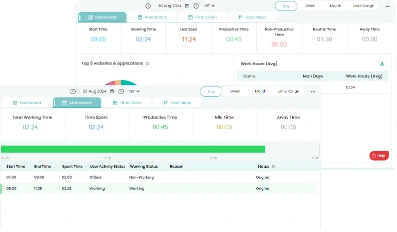
- Multi-Project Dashboard:View project progress, workloads, and team activity from one centralized dashboard
- Attendance Management:Monitor employee attendance, work hours, and shift activity in real time to maintain better workforce visibility
- Real-Time Activity Monitoring:Get better visibility into ongoing work and project progress
- Automated Timesheets:Reduce manual tracking work with automatically generated timesheets
- App & Website Usage Tracking:Understand how your team spends time during work hours
- Productivity Insights:Identify delays, idle time, and workflow gaps to improve efficiency
- PM Tool Integrations:Keep your workflows connected with your existing project management tools
Need a better way to track workloads across multiple ongoing projects? Get real-time visibility into project activity, work hours, and productivity with Time Champ.
Get real-time visibility into project activity, work hours, and productivity with Time Champ.
Conclusion
Multi-project time tracking helps you improve visibility, balance workloads, and make better project decisions. When your team follows a consistent tracking process, it becomes easier to avoid missed hours, reduce reporting issues, and manage projects more efficiently.

Guna Lakshmi

Table of Content
 Why Multi-Project Time Tracking Is Different from Single-Project Tracking
- 5 Challenges of Tracking Time on Multiple Projects
- 6-Step Workflow to Track Time Across Multiple Projects
- 5 Common Mistakes to Avoid While Tracking Time in Multiple Projects
- How Time Champ Helps You Track Time on Multiple Projects
- Conclusion
Related Blogs

Learn how to integrate productivity tracking with project management without broken workflows or manual exports. A practical step-by-step guide.
Guna Lakshmi | May 06, 2026
Explore the essentials of project time management, its importance, best processes and top tips to meet deadlines without fail and boost workforce productivity.
Shabana Shaik | Oct 10, 2024
Learn what is project planning: key components, examples, templates, strategies, benefits, challenges & tools to ensure project success and efficiency.
Guna Lakshmi | Apr 08, 2026
Explore key features of project management and software for efficient task management and enhanced team collaboration.
Jahnavi Pulluri | May 21, 2024![16 Best Project Management Software for [2026]](https://www.timechamp.io/images/blog-images/best-project-management-software-67e78b92.webp)
Find the 16 best project management software for 2026. Compare features, pricing, pros & cons to streamline workflows and drive smarter decisions.
Sai Keerthi Uppala | Apr 02, 2026
Project timeline guide: definition, key components, examples, templates, pros & cons, management tips, and software for efficient project tracking and planning.
Guna Lakshmi | Apr 02, 2026


 4.7/5 avg.
Ready to Manage Your Workforce Smarter?
Join our family of 1500+ companies using smart insights to redefine workforces!

Free Trial
No Credit Card Required