Waterfall Methodology: A Complete Project Management Guide
Get a practical view of Waterfall Methodology, its project phases, advantages, limitations, Agile differences, and ways to maintain project visibility.
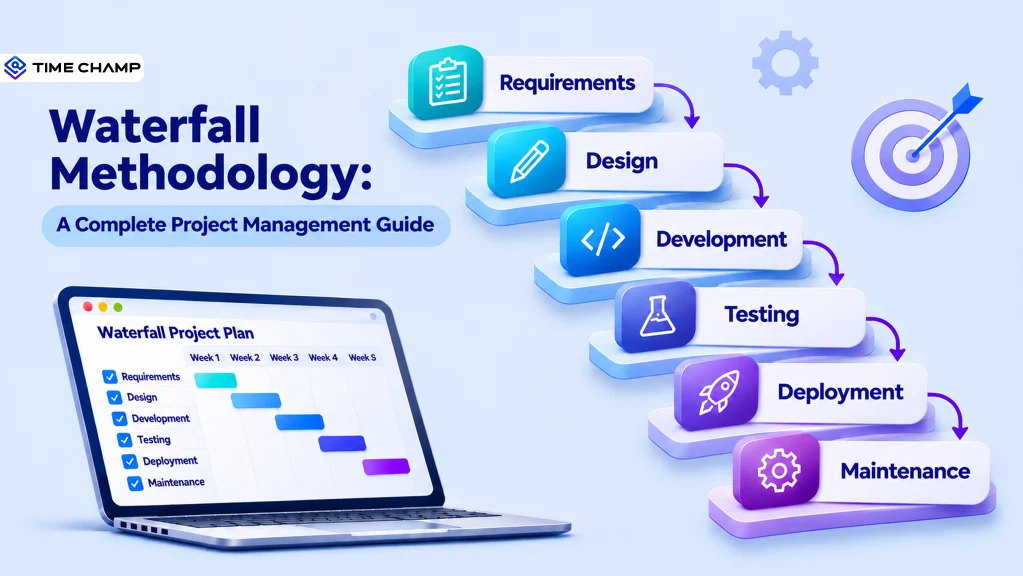
Managing a project with changing priorities, unclear requirements, and missed deadlines can make progress difficult to control. You need clear milestones and defined responsibilities to keep every stage moving as planned. Waterfall methodology provides a structured approach by moving projects through clearly defined stages in sequence. Each phase has specific requirements, deliverables, and approvals before the team moves to the next stage.
This guide covers the key phases of the waterfall approach and how they work in practice. You’ll also look at its advantages, limitations, Agile comparison, and ways to maintain project visibility.
What is the waterfall methodology?
Waterfall methodology is a structured project management approach that organizes work into clearly defined stages, with each stage having specific goals, deliverables, and review points. It emphasizes detailed planning, documented requirements, and controlled progress, making it suitable for projects with stable requirements and predictable workflows.

Did You Know?
A GAO report found that federal IT investments frequently experienced delays or cost overruns, with weaknesses in project planning and requirements definition identified as management challenges.
Where Did the Waterfall Model Come From?
The waterfall model emerged from early software development practices that favored detailed planning and sequential execution. The approach became widely associated with software engineering after Winston W. Royce discussed a sequential development model in his 1970 paper, Managing the Development of Large Software Systems.
The Phases of the Waterfall Project Management Methodology
Waterfall project management follows a structured sequence, with each phase building on the work completed before it. The main phases help teams define expectations, create the solution, verify its quality, and support it after delivery.
| Phase | Description |
|---|---|
| 1. Requirements | The team identifies the project’s goals, scope, business needs, and expected outcomes. These requirements create a clear foundation for planning the remaining work. |
| 2. Design | Teams turn the approved requirements into a detailed project or solution design. This stage defines how the planned solution will work and what resources it will need. |
| 3. Development | The team builds the solution according to the approved requirements and design. Work follows the established specifications to keep development aligned with the original project plan. |
| 4. Testing | The completed work is reviewed to identify defects, errors, or gaps against the defined requirements. Teams address issues before the project moves toward final delivery. |
| 5. Deployment | The finished solution is prepared and released for its intended users or operating environment. This phase marks the transition from development to actual use. |
| 6. Maintenance | Teams provide ongoing support after deployment to address issues and keep the solution functioning as expected. Updates or necessary improvements can also be introduced during this stage. |
How Does Waterfall Methodology Work in Practice?
Waterfall methodology works through a defined sequence where each stage produces the foundation for the next one. The process begins with detailed planning and moves through development, testing, deployment, and ongoing maintenance.
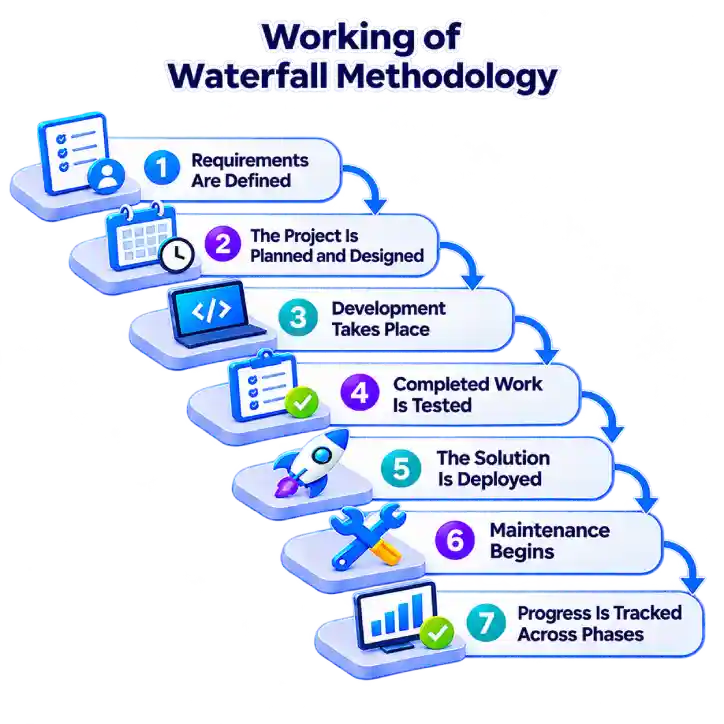
1. Requirements Are Defined
The process begins by identifying the project goals, business needs, scope, constraints, and expected deliverables. These requirements are documented and finalized before the project moves into the next stage.
2. The Project Is Planned and Designed
The approved requirements are converted into a detailed project plan and solution design. This stage establishes timelines, milestones, resources, dependencies, responsibilities, and technical specifications.
3. Development Takes Place
The product, system, or deliverable is developed according to the approved requirements and design. The development work follows the established specifications rather than changing direction throughout the stage.
4. Completed Work Is Tested
The developed solution is evaluated against the documented requirements. Testing identifies defects, errors, or gaps that need to be resolved before the solution can proceed to deployment.
5. The Solution Is Deployed
Once testing is completed and the solution receives approval, it is prepared for its intended users or operating environment. Deployment marks the transition from project development to actual use.
6. Maintenance Begins
After deployment, the solution enters a maintenance stage where issues are addressed, and necessary updates are provided. This helps keep the final deliverable functional and reliable over time.
7. Progress Is Tracked Across Phases
Project progress is monitored through milestones, timelines, dependencies, resources, and completed deliverables. This provides visibility into whether each phase is progressing according to the original project plan.
Did You Know?
PMI’s Pulse of the Profession reports that about one-third of complex projects fail, compared with a 13% failure rate for projects overall.
Key Advantages and Disadvantages of Waterfall Methodology
Waterfall methodology offers a structured way that helps you manage projects with clear requirements and defined deliverables. However, its sequential nature can make it less flexible when project needs change during execution.
| Advantages | Disadvantages |
|---|---|
| Clear Project Structure: Each phase has defined goals, activities, and deliverables, making the overall workflow easier to organize. | Limited Flexibility: Changes become harder to accommodate once a phase has been completed and the project moves forward. |
| Well-defined Requirements: Detailed requirements are established early, giving teams a clear direction throughout the project. | Late Feedback: Stakeholders may not see the completed solution until later stages, which can delay valuable feedback. |
| Predictable Planning: Defined phases and milestones make it easier to establish project timelines, budgets, and resource requirements. | Higher Change Costs: Significant changes may require teams to revisit completed work, increasing time and project costs. |
| Strong Documentation: Each stage produces documented requirements, decisions, and deliverables that create a clear project record. | Testing Happens Later: Testing typically follows development, so some issues may remain unnoticed until later in the project. |
| Clear Responsibilities: The sequential structure helps teams define ownership for specific activities and deliverables across project phases. | Risk of Late-stage Issues: Problems with requirements or design may become visible only after substantial work has been completed. |
| Easy Progress Tracking: Defined milestones make it easier to measure progress against the original project plan and identify delays. | Less Suitable for Evolving Projects: Projects with uncertain requirements or frequent changes may find the sequential approach restrictive. |
Struggling to spot project delays before they affect delivery?
Time Champ tracks project time and tasks to keep progress visible.
Waterfall Vs Agile Methodology (Comparison Table)
Waterfall and agile methodologies organize project work in fundamentally different ways. Waterfall follows a planned sequence with defined phases, while Agile breaks work into shorter cycles and uses regular feedback to adjust priorities.
| Factor | Waterfall Methodology | Agile Methodology |
|---|---|---|
| Project approach | Follows a linear sequence where each phase is completed before the next begins. | Uses iterative cycles where teams plan, build, review, and improve work repeatedly. |
| Planning | Relies heavily on detailed planning and defined requirements at the beginning. | Uses continuous planning, with priorities refined throughout the project. |
| Requirements | Requirements are generally established and documented before development starts. | Requirements can evolve as teams receive feedback and gain new information. |
| Flexibility | Changes can be difficult and costly after a phase has been completed. | Changes can be incorporated between or during iterations as priorities evolve. |
| Delivery | The main deliverable is typically completed toward the end of the project lifecycle. | Teams deliver smaller, working increments throughout the project. |
| Stakeholder feedback | Feedback is generally concentrated around requirements, milestones, reviews, or final delivery. | Stakeholders can provide feedback regularly throughout development cycles. |
| Testing | Testing generally follows the development stage, after substantial implementation is complete. | Testing occurs continuously alongside iterative development. |
| Documentation | Places strong emphasis on detailed requirements, specifications, and project documentation. | Documentation remains important but typically focuses on what each iteration requires. |
| Team collaboration | Work is often organized around defined phases and specialized responsibilities. | Cross-functional collaboration is emphasized across planning, development, testing, and review. |
| Handling change | Scope changes may require revisiting completed work and can affect timelines and costs. | Teams can reprioritize upcoming work based on feedback, findings, and changing requirements. |
| Project visibility | Progress is commonly measured against predefined phases, milestones, and schedules. | Progress is often assessed through completed iterations, working increments, and ongoing feedback. |
| Best suited to | Projects with stable requirements, defined scope, and predictable outcomes. | Projects where requirements may evolve, and frequent feedback is valuable. |
How Time Champ Helps to Manage a Waterfall Project Without Losing Visibility
Waterfall projects depend on clear timelines, defined deliverables, and steady progress across each phase. Without visibility into task time, project status, and team activity, delays can remain unnoticed until they affect later stages.
Time Champ is employee monitoring software with project management, time tracking, productivity monitoring, and reporting features that help you maintain visibility throughout a waterfall project. Its project and task tracking capabilities connect team effort with project progress, while automated timesheets and reports provide a clearer view of how work is progressing.
Key Time Champ features that can support waterfall project management include:
- Project & Task Time Tracking: Tracks time spent on individual tasks and projects, helping you understand where team effort goes across different project phases.
- Clear Project Status Tracking: Tracks tasks through defined stages, not started, in progress, completed, and verified, to maintain visibility across the project lifecycle.
- Automated Timesheets: Generates timesheets from tracked work hours and activities, giving you accurate records without relying on manual entries.
- Real-Time Dashboards & Reports: Uses project and productivity reports to review progress, time logs, and resource usage, helping you identify potential delays earlier.
- Productivity and Activity Tracking: Monitors work patterns, productive time, idle gaps, and app or website usage to help you identify where teams may need support during project execution.
- Task Assignment & Clear Ownership: Assigns tasks with defined priorities, timelines, and responsibilities so each phase has clear ownership and accountability.
Together, these features help you maintain a clear view of work across waterfall phases, from initial planning through delivery and maintenance.
Finding it hard to track every project phase in one place?
Time Champ brings time tracking, productivity insights, and reports together.
Conclusion
Waterfall methodology provides a structured path for projects with stable requirements, defined milestones, and clear deliverables. Its sequential approach brings clarity but can make late changes harder to manage. Assess your project requirements, timeline, and flexibility needs before choosing this approach. Then use the right project tracking tools to maintain visibility from planning through delivery.

Anjali

Table of Content
 What is the waterfall methodology?
- The Phases of the Waterfall Project Management Methodology
- How Does Waterfall Methodology Work in Practice?
- Key Advantages and Disadvantages of Waterfall Methodology
- Waterfall Vs Agile Methodology (Comparison Table)
- How Time Champ Helps to Manage a Waterfall Project Without Losing Visibility
- Conclusion
Related Blogs
Learn what a project management framework is, its components, importance, popular methodologies, benefits, and challenges for organizations.
Guna Lakshmi | Apr 08, 2026
Track team productivity without watching people: 8 metrics with formulas, the three that fit your team, and how to spot when your numbers are being gamed.
Shabana Shaik | Aug 31, 2026
Learn how time tracking improves remote team productivity through better visibility, accountability, performance tracking, and smarter team management.
Anjali | May 16, 2026
Download free agile project management templates in Excel, Word, and PDF formats to plan, track, and manage agile projects with clarity and control.
Thasleem Shaik | Feb 19, 2026
Learn what is project planning: key components, examples, templates, strategies, benefits, challenges & tools to ensure project success and efficiency.
Guna Lakshmi | Apr 08, 2026
Explore key features of project management and software for efficient task management and enhanced team collaboration.
Jahnavi Pulluri | May 21, 2024


 4.7/5 avg.
Ready to Manage Your Workforce Smarter?
Join our family of 1500+ companies using smart insights to redefine workforces!

Free Trial
No Credit Card Required