What is Allowance? Definition & Different Forms
Learn how employee allowances provide extra financial support beyond salaries, covering specific expenses and boosting performance and retention.

Allowance is like extra money that employers give to their employees on top of their regular salary. It’s meant to help cover specific expenses beyond the basic pay. For instance, if employees work extra hours, they might get an allowance called overtime pay.
For example, if you work really hard at your job, your boss might decide to give you an allowance as a way of saying, “Great job! Here’s a little extra for your effort.” Or, if you have to travel for work, your employer might provide a travel allowance to help with the additional expenses. So, allowances are like those little financial bonuses that make the regular income a bit more flexible and personalized to your needs.
What Are Employee Allowances?
Allowances to employees are payments advanced above their standard wage.
They are normally given to pay for work-related expenses or as rewards. Many types of allowances
can be distinguished, including relocation, travel, or special duty allowance and both the employer and employee
are often faced with tax
implications.
Allowances serve several
purposes:
- Compensatory: They offset the costs incurred by employees as they perform
their duties.
- Incentive-Based: Other benefits that aid in the attraction and retention
of talent.
- Regulatory Compliance: Some of these allowances may be statutory,
for instance, the minimum mileage reimbursement in some jurisdictions.
In the subsections that follow, we shall discuss different forms of allowances and provide a detailed analysis of how these benefits affect salary structures among workers.
Baggage Allowance and Travel Reimbursements
Baggage allowance is one of the travel reimbursements given to employees travelling for business reasons. It is meant to cater for the expenses incurred when transporting luggage as well as work equipment. Employers can pay a flat rate or reimburse actual costs supported by receipts. Companies may also include travel insurance in this allowance.
Companies can simplify this procedure by using expense tracking tools. Such expense tracking software can efficiently manage travel expenses so that it becomes easy for employees to enter their claims and employers to approve them and control expenditures.
Special Allowances and Incentives
Special allowances are for special cases or specific jobs that require extra remuneration. This may include hardship allowances for employees working under challenging conditions and car allowances for those who have to travel a lot.
Managing these incentives is more of a balancing act; they need to be appealing enough to fulfill their purpose but affordable for the organizational budget. Once again, systems such as Time Champ perform a crucial function due to their precise tracking of special allowances contributing to budget forecasting and ensuring equitable allocation.
Salary and Pay Allowances: Understanding the Full Compensation Package
In
addition to the basic wage, salary and pay allowances are a significant component of an individual’s overall
compensation package. Some common types of pay allowances include:
- Housing Allowance: To help with the rent or mortgage.
- Education Allowance: For employees who have children or are studying further.
- Meal Allowance: Pay for meals during the working day or business trips.
- Utility Allowance: Usually provides coverage for electricity or water bills that employees must pay if they are required to work from a home office.
Advance your HR practices with Time Champ.
Sign up today for a comprehensive suite of HR management tools! Time Champ can help for more transparent, fair, and systematized allowance management.
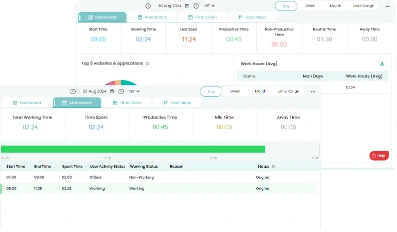
Table of Content
-
 What Are Employee Allowances?
-
Allowances serve several purposes:
-
Baggage Allowance and Travel Reimbursements
-
Special Allowances and Incentives
Related Blogs



 4.7/5 avg.
Ready to Manage Your Workforce Smarter?
Join our family of 1500+ companies using smart insights to redefine workforces!

Free Trial
No Credit Card Required