Employee Consent Monitoring Requirements: Full Guide
Understand employee consent monitoring requirements, key laws, and how to build a clear, compliant process for workplace monitoring.

Employee monitoring only works when employees understand and agree to it. Consent is not a formality you add at the end. It shapes how you introduce monitoring, what you track, and how your team responds to it. When consent is unclear or poorly handled, it creates resistance, reduces trust, and increases risk for your business. Most rollouts also need to align with freelancer consent requirements before tracking begins. For the broader picture across this topic, our enterprise employee monitoring guide brings the moving parts together.
This guide explains what employee consent monitoring actually involves and how to approach it in a structured way. You will learn when you need consent, what valid consent looks like, and how to collect and manage it without disrupting workflows. The focus stays on clarity, control, and transparency so you can monitor work responsibly while keeping your team aligned.
What Are Employee Consent Monitoring Requirements?
Employee consent monitoring requirements define how you inform employees about tracking and how you get their approval before collecting work-related data. This includes what you monitor, when monitoring starts, and how employees acknowledge it. Here are the key elements you need to understand:
- Notice: It means you should clearly inform employees about monitoring. It explains what you track, how you track it, and when it happens. Notice ensures employees are aware, but it does not confirm their agreement.
- Consent: Employees actively agree to monitoring through a clear action, such as signing a policy or accepting terms. Without this action, you cannot treat notice as agreement.
- Explicit Consent: Requires a direct action from the employee, such as a signed document or in-app agreement. It creates a clear record and reduces confusion.
- Implied Consent: Assumes agreement based on behavior, such as continuing to work after receiving a policy. This approach is weaker and often leads to unclear expectations.
When Do You Need Employee Consent
Consent requirements depend on how you plan and expand your monitoring setup:
- If you track activity continuously, you need clear upfront consent.
- If you introduce new tracking features later, you need renewed consent.
- If monitoring expands beyond work devices or hours, consent must reflect that change.
Consent works best when you treat it as an ongoing process, not a one-time checkbox. You should clearly document agreements, update them when monitoring changes, and make them easy for employees to review at any time.
What Laws Govern Employee Monitoring Consent?
Employee monitoring consent does not follow one fixed standard. It varies across federal laws, state requirements, and regulations like GDPR. The common expectation remains clear. You should inform employees properly and, in many cases, obtain their approval before using employee monitoring software. Here are the key legal layers that shape how consent works.
A. Federal Baseline (United States)
At the federal level, monitoring falls under communication privacy laws rather than strict consent mandates.
- The Electronic Communications Privacy Act (ECPA) allows employers to monitor work-related communications under specific conditions
- Monitoring is generally permitted when there is a valid business purpose or employee consent
What this means for consent: Federal law gives flexibility, but it does not protect unclear practices. Clear communication and documented agreement still matter to avoid risk.
B. US State-Level Consent Requirements
The table below shows the states with the most significant requirements:
| State | What the Law Requires | What You Must Do |
|---|---|---|
| New York | NY Civil Rights Law § 52-c: Prior written notice + signed acknowledgment | Give every new hire written notice before monitoring email, internet, or phone activity. Collect written acknowledgment at hiring. Post notice in a visible location for existing team members. |
| Connecticut | Conn. Gen. Stat. § 31-48d: Prior written notice required | One-time written notice before monitoring computer or phone activity. One of the earliest US state monitoring notice laws has been in place since 1998. |
| Delaware | CCPA employee provisions + CA Penal Code § 632 for call recording | Disclose what monitoring data you collect and why. All-party consent is required before recording any phone call. Only collect data that is necessary and proportionate. |
| California | CCPA employee provisions + CA Penal Code § 632 for call recording | Disclose what monitoring data you collect and why. All-party consent is required before recording any phone call. Only collect data that is necessary and proportionate. |
| Illinois | Biometric Information Privacy Act (BIPA): Explicit written consent for biometric data | Obtain signed written consent before collecting fingerprints, face scans, voiceprints, or any biometric identifier. |
| Florida | FL Security of Communications Act: Two-party consent for audio recording | All parties must consent before recording any voice communication. Written monitoring policy recommended for computer activity. |
| Texas | Texas Data Privacy and Security Act: Notice and data protection obligations | Provide notice of monitoring. Meet consent and data protection requirements. Confirm current obligations with legal counsel, as Texas rules. |
| Massachusetts | MA Wiretapping Statute (G.L. c. 272, § 99): Two-party consent for call recording | All parties must give consent before you record any telephone conversation. Email and computer monitoring remain permissible under federal standards with a written policy. |
What this means for consent: State laws move closer to explicit acknowledgment. For workforce monitoring systems, relying only on implied awareness can create gaps.
For a broader overview of the laws governing monitoring beyond consent alone, including data retention, employee rights, and enforcement cases, see employee monitoring legal compliance.
C. GDPR (For EU Employees or Operations)
The General Data Protection Regulation (GDPR) sets a higher standard for consent.
- Consent must be clear, specific, and informed.
- Employees should have a real choice, which limits forced consent.
- Employers often use legitimate interest, but they still need transparency and safeguards.
What this means for consent: If you handle EU employee data, you must treat consent carefully and avoid vague or bundled agreements.
For the full picture of how GDPR shapes your monitoring obligations beyond consent, read GDPR and employee monitoring.
Disclaimer: The information above is for general guidance only and does not constitute legal advice. Laws and regulations change frequently. Consult qualified legal counsel for compliance decisions specific to your organization.
Want to keep monitoring clear and aligned with employee expectations?
Use Time Champ to track activity, manage workflows, and keep everything transparent.
When Does Employee Monitoring Require Explicit Consent?
Some types of monitoring go beyond basic tracking and involve higher sensitivity. In these situations, general policies are not enough. You need clear and direct approval before you move forward. Here are the key scenarios where explicit consent becomes necessary.
1. Biometric and Sensitive Data (BIPA and Similar Laws)
Biometric data includes fingerprints, facial recognition, or any data that uniquely identifies an individual. Laws like the Illinois Biometric Information Privacy Act (BIPA) set strict rules around how you collect and use this data.
- You must inform employees about what biometric data you collect.
- You must explain why you collect it and how long you store it.
- You must get written consent before collecting or using it.
If your development tracking software setup uses biometric authentication, you cannot activate it without prior written approval. You also need to maintain clear records of that consent.
2. BYOD (Bring Your Own Device) Monitoring
BYOD setups involve monitoring work activity on personal devices. This creates a higher expectation of transparency because personal and work data exist on the same device.
- You must clearly define what you track on personal devices.
- You should support this with a clear BYOD policy that defines boundaries and expectations.
- You must separate work data from personal data wherever possible.
- You must get explicit consent before enabling any tracking.
If your tracking software monitors activity on personal laptops or phones, employees should know exactly what data you access and what remains private. State-level rules add additional layers to BYOD consent, especially in California and Illinois. See employee monitoring privacy laws in the USA for the specifics.
How to Build a Compliant Consent Process?
A clear consent process does more than meet requirements. It helps you set expectations, avoid confusion, and keep your monitoring structured from the start. You do not need a complex system, but you do need a consistent approach. Here are the key steps you should follow.

- Define What You Plan to Monitor: List exactly what you track, such as apps, websites, time, or activity patterns. Keep this specific so employees understand the scope without guessing.
- Explain the Purpose Clearly: Tell employees why you monitor. Focus on outcomes like productivity visibility, workload balance, or project tracking instead of vague reasons.
- Choose the Right Consent Method: Decide how you will collect consent. Use clear actions such as signed documents or in-app acknowledgments. Avoid relying on assumptions or silence.
- Present a Clear and Simple Policy: Write your policy in plain language. Remove legal jargon and make it easy to read. Employees should understand it without needing extra explanation.
- Collect and Record Consent Properly: Capture consent in a way you can verify later. Store records securely so you can refer to them if questions arise.
- Update Consent When Monitoring Changes: Review your setup regularly. If you add new tracking features or expand the scope, inform employees and collect updated consent.
- Give Employees Access to Their Agreement: Allow employees to review what they agreed to at any time. This keeps your process transparent and reduces misunderstandings.
A structured consent process keeps your monitoring approach aligned with employee expectations and helps you manage consent clearly without confusion. Consent is also closely connected to how employees experience monitoring overall. For guidance on building a setup that feels fair and transparent, read the guide on ethical considerations in employee monitoring.
How Time Champ Supports Compliant Monitoring?
A strong consent process depends on clarity, control, and proper documentation. You need an employee monitoring software that makes it easy to inform employees, collect approval, and keep records without adding complexity to daily workflows. Without the right setup, consent can become unclear or inconsistent over time.
Time Champ supports this by giving you structured control over who can access monitoring data through role-based access. It ensures only authorized users can view specific information while keeping everything organized. It also records activity logs, time entries, and system data in one place, so you can review and track how monitoring operates at any time. This keeps your monitoring structured, transparent, and easy to review whenever needed.
Want full visibility without overcomplicating your monitoring process?
Use Time Champ to track work clearly and stay in control at every step.
Conclusion
Employee consent is not something you handle once and move on. It shapes how clearly your monitoring works, how employees respond to it, and how well your process holds up over time. When you define consent properly, communicate it clearly, and update it as your monitoring evolves, you remove confusion and build a more structured, transparent approach that works for both the business and the team.

Thasleem Shaik

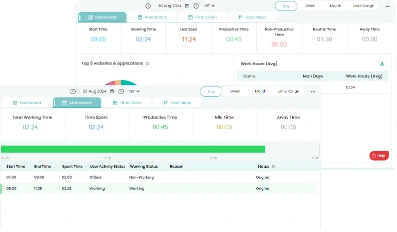
Table of Content
-
 What Are Employee Consent Monitoring Requirements?
-
What Laws Govern Employee Monitoring Consent?
-
When Does Employee Monitoring Require Explicit Consent?
-
How to Build a Compliant Consent Process?
-
How Time Champ Supports Compliant Monitoring?
-
Conclusion
Related Blogs
Learn how employee monitoring enhances safety through compliance, risk management, and awareness. Explore key practices and future trends.
Tarun Kumar Reddy | Aug 22, 2024
Learn what employee email monitoring is, how it works, why companies use it, its legality, and how to implement it step by step, ethically and effectively.
Jahnavi Pulluri | Apr 13, 2026
Explore the possible ethical considerations of monitoring employee's activities to increase their productivity while respecting their privacy.
Jahnavi Pulluri | Jul 31, 2024
Get answers to the most asked questions about employee monitoring laws, including legal considerations and privacy rights for compliant workplace monitoring.
Thasleem Shaik | Aug 17, 2024
Boost efficiency with office monitoring software. Streamline productivity, track performance, and enhance workplace management effortlessly
Mounika Sai | Dec 16, 2023
Learn what staff Monitoring and tracking to increase productivity at the workplace, make sure that the policies are followed, and improve employee responsibility.
Hima Bindhu Nara | Jan 29, 2024


 4.7/5 avg.
Ready to Manage Your Workforce Smarter?
Join our family of 1500+ companies using smart insights to redefine workforces!

Free Trial
No Credit Card Required