GDPR Employee Monitoring: Rules, Rights & Best Practices
Learn how GDPR and employee monitoring impact your business, including key principles, risks, employee rights, compliance steps, and best practices.
You monitor productivity through system access, communication tools, and screen activity to support security and performance. But the moment you collect workforce data, you step into GDPR and employee monitoring, where the rules are strict and often misunderstood. One unclear policy or poorly configured setup can lead to complaints, audits, or serious financial penalties. Most rollouts also need to align with stealth monitoring legal risks before tracking begins. The detail here sits inside a wider conversation covered in our enterprise employee monitoring guide.
The modern workplace makes monitoring easy, but it does not remove legal limits. Remote work, collaboration tools, and tracking software generate continuous data, yet GDPR sets clear limits on what you can collect and how you use it. This guide helps you approach GDPR employee monitoring with clarity and stay aligned with data protection requirements.
What Is GDPR and Why Is It Important for Employee Monitoring?
The General Data Protection Regulation (GDPR) is a data-protection law introduced by the European Union in 2018 that governs how any organization collects, stores, and processes personal data of EU or EEA residents. For employee monitoring, GDPR applies the moment you capture any information that identifies an employee, whether that is login activity, screen data, keystrokes, email content, or physical location.
This is exactly why data protection for employees matters beyond a legal checkbox. When you handle employee data responsibly, you build trust. When you fail to do that, you risk legal penalties, damaged morale, and a serious impact on your company’s reputation. Employees' data protection forms the foundation of a healthy and transparent working relationship.
If your workforce is primarily US-based, the employee monitoring privacy laws in the USA guide covers the federal and state rules that apply to you.
What are the Key Principles of GDPR in Employee Monitoring?
GDPR employee monitoring is not just about compliance. It directly shapes how you collect, store, and use your employees' data every single day. If you run monitoring systems without understanding the principles behind the regulation, you risk fines and a loss of trust. Here are the core principles you need to understand before setting up any monitoring practice in your workplace.
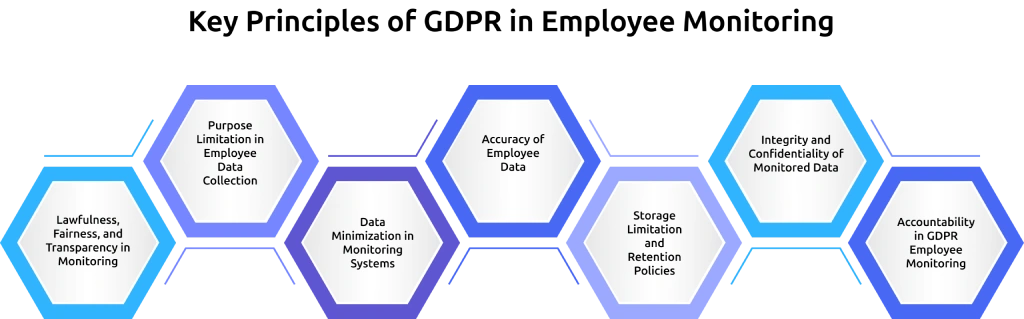
1. Lawfulness, Fairness, and Transparency in Monitoring
Before you monitor anything, you need a lawful reason. Under GDPR, you can rely on legitimate interest, contractual necessity, or legal obligation when you carry out monitoring of employees. You can also use consent, but in most workplaces, employees may not feel comfortable refusing it. This makes consent unreliable from a regulatory perspective.
Fairness means your monitoring should not put employees at a disadvantage or track activities in ways they do not expect or clearly understand. Transparency means you clearly explain what you monitor, why you do it, and how you use that data. If you hide monitoring tools or bury details in lengthy documents, you fail to meet GDPR transparency requirements.
2. Purpose Limitation in Employee Data Collection
Purpose limitation under GDPR means you can only use monitoring data for the specific reason you defined before collecting it. You cannot repurpose it later.
For example, if you track login times to measure attendance, you cannot reuse that same data for productivity reviews unless you disclose the new purpose in advance. Employee monitoring GDPR rules require you to define the purpose before you collect the data, not after.
3. Data Minimization in Monitoring Systems
More data does not mean better monitoring. GDPR requires you to collect only what is necessary for the purpose you defined. If you only need to check whether an employee stays logged in during work hours, you do not need to record every website they visit.
Data minimization in monitoring systems keeps your compliance clear and reduces the impact of potential data breaches. The less unnecessary data you store, the easier it becomes to manage security and limit risk.
4. Accuracy of Employee Data
Inaccurate monitoring data can harm employees. For example, wrong time logs or misinterpreted activity reports can lead to poor decisions. GDPR requires you to keep data protection for employees accurate and up to date.
If an employee questions the data you record, you must review it and correct it when needed. You should also check your monitoring data regularly to ensure it stays accurate. This is a key part of maintaining a compliant system.
5. Storage Limitation and Retention Policies
You cannot keep monitoring data indefinitely just in case you might need it later. GDPR requires you to set clear retention periods and follow them. Once the data serves its purpose, you must delete it.
For example, if you use continuous employee monitoring to track security incidents, you might keep logs for 30 or 90 days. After that, you should remove them. Define your retention policy, apply it consistently, and ensure your team understands it.
6. Integrity and Confidentiality of Monitored Data
Every piece of monitoring data you collect about your employees is personal data, and you must protect it properly. Integrity means you keep the data accurate and prevent any tampering. Confidentiality means you restrict access so only authorized individuals can view it.
Your technical setup plays a key role here. You should use encrypted storage, strong access controls, and clear audit trails. Whether you track digital activity or physical access, you must secure the data against internal misuse and external threats.
7. Accountability in GDPR Employee Monitoring
Accountability means you do not just follow the rules, you also prove that you follow them. Under GDPR employee monitoring requirements, you need to document your monitoring activities, maintain records of processing, and show compliance when a regulator or employee raises a concern.
This includes keeping records of your data protection impact Assessments, your monitoring policies, and any reviews you conduct. Accountability makes GDPR compliance an ongoing effort. This is where the ongoing data protection monitoring definition becomes relevant, as it focuses on continuously reviewing and improving how you handle employee data.
Get clarity on how your team works without crossing privacy lines.
Use Time Champ to monitor employee work activity and stay aligned with compliance.
What Are the Benefits and Risks of Employee Monitoring?
Employee monitoring is not just about checking what your team does during work hours. When you approach it with the right intent, you gain clear visibility into how your team works, identify bottlenecks, and improve both security and performance. At the same time, you must handle employee data carefully, especially when it comes to employee data protection. To understand this better, look at the key benefits you can achieve and the risks you need to manage.
1. Support Better Decisions and Security
When you monitor employees with a clear purpose, you gain more than just visibility. You understand how your teams use time and resources across projects. If a department misses deadlines often, monitoring data helps you identify whether the issue comes from workload, workflow, or gaps in coordination. You replace guesswork with clear, data-backed decisions.
Monitoring also strengthens your business security. You can track unauthorized access to sensitive files, identify unusual activity early, and ensure your teams follow internal policies. For industries that handle confidential client data or financial information, this level of oversight is essential.
2. Improve Team Productivity
Continuous employee monitoring gives you a clear view of how work actually happens across your team. Instead of waiting for reports, you can see who handles work efficiently, where delays happen, and where you need to step in. This helps you balance workloads, guide your team members who need improvement, and maintain consistent performance across projects without relying on assumptions.
3. Risks to Employee Data Protection
Monitoring systems collect a large amount of personal data, such as screenshots, keystrokes, location details, and browsing activity. If you collect more data than necessary or fail to manage it properly, you increase compliance risk and weaken trust within your team. GDPR employee monitoring rules set clear limits to prevent misuse, and ignoring them can lead to legal issues and long-term damage to your organization’s credibility.
4. Legal and Ethical Challenges in Monitoring
Even with the right intent, monitoring of employees can create legal issues if you do not handle it carefully. The Data Protection Act for employees requires you to establish a valid legal basis before you monitor any activity. You need to define a clear reason and ensure your approach matches that purpose. If your monitoring goes beyond what is necessary, you risk non-compliance.
You also need to consider how your team experiences this process. Monitoring should support performance, not create discomfort or mistrust. When you clearly explain what you track, why you track it, and how long you keep the data, you build confidence within your team. Without that clarity, even necessary monitoring can feel intrusive and damage workplace trust.
How Does GDPR Regulate Employee Monitoring Practices?
GDPR and employee monitoring do not work against each other. GDPR does not ban monitoring at work. What it does is set clear rules on how you carry it out, what data you collect, and why. If your organization monitors its workforce, GDPR expects you to follow a structured, fair, and transparent approach at every step. Here is how GDPR regulates the way you monitor employees.
1. Legal Bases for Processing Employee Data Under GDPR
Before you start any form of monitoring, you need a valid legal reason to process that data. GDPR outlines six lawful bases for processing personal data, and not all of them work equally well in a workplace setting.
The two most commonly used bases in employee monitoring GDPR cases are:
- Legitimate Interests: This applies when your organization has a genuine business reason for monitoring, such as protecting company systems, preventing data breaches, or ensuring policy compliance. But relying on this basis requires you to carry out a Legitimate Interests Assessment (LIA). You have to weigh your business need against the privacy rights of your workforce and confirm that monitoring is the right way to meet that need.
- Legal Obligation: In some industries, monitoring is not optional. Financial services firms, for instance, may need to record certain communications under sector-specific regulations. When a law or regulation requires it, you can rely on this basis, but you must identify the exact legal provision that makes it necessary.
If your business operates outside the EU as well, see the broader overview of employee monitoring legal compliance covering US federal, state, and international frameworks.
2. Necessity and Proportionality Principles
Even when you have a lawful basis, GDPR does not give you unlimited freedom to monitor. Two core principles shape how far your monitoring can go: necessity and proportionality.
- Necessity: You need to prove that monitoring directly supports a clear purpose. It should not exist just because it feels useful or convenient. If you can achieve the same result with a less intrusive method, you should choose that approach. The ICO confirms that necessity means more than just useful or desirable.
- Proportionality: Your level of monitoring should match the purpose you define. You should not collect more data or apply deeper tracking than required. If a lighter, more focused method can achieve the same outcome, you should avoid excessive monitoring.
For example, if your goal is to protect company systems from security threats, you do not need to record every keystroke of every team member all day. Targeted monitoring focused on high-risk access points would be proportionate.
These two principles act as a practical check. Every time you introduce or expand a monitoring practice, review it against necessity and proportionality before you move forward.
3. Limits on Excessive Monitoring
GDPR sets clear boundaries to prevent monitoring from becoming excessive or intrusive. Key limits you need to follow:
- Covert Monitoring: You should not monitor employees without informing them. GDPR allows it only in rare cases like serious misconduct, and you must justify it with strong legal grounds.
- Personal Communications: You should restrict monitoring to work-related systems. Accessing personal emails or private messages crosses legal boundaries.
- Automated Decision-Making: You should not rely only on automated systems for decisions that impact employees. You need human review before taking actions like discipline or pay changes.
- Continuous Monitoring: Large-scale or constant monitoring, such as ongoing email tracking or keystroke logging, often requires a DPIA. You must justify why you need such a level of monitoring.
- Data Retention: You should not store monitoring data longer than necessary. Limit access to authorized individuals and delete data once it serves its purpose.
See how work happens without overstepping boundaries.
Time Champ gives you visibility while keeping your monitoring practices in check.
What Rights do Employees Have Under GDPR in Monitoring Scenarios?
When you monitor employees, you collect personal data, and GDPR gives employees clear rights over that data. These rights directly impact how you handle the monitoring of employees in your organization. Whether you use tracking tools, email monitoring, or CCTV, you must respect these rights and ensure your processes support them. Understanding these rights helps you stay compliant and avoid actions that could lead to legal or trust issues. Here is what each right means for you in a workplace context.
- Right to Access Employee Monitoring Data (Article 15): Employees can request a copy of the data you collect through monitoring. This includes activity logs, screen data, working hours, and access details. You must explain the purpose, data type, storage period, and access clearly, and provide the data within 30 days.
- Right to Rectification of Inaccurate Data (Article 16): Employees can ask you to correct inaccurate or incomplete data. Monitoring tools may record incorrect information, and you must update them without delay. This ensures that decisions based on monitoring data remain fair and accurate.
- Right to Erasure (Right to Be Forgotten) (Article 17): Employees can request that you delete their data when it no longer serves the original purpose. You can retain data only when legal obligations require it. You must review each request and justify your decision clearly.
- Right to Restrict Processing (Article 18): Employees can ask you to limit how you use their data instead of deleting it. This usually applies when they question data accuracy or processing. During this time, you can store the data but should not actively use it unless required for legal reasons.
- Right to Data Portability (Article 20): Employees can request their data in a structured and usable format. This allows them to reuse or transfer it if needed. You must provide this data in a machine-readable format, such as logs or time records from your monitoring systems.
- Right to Object to Monitoring Practices (Article 21): Employees can object when you rely on legitimate interest for monitoring. This often applies in GDPR monitoring employee scenarios. When an objection comes in, you must reassess your justification and ensure your monitoring remains necessary and proportionate.
- Rights Related to Automated Decision-Making (Article 22): Employees have the right not to face decisions based only on automated processing if those decisions significantly affect them. You must include human review in such cases and allow employees to question or challenge the outcome.
What are the Best Practices for GDPR-Compliant Employee Monitoring?
Building a GDPR-compliant monitoring setup requires a clear approach. Whether you manage a small team or a large workforce, your practices need to meet GDPR employee monitoring requirements from day one. When you get this right, you protect your organization, build trust within your team, and keep employee data handling responsible and compliant. Here is what a well-structured monitoring approach looks like.
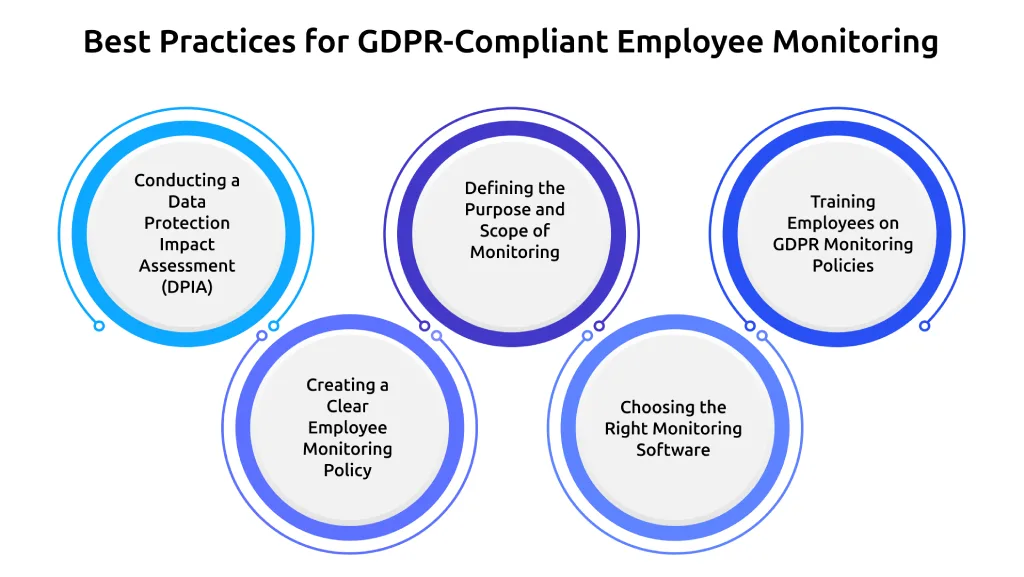
1. Conducting a Data Protection Impact Assessment (DPIA)
Before you start any monitoring, you need to conduct a Data Protection Impact Assessment (DPIA). GDPR requires this when your monitoring involves regular tracking of employees or handles data that could affect their privacy or rights.
A DPIA helps you answer three key questions:
- Is this monitoring actually necessary? Define the exact purpose. Different goals like productivity tracking, security, or compliance each require clear justification and a valid legal basis.
- What are the risks? Identify where things can go wrong, such as collecting too much data or allowing unauthorized access.
- How do you reduce those risks? Take steps like limiting data collection, restricting access, and setting clear retention periods.
If your monitoring involves large-scale tracking like continuous email monitoring, CCTV, or keystroke logging, you should treat the DPIA as the first step before implementation.
2. Creating a Clear Employee Monitoring Policy
A monitoring setup without a clear employee monitoring policy creates compliance risks. Your policy should clearly explain what data you collect, why you collect it, who can access it, and how long you store it. When you communicate this in simple and clear language, you ensure transparency, reduce legal risk, and help your team understand how monitoring works.
3. Defining the Purpose and Scope of Monitoring
GDPR monitoring of employees requires you to define a clear reason for every type of data you collect. You cannot collect broad activity data and decide its use later. You need to align your data collection with a specific purpose and keep it necessary and proportionate. According to EU supervisory authorities, monitoring should support a legitimate aim and respect fairness, which means you should limit data collection to only what the purpose truly requires.
4. Choosing the Right Monitoring Software
The software you choose plays a key role in meeting GDPR employee monitoring requirements. You should select tools that collect only necessary data and support privacy by design. Look for features like data retention controls, role-based access, audit trails, and encryption to keep data secure and controlled. Avoid tools that capture everything by default. Instead, use employee monitoring software like Time Champ that lets you enable only what you need. Also, ensure the vendor signs a data processing agreement, as they handle employee data on your behalf.
Time Champ supports this approach by giving you control over what you track and how you manage data. You can set clear boundaries on data collection, restrict access based on roles, and manage retention without manual effort. This helps you stay aligned with compliance requirements while maintaining visibility into your team’s work without overstepping privacy limits.
5. Training Employees on GDPR Monitoring Policies
Creating a policy is not enough. Your team needs to understand how GDPR employee monitoring affects daily work. Train those who handle monitoring data on how to use it correctly and within defined limits. At the same time, ensure employees know what you monitor, why you do it, and what rights they have. Regular training keeps everyone aligned, reduces misuse of data, and lowers compliance risk.
Conclusion
GDPR and employee monitoring require a responsible and structured approach. When you monitor with a clear purpose, limit data collection, and respect employee rights, you reduce legal risk and build trust at the same time. The key is to stay intentional with what you track and how you use it. When you get this balance right, monitoring supports your business without creating compliance issues.
Track work in a way that respects both performance and privacy.
Try Time Champ to keep your monitoring clear, controlled, and responsible.

Thasleem Shaik

Table of Content
-
 What Is GDPR and Why Is It Important for Employee Monitoring?
-
What are the Key Principles of GDPR in Employee Monitoring?
-
What Are the Benefits and Risks of Employee Monitoring?
-
How Does GDPR Regulate Employee Monitoring Practices?
-
What Rights do Employees Have Under GDPR in Monitoring Scenarios?
-
What are the Best Practices for GDPR-Compliant Employee Monitoring?
-
Conclusion
Related Blogs
Learn about employee monitoring laws, what they mean for businesses, and how they protect employee privacy and rights.
Shabana Shaik | Jul 10, 2024
Get answers to the most asked questions about employee monitoring laws, including legal considerations and privacy rights for compliant workplace monitoring.
Thasleem Shaik | Aug 17, 2024
Stay informed on employee GPS tracking laws and policies, including state regulations, device compliance rules, and how to create a legal tracking policy.
Thasleem Shaik | October 09, 2025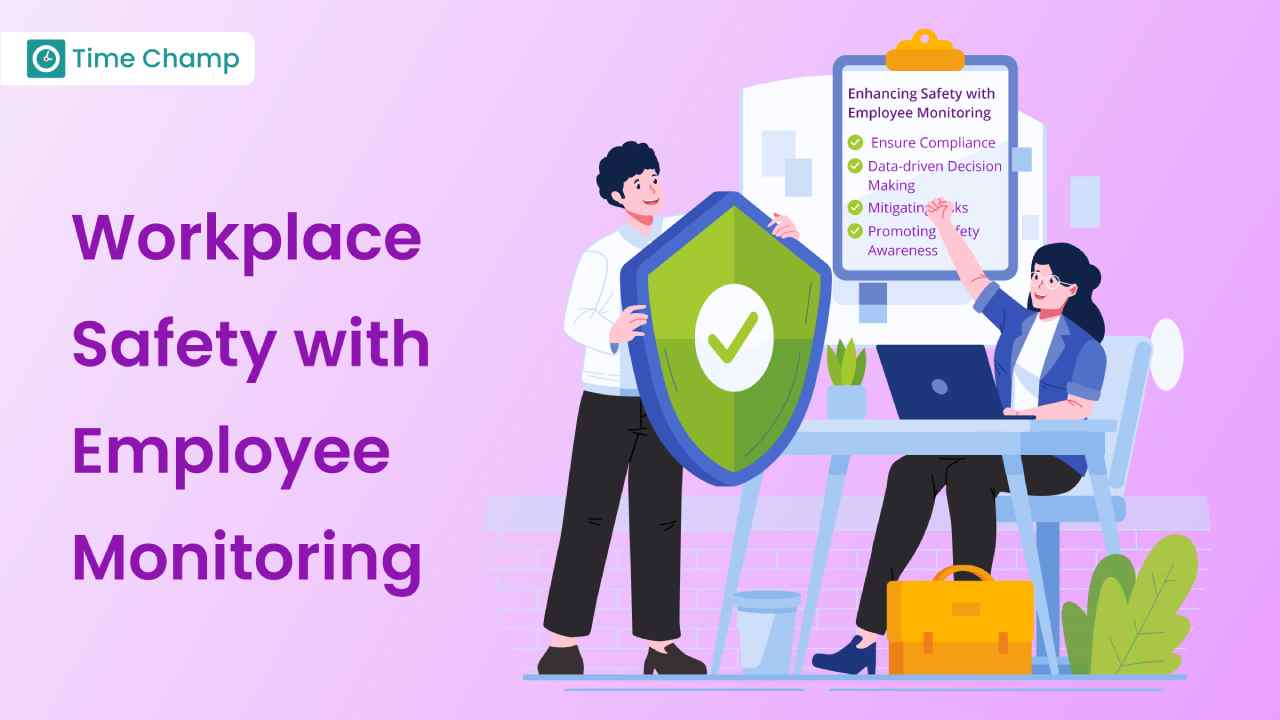
Learn how employee monitoring enhances safety through compliance, risk management, and awareness. Explore key practices and future trends.
Tarun Kumar Reddy | Aug 22, 2024
Explore the possible ethical considerations of monitoring employee's activities to increase their productivity while respecting their privacy.
Jahnavi Pulluri | Jul 31, 2024
Learn how to detect employee monitoring software, identify the key signs on your computer, and understand what to do if your activity is being monitored.
Anjali | Apr 13, 2026


 4.7/5 avg.
Ready to Manage Your Workforce Smarter?
Join our family of 1500+ companies using smart insights to redefine workforces!

Free Trial
No Credit Card Required