Stealth Monitoring Risks: Legal Challenges You Need to Know
Stealth monitoring can expose your business to legal risks. Learn the key challenges, compliance issues, and how to monitor employees effectively.

You might think that secretly monitoring your employees will improve productivity, but it can actually damage it. The detail here sits inside a wider conversation covered in our enterprise employee monitoring guide.
Stealth monitoring, which means tracking employees without their knowledge, can put your business at risk. It can lead to legal issues, break employee trust, and harm your reputation. When employees feel watched without their consent, it creates discomfort and uncertainty. Instead of improving performance, it often leads to stress, disengagement, and a negative work environment. 56% of monitored employees report stress or tension, far higher than those who are not monitored. What feels like a quick solution can turn into legal trouble, unhappy employees, and long-term damage.
In this blog, you will learn what stealth monitoring really means, the risks you face, and how you can monitor your team the right way without breaking trust or the law.
What is Stealth Monitoring?
Stealth monitoring is the practice of tracking employee activities without informing them. This can include monitoring screen activity, recording keystrokes, tracking websites visited, or even capturing screenshots, all without the employee’s knowledge. In fact, 74% of U.S. employers use online tracking tools to monitor work activities, including real-time screen tracking (59%) and web browsing logs (62%), which shows how common employee monitoring has become, even though not all of it is done transparently. Some companies often use it to improve productivity, prevent data leaks, or manage remote teams.
When your employees don’t know they are being monitored, it breaks their sense of trust and privacy. Instead of feeling supported, they start to feel watched and uncomfortable. When you break employee trust, you make it difficult to rebuild and create bigger problems in performance, engagement, and overall company culture.
The 7 Biggest Risks of Stealth Monitoring
At first, stealth monitoring might seem like a quick way to gain control and improve productivity. But once you look closer, the risks start to outweigh the benefits. What begins as a simple tracking decision can lead to legal trouble, broken trust, and long-term damage to your workplace.
Here are the biggest risks you need to be aware of before choosing this approach.
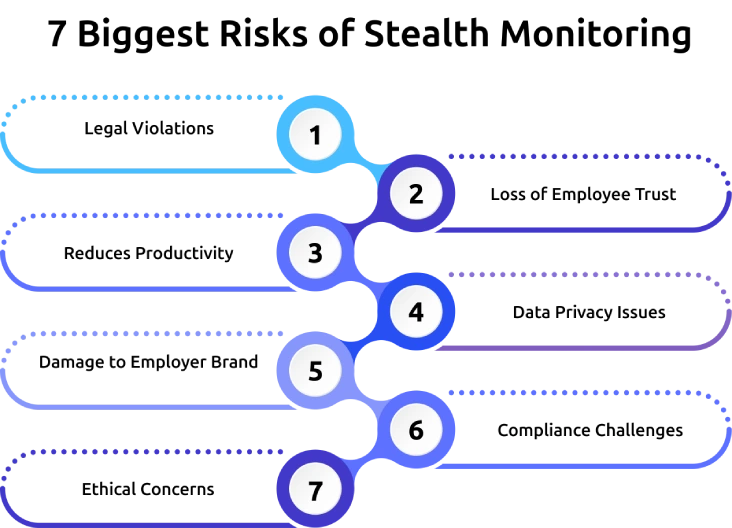
1. Legal Violations
When you monitor employees without informing them, you may be directly violating privacy laws. In many regions, employee consent is required by law, which means you need to clearly inform employees about your monitoring practices before tracking their activity. If you ignore this, you could face heavy fines, legal notices, or even lawsuits.
What makes this risk even more serious is that laws are constantly changing. If you’re not actively staying updated, you might break rules without even realizing it. In some cases, legal action can also damage your business operations and slow down growth. A single mistake here can cost your business both money and credibility.
2. Loss of Employee Trust
Trust is hard to build, but it can be broken in seconds. When your employees find out they’re being secretly monitored, it can feel like a betrayal. Instead of feeling supported, they may start feeling watched or controlled. This creates distance between you and your team.
Over time, this lack of trust can lead to poor communication, low engagement, and even higher employee turnover. Employees may also become less open in sharing ideas or feedback. This can quietly reduce collaboration and innovation within your team.
3. Reduces Productivity
You might think stealth monitoring will make employees work better, but it often does the opposite. When people feel constantly watched, they tend to focus more on “looking busy” rather than doing meaningful work.
Stress and anxiety can increase, which affects focus and creativity. Instead of improving team performance, you may end up slowing your team down. Over time, this pressure can lead to burnout, especially in remote work environments. When employees feel uncomfortable, their quality of work can also drop.
4. Data Privacy Issues
Stealth monitoring tools often collect a large amount of sensitive data, screenshots, activity logs, and sometimes even personal information. If this data is not handled properly, it can be exposed, misused, or even leaked.
This puts your employees at risk but also exposes your business to serious legal and security problems. Managing this data safely becomes a responsibility you can’t afford to ignore. Even a small data breach can lead to loss of trust and financial damage. Protecting this data requires strong systems and constant monitoring.

Did You Know?
The 2024 IBM Cost of a Data Breach Report covers data breach statistics with respect to cost and shows that the average cost of a data breach is $4.4M, over last year, and the highest total ever.
5. Damage to Employer Brand
Your employer's reputation plays a big role in how people see your company. If employees feel uncomfortable or believe they’re being treated unfairly, they won’t keep it to themselves.
Negative reviews on platforms like Glassdoor or LinkedIn can quickly impact how others see your company. This makes it harder for you to attract skilled talent and build a strong team. A damaged reputation can take years to rebuild. In competitive industries, this can put you at a serious disadvantage.
6. Compliance Challenges
Even if you try to follow the rules, compliance is not always simple. Different countries, states, or industries have different regulations when it comes to employee monitoring.
If your team is remote or spread across locations, this becomes even more complex. You need to constantly review your practices, update policies, and make sure everything aligns with the latest laws. Without a proper system in place, this can quickly become overwhelming. Missing even a small compliance requirement can lead to major consequences. Managing compliance requires time, effort, and the right processes.
7. Ethical Concerns
Even if some cases allow stealth monitoring, it can still make your employees feel that it is unfair. When employees aren’t aware they’re being tracked, it can feel invasive and disrespectful.
When your workplace starts to feel like a surveillance zone, it affects how people think and behave. Instead of building a culture of trust and accountability, you may end up creating fear and discomfort. Over time, this can damage your company culture in ways that are hard to fix. A healthy organization depends on transparency and respect. Without these, even the best teams can struggle to perform at their best.
Looking for a smarter way to track work without legal risks?
Time Champ helps you manage your team without breaking trust.
Smart Ways to Reduce Stealth Monitoring Risks Without Breaking Trust
If you want to avoid legal trouble and still improve productivity, your main goal is to monitor your employees in the right way. A transparent and thoughtful approach keeps you compliant and also strengthens employee trust.
Here’s how you can reduce stealth monitoring risks effectively:
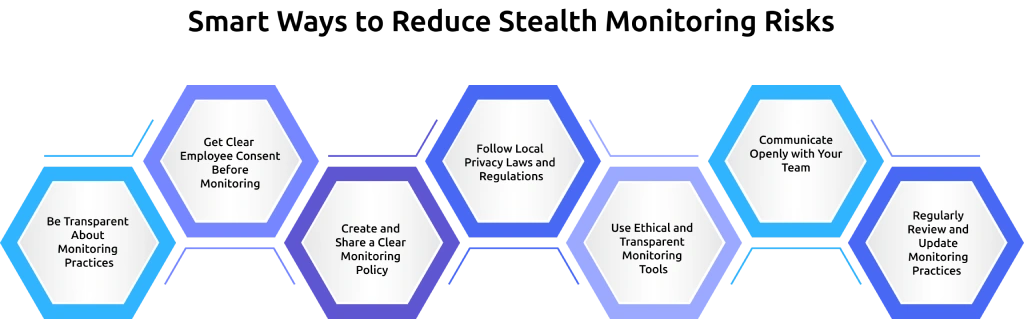
Be Transparent About Monitoring Practices
Employees feel more secure when they clearly understand what is being monitored, how the monitoring works, and the reasons behind it. Explaining that monitoring exists to improve workflows, maintain accountability, or protect company data helps remove fear and confusion. This level of openness builds trust and reduces the chances of misunderstandings or negative assumptions.
Get Clear Employee Consent Before Monitoring
Employee consent plays a key role in creating a fair and respectful work environment. It means that collecting written approval before introducing monitoring practices establishes a clear agreement between the organization and the employee. This approach protects the business from legal risks while also making employees feel included rather than controlled.
Create and Share a Clear Monitoring Policy
A well-defined employee monitoring policy brings clarity and consistency across the organization by outlining what activities are tracked, when monitoring takes place, how data is used, and who can access it. When employees have access to this information, confusion decreases, and expectations become clear, which helps prevent conflicts in the long run.
Follow Local Privacy Laws and Regulations
Privacy and labor laws vary across regions and continue to evolve over time, making it essential to stay informed about current requirements. Regularly reviewing monitoring practices in line with legal updates helps maintain compliance and reduces the risk of penalties that can arise from outdated or incorrect processes.
Use Ethical and Transparent Monitoring Tools
The type of monitoring tool used has a direct impact on employee perception and trust. Tools designed for hidden tracking often create discomfort, while transparent tools like Time Champ provide visibility into productivity without invading privacy. Choosing ethical solutions supports business goals while also maintaining respect for employees.
Communicate Openly with Your Team
Open communication creates a sense of involvement and trust within the team. Encouraging discussions, answering questions, and addressing concerns allows employees to understand the purpose behind monitoring. This clarity reduces resistance and strengthens the relationship between employees and management.
Regularly Review and Update Monitoring Practices
Monitoring strategies need to evolve alongside business needs, technology, and legal requirements. Regular reviews help to make sure that practices remain effective, fair, and compliant. This ongoing process also makes it easier to identify gaps and improve the overall approach to employee monitoring.
How Time Champ Eliminates the Risks of Stealth Monitoring
A better approach to employee monitoring focuses on clarity, trust, and compliance, and that’s exactly where Time Champ helps you create a more transparent and reliable way to track work. As an employee monitoring software, it replaces hidden surveillance with a transparent system where employees clearly understand what is being tracked and why it matters.
With Time Champ, you get clear visibility into work through features like activity tracking, configured screenshot capturing, and real-time productivity insights, which help you stay aligned with your team without creating discomfort. Since your employees are aware of the process, monitoring feels fair and structured rather than intrusive, helping you build trust instead of confusion. You can also customize monitoring settings based on your company policies and legal requirements, making it easier for you to stay compliant while focusing only on relevant work data. This approach helps you avoid unnecessary intrusion and reduces the risks linked to over-monitoring.
This transparent approach allows you to improve productivity while protecting employee privacy, helping you create a workplace where trust, accountability, and long-term performance grow together.
Ready to monitor your team without legal risks or trust issues?
Time Champ helps you create a transparent and productive work environment.
Conclusion
Stealth monitoring may seem like a quick solution, but it often leads to legal risks, broken trust, and lower productivity. Over time, it can damage your workplace culture and make it harder to build a strong, engaged team. A better approach focuses on transparency, clear communication, and ethical monitoring practices. When employees understand what is being tracked and why, trust improves, and your business stays compliant. Choosing the right approach allows you to create a work environment where employees feel respected and motivated, while your business benefits from better performance and long-term growth.

Guna Lakshmi

Table of Content
-
 What is Stealth Monitoring?
-
The 7 Biggest Risks of Stealth Monitoring
-
Smart Ways to Reduce Stealth Monitoring Risks Without Breaking Trust
-
How Time Champ Eliminates the Risks of Stealth Monitoring
-
Conclusion
Instant Signup
Thank you for your request!
We have received your signup request and our team will get back to you soon. In the meantime, you can book a demo to see Time Champ in action.
Book a DemoFree trial. No credit card required. Prefer a walkthrough? Book a demo.
Related Blogs
Discover how stealth tracking in the digital world empowers organizations to effectively monitor activities and enhance privacy and security measures.
Jahnavi Pulluri | August 8, 2024
Stealth and transparent monitoring work very differently for teams. See the key differences, legal implications, and which approach fits your organization.
Jahnavi Pulluri | Apr 21, 2026
Employee screen monitoring captures work activity in real time. Learn all monitoring types, how they boost productivity, and how to implement them ethically.
Jahnavi Pulluri | Apr 17, 2026
Learn how to address employee monitoring concerns with transparency, clear policies, and trust-building practices that improve engagement and reduce resistance.
Anjali | Apr 17, 2026
Learn how to choose the right remote employee monitoring software with the right features, scalability, and usability to manage remote teams effectively.
Guna Lakshmi | Apr 14, 2026
Companies are watching remote workers more than ever. But is it ethical? We break down where monitoring is justified and where it crosses the line.
Guna Lakshmi | Apr 16, 2026


 4.7/5 avg.
Ready to Manage Your Workforce Smarter?
Join our family of 1500+ companies using smart insights to redefine workforces!

Free Trial
No Credit Card Required