Addressing Employee Monitoring Concerns Effectively
Learn how to address employee monitoring concerns with transparency, clear policies, and trust-building practices that improve engagement and reduce resistance.

Have you ever introduced an employee monitoring system to improve visibility, only to notice hesitation, questions, or even silent resistance from your team? This is a common challenge when addressing employee monitoring concerns around the workplace. Monitoring is meant to support productivity, security, and better decision-making, but employees often worry about privacy, trust, and how their work is judged. The real issue is not the monitoring itself, but the gap between what you intend and what employees perceive. Many organizations focus on tools and data, while missing clear communication and employee involvement. As a result, monitoring can seem more controlling than supportive. Building enterprise employee monitoring requires aligning policy, technology, and team adoption from day one.
This blog will help you close that gap. You will learn what employee monitoring concerns look like and why they lead to resistance. You will also see how clear communication and the right approach can build trust and make monitoring work better for everyone.

Did You Know?
A recent workforce study found that 43% of employees say their online activity is monitored, and many report that workplace monitoring negatively affects morale and their relationship with employers.
What Are the Most Common Employee Concerns About Monitoring?
You must have a clear understanding of what employees are concerned with before you can deal with their issues. The majority of issues with employee surveillance are not accidental. They follow different patterns associated with privacy, control, and lack of clarity. When you detect these concerns early, it becomes easier to implement workplace monitoring with trust.
Privacy and Personal Data Exposure
One of the biggest employee monitoring software privacy concerns is the fear that personal data may get tracked along with work activity. Employees worry workplace monitoring may track private messages or personal browsing. Unclear rules around monitoring employee communications increase discomfort. addressing employee monitoring concerns requires clear limits on what is tracked.
Fear of Micromanagement and Trust Erosion
Employees often link workplace monitoring with a lack of trust from management. Constant tracking makes them feel controlled without support. This perception lowers employee trust and reduces engagement. Address employee concerns by focusing on outcomes, not constant activity tracking.
Unclear Monitoring Scope and Hidden Data Collection
Lack of clarity increases resistance to employee monitoring systems. Employees assume that everything is tracked when workplace monitoring is not explained clearly. Hidden monitoring of employee communications damages their trust quickly. addressing employee monitoring concerns requires open communication about what data is actually collected.
Facing employee monitoring concerns in your team?
Time Champ brings clear and transparent workplace monitoring.
How Does Transparency Reduce Employee Monitoring Concerns?
Transparency plays a key role in addressing employee monitoring concerns around workplace monitoring. When employees understand what is happening, they feel more comfortable and informed. Effective communication builds trust in employees and minimizes fear associated with workplace monitoring.

Communicating What Is Collected and Why
Employees should have a good understanding of what employee monitoring tracks. They need to understand the purpose of collecting each point of data. This minimizes misunderstandings about monitoring workplace communications. Explain everything clearly, making the employees feel safer.
Giving Employees Access to Their Own Data
Employees feel more confident when they can access their own data, which improves transparency in workplace monitoring systems. It also helps the employees to verify accuracy and understand the expectations. This creates trust among employees in the long run.
Defining Clear Monitoring Boundaries
Companies must specify what workplace monitoring actually includes and excludes. Employees need to know that their personal data is not tracked. Well-defined boundaries minimize the privacy concerns of employee monitoring software, which brings a secured feeling.
Building Employee Trust through Transparency
Transparency helps companies build the trust of their employees. Open communication eliminates fear associated with workplace monitoring. When nothing is hidden, the employees feel more respected, which can improve acceptance of employee monitoring.
Focusing on Outcomes over Activity Tracking
Employees respond effectively when monitoring mainly focuses on the results. Tracking outcomes minimizes pressures from continuous observation. It shifts attention away from the small actions. This approach can make workplace monitoring more supportive.
Struggling to build employee trust with monitoring?
Time Champ helps you track work without creating pressure.
What Should an Employee Monitoring Policy Include to Build Trust?
A clear policy is important for addressing the employee concerns in any workplace monitoring setup. Without proper structure, employee monitoring can feel unclear and raise doubts. A clear policy will also create trust among employees and minimize resistance to workplace monitoring.
1. Define the Purpose of Employee Monitoring Clearly
Clearly explain why employee monitoring is used in the organization. Employees must understand how it supports productivity, security, and better decisions. This helps to address the employee monitoring concerns from the start. When the purpose is explained clearly, workplace monitoring becomes more meaningful.
2. Specify the Scope of Data Collected
Employees need to understand what data is gathered during the employee monitoring. Clear scope reduces employee monitoring software privacy concerns. It also sets expectations around monitoring employee communications. Workplace monitoring becomes more controlled and fairer when the boundaries are clearly defined.
3. Set Data Usage, Access, and Retention Rules
Organizations must explain how monitoring data is used and who can access it. Clear rules improve employee trust and reduce confusion. Employees must also understand how long data is stored. This transparency helps address employee concerns around misuse.
4. Obtain Employee Consent and Acknowledgement
Employees need to be informed before any workplace monitoring starts. Consent builds trust and shows respect for employee rights. Acknowledgement ensures that the employees understand monitoring employee communications clearly. This step plays a key role in addressing employee monitoring concerns.
5. Establish Feedback Channels and Regular Policy Reviews
Organizations can create simple ways for employees to share feedback. Open communication helps address employee concerns early. Regular policy reviews keep workplace monitoring fair and relevant. This approach strengthens employee trust over time.
Did You Know?
A U.S. workplace study found that 1 in 9 employees quit their job due to excessive monitoring, and many report negative effects like stress and low morale from workplace monitoring.
How Do Leading Organizations Use Monitoring to Strengthen Workplace Trust?
Leading organizations use employee monitoring to support employees. They focus on clarity, fairness, and meaningful outcomes. This approach helps address employee concerns and builds long-term trust.
1. Outcome-Focused Monitoring vs. Activity Tracking
Outcome-focused employee monitoring looks at results, not constant activity. It reduces pressure from workplace monitoring, helping employees focus on meaningful work and improving trust and performance.
2. Using Monitoring Data to Support Employee Wellbeing
Organizations use employee monitoring data to identify workload issues, helping detect stress and prevent burnout. This shifts workplace monitoring towards employee support and creates stronger trust among employees.
3. Maintaining Transparency in Monitoring Practices
Clear communication helps employees understand how workplace monitoring works and what data is collected. When monitoring employee communications are explained clearly, it reduces confusion and enhances long-term employee trust.
4. Optimizing Workflows and Team Efficiency
Organizations use employee monitoring insights to improve workflows and remove bottlenecks. They focus on how work moves across teams. This reduces delays and improves collaboration, which also helps to address employee concerns without creating pressure.
5. Aligning Monitoring with Employee Development Goals
Employee monitoring can support growth when used effectively, as organizations use data to guide training and skill development. When employees see that workplace monitoring supports their progress, it builds employee trust and improves engagement.
What Legal Requirements Apply to Employee Monitoring Communication?
Legal clarity plays a key role in addressing employee monitoring concerns around employee monitoring. When organizations follow clear rules, employees feel more secure and informed. Compliance also strengthens employee trust and reduces fear associated with workplace monitoring.
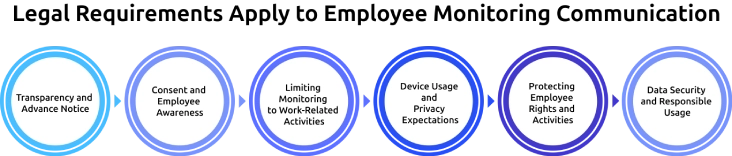
Transparency and Advance Notice
Inform employees about workplace monitoring before it begins, including when and where it applies. Early clarity helps employees feel prepared and reduces uncertainty, which supports employee trust from the start.
Consent and Employee Awareness
Make sure employees clearly understand how employee monitoring works in the workplace. Obtain consent, especially when personal data is involved. Communicate openly to reduce privacy concerns and improve acceptance of workplace monitoring.
Limiting Monitoring to Work-Related Activities
Focus workplace monitoring only on work-related tasks. Avoid tracking personal activities to reduce discomfort and protect employee trust. Set clear boundaries to keep monitoring fair and balanced.
Device Usage and Privacy Expectations
Clarify how workplace monitoring works on company-owned devices. Respect basic privacy rights even on these devices. Explain data usage clearly to reduce confusion and build employee trust.
Protecting Employee Rights and Activities
Respect legal rights and protected activities at all times. Allow employees to discuss workplace matters without fear. Maintain these boundaries to strengthen employee trust and ensure fair workplace monitoring.
Data Security and Responsible Usage
Protect employee monitoring data using secure storage and limited access. Handle data responsibly to reduce risks and address employee concerns. Build long-term employee trust and confidence in workplace monitoring.
Build Employee Trust with Smarter Monitoring Using Time Champ
Managing employee monitoring without affecting trust can feel challenging. Many teams struggle with workplace monitoring that creates confusion or resistance. This is where Time Champ helps you simplify the process with clear visibility, transparent tracking, and employee-friendly insights.
With Time Champ, you can focus on outcomes, not constant activity. It gives employees clarity on what is tracked while helping managers make better decisions. This approach helps reduce concerns, improve employee trust, and make workplace monitoring more effective. Time Champ also helps teams stay aligned with clear reports and real-time insights. Managers can identify workload gaps, while employees stay informed about their own performance. This creates a balanced environment where monitoring supports productivity and trust at the same time. Through keeping monitoring simple, transparent, and focused on outcomes, Time Champ helps organizations build a healthier and more confident workplace.
Worried about managing workplace monitoring without risking employee trust?
Time Champ helps you track work securely while maintaining transparency and control.
Conclusion
Addressing employee monitoring concerns around employee monitoring requires more than tools and policies. It requires clear communication, transparency, and consistent actions that build employee trust over time. When employees understand how workplace monitoring works and how their data is used, resistance starts to reduce. An effective approach that respects privacy, sets clear boundaries, and focuses on outcomes helps to create a balanced environment. Organizations that listen to employees, involve them in decisions, and use monitoring to support growth see better engagement and long-term results. When it is done in the right way, employee monitoring becomes a tool for clarity, trust, and stronger workplace relationships.

Anjali

Table of Content
-
 What Are the Most Common Employee Concerns About Monitoring?
-
How Does Transparency Reduce Employee Monitoring Concerns?
-
What Should an Employee Monitoring Policy Include to Build Trust?
-
How Do Leading Organizations Use Monitoring to Strengthen Workplace Trust?
-
What Legal Requirements Apply to Employee Monitoring Communication?
-
Build Employee Trust with Smarter Monitoring Using Time Champ
-
Conclusion
Related Blogs

Learn how employee productivity monitoring software can boost your company with key features, usage tips, and advantages of using tools like Time Champ.
Discover essential features of time tracking software and how Time Champ enhances project management, productivity, and accuracy.
Discover workforce analytics: definition, types, and benefits. Explore how workforce analytics tools and metrics improve HR planning, retention & efficiency.
Chethana Choudary | September 01, 2025
Explore effective practices and software solutions for monitoring employee internet usage. Elevate productivity and security in the workplace with optimal.
Struggling to build trust in your remote team? Discover proven ways to create a connected, motivated, and high-performing remote team today!

Empower your team's productivity with expert strategies. From setting SMART goals to reducing distractions, discover effective methods for success. Elevate your business performance and unlock growth potential.
Shabana Shaik | Jun 23, 2024


 4.7/5 avg.
Ready to Manage Your Workforce Smarter?
Join our family of 1500+ companies using smart insights to redefine workforces!

Free Trial
No Credit Card Required