What is Workplace Communication? A Complete Guide (2026)
Explore workplace communication, its types, styles, benefits, challenges, and practical tips to improve collaboration, performance, and employee success.

Workplace communication plays a major role in how work gets done every day. Your communication style when sending the messages, attending meetings, and sharing updates will influence the trust, alignment, and performance across your organization.
When communication flows efficiently, the teams work accurately, decision-making improves, and collaboration also feels natural. But when the communication breaks down, even the efficient teams struggle with work delays, confusion, and frustration. This is why workplace communication is not a soft skill, it is one of the fundamental business capabilities.
In this guide, you’ll learn what workplace communication means today and why it matters in modern, hybrid work environments. You’ll also discover how the right communication styles, tools, and strategies help teams work better together in 2026 and beyond.
What is Workplace Communication?
Workplace communication is the exchange of information, new ideas, and feedback between people to ensure proper alignment, clarity, and confidence. It supports daily work by setting clear expectations, guiding decisions, building trust, enhancing collaboration, and helping employees perform effectively from anywhere.
Clear communication helps you to stay aligned and work with more clarity. It ensures that everyone understands their key responsibilities, priorities, and expectations by eliminating confusion and helping teams work effectively.
An effective flow of communication helps you to work together, solve problems more quickly and build trust within your teams. You can create an environment where the employees feel informed, involved and ready to perform at their best by enhancing workplace communication skills and utilizing the right tools and approaches.
Why is Workplace Communication Important?
Workplace communication impacts how well the teams remain aligned, communicate, and achieve effective results. Clearly, sharing the information can help move the work forward without confusion and stronger coordination.
This section helps you to see how workplace communication enhances the overall performance, teamwork, and daily tasks.
Improves Employee Engagement:
Clear and effective communication helps you to feel valued and informed at work. Sharing updates and feedback openly with employees supports better workforce engagement management and keeps them involved in their roles and teams.
Enhances Productivity and Performance: Effective communication helps to minimize misunderstandings and repeated work. Through sharing the information at the right time, teams work faster, remain focused, and deliver efficient results with less friction.
Improves Clarity and Alignment: Workplace communication ensures that everyone clearly understands their goals, priorities, and responsibilities. This transparency helps the teams to remain focused and move forward smoothly.
Supports Accurate Decision-Making: When information is clearly communicated, decisions are made based on the real facts. This leads the teams to make better, more confident choices supporting business goals.
Resolves Workplace Conflicts: Open communication helps to address the issues faster. Your teams can resolve any conflicts before they impact the teamwork and overall performance, by encouraging dialog and active listening.
Facing communication gaps and unclear updates in your team?
Time Champ helps you improve communication, clarity, and team alignment.
What Are the Different Types of Workplace Communications?
Workplace communication happens in different forms, each serving a specific purpose. Understanding these types helps you choose the right method to share information clearly and collaborate more effectively.
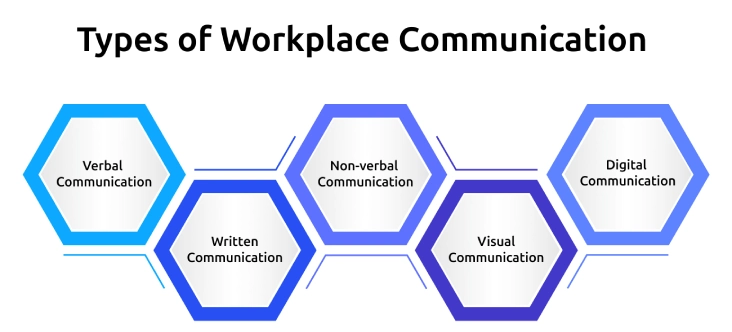
1. Verbal Communication
This communication involves meetings, face-to-face conversations, phone calls, and video discussions. Verbal communication allows instant feedback, making it helpful for brainstroming, discussions, and quick clarifications.
2. Written Communication
This covers the reports, emails, policies, chat messages, and documentation. Written communication provides clarity, creates information, records, and is ideal for formal communication.
3. Non-verbal Communication
Facial expressions, body language, voice tone, and gestures play a major role in how messages are understood. Non-verbal communication often reinforces or changes the meaning of the spoken communication.
4. Visual Communication
Visual elements, such as dashboards, charts, presentations, infographics, and tools that help teams change background images for presentations or marketing materials, make complex information easy to understand at a glance. They help teams to identify the trends, monitor progress, and share the knowledge.
5. Digital Communication
Digital communication utilizes the workplace communication software and applications to support file sharing, real-time collaboration, and quick updates. It helps teams to remain connected and work efficiently, especially in a remote or hybrid work environment.
How Can Communication Styles in the Workplace Improve Collaboration?
Communication styles determine the way you share ideas with others, listen to them, and work together as a team. When the employees clearly understand and adapt to different communication styles in the workplace, collaboration becomes more respectful, smoother, and productive.
Office managers often learn from Gamma Communications developers how digital tools can be configured to accommodate both real-time and asynchronous team dynamics. Implementing these tailored software solutions ensures that every team member can share their ideas effectively, regardless of their personal interaction style.
Assertive Communication: Assertive communication enables you to communicate effectively by respecting others. The balance creates mutual trust and promotes open discussions. When your teams communicate assertively, collaboration becomes more aligned and productive.
Passive Communication: Avoid openly sharing opinions and concerns. When you encourage passive communicators to share their ideas, collaboration improves because more perspectives emerge and decisions become more inclusive.
Aggressive Communication: Communicate in a dominating and forceful way. Reducing aggressive behavior improves teamwork by fostering trust, promoting effective discussions, and creating psychological safety.
Passive-Aggressive Communication: Show your disagreement with some specific actions or tone. Addressing the concerns openly enhances teamwork by resolving issues and preventing confusion.
Collaborative Communication: Identify shared objectives, active listening and solving problems together. This style improves collaboration by strengthening teamwork, encouraging feedback, and converting efforts towards common outcomes.
How to Improve Communication in the Workplace?
Enhancing workplace communication requires effective plans and efforts. When you strengthen workplace communication skills, you minimize the confusion, enhance employee performance, and improve accountability.
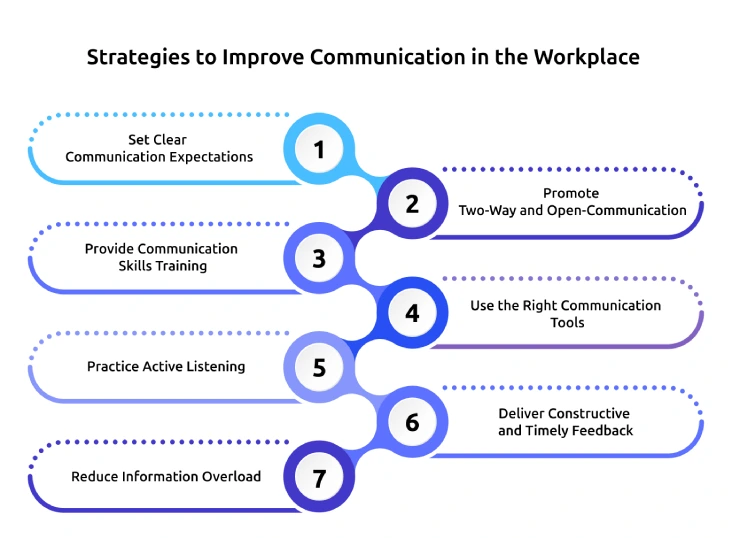
- Set Clear Communication Expectations: Define how and where teams share updates, feedback, and decisions. Clear guidelines help you minimize misunderstandings and keep the employees aligned with the priorities.
- Promote Two-Way and Open-Communication: Create an environment where the employees feel more comfortable sharing their ideas and concerns. Open communication fosters trust and enhances interaction among the teams.
- Provide Communication Skills Training: Offer training to enhance listening, feedback, and presentation skills. Effective workplace communication skills help employees to work together and perform with confidence.
- Use the Right Communication Tools: Choose workplace communication tools that match your team’s needs. Organized usage of workplace communication software enhances clarity and efficiency in workflow.
- Practice Active Listening: Encourage the employees to listen carefully before responding. Active listening minimizes mistakes, builds relationships and enhances the performance of the team.
- Deliver Constructive and Timely Feedback: Provide feedback to employees which focuses on solutions and growth. Accurate feedback helps them change quickly and enhance performance.
- Reduce Information Overload: Provide relevant information and minimize excessive updates. Clear messages help the employees remain more focused and productive.
Finding it hard to keep your teams connected and informed?
Time Champ helps you streamline communication and improve team productivity.
What Are the Benefits of Workplace Communication?
Workplace communication directly influences how well your organization performs every day. Using clear and consistent communication helps you to lead effectively, and teams remain engaged and collaborate effectively. The benefits go beyond everyday conversations and enhance the real business outcomes.
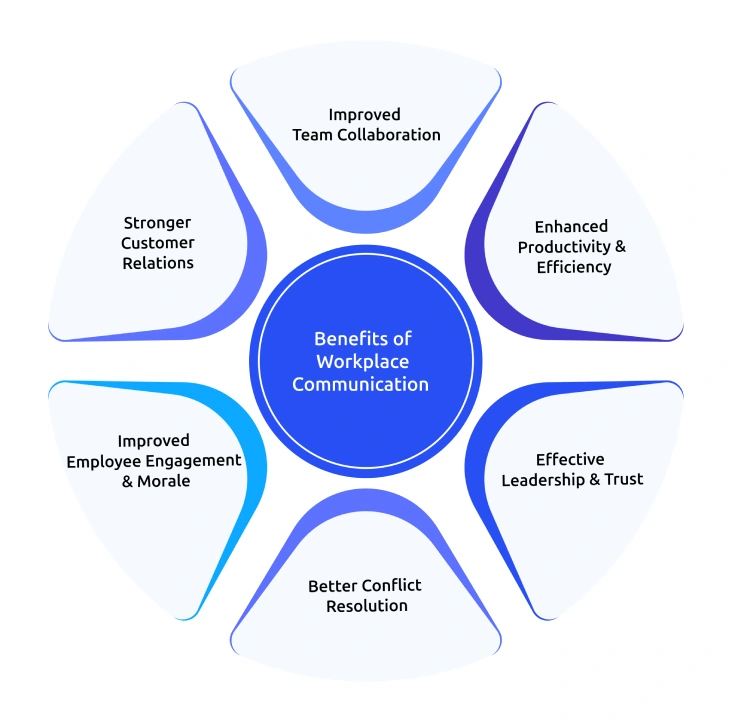
1. Improves Team Collaboration
Clear communication helps you to work efficiently with your team members. You understand the key objectives, coordinate the tasks effectively, and minimize unnecessary misunderstandings. This creates stronger cooperation across departments.
2. Enhances Productivity & Efficiency
Communicating clearly helps to eliminate duplication of work and errors. Teams complete the tasks faster because everyone understands the expectations and priorities. This helps you to focus on delivering quality results and applying practical productivity strategies in daily workflows.
3. Effective Leadership & Trust
Open communication builds transparency between leaders and employees. When you share the updates clearly with the employees, they feel very confident and supported. This builds trust within the organization.
4. Better Conflict Resolution
Open communication helps you to solve the concerns before they grow. Sharing the issues openly can help the teams to resolve disagreements early and professionally. This secures teamwork and maintains healthy working relationships.
5. Improves Employee Engagement & Morale
When employees get feedback and regular updates about work, they feel involved and valued. Effective communication enhances your sense of belonging in the organization. This increases morale and long-term commitment.
6. Stronger Customer Relations
Strong internal communication shapes the external interactions. When the teams accurately share the data, you can respond to the customers confidently and clearly. This enhances customer satisfaction and strengthens the organization's reputation.
What Are the Challenges Faced While Implementing Communication in the Workplace?
Even with the right intent, communication in the workplace can face some practical issues. By identifying these challenges at an early stage, you can take the right steps to manage them and enhance cooperation throughout your organization.
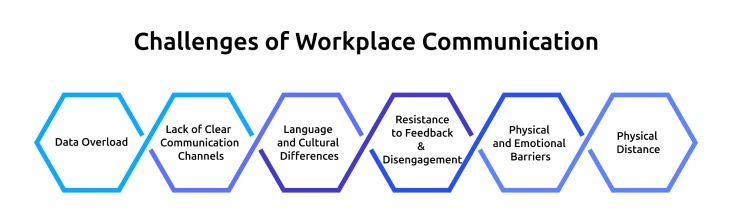
1. Data Overload
Excess information may overload and reduce focus. Critical information usually gets lost under the constant emails and notifications. You can overcome this by prioritizing the key information and setting clear communication boundaries.
2. Lack of Clear Communication Channels
When the teams use various platforms without a proper structure, confusion increases. You might not even know where to share updates or find the information. Defining specific communication tools for a particular purpose brings consistency and clarity.
3. Language and Cultural Differences
Different teams interpret the messages differently due to cultural and language backgrounds. This can develop misunderstandings and slow down the collaboration. You can avoid this challenge by encouraging effective language and cultural awareness in everyday communication.
4. Resistance to Feedback & Disengagement
Employees can avoid conversations when they feel that the feedback is unclear or too critical. This weakens trust and teamwork. You can overcome this issue by promoting constructive feedback and establishing an environment for open discussion.
5. Physical and Emotional Barriers
Workload pressure, stress, and lack of trust can lead to limited open communication, making workload analysis important for team health. Employees can feel hesitant to express their concerns or ideas. You can minimize this through creating constructive leadership and promoting open dialog.
6. Physical Distance
Remote and hybrid work may decrease impulsive conversations and real-time clarity. Without having regular contact, teams could become isolated. You can solve this issue by scheduling formal check-ins and using effective digital communication tools.
How Time Champ Workforce Intelligence Helps You Strengthen Workplace Communication?
Effective communication in the workplace is not just about meetings and messages. It requires visibility into team interactions, clarity in collaboration, and measurable outcomes. Time Champ communicator app helps you centralize conversations, share updates, and keep teams aligned in real-time. With Communicator, you can easily monitor team engagement, participation, and understand how the communication impacts productivity. It provides you with clear insights into collaboration patterns, helping you identify gaps and enhance coordination across teams. These insights enable you to make data-driven decisions and strengthen overall performance.
Time Champ also helps you to detect early burnout signs by analyzing the workload, activity levels, and engagement trends. Through connecting communication with productivity and well-being, Time Champ helps you build a healthier, more connected workplace.
Struggling to track team collaboration and communication performance?
Time Champ helps you build a more connected and high-performing workplace.
Conclusion
Workplace communication defines the way your teams work, make decisions, and achieve meaningful outcomes. Strengthening communication skills and recognizing the challenges early can help you develop trust and improve clarity across your teams. Effective workplace communication contributes to engagement, performance, and business success in the long-term. You build a connected and high-performing workforce by making communication a priority.
Table of Content
-
 What is Workplace Communication?
-
Why is Workplace Communication Important?
-
What Are the Different Types of Workplace Communications?
-
How Can Communication Styles in the Workplace Improve Collaboration?
-
How to Improve Communication in the Workplace?
-
What Are the Benefits of Workplace Communication?
-
What Are the Challenges Faced While Implementing Communication in the Workplace?
-
How Time Champ Workforce Intelligence Helps You Strengthen Workplace Communication?
-
Conclusion
Related Blogs
Discover workforce analytics: definition, types, and benefits. Explore how workforce analytics tools and metrics improve HR planning, retention & efficiency.
Chethana Choudary | September 01, 2025
Learn what workforce engagement management (wem) is, why it matters in contact centers, components, benefits, and how to choose the right software.
Shabana Shaik | October 01, 2025
Discover the top 20 productivity hacks to get more done, boost efficiency, and stay focused. Learn expert tips to maximize your workflow and results!
Thasleem Shaik | Nov 14, 2024
Build a strong communication culture in remote teams to improve collaboration, trust, and productivity. Explore key strategies for seamless teamwork!
Sai Keerthi Uppala | Feb 24, 2025
Discover ways to overcome communication challenges in remote work and boost collaboration. Find solutions for miscommunication, time zone issues, more!
Tarun Kumar Reddy | Oct 25, 2024
Boost team productivity with smart workload analysis. Discover effective strategies to balance tasks, optimize resources, and enhance performance.
Thasleem Shaik | Mar 13, 2025


 4.7/5 avg.
Ready to Manage Your Workforce Smarter?
Join our family of 1500+ companies using smart insights to redefine workforces!

Free Trial
No Credit Card Required