How to Build Trust in a Remote Team: 10 Practical Ways
Learn how to build trust in a remote team with practical strategies to strengthen relationships and create a more connected and collaborative team.
When your employees work from different places, small gaps in communication can quickly turn into bigger problems. A missed update can raise questions, a delayed reply can create doubt, and unclear expectations can leave everyone guessing. That is why learning how to build trust in a remote team matters.
To help you build that trust, we’ve gathered 10 proven and practical ways to build trust in a remote team so you can create stronger relationships and a team that works with confidence.
Why Trust Matters in Remote Teams
Trust is important for creating a positive and supportive remote work environment. It helps your employees feel valued, respected, and confident in their roles.
The main reasons trust matters in a remote or hybrid team include:
- Better Communication: Employees feel comfortable sharing ideas, questions, and concerns.
- Stronger Collaboration: Trust helps employees work together and support each other.
- Higher Accountability: Employees are more likely to take ownership of their work and responsibilities.
- Less Micromanagement: You can focus on results instead of constantly checking on your employees.
- Greater Employee Engagement: Employees feel more connected and involved when they know their work is trusted.
- Stronger Relationships: Trust helps you build positive and lasting relationships with your employees.
- More Psychological Safety: Employees feel safer speaking up, asking for help, and admitting mistakes.

Did You Know?
Gallup found that only 57% of remote employees strongly feel trusted by their managers, highlighting why trust remains essential for successful remote teams.
10 Practical Ways to Build Trust in Remote Teams
Small changes in how you manage your remote team can make a big difference in how much your employees trust you. Here are 10 practical strategies to help you build stronger relationships and a more connected team.
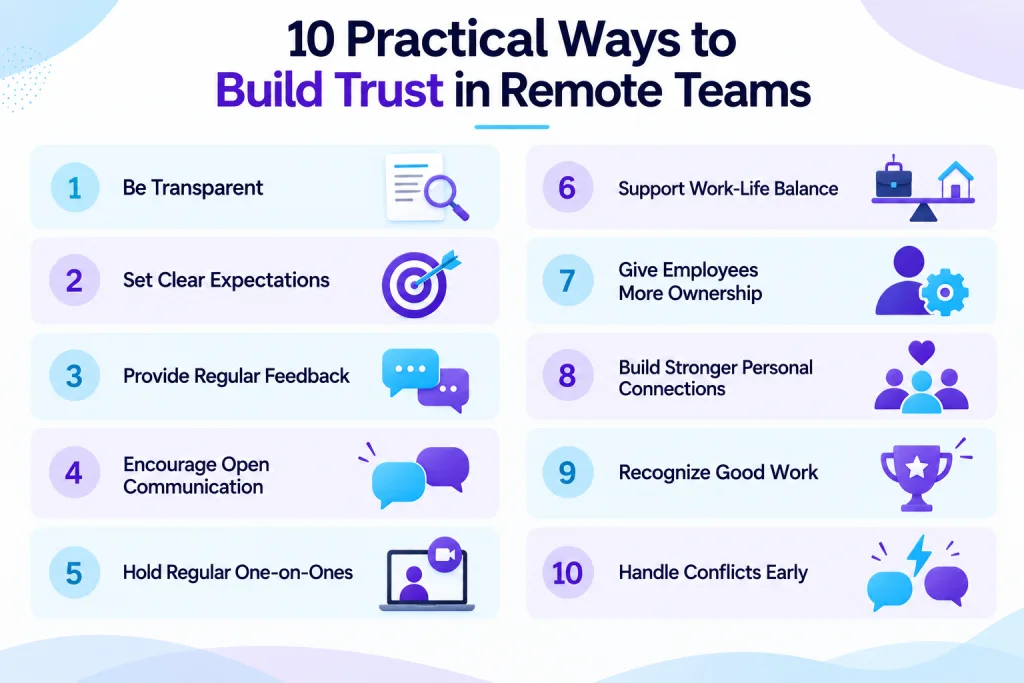
1. Be Transparent
Share important information openly with your employees, especially when it affects their work. Explain changes in goals, deadlines, policies, or team decisions instead of leaving employees to guess what is happening. When you communicate the reasons behind important decisions, employees can better understand your choices and feel more involved.
Be honest when you do not have an answer yet, and keep your team updated as the situation develops.
2. Set Clear Expectations
Tell your employees exactly what you expect from them, including their responsibilities, deadlines, and outcomes. Set clear goals at the start of each project so employees know what they need to achieve and when. If priorities change, communicate those changes quickly instead of leaving employees to figure them out on their own.
Clear expectations reduce confusion and help employees work independently with confidence.
3. Provide Regular Feedback
Give your employees feedback throughout the project instead of waiting for a formal performance review. Highlight what they are doing well and explain what they can improve with clear, specific suggestions. Address problems early so employees have enough time to make changes and improve their work.
Regular feedback also gives employees a clear idea of where they stand and what you expect from them. In fact, 80% of employees who receive meaningful feedback are fully engaged.
4. Encourage Open Communication
Create a space where your employees can freely share ideas, ask questions, and raise concerns. Make it clear that they can speak honestly without worrying that you will dismiss their opinions. Listen to what they say and respond thoughtfully, even when you disagree.
Open communication helps you understand problems earlier and gives employees more confidence in speaking with you.
Struggling to build trust while managing your remote team?
Use Time Champ to gain the visibility you need while giving your employees the freedom to work independently.
5. Hold Regular One-on-Ones
Schedule regular one-on-one meetings to check in with your employees beyond their daily tasks. Ask about their workload, challenges, goals, and any support they need from you. Give them enough time to discuss concerns they may not bring up during team meetings.
These conversations help you understand your employees better and build a stronger working relationship.
6. Support Work-Life Balance
Respect your employees’ working hours and avoid expecting them to respond to messages outside those hours. Give them reasonable flexibility when they need to manage personal responsibilities alongside work. Encourage employees to take breaks and use their time off without making them feel guilty about stepping away. When you respect their boundaries, you show that you trust them to manage their work responsibly.
7. Give Employees More Ownership
Give your employees clear goals and deadlines, then give them the freedom to decide how they complete their work. Avoid asking for constant updates or checking every small task unless they need your help. Focus on the results they deliver rather than watching every step they take.
This approach shows that you trust their skills and gives them more confidence to take ownership of their work.
8. Build Stronger Personal Connections
Make time for casual conversations so your employees can get to know you and their teammates beyond work tasks. Ask about their interests, experiences, or how they are doing instead of keeping every conversation work-focused. Create simple opportunities for remote employees to connect outside regular meetings.
These interactions help employees feel more comfortable with you, communicate more openly, and build stronger working relationships.
9. Recognize Good Work
Recognize your employees when they complete important tasks, reach goals, or make valuable contributions to the team. Be specific about what they did well so they know their efforts did not go unnoticed. Celebrate both individual achievements and team successes. Regular recognition shows employees that you value their work and appreciate their contribution.
In fact, SHRM's research on recognition programs links recognition with employee retention and highlights recognition as an important part of creating a positive work environment.
10. Handle Conflicts Early
Address conflicts as soon as they arise instead of letting them create tension within your team. Listen to everyone involved and understand the issue before deciding how to resolve it. Give each person a fair chance to explain their side and work together to find a practical solution. Quick and fair conflict resolution helps you maintain a respectful team environment and protect trust.
Looking for a smarter way to manage your remote team?
With Time Champ, get the visibility you need to support your team and take action before small issues become bigger problems.
Mistakes That Break Trust in Remote Teams
Even small management habits can weaken trust when your team works remotely. Avoid these common mistakes to maintain stronger relationships with your employees:
- Micromanaging Employees: Constantly checking every task can make employees feel that you do not trust them.
- Making Promises You Cannot Keep: Broken promises can make employees question whether they can rely on you.
- Playing Favorites: Treating some employees differently can create frustration and damage team trust.
- Breaking Confidentiality: Sharing private employee concerns can make people hesitate to speak openly with you.
- Taking Credit for Employee Work: Failing to recognize contributions can make employees feel undervalued.
- Changing Expectations Without Warning: Sudden changes can create confusion and make employees lose confidence in your decisions.
- Ignoring Employee Concerns: Dismissing concerns can make employees feel that their opinions do not matter.
- Expecting Employees to Always Be Available: Constant availability expectations can make employees feel that you do not respect their boundaries.
Did You Know?
A 2025 iHire survey found that 51.8% of U.S. workers had experienced or witnessed favoritism or bias toward select employees at their current or most recent job.
Manage Remote Teams Effectively Without Breaking Their Trust with Time Champ
Trust works best when you find the right balance between freedom and visibility. You want your employees to work independently, but you also need enough visibility to know how work is progressing.
Time Champ, a remote workforce management software, gives you visibility into employee work hours, activity, and productivity through automated tracking and workforce insights. This helps you stay informed about how work is progressing while giving your employees the freedom to work independently.
- Automatic Time Tracking: Automatically capture work hours so you can reduce manual timesheets and understand how your remote team spends its working time.
- Productivity Analytics: Review productivity patterns and identify workload or work-process issues without constantly asking employees for updates.
- Attendance Tracking: Manage attendance, schedules, and time-off records in one place so you can keep your remote workforce organized.
- Project and Task Tracking: See how employees spend time across projects and tasks to understand workload, improve planning, and keep work moving.
- Reports & Analytics: Turn workforce data into clear reports so you can make informed decisions without manually collecting and organizing information.
Tired of handling remote team management manually?
Automate the process, boost productivity, and gain powerful workforce visibility with Time Champ!
Conclusion
Building trust in a remote team needs clear expectations, honest conversations, regular feedback, employee support, and the freedom for your team to take ownership of their work. The key is to build trust consistently and avoid small management habits that can weaken it over time.
Looking for a smarter way to manage your remote team without unnecessary check-ins? Try Time Champ today and give your team the freedom to work while getting the visibility you need.

Guna Lakshmi

Table of Content
 Why Trust Matters in Remote Teams
- 10 Practical Ways to Build Trust in Remote Teams
- Mistakes That Break Trust in Remote Teams
- Manage Remote Teams Effectively Without Breaking Their Trust with Time Champ
- Conclusion
Related Blogs
Discover effective ways to build employee trust in automatic time tracking software and create a transparent, productive, and positive work environment.
Thasleem Shaik | Mar 13, 2025
Learn why trust matters in workforce intelligence, how a privacy-first approach builds it, the key benefits, and how it protects company culture.
Thasleem Shaik | Feb 11, 2026
Struggling to keep your remote team connected? Explore 10 proven strategies to boost engagement, strengthen teamwork, and build a thriving remote culture!
Tarun Kumar Reddy | Mar 14, 2025
Build a strong communication culture in remote teams to improve collaboration, trust, and productivity. Explore key strategies for seamless teamwork!
Sai Keerthi Uppala | Feb 24, 2025
Avoid common remote team management mistakes that hurt productivity. Learn how to handle communication, collaboration, and efficiency challenges effectively.
Jahnavi Pulluri | Mar 15, 2025
Explore the essentials of remote work culture, including best practices, and strategies to enhance your productivity in a virtual environment!
Sai Keerthi Uppala | Oct 17, 2024


 4.7/5 avg.
Ready to Manage Your Workforce Smarter?
Join our family of 1500+ companies using smart insights to redefine workforces!

Free Trial
No Credit Card Required