Importance of Goal Setting: Benefits, Types & Examples
Understand the importance of goal setting with practical examples, proven benefits, and types to turn your plans into measurable results.

A goal without a plan is like opening 27 browser tabs and forgetting why you opened them. Whether you're working toward personal growth or business success, the importance of goal setting lies in giving you focus, motivation, and a clear path forward.
From understanding why goals matter to choosing the right goal-setting framework, here's everything you need.
What Is Goal Setting?
Goal setting is the process of identifying what you want to achieve and creating a plan to achieve it. It transforms ideas into actionable steps, helping you prioritize tasks, stay motivated, and measure your progress along the way. Whether you're pursuing a short-term milestone or a long-term vision, clear goals give your efforts a direction and purpose.
Why Is Goal Setting Important? Top 5 Benefits
The way you define a goal can influence how you approach every step of the journey. From improving your employee focus to building resilience, effective goal setting creates habits that lead to consistent progress. Here are its biggest benefits.
1. Provides Direction and Focus
Setting clear goals helps you communicate priorities across your organization. When employees know what they're working toward, they can focus on high-impact tasks instead of spending time on activities that don't support your business objectives.
2. Boosts Motivation and Engagement
Clear goals give your employees something meaningful to work toward, making their daily responsibilities feel more purposeful. Recognizing milestones and progress help to keep your team motivated and engaged. When employees understand how their work contributes to your organization's success, they're more likely to stay committed and perform at their best.

Did You Know
Research by Gallup revealed that employees who are involved in goal setting are 3.6 times more likely to be engaged at work.
3. Drives Accountability and Ownership
When you set specific goals, your employees are more likely to take responsibility for achieving them. Goals create clear expectations and make it easier to track progress, identify challenges, and stay committed. Whether employees work independently or as part of a team, accountability encourages consistent effort and better business results.
4. Improves Productivity and Performance
One of the biggest benefits of goal setting is increased productivity. Clear goals help your employees prioritize high-impact tasks, manage their time more effectively, and avoid unnecessary distractions. As a result, your teams accomplish more in less time while maintaining the quality of their work and contributing to stronger organizational performance.
5. Encourages Learning and Growth
Every goal creates an opportunity for your employees to learn something new. As they overcome challenges, develop new skills, and adapt their approach, they continue to grow professionally. Even when goals aren't achieved exactly as planned, the experience provides valuable insights that help your employees improve their performance and prepare for future challenges.
Every Team Deserves a Clear Path to Success!
Set clear goals, measure progress, and keep your employees aligned with Time Champ!
Why is Goal Setting Important in the Workplace and Organizations?
If you want your team to perform at its best, clear goals are essential. They help you communicate expectations, align employees with business priorities, and measure progress more effectively. Instead of guessing whether your team is on track, you can use goals to keep everyone focused on outcomes that matter.
Aligns Employees with Business Goals
When you set clear goals, your employees understand how their work contributes to the organization's success. This creates alignment across teams, reduces confusion, and ensures everyone is working toward the same objectives instead of pursuing competing priorities.
Makes Performance Management More Effective
Goal setting gives you a fair and measurable way to evaluate your employee performance. Rather than relying on assumptions, you can review progress against defined objectives, provide meaningful feedback, recognize achievements, and identify where your employees need additional support or training.
Increases Employee Engagement and Retention
Employees are more engaged when they know what's expected of them and can see the impact of their work. By setting achievable goals and regularly discussing progress, you create a sense of purpose that motivates employees and encourages them to stay committed to your organization.
Improves Team Productivity
Clear goals help your team focus on high-priority work instead of getting distracted by low-value tasks. You can allocate resources more effectively, track productivity metrics, remove roadblocks quickly, and ensure your team spends time on activities that contribute to business growth.
Supports Better Business Decisions
When your organization has clearly defined goals, it becomes easier to prioritize projects, allocate budgets, and make strategic decisions. Goals provide a framework for evaluating opportunities, helping you invest time and resources where they'll have the greatest impact.
Why is Goal Setting Important in Your Personal Life?
Your personal goals shape the life you want to build. Whether you're improving your health, learning a new skill, managing your finances, or achieving a personal milestone, clear goals help you stay focused and make steady progress.
Helps You Grow Personally
Setting personal goals encourages you to step outside your comfort zone and develop new skills. Every milestone you achieve builds confidence, strengthens discipline, and prepares you to take on bigger challenges. Over time, these small improvements lead to meaningful personal growth.
Improves Your Financial Well-Being
Financial goals help you make smarter decisions about your money. Whether you're saving for a home, building an emergency fund, paying off debt, or planning for retirement, having a clear financial goal makes it easier to budget, prioritize spending, and stay committed to your long-term plans.
Creates Better Daily Habits
Big achievements are the result of consistent habits. Setting goals helps you build routines that support your objectives, whether that's exercising regularly, reading more, learning a new language, or improving your work-life balance. Small, consistent actions eventually lead to lasting results.
Helps You Stay Motivated During Challenges
There will always be setbacks, but clear goals remind you why you started in the first place. They help you stay committed, measure how far you've come, and keep moving forward even when progress feels slow.
Common Types of Goals
Goals can be categorized based on different areas of your organization and the timeframe you want to achieve them. Understanding these common types of goals can help you set realistic expectations for your team and create a plan that aligns with your business priorities.
- Employee Well-Being Goals: Focus on supporting your team's self-improvement, work relationships, and personal well-being so they can bring their best to work.
- Professional Goals: Help your employees advance their careers, develop new competencies, and achieve success within your organization.
- Financial Goals: Aim to improve your organization's financial health by managing costs, reducing waste, improving margins, or planning for future investments.
- Health & Wellness Goals: Encourage healthier habits among your team, support their physical fitness, and help maintain overall mental and physical well-being across your workforce.
- Learning & Development Goals: Focus on upskilling your employees, improving performance, supporting certifications, or building new capabilities your organization needs.
- Short-Term Goals: Objectives you can accomplish within days, weeks, or a few months that contribute to your team's immediate priorities.
- Long-Term Goals: Larger business ambitions that require consistent effort over several months or years and are achieved through smaller milestones.
Popular Goal-Setting Frameworks
Choosing the right goal-setting framework can make it easier to align your team, measure progress, and achieve business objectives. Whether you're managing a small team or an entire organization, these frameworks help you set clear expectations and keep everyone working toward shared goals.
SMART Goals
The SMART framework helps you set goals that are clear, measurable, and achievable, making it easier for your team to understand expectations and deliver results.
- Specific: Clearly define what your team needs to achieve.
- Measurable: Use metrics to evaluate progress.
- Achievable: Set realistic targets based on your team's resources.
- Relevant: Ensure every goal supports your business objectives.
- Time-bound: Set deadlines to maintain accountability.
Example: Increase customer retention by 15% over the next six months.
OKRs (Objectives and Key Results)
OKRs help you align your teams around ambitious objectives while measuring success through clear, measurable outcomes. They're particularly useful for organizations that want every department working toward the same strategic priorities.
- Set one inspiring objective for your team.
- Define measurable key results to track success.
- Review progress regularly and adjust priorities when needed.
- Promote transparency and alignment across departments.
Example: Objective: Improve customer experience.
Key Results
- Increase customer satisfaction (CSAT) from 85% to 92%.
- Reduce average support response time to under two hours.
- Improve customer retention by 10%.
MBO (Management by Objectives)
Management by Objectives (MBO) encourages you and your employees to set goals together, creating accountability and ensuring individual performance contributes to organizational success.
- Collaborate with employees to define measurable goals.
- Align individual objectives with business priorities.
- Conduct regular progress reviews and coaching sessions.
- Evaluate performance based on agreed outcomes.
Example: Work with your sales team to increase qualified leads by 20% during the next quarter.
BHAG (Big Hairy Audacious Goals)
BHAGs are ambitious, long-term goals that inspire your organization to think beyond incremental improvements. They encourage innovation, unite teams around a shared vision, and drive long-term growth.
- Set a bold vision that inspires your workforce.
- Break the larger goal into smaller milestones.
- Keep teams aligned on a common purpose.
- Review progress regularly while adapting your strategy as needed.
Example: Become the leading SaaS provider in your industry within the next five years.
Achieving Business Goals Starts with Tracking Team Performance
Gain real-time visibility into your workforce, improve accountability, and keep every goal on track with Time Champ.
How to Set Goals Effectively
Having a goal is a great start, but success comes from the actions you take every day. A well-structured approach helps your employees stay organized, overcome obstacles, and make steady progress instead of relying on motivation alone. Follow these steps to set goals that are both realistic and achievable.
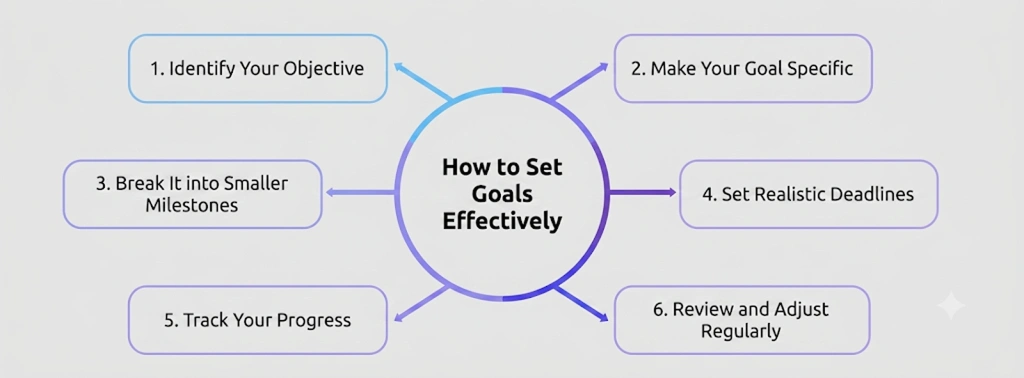
1. Identify Your Objective
Start by defining exactly what you want your team or organization to accomplish. The clearer the objective, the easier it becomes to make decisions and keep everyone focused on what truly matters.
Before moving forward, ask yourself why this goal matters to the business. Having a strong purpose will keep your team committed, especially when challenges arise.
2. Make Your Goal Specific
Avoid broad goals like "increase sales" or "get healthier." Instead, define what success looks like by including measurable outcomes and clear expectations for your team.
The more specific your goal is, the easier it becomes to create an action plan and evaluate your progress.
3. Break It into Smaller Milestones
Large goals often feel overwhelming when viewed as a single task. Divide them into smaller milestones that your team can accomplish and celebrate along the way.
Completing smaller milestones builds confidence and keeps your team motivated to continue working toward the larger objective.
4. Set Realistic Deadlines
Every goal should have a realistic timeframe to create a sense of urgency without adding unnecessary pressure on your team. Deadlines help you prioritize tasks and maintain consistent progress.
When setting deadlines, consider the resources, workload, and potential challenges that could affect your timeline.
5. Track Your Progress
Regularly reviewing productivity reports helps you understand whether your team is moving in the right direction. It also allows you to identify obstacles early and make improvements before they affect your results.
Using tools, progress reports, or regular check-ins can make tracking more consistent and objective across your team.
6. Review and Adjust Regularly
Your priorities and circumstances may change over time, so your goals should be flexible enough to adapt. Reviewing your goals regularly ensures they remain relevant and achievable.
If something isn't working, review your approach and make the necessary changes. Small improvements can keep your team moving toward its goal.
Common Goal-Setting Mistakes to Avoid
Even the best goals can fall short if they're not planned or managed effectively. Avoid these common mistakes to improve your chances of success.
- Setting Vague Goals: Goals like "do better" or "increase productivity" lack clarity. Be specific about what you want to achieve and how you'll measure success.
- Trying to Achieve Too Many Goals at Once: Taking on multiple priorities can divide your attention and reduce your chances of completing any of them. Focus on the goals that matter most.
- Setting Unrealistic Expectations: Ambitious goals are valuable, but they should also be achievable. Unrealistic targets can lead to frustration and loss of motivation.
- Not Creating an Action Plan: A goal without a clear plan is difficult to achieve. Break your goal into smaller tasks and define the steps needed to reach it.
- Ignoring Deadlines: Without a timeframe, it's easy to delay important tasks. Setting realistic deadlines helps maintain momentum and accountability.
- Failing to Track Progress: If you don't monitor your progress, you won't know whether you're moving in the right direction. Review your progress regularly and make adjustments when needed.
- Giving Up After Setbacks: Challenges and delays are part of the process. Treat setbacks as learning opportunities and continue working toward your goal.
- Not Reviewing or Updating Goals: As your priorities or circumstances change, your goals should evolve too. Regular reviews help keep them relevant and achievable.
How Time Champ Helps You Set and Track Goals
Setting goals is only half the journey. To achieve them, you need visibility into your team's progress, productivity, and performance. Time Champ helps you turn goals into measurable outcomes by giving you real-time insights into how work is being completed.
Time Champ is an employee time tracking and productivity tracking software that helps you manage projects and monitor team performance from a single dashboard. With detailed reports and actionable insights, you can make informed decisions, improve accountability, and keep your goals on track.
- Set Clear Goals for Teams and Projects: Assign goals and priorities so every employee knows what they're working toward.
- Track Progress in Real Time: Monitor task completion, project status, and employee productivity through live dashboards and detailed reports.
- Measure Performance with Actionable Insights: Use productivity analytics, time reports, and work patterns to evaluate progress and identify opportunities for improvement.
- Improve Accountability Across Your Workforce: Gain visibility into work hours, task completion, and project contributions, helping employees stay responsible for business goals.
- Identify Bottlenecks Before They Impact Results: Spot delays, workload imbalances, and productivity challenges early so you can take corrective action.
- Keep Teams Aligned With Business Objectives: Make sure everyone is focused on the right priorities by tracking projects, tasks, and overall team performance from a single platform.
Ready to turn your business goals into measurable results?
Use Time Champ to set smarter goals, track progress effortlessly, and boost team productivity.
Without a clear plan, it's easy to jump from one task to another without making real progress. But when you set the right goals and track them consistently, every step brings you closer to meaningful results. And when you need a smarter way to keep everything on track, Time Champ gives you the visibility and insights to turn goals into achievements.

Guna Lakshmi

Table of Content
 What Is Goal Setting?
- Why Is Goal Setting Important? Top 5 Benefits
- Why is Goal Setting Important in the Workplace and Organizations?
- Why is Goal Setting Important in Your Personal Life?
- Common Types of Goals
- Popular Goal-Setting Frameworks
- How to Set Goals Effectively
- Common Goal-Setting Mistakes to Avoid
- How Time Champ Helps You Set and Track Goals
Instant Signup
Thank you for your request!
We have received your signup request and our team will get back to you soon. In the meantime, you can book a demo to see Time Champ in action.
Book a DemoFree trial. No credit card required. Prefer a walkthrough? Book a demo.
Related Blogs
Learn to create and leverage SMART goals effectively in project management for better planning, execution, and success. Get expert insights now!
Mounika Sai | Mar 26, 2025
Learn how SMART HR goals can make your business’s people management easier. Make team members work together better, be more involved, and enjoy their jobs by setting realistic targets.
Mounika Sai | Jan 10, 2024
Explore effective strategies for sustaining employee motivation. Boost engagement, productivity, and job satisfaction in your workplace.
Thasleem Shaik | May 30, 2023
Find out the difference between short-term and long-term planning. Learn how businesses set short-term goals and lay the foundation for long-term success in simple terms.
Jahnavi Pulluri | May 24, 2024
Learn what short-term planning is, its importance, and how it helps businesses stay focused for immediate success.
Shabana Shaik | May 27, 2024
Learn the art of long-term planning with us! Explore practical advice and user-friendly tools to achieve Everlasting success on your terms.
Jahnavi Pulluri | May 25, 2024


 4.7/5 avg.
Ready to Manage Your Workforce Smarter?
Join our family of 1500+ companies using smart insights to redefine workforces!

Free Trial
No Credit Card Required