How Employee Monitoring Can Enhance Workplace Safety
Learn how employee monitoring improves workplace safety by spotting risky work patterns early and building accountability through visibility.
Most data breaches begin quietly, long before your team notices anything is wrong. Weak security practices, insider actions, or hackers often create damage in the background until the issue becomes visible. When a team member burns out, you notice it only after productivity drops or a resignation lands on your desk. When a compliance audit flags a violation, the issue often started weeks earlier. Workplace safety today goes far beyond physical hazards on the floor. It also includes digital threats inside your network, psychological pressure building across teams, and compliance gaps that create serious operational risks. The problem is not that these risks exist. The problem is that you often do not see them until it is too late.
Employee monitoring gives you that visibility before the damage happens. In this guide, you will learn how employee-monitoring strategies strengthen workplace safety across digital, physical, psychological, and compliance dimensions. You will also see where employee monitoring delivers the most value, where it plays a supporting role, and where dedicated workplace safety systems become necessary. By the end, you will have a clear understanding of how to create a safer work environment using the visibility and insights your monitoring systems already provide.
What Does Workplace Safety Mean in Modern Work Environments?
For a long time, workplace safety focused mainly on physical protection. Businesses concentrated on accident prevention, machinery safety, fire exits, and workplace injuries. That approach worked when most work happened inside factories, warehouses, or construction sites. But modern work environments look very different today.
Your team now works across offices, remote setups, shared spaces, and distributed locations. Along with physical risks, you now deal with cybersecurity threats, burnout, compliance violations, excessive workloads, and unsafe work patterns that affect both productivity and business operations. This is why modern workplace safety monitoring now covers four major dimensions, not just physical safety alone.
- Digital Safety: This area focuses on protecting your systems, devices, and business data from insider threats, unauthorized access, data leaks, and BYOD security risks. According to the Morgan Lewis Report, the global average cost of a data breach reached $4.44 million.
- Physical Safety: This dimension covers accident prevention, fatigue risks, lone-worker visibility, ergonomics, and unsafe work-hour patterns. This area connects closely with OSHA compliance and dedicated workplace safety systems. Employee monitoring software supports physical safety by improving visibility into work patterns, but specialized workplace safety tools handle hazard detection and incident management.
- Psychological Safety: Burnout prevention, workload balance, stress management, and healthy communication fall under psychological safety. According to the Dräger Safety and Health at Work report, 65% of workers believe poor psychological safety contributes to workplace safety risks.
- Compliance Safety: It focuses on regulatory requirements like GDPR, HIPAA, SOX, and industry-specific policies. Audit trails, access controls, policy tracking, and activity records help you reduce compliance risks and prepare for internal or external audits more effectively.
Stop suspicious activity and risky data movement before they create security risks.
Use Time Champ to monitor work activity, protect business data, and improve operational visibility across your teams.
How Does Employee Monitoring Strengthen Digital Workplace Safety?
Digital tools make teams faster and more flexible, but they also create new gaps in how you protect business data, systems, and daily operations. Employee monitoring, when used responsibly, can close many of these gaps and help you maintain a safer digital work environment every day. Here is how employee monitoring strengthens digital workplace safety in practical ways.
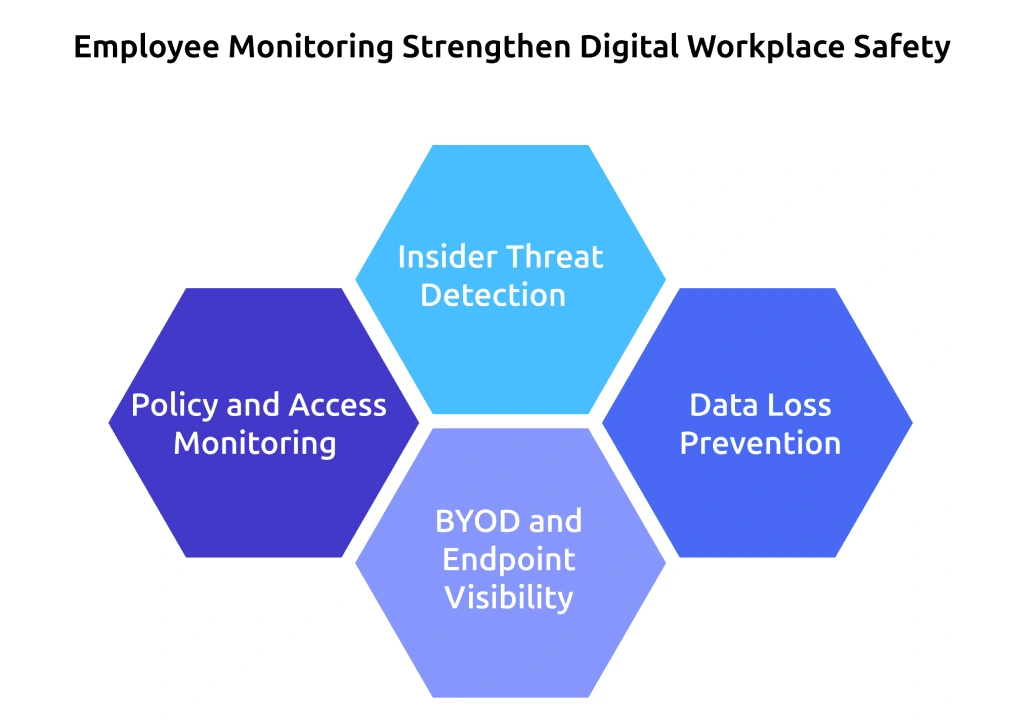
1. Insider Threat Detection
Employee monitoring helps you identify unusual activity patterns before they turn into serious security incidents. Sudden file downloads, repeated access to restricted folders, or logins outside regular work hours often signal insider threats or compromised accounts. According to the Verizon Data Breach Investigations Report, 19% of breaches involve internal actors.
2. Data Loss Prevention
Mishandling business information through unauthorized file sharing, personal email usage, external storage devices, or suspicious uploads can expose your systems and data. Employee monitoring improves data loss prevention by helping you track risky file activity and unusual data movement across daily operations. This visibility helps you identify security or compliance risks early, before they create larger business problems.
3. BYOD and Endpoint Visibility
Remote and hybrid work increased the use of personal devices for business tasks. Without proper visibility, unsecured devices create major BYOD security risks for your business. Employee monitoring helps you track approved device usage, login activity, and risky behavior across both company-owned and personal systems.
4. Policy and Access Monitoring
Security policies only work when your team follows them consistently. Employee monitoring helps you track software usage, access behavior, password practices, and unauthorized applications across daily operations. This improves digital workplace safety by helping you identify risky activity before it affects your systems or business data.
How Does Employee Monitoring Help with Workplace Compliance Safety?
Employee monitoring does not just protect your systems. It also helps you stay compliant with workplace safety rules, data protection policies, and industry regulations. When you use it correctly, compliance becomes part of your daily operations instead of a stressful last-minute process during audits or investigations. Here is how employee monitoring supports workplace compliance and safety across daily business operations.
1. OSHA Compliance
OSHA compliance in safety-sensitive roles depends partly on how your team uses work hours and shift schedules. If your workforce operates in high-risk environments, monitoring tools help you identify excessive overtime, long shifts, and back-to-back scheduling patterns that increase accident risks. This visibility helps you take corrective action early before unsafe work conditions lead to incidents or compliance problems.
Full OSHA compliance goes beyond what digital monitoring covers. For hazard reporting, incident logs, and physical safety inspections, you still need a dedicated EHS (Environmental, Health, and Safety) platform alongside your monitoring setup.
2. GDPR and Privacy Regulations
When your business needs to prove how your team handles personal data, policy documents alone are not enough. Employee monitoring software creates audit trails that show who accessed sensitive data, when the access happened, and which device handled the activity. You can combine this with consent tracking and data retention controls to support GDPR compliance and improve visibility into data handling practices.
For a complete breakdown of what monitoring is legally allowed under GDPR and regional privacy laws, the employee monitoring laws blog explains those compliance boundaries in detail.
3. HIPAA and PCI DSS
If your team handles healthcare records or payment card information, even a small access violation can create serious compliance risks. Employee monitoring tools help you track who accessed sensitive data, when the activity happened, and whether the access matched normal work behavior. These records help you during HIPAA audits and PCI DSS compliance reviews by giving you clear visibility into data access and security activity.
4. SOX and Industry-Specific Frameworks
SOX compliance requires finance teams and publicly traded companies to maintain clear records that prove internal controls over financial data are working properly. Employee monitoring software helps by recording activity logs, access history, and system usage data that auditors often review during compliance checks. Instead of manually rebuilding records during an audit, you already have audit-ready activity logs at hand.
This level of audit visibility also supports industry-specific compliance frameworks in sectors like legal services, insurance, and government contracting. In these industries, businesses need to stay audit-ready throughout the year instead of preparing only during annual reviews.
What Are the Best Practices for Safety-Focused Employee Monitoring?
Safety-focused employee monitoring only works when you get it right from the start with clear rules, strong privacy, and a genuine focus on protection instead of surveillance. When you design it thoughtfully, you can reduce risks, meet compliance requirements, and maintain trust across your workplace. Below are the best practices that help you use employee monitoring to support workplace safety without crossing the line.
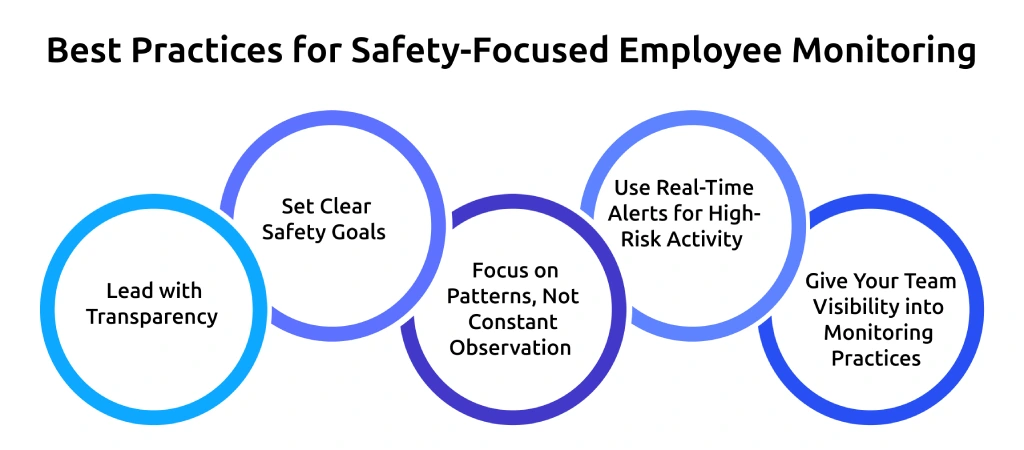
1. Lead with Transparency
Your team should clearly understand what you monitor, why you monitor it, and how the data supports workplace safety. Open communication reduces confusion and improves acceptance of monitoring practices. According to Gartner research, 96% of digital workers accept monitoring when businesses explain the benefits clearly.
2. Set Clear Safety Goals
Do not monitor every activity without purpose. Focus your monitoring setup on specific goals like reducing security risks, identifying burnout patterns, improving compliance visibility, or managing unsafe work-hour schedules. Clear goals help you avoid unnecessary tracking and improve the value of your monitoring data.
3. Focus on Patterns, Not Constant Observation
Continuous micromanagement creates stress and reduces trust across teams. Instead of watching every small action, focus on long-term patterns like excessive overtime, repeated security violations, unusual login behavior, or workload imbalance. Pattern-based monitoring gives you more useful insights without creating unnecessary pressure.
4. Use Real-Time Alerts for High-Risk Activity
Real-time alerts help you respond quickly when suspicious activity appears across your systems. Unauthorized file access, unusual login attempts, excessive work hours, or abnormal data transfers often need immediate attention. Faster response times help you reduce operational, compliance, and security risks before they grow larger.
5. Give Your Team Visibility into Monitoring Practices
Transparency improves trust. When your team understands what data you collect and how you use it, monitoring stays balanced, not invasive. Shared visibility also helps you create healthier monitoring practices that support both workplace safety and operational accountability.
What Trends Are Shaping the Future of Workplace Safety Monitoring?
Workplace safety monitoring is moving beyond cameras and basic checklists. Modern tools give businesses faster ways to identify risks, improve safety visibility, and maintain safer work environments every day. Instead of reacting only after incidents happen, businesses now use technology to detect problems early and reduce safety risks before they grow larger.
AI-powered predictive safety analytics is one of the biggest changes shaping workplace safety monitoring today. Instead of checking problems only after they happen, predictive tools analyze work patterns, login activity, and productivity signals to identify risks early. For example, if a team member's after-hours logins spike and their focus time drops over two consecutive weeks, the system flags it as a burnout risk, not just an anomaly. This gives you time to take action before burnout or a data incident affects your business.
AI-based insider threat detection is also becoming more advanced. Older monitoring systems mainly detected obvious policy violations. Modern AI tools now learn normal work behavior for each employee and identify unusual activity patterns that traditional rule-based systems often miss. This makes cybersecurity employee monitoring more accurate and helps security teams focus on real risks instead of reviewing too many false alerts.
Workplace safety monitoring is moving toward predictive analytics and connected systems. Businesses also focus more on balanced monitoring practices that support workplace safety while respecting employee privacy.
How Does Time Champ Help Enhance Workplace Safety?
Managing workplace safety becomes difficult when you cannot clearly see risky work patterns, unusual system activity, or sensitive data movement across daily operations. Built as employee monitoring software with integrated workforce intelligence, Time Champ helps you improve workplace visibility across productivity, compliance, and digital safety. Instead of only tracking work hours, it helps you identify workload imbalance, unusual behavior, excessive overtime, and operational risks before they grow into larger security or compliance problems.
Time Champ also strengthens workplace safety through its data loss prevention capabilities. The platform helps you monitor suspicious file transfers, external device usage, unauthorized application activity, and risky data movement that could expose sensitive business information. Combined with workforce analytics, activity tracking, and real-time visibility, Time Champ helps you create a safer, more controlled work environment without relying only on manual supervision or disconnected monitoring systems.
Conclusion
Employee monitoring can enhance workplace safety when you use it with clear goals, strong rules, and transparent monitoring practices. Instead of treating it as constant surveillance, you can turn it into a safety-first tool that spots risky behavior, protects data, and supports your workforce before incidents happen. When you set up monitoring fairly and transparently, it helps you create a safer and more responsible workplace across daily operations.
Stop letting unauthorized file transfers and risky data movement go unnoticed.
Use Time Champ to detect suspicious activity and protect sensitive business data.

Thasleem Shaik

Table of Content
 What Does Workplace Safety Mean in Modern Work Environments?
- How Does Employee Monitoring Strengthen Digital Workplace Safety?
- How Does Employee Monitoring Help with Workplace Compliance Safety?
- What Are the Best Practices for Safety-Focused Employee Monitoring?
- What Trends Are Shaping the Future of Workplace Safety Monitoring?
- How Does Time Champ Help Enhance Workplace Safety?
- Conclusion
Related Blogs
Data encryption in employee monitoring is non-negotiable. Learn the standards, certifications, and six questions to ask before signing with any vendor.
Sai Keerthi Uppala | May 07, 2026
Learn how to ensure data privacy in productivity tracking with key controls, vendor evaluation, and setup steps that reduce risk and protect employee data.
Guna Lakshmi | May 02, 2026
Understand how employee monitoring affects workplace morale, trust, and productivity, with practical ways to implement monitoring without reducing engagement.
Anjali | Apr 28, 2026
Explore how an employee monitoring privacy policy protects employee rights, maintains compliance, and supports transparent workplace monitoring.
Anjali | Apr 25, 2026
MDM and employee monitoring software are not the same tool. See what each one does, where they overlap, and whether your organization needs one or both.
Shabana Shaik | Apr 23, 2026
From AI-powered behavior analytics to no-code workflow builders, explore the top 10 automation trends that are reshaping employee monitoring in 2026.
Shabana Shaik | Apr 21, 2026


 4.7/5 avg.
Ready to Manage Your Workforce Smarter?
Join our family of 1500+ companies using smart insights to redefine workforces!

Free Trial
No Credit Card Required