Employee Burnout Signs: Early Warnings & Prevention
Learn the employee burnout signs you often miss, find early warning signals in advance, and prevent burnout before valuable employees ever decide to quit.

Most employees don't walk into work one day and announce they're burned out. In reality, burnout develops gradually, and many employees don't recognize it until they're emotionally exhausted, disengaged, or thinking about quitting. Often, the warning signs appear weeks or even months before reaching that point.
In this blog, I’ll explain the most common employee burnout signs, the early warning signals managers often overlook, and practical strategies to prevent burnout before it affects your employees, team performance, and business.
What Is Employee Burnout?
Employee burnout is a work-related condition of physical, emotional, and mental exhaustion caused by chronic workplace stress, resulting in disengagement, reduced productivity, and decreased job performance.
According to the World Health Organization (WHO), burnout is an occupational phenomenon rather than a medical condition. The WHO identifies three key characteristics of burnout:
- Energy depletion or exhaustion
- Increased mental distance from work, including cynicism or negativity
- Reduced professional effectiveness
What Are the Early Warning Signs of Employee Burnout?
The earliest employee burnout signs usually appear long before productivity drops, or employees begin thinking about leaving. Recognizing these early warning signs makes it easier to prevent burnout before it affects employee well-being, productivity, and retention.
| Early Warning Sign | When It Usually Appears | Why It's Often Missed |
|---|---|---|
| Skipping breaks | Earliest | Mistaken for dedication and productivity |
| Working later each day | Very early | Seen as commitment rather than overwork |
| Reduced participation in optional activities | Early | Managers rarely notice what's no longer happening |
| Regular weekend work | Early to mid | Assumed to be temporary during busy periods |
| Productivity declines while hours increase | Mid | Long hours hide falling efficiency |
| Communication becomes distant or cynical | Mid | Often dismissed as stress or a bad week |
| Vacation and leave go unused | Mid to late | Rarely viewed as a burnout risk |
| More mistakes and missed deadlines | Late | Usually the first obvious warning sign |
| Increased sick leave or absenteeism | Late | Treated as isolated incidents |
| Resignation | Final stage | Often described as "unexpected" |
Many of the earliest indicators actually look like positive behaviors. Employees who work longer hours, answer emails late at night, or never take time off are often praised for being committed. In reality, these habits can signal that workload, pressure, or stress is becoming unsustainable.
Microsoft's 2025 Work Trend Index found that meetings after 8 p.m. increased by 16% year over year, while nearly 20% of employees working weekends checked email before noon on both Saturday and Sunday. These employee burnout signs often develop gradually, making them difficult to recognize until employees become disengaged or consider leaving.
How to Prevent Employee Burnout
Recognizing employee burnout signs early is only the first step. The most effective way to prevent burnout is to improve how work is planned, managed, and supported across the organization.
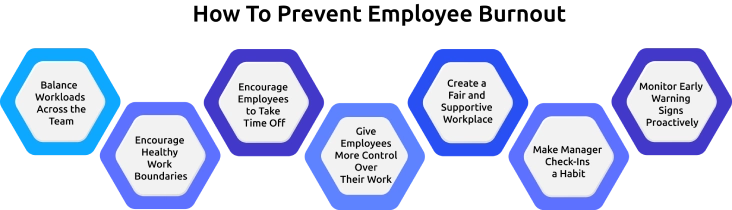
1. Balance Workloads Across the Team
Review team workloads regularly and redistribute tasks before employees become overloaded. Avoid assigning extra work to the same high performers simply because they're reliable. Sharing responsibilities fairly helps reduce stress and prevents long-term burnout.
2. Encourage Healthy Work Boundaries
Set clear expectations around working hours and avoid making after-hours emails or messages the norm unless they're genuinely urgent. Encourage employees to disconnect after work so they can recharge and maintain a healthy work-life balance.
3. Encourage Employees to Take Time Off
Encourage employees to use their vacation days regularly instead of saving them indefinitely. Monitor leave balances and check in with employees who rarely take time off, as unused leave can be an early sign of burnout. Regular breaks help employees recover and stay productive.
4. Give Employees More Control Over Their Work
Give employees the flexibility to organize and complete their work in ways that suit them best. Allowing more control over priorities, schedules, and workflows can reduce stress and improve job satisfaction. According to Gallup, employees who have flexibility in how they perform their work are significantly less likely to experience burnout.
5. Create a Fair and Supportive Workplace
Review how workloads, recognition, and growth opportunities are distributed across the team. Make sure responsibilities are shared fairly and employees feel valued for their contributions. A fair and supportive workplace strengthens trust, engagement, and overall well-being.
6. Make Manager Check-Ins a Habit
Schedule regular one-on-one check-ins to discuss workloads, challenges, and employee well-being. Don't wait for annual surveys to identify problems. Frequent conversations help managers spot early signs of burnout and provide support before the situation worsens.
Gallup research shows that employees who feel supported by their managers are less likely to experience burnout.
7. Monitor Early Warning Signs Proactively
Don't wait until employees resign. Monitor the early signs of burnout and take action.
Keep an eye on trends such as:
- Frequent overtime
- After-hours work
- Weekend activity
- Unused leave
- Declining productivity
- Increased absenteeism
Reviewing these metrics regularly helps you identify risks early and intervene before burnout affects employee well-being or business performance.
How Time Champ Helps You Identify Employee Burnout Early
Recognizing employee burnout signs before it affects performance requires more than observation; it requires visibility into work patterns. Time Champ is a workforce intelligence platform that helps organizations identify early burnout risks by combining work pattern insights with workforce analytics, allowing you to find unhealthy work trends before they turn into disengagement or turnover.
Key Features That Help Prevent Employee Burnout
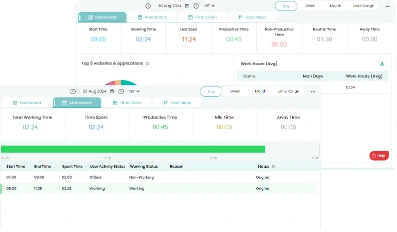
- Work-Life Balance Dashboard: Instantly see employees' focus time, break habits, working hours, and workload distribution to identify burnout risks before they escalate.
- Burnout Risk & Overutilization Alerts: Receive proactive alerts when employees experience sustained overwork, helping you take action early instead of reacting after burnout occurs.
- Overtime Tracking: Track overtime and after-hours work automatically to spot unhealthy work patterns and promote healthier work-life boundaries.
- Break Monitoring & Reminders: Help employees recharge with automated break reminders while ensuring they're taking enough time away from their screens to stay productive.
- Productivity & Activity Analytics: Understand whether employees are working efficiently by comparing productive time with total logged hours, making it easier to detect early signs of fatigue.
- Idle Time & Work Pattern Insights: Identify trends like prolonged inactivity, inconsistent work intensity, or the "overwork-then-crash" cycle that often signals impending burnout.
- Leave & Time-Off Management: Monitor leave balances and encourage employees to take well-earned vacations before stress turns into exhaustion.
- Resource Allocation & Capacity Planning: Gain visibility into team capacity so you can redistribute work fairly, reduce employee overload, and prevent burnout before it impacts performance.
Want to spot employee burnout before it's too late?
Monitor workloads, detect early burnout signs, and create a healthier, more productive workplace.
Conclusion
Employee burnout signs rarely appear all at once. Recognizing them early helps organizations prevent burnout before it affects performance and retention. With the right strategies and workforce insights, you can build a healthier, more productive, and more resilient team.

Jahnavi Pulluri

Table of Content
 What Is Employee Burnout?
- What Are the Early Warning Signs of Employee Burnout?
- How to Prevent Employee Burnout
- How Time Champ Helps You Identify Employee Burnout Early
- Conclusion
Related Blogs
Explore the advantages of employee wellness programs! Discover how prioritizing employee wellness can lead to happier, healthier, and more productive teams.
Jahnavi Pulluri | Mar 15, 2025
Help your remote employees stay productive and stress-free with simple and effective strategies to reduce work-related pressure and improve well-being.
Jahnavi Pulluri | Mar 12, 2025
Learn how to master time management, prioritize tasks, and maintain work-life balance for a healthier, more productive life.
Jahnavi Pulluri | Sep 19, 2024
Learn how employee monitoring supports work-life balance by detecting overwork, protecting boundaries, and helping teams build sustainable work patterns.
Anjali | Apr 23, 2026
Discover practical ways to maintain work-life balance in the era of remote work, reduce burnout, and build healthier remote work habits.
Guna Lakshmi | Sep 29, 2026
Always stuck in work mode at home? Learn how to set clear work-life boundaries, reduce stress, and and stay productive while working from home!
Jahnavi Pulluri | Mar 12, 2025


 4.7/5 avg.
Ready to Manage Your Workforce Smarter?
Join our family of 1500+ companies using smart insights to redefine workforces!

Free Trial
No Credit Card Required