Time Champ > Blog > How Workforce Intelligence Redefines Employee Experience > Content
How Workforce Intelligence Redefines Employee Experience
Learn workforce intelligence's role in employee experience & retention, how it redefines engagement, and key strategies to reduce turnover effectively.

Employee experience often breaks down because you lack clear visibility into workload, role alignment, and everyday work pressure. These gaps affect how people feel long before disengagement shows up in surveys or exit conversations. Workforce intelligence addresses this problem by helping you understand how work actually unfolds across teams and roles.
In this blog, you will learn how workforce intelligence improves employee experience, supports retention, and reduces turnover by identifying workload imbalances, work pressure, and capacity gaps that often lead to burnout and disengagement. At the end, these insights help you make better decisions, balance workloads, and build employee experiences that drive long-term commitment.
What Is the Role of Workforce Intelligence in Employee Experience and Retention?
Workforce intelligence plays a key role in shaping how your employees experience work and how strongly they stay connected to your organization over time.
Visibility into Workload Allocation
Workforce intelligence shows how your teams and roles handle work every day. When effort remains uneven for long periods, fatigue builds quietly. Gallup states that 63% of employees who experience burnout are more likely to take sick leave, often linked to prolonged workload pressure. This visibility helps you rebalance work early and prevent overload from becoming a long-term issue.
Fairness through Clarity
Clear visibility into effort and contribution promotes equitable decision-making. According to Deloitte's research, organizations that are highly transparent and people-oriented are more likely to have greater workforce stability and retention due to the increased trust and perceived fairness. This clarity also helps employees feel confident that decisions are based on facts, not assumptions.
Early awareness of Burnout Risk
Patterns like extended work intensity and irregular work hours indicate rising stress in employees. Workforce intelligence helps you identify these indicators early and respond with timely, supportive actions. Early awareness allows you to address pressure points before they affect morale, health, or performance.
Retention through Informed Decisions
Retention improves when you respond to engagement and workload signals promptly. Research from the Work Institute shows that managers can prevent nearly 75% of employee departures when they take proactive action to address unmet expectations, workload imbalance, and lack of support. When you make informed decisions early, you can resolve issues while employees stay engaged and open to change.
Want to improve employee experience with real workforce insights?
Explore how Time Champ helps you balance workloads and build trust with data
How Does Workforce Intelligence Redefine the Employee Experience?

Employee experience improves when you understand how work unfolds across time, teams, and roles. Workforce intelligence provides this understanding by transforming daily work signals into practical insight that empowers individuals, not pressure.
Clear Expectations and Role Clarity
Workforce intelligence helps you bring clarity to priorities and responsibilities across your teams. Employees benefit when expectations are clear and aligned with daily work. This clarity reduces confusion, enhances focus, and builds confidence in work evaluation. It also helps employees understand how their work contributes to broader team and business outcomes.
Sustainable Workload Management
Visibility into work patterns helps you maintain balanced workloads over time. When work intensity is manageable, employees tend to be more engaged and consistent in their performance. Balanced workloads also reduce the risk of fatigue building unnoticed across teams.
Trust in Performance Conversations
Workforce intelligence replaces assumptions with real work insights during performance reviews. Employees feel more confident when feedback reflects actual effort and contribution, which strengthens trust and open communication. This trust encourages more honest conversations and continuous improvement.
Personalized Employee Support
When you understand individual work patterns, you can provide support at the right time and in the right way. This enhances motivation, decreases stress and promotes long-term involvement. Personalized support also helps employees feel seen and valued in their roles.
Consistency across Hybrid and Distributed Teams
Workforce intelligence offers a shared view of work across locations. This guarantees that employees have similar expectations and experiences, no matter where or how they work. Consistency across teams strengthens inclusion and reduces friction in hybrid environments.
How to Reduce Employee Turnover with Workforce Intelligence
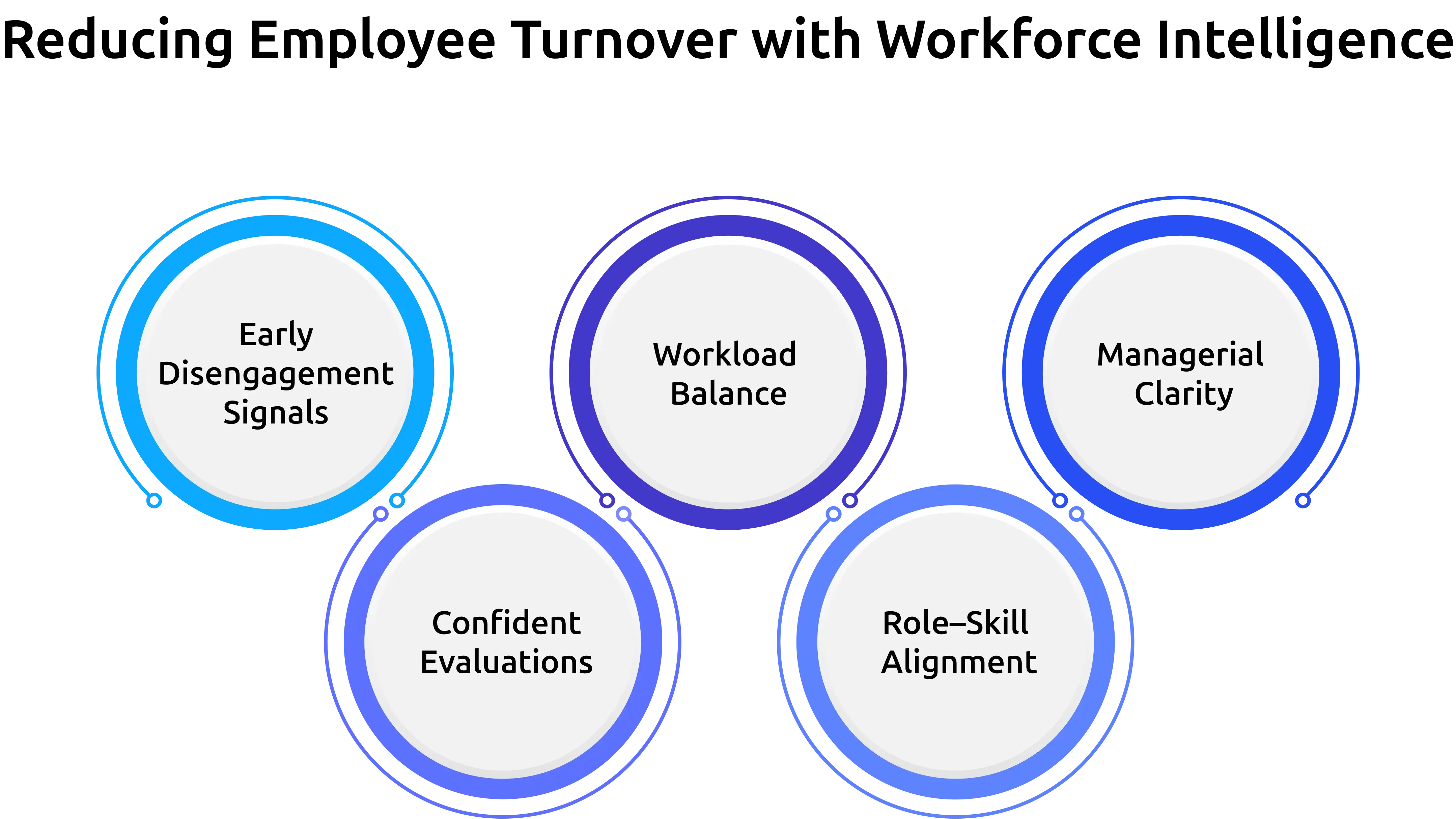
Employee turnover usually builds quietly. Fatigue, disengagement, and a lack of clarity tend to appear much earlier, before employees consider leaving. Workforce intelligence helps you act on these signals early and create environments that motivate people to stay.
Identify Early Disengagement Signals
Workforce intelligence identifies changes in work patterns that indicate a decrease in focus or an increase in pressure. Early identification of these signals allows you to initiate timely support and purposeful conversations.
Maintain Balanced Workloads
Continuous workload imbalance contributes to disengagement and attrition. Workforce intelligence gives you continuous visibility into work distribution, helping your teams maintain balance and avoid strain over time.
Lead with Clear Workforce Insights
Retention depends on the decisions you make every day. Workforce intelligence gives you clear visibility into effort and capacity, so you can respond faster, support your team effectively, and prevent burnout. This helps you build trust, improve stability, and retain employees long term.
Strengthen Confidence in Performance Evaluation
Clear workforce insights strengthen performance conversations, helping employees feel acknowledged and appreciated. Workforce intelligence helps you maintain consistent evaluation practices, reducing doubts and frustration.
Align Roles with Skills and Interests
Turnover tends to rise when employees feel disconnected from their work. Workforce intelligence helps you see how roles align with skills and interests across your workforce, making it easier to make adjustments that boost engagement and foster long-term commitment.
Turning Workforce Intelligence into Everyday Decisions with Time Champ
Workforce intelligence creates impact when it guides the decisions you make every day. When you understand how work flows across teams, how effort concentrates, and where pressure builds, you can shape employee experience with intention and consistency.
Time Champ helps you apply workforce intelligence in practical ways across roles and teams. You gain clear visibility into workload distribution and capacity, enabling you to support employees with insight rooted in actual work. This clarity allows you to build fair, balanced experiences driven by informed decisions that hold up over time.
Ready to reduce burnout and create a fair work environment?
Use Time Champ to analyze workload trends and support employees with clarity.
Conclusion
Employee experience strengthens when you gain clarity into how work unfolds across teams, roles, and time. Workforce intelligence helps you recognize workload imbalance, support engagement, and make decisions that employees experience as fair and consistent.
By applying these insights across your organization, you can reduce turnover risk, improve retention, and create work environments where people feel supported. Workforce intelligence platforms like Time Champ help you put this understanding into practice, turning insight into action and enabling you to build employee experiences that endure.

Chethana


Table of Content
-
 What Is the Role of Workforce Intelligence in Employee Experience and Retention?
-
How Does Workforce Intelligence Redefine the Employee Experience?
-
How to Reduce Employee Turnover with Workforce Intelligence
-
Turning Workforce Intelligence into Everyday Decisions with Time Champ
-
Conclusion
Related Blogs
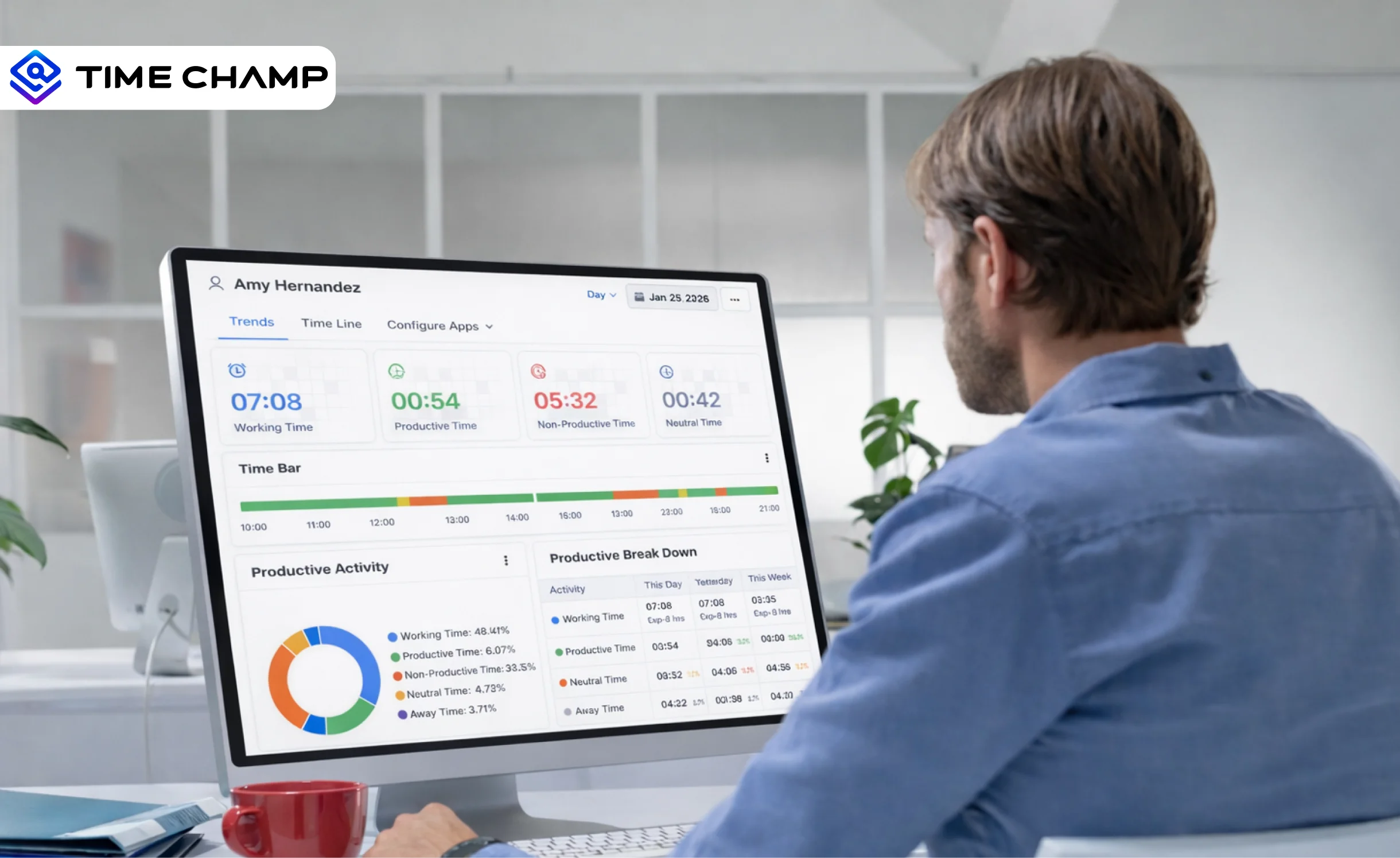
Discover what workforce intelligence is, why it's critical, real examples, implementation steps, key benefits, challenges & how AI transforms the future.
Guna Lakshmi | February 11 2026
Discover what an employee experience framework is, its benefits, how to build and implement it, and how to overcome common challenges effectively.
Shabana Shaik | August 08 2025
Learn what workplace intelligence is with real examples, how to implement it, key benefits, major challenges, and how it helps businesses scale effectively.
Anjali | February 11 2026
Learn what productivity intelligence is, why it's important, how it works, ways it transforms team performance, pros & cons, and how to measure it.
Shabana Shaik | February 11 2026
Learn what talent strategy is in workforce intelligence, how to create, implement & manage it effectively for a future-ready talent workforce.
Chethana | February 11 2026
Learn why trust matters in workforce intelligence, how a privacy-first approach builds it, the key benefits, and how it protects company culture.
Thasleem shaik | February 11 2026


 4.7/5 avg.
Ready to Manage Your Workforce Smarter?
Join our family of 1500+ companies using smart insights to redefine workforces!

Free Trial
No Credit Card Required