Work-Life Balance in the Era of Remote Work
Discover practical ways to maintain work-life balance in the era of remote work, reduce burnout, and build healthier remote work habits.

Remote work offers flexibility, but it can also blur the boundaries between professional and personal life. Achieving work-life balance in the era of remote work requires clear boundaries and effective time management. Maintaining this balance is essential for long-term well-being and job satisfaction.
To support a healthier balance between work and personal life, this guide covers practical tips that can be incorporated into daily routines. It also explains how to establish healthier boundaries, manage workloads, and maintain a sustainable remote work routine.
How Remote Work Changed Work-Life Balance
Remote work has changed how employees manage their time, responsibilities, and daily routines. While it offers greater flexibility, it can also create new challenges in maintaining a healthy separation between work and personal life. Here are the key ways remote work has changed how employees manage their work-life balance:
- More Flexibility: Employees can choose where and, in some cases, when they work, making it easier to manage personal responsibilities. In fact, 54% of workers preferred remote or flexible working arrangements.
- Less Commuting: Working from home eliminates daily travel, giving employees more time for family, hobbies, exercise, or rest.
- Blurred Work Boundaries: Without a clear separation between home and the workplace, employees may find themselves working beyond their scheduled hours.
- Always-Connected Culture: Emails, chats, and notifications can create pressure for employees to stay available even after their workday ends.
- Greater Autonomy: Remote work gives employees more control over their schedules and work environments, which can improve how they manage their day.
- Risk of Burnout: Longer hours and difficulty disconnecting can gradually increase stress and make it harder for employees to maintain a healthy balance.
- Need for Stronger Boundaries: Setting working hours, taking regular breaks, and creating a dedicated workspace have become more important for employees who want to protect their personal time.

Did You Know?
Research by Gallup found that 85% of fully remote workers say improved work-life balance is one of the greatest benefits of remote work.
Why Work-Life Balance Matters in Remote Work
When home becomes the workplace, an employee’s daily routine can have a direct impact on how they feel and perform. Here are the key reasons why work-life balance matters in remote work:
Reduces Burnout
Taking regular breaks and disconnecting after work helps employees manage stress, recharge, and avoid feeling constantly overwhelmed. When employees give themselves enough time to recover, they can return to work with more energy and motivation. Clear limits on working hours can also prevent work from becoming a constant part of their day.
Improves Productivity
When employees have enough time to rest and reset, they can return to work with better focus, energy, and concentration. Working longer hours does not always mean getting more done. A balanced routine helps employees use their working hours more effectively and stay focused on important tasks.
Supports Mental Well-Being
Creating space between work and personal life can help employees manage work pressure and maintain a healthier daily routine. Having time to relax and pursue activities outside work gives their minds a chance to recharge. It can also help employees approach challenges with a clearer and calmer mindset.
Strengthens Personal Relationships
Protecting personal time gives employees more opportunities to connect with family and friends without work constantly getting in the way. Being fully present during personal time can help employees build stronger connections. It also ensures that remote work does not gradually replace important social interactions.
Increases Job Satisfaction
When employees can manage their professional responsibilities without sacrificing their personal lives, they are more likely to feel positive about their work. A healthy balance can make their daily routine feel more manageable and rewarding. It can also help them maintain motivation and engagement over the long term.
Builds Sustainable Work Habits
A balanced routine helps employees maintain consistent performance over time instead of depending on long hours to get things done. Setting realistic working hours and taking regular breaks makes their routine easier to maintain. These habits can help employees stay productive without constantly feeling exhausted.
Struggling to help your remote team maintain a healthy work-life balance?
Start using Time Champ today to see where your work hours go, understand your productivity, and build a healthier routine!
Common Work-Life Balance Challenges in Remote Work
Working remotely can create several challenges that affect how managers support their teams and maintain healthy work-life boundaries. Here are some of the most common challenges managers may need to address:
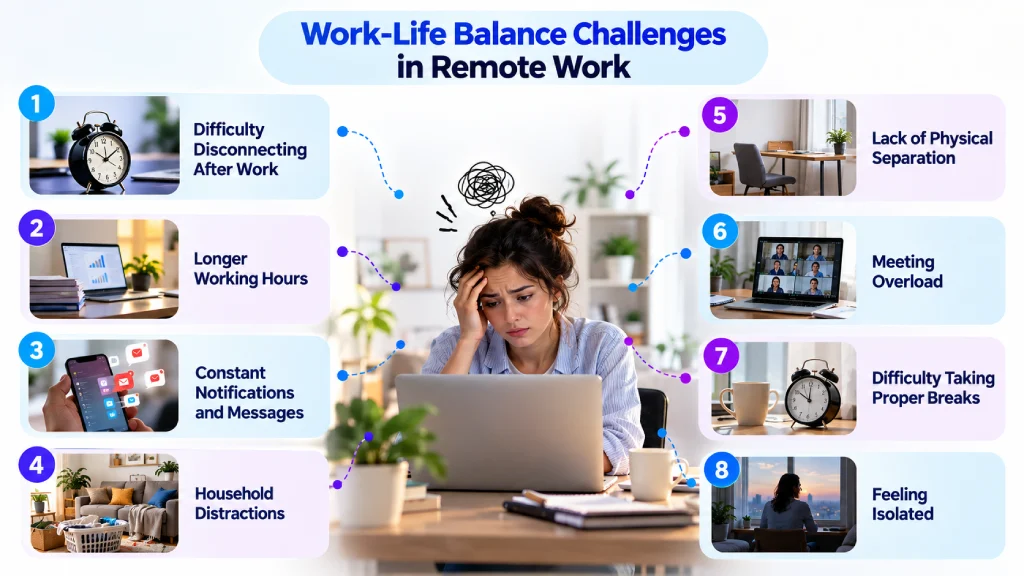
Difficulty Disconnecting After Work
When the workplace is only a few steps away, employees may continue checking emails, completing pending tasks, or responding to messages after their scheduled hours. Over time, this can make it harder for employees to mentally switch from work mode to personal time.
Did You Know?
Research by the American Psychological Association revealed 1 in 3 workers say they do not have enough workplace flexibility to maintain a healthy work-life balance.
Longer Working Hours
Without a clear end to the workday, employees may spend extra time completing tasks or attending meetings. These additional hours can gradually reduce the time available for rest, hobbies, and other personal activities.
Constant Notifications and Messages
Work chats, emails, and meeting alerts can interrupt employees throughout the day. Frequent interruptions can create pressure to remain available beyond scheduled working hours and make it harder for employees to maintain healthy boundaries.
Household Distractions
Family responsibilities, household chores, deliveries, and other activities can interrupt employees during the workday. Managing WFH distractions alongside professional responsibilities can make it difficult for employees to maintain a consistent routine.
Lack of Physical Separation
Working in the same space where employees relax can make it harder to create a mental distinction between work and personal life. This can be especially challenging for employees who do not have a dedicated workspace.
Meeting Overload
Back-to-back virtual meetings can take up much of an employee’s working day and leave little time for focused work or breaks. This can also push important tasks into personal hours and contribute to longer working days.
Difficulty Taking Proper Breaks
Employees may skip lunch, postpone short breaks, or continue working between meetings to finish tasks. Without regular breaks, they can feel mentally drained before the workday is over.
Feeling Isolated
Remote work can reduce spontaneous conversations and social interactions among colleagues. Over time, limited team connection may affect employees’ sense of belonging and make the workday feel more disconnected. Managers need to create opportunities for meaningful team interaction and maintain regular communication.
Struggling to help your remote team maintain a healthy work-life balance?
Use Time Champ to understand how your team spends its work hours, identify workload issues, and build more sustainable work routines.
How Employees Can Improve Work-Life Balance Remotely
Improving work-life balance starts with making small changes to how employees structure and manage their remote workday. These practical habits can help employees stay productive while giving themselves enough time to recharge.
Set Clear Working Hours
Employees can decide when their workday starts and ends and follow the same schedule consistently. This creates a clear routine and makes it easier to separate work time from personal time. Sharing working hours with the team also helps colleagues understand when employees are available.
Create a Dedicated Workspace
Employees can choose a specific area for work, even with limited space at home. Using the same place for work helps create a stronger mental boundary between professional and personal activities. Leaving the workspace when the workday ends can signal that it is time to switch off.
Plan the Day in Advance
Employees can start their day by identifying their most important tasks and allocating time for them. A simple plan helps them stay organized and prevents unfinished work from extending into the evening. Prioritizing the workload also helps employees focus on what needs to get done.
Take Regular Breaks
Employees can step away from their screens throughout the day instead of working continuously for several hours. Short breaks help them recharge, reduce mental fatigue, and return to their tasks with better focus. Even a few minutes away from the desk can make the workday feel more manageable.
Turn Off Work Notifications After Hours
Employees can mute work-related notifications once their working hours are over. This reduces unnecessary interruptions and helps them stay present during personal time. Messages can be checked again when the next workday begins.
Avoid Multitasking
Employees can focus on one task at a time instead of constantly switching between work, household activities, and personal tasks. Staying focused helps them complete important work more efficiently and leaves more time for themselves. It also reduces the mental effort involved in constantly switching between activities.
Make Time for Personal Activities
Employees can schedule time for exercise, hobbies, family, friends, or simply relaxing. Treating personal activities as an important part of the routine makes it easier to protect them from work demands. Activities that help employees recharge can also provide a valuable break from work.
Learn to Say No When Necessary
Employees do not have to accept every meeting, request, or last-minute task immediately. Setting reasonable limits and communicating availability helps protect personal time without affecting professional responsibilities. When possible, employees can suggest an alternative time or approach instead of automatically taking on additional work.
How Time Champ Supports Work-Life Balance in Remote Work
Creating a healthy work-life balance across a remote team starts with understanding how employees spend their working day. For employers looking to gain a clearer view of work hours, productivity, and daily work patterns, Time Champ provides practical tools to manage workloads, improve productivity, and support healthier work habits.
Time Champ is a workforce intelligence platform and remote team management software that helps employers understand working hours, analyze productivity, and review daily work patterns across their teams.
Here are some Time Champ features that can help employers support better time management and work-life balance:
- Automatic Time Tracking: Time Champ automatically records employees’ working hours, giving employers visibility into daily work patterns and helping identify employees who may regularly be working beyond their planned hours.
- Productivity Analytics: Employers can understand how working time is spent and identify productivity patterns, distractions, and areas where teams may benefit from better workload management.
- Project & Task Tracking: Employers can see how much time employees spend on different projects and tasks, making it easier to understand workloads, prioritize resources, and identify potential workload imbalances.
- Weekly Timesheets: Employers can review working hours throughout the week in one place. This makes it easier to identify recurring work patterns, extended hours, and workload trends that may affect employee well-being.
- Application & Website Usage: Employers can understand how employees spend time across applications and websites during work. These insights can help identify distractions, improve workflow efficiency, and support more focused workdays.
Ready to build a healthier and more productive remote team?
Use Time Champ to gain the insights needed to understand team workloads and support healthier work routines.
Conclusion
Remote work gives you more freedom in how you organize your day, but maintaining a healthy routine takes conscious effort. Work-life balance in the era of remote work is about finding a way of working that fits your responsibilities while leaving enough time for the things that matter to you.
If you want a better understanding of how you spend your working hours and where your time goes, give Time Champ a try. Start using Time Champ today and take a smarter approach to managing your workday.

Guna Lakshmi

Table of Content
 How Remote Work Changed Work-Life Balance
- Why Work-Life Balance Matters in Remote Work
- Common Work-Life Balance Challenges in Remote Work
- How Employees Can Improve Work-Life Balance Remotely
- How Time Champ Supports Work-Life Balance in Remote Work
- Conclusion

Related Blogs

Don't let remote work myths hold your team back. Learn how to overcome challenges and build a productive, engaged remote workforce.
Guna Lakshmi | Aug 4, 2026
Misread messages, missed updates, endless pings? Learn how to overcome communication challenges in remote work and keep your team connected.
Guna Lakshmi | Jul 20, 2026
Learn how to track time for remote workers using simple methods and remote tracking tools and learn best practices that improve trust and productivity.
Guna Lakshmi | May 19, 2026
Struggling to keep your remote team connected? Explore 10 proven strategies to boost engagement, strengthen teamwork, and build a thriving remote culture!
Tarun Kumar Reddy | Mar 14, 2025
Build a strong communication culture in remote teams to improve collaboration, trust, and productivity. Explore key strategies for seamless teamwork!
Sai Keerthi Uppala | Feb 24, 2025
Avoid common remote team management mistakes that hurt productivity. Learn how to handle communication, collaboration, and efficiency challenges effectively.
Jahnavi Pulluri | Mar 15, 2025


 4.7/5 avg.
Ready to Manage Your Workforce Smarter?
Join our family of 1500+ companies using smart insights to redefine workforces!

Free Trial
No Credit Card Required