How to Avoid Distractions in the Workplace: 12 Best Ways
How to avoid distractions in the workplace with practical tips to reduce interruptions, improve concentration, and boost daily productivity.

A quick notification, a sudden conversation, or switching between tasks can break the workflow and make even simple tasks take longer than expected. Over time, these distractions turn into a daily pattern that makes it difficult to stay consistent and productive.
Without a clear way to handle these interruptions, workplace distractions continue to affect your work quality, slow down progress, and create unnecessary stress. This guide shows how to avoid distractions in the workplace with simple and practical steps that help your teams stay focused at work, reduce interruptions, and build a work routine that supports better focus every day.
What Are Workplace Distractions?
Workplace distractions are anything that pulls people's attention away from the task they need to complete. These distractions can come from notifications, conversations, noise, unclear priorities, multitasking, or frequent task switching during the workday.
When distractions happen often, focus becomes harder to maintain, and work can take more time than planned. A distracted workday can also make it difficult to think clearly, finish tasks on time, and move through priorities with confidence.
What is the Impact of Workplace Distractions on Productivity?
Workplace distractions affect much more than your team's ability to concentrate. Every interruption breaks your team's flow, shifts attention away from important work, and makes it harder to return to the original task. As distractions become more frequent, work slows down, deadlines become harder to meet, and overall productivity starts to decline. Here is what the data shows about the impact on productivity.
- According to the Time-Wasting Report by Resume Now, over half (58%) of employees spend between 30 minutes and 1 hour of their workday on activities that are not related to work.
- Employers are already noticing the impact on productivity caused by these distractions in the workplace. About one-third report losing around five hours of work time each week, while another third estimate a loss of six to ten hours, which can be up to 25 percent of the total workweek.
- Unnecessary meetings lead to nearly $37 billion in lost productivity for US businesses each year.
- Overloaded emails are responsible for roughly $1 trillion in lost productivity worldwide. Multitasking reduces efficiency by 20–40%, contributing an additional $450 billion in losses.
These numbers show how small daily interruptions can gradually affect your team's performance and overall business results. Reducing distractions helps your team stay focused, complete work more efficiently, and achieve better outcomes.
12 Most Common Workplace Distractions and How to Manage Them
Workplace distractions come from many different sources, and not all of them affect your team in the same way. Some distractions come from technology, while others result from the work environment, daily interactions, or personal work habits. Understanding the source of each distraction helps you choose the right solution instead of applying the same approach to every situation.
Let's start with the most common distractions that interrupt focus during a typical workday.
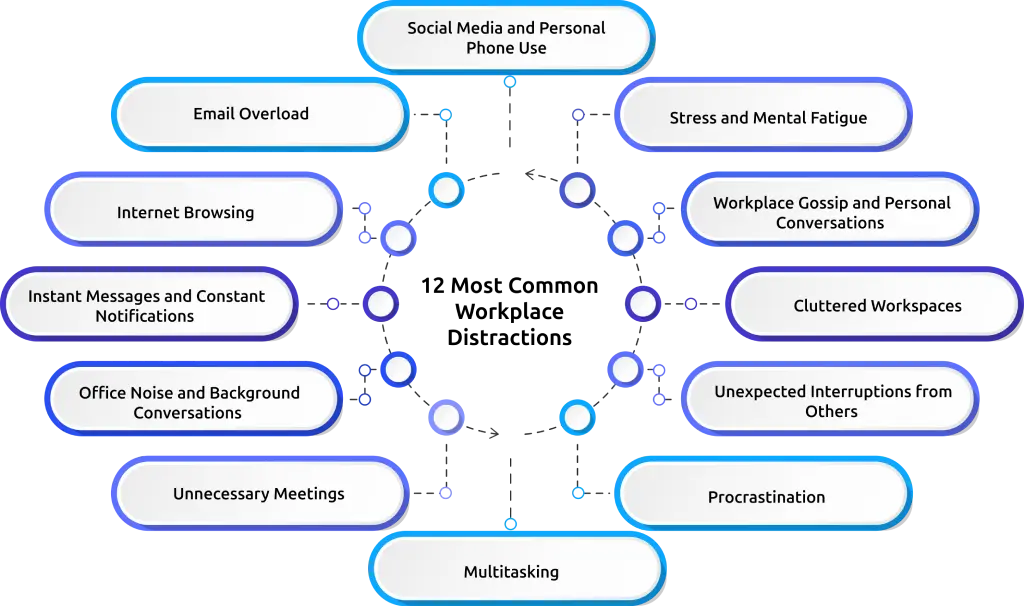
1. Social Media and Personal Phone Use
Social media and smartphones make it easy to lose focus without even realizing it. A quick look at a message or notification can easily turn into several minutes of scrolling, making it harder to return to important work. When this happens repeatedly throughout the day, productivity starts to decline.
How to Avoid: Set clear expectations for phone use during work hours instead of trying to eliminate it completely. Encourage dedicated focus periods where notifications stay silent and non-work apps remain closed. Supporting healthy digital habits helps your teams stay focused without creating unnecessary restrictions.
2. Email Overload
Checking email every few minutes interrupts concentration and keeps work in a constant cycle of switching between messages and tasks. Even important emails can become a distraction when they break focus throughout the day.
How to Avoid: Set simple rules for checking email. Instead of checking it all the time, check it at fixed times during the day. Make it clear which messages need quick attention and which can wait until the next scheduled check. Encourage your team to use chat for quick questions and shared documents for detailed information. This helps reduce email overload and keeps everyone focused on their work.

Did You Know
According to Business Insider, nearly 34% of Americans check their email continuously throughout the day.
3. Internet Browsing
The internet supports everyday work, but it also provides endless opportunities for distraction. Reading news, watching videos, shopping online, or exploring unrelated websites can consume valuable work time before anyone notices.
How to Avoid: Focus on outcomes rather than monitoring every online activity. Explain to your team what counts as work-related browsing and what they should save for breaks. When you build awareness around healthy browsing habits, your team stays focused without needing strict restrictions.
Is excessive internet use affecting your team’s focus?
Use Time Champ to monitor app and website activity effectively
4. Instant Messages and Constant Notifications
Messages from chat applications, collaboration tools, calendars, and mobile apps can interrupt work throughout the day. Each alert may seem small, but frequent notifications break concentration and make it difficult to complete deep, focused work.
How to Avoid: Reduce unnecessary notifications by limiting alerts to only what is truly important. Encourage your team to turn off non-essential notifications, use “do not disturb” modes during focus time, and check messages at set intervals instead of constantly responding. These simple steps help create longer periods of uninterrupted work.
5. Office Noise and Background Conversations
A noisy workplace makes it difficult to stay focused, especially when you're trying to do deep work that requires full attention. Conversations nearby, ringing phones, office equipment, or constant movement can easily pull your attention away. Even if each interruption lasts only a few seconds, those moments add up throughout the day and make it harder to get back into the flow of work.
How to Avoid: You can create dedicated quiet periods and provide distraction-free spaces for employees for focused work whenever possible. Noise-cancelling headphones, dedicated focus areas, or simply moving to a quieter space for important tasks can make a noticeable difference. Small changes in the work environment often lead to better concentration.
6. Unnecessary Meetings
Meetings help teams collaborate, but too many meetings leave very little time to complete actual work. Long discussions without a clear purpose often interrupt the day and break momentum. It's even more frustrating when a one-hour meeting could have been a quick message or a short conversation.
How to Avoid: Before scheduling a meeting, ask your team whether it truly needs everyone's time. Keep meetings focused with a clear meeting agenda, invite only those who need to participate, and end with clear action items. Shorter, well-planned meetings leave more time for meaningful work.
Did You Know
The LSE Generational Survey Report shows that 35% of meetings are viewed as unproductive by many employees.
7. Multitasking
Handling multiple tasks at once may feel productive, but it usually has the opposite effect. Constantly switching between emails, chats, documents, and meetings forces your brain to reset every time. Instead of finishing work faster, teams often spend more time remembering where they left off. Frequent task switching reduces efficiency and increases mental fatigue.
How to Avoid: Guide your team to focus on one priority at a time instead of constantly switching between tasks. Completing one task before moving to the next improves concentration and usually produces better results than juggling several tasks together.
8. Procrastination
Not every distraction comes from the outside. Sometimes procrastination becomes the biggest obstacle, especially when a task feels difficult, repetitive, or overwhelming. The longer you delay it, the easier it becomes to shift your attention to simpler, less important tasks.
How to Avoid: Break larger projects into smaller milestones and set clear deadlines so your team can make steady progress. Taking small steps helps you build momentum and makes the rest of the work feel more manageable. Often, getting started is the hardest part, and once you begin, it becomes easier to stay focused.
Pro Tip
Use a task management tool like Time Champ to assign tasks, track progress, and keep your team focused on priorities. Seeing your progress in one place makes it easier to stay on track and reduces the urge to delay important work.
9. Unexpected Interruptions from Others
A quick question or an unplanned conversation may seem harmless, but frequent interruptions can easily break your team’s concentration. Even brief disruptions can slow down your progress and make tasks take longer than expected. For remote workers, interruptions can come from home environments, such as family members, household chores, or unexpected noise.
How to Avoid: Help your team to respect focus time and minimize unnecessary interruptions. If something isn't urgent, note it down and discuss it later. Simple habits like checking availability before interrupting help everyone work with fewer distractions.
10. Cluttered Workspaces
A cluttered desk or a disorganized digital workspace makes it harder to find what you need. Searching through scattered files, crowded desktops, or piles of paperwork wastes time and creates unnecessary mental clutter. A clean workspace makes it easier to stay organized and keep your attention on the task instead of the mess around it.
How to Avoid: Ask your team to spend a few minutes at the end of each day organizing their workspace. Have them keep only frequently used items within reach, arrange digital files into folders, and close tabs they no longer need. A simple routine like this allows your team to start the next workday more smoothly. If you want a more structured and tidy setup, check out our guide on organizing your workspace for better productivity.
11. Workplace Gossip and Personal Conversations
Friendly conversations help build good relationships, but long discussions that drift away from work can quickly become distractions. It's easy to lose track of time when casual chats continue throughout the day. Besides affecting focus, these conversations can also interrupt others who are trying to complete their work.
How to Avoid: Enjoy casual conversations during breaks instead of while working on important tasks. Keeping work discussions and social conversations separate helps maintain a healthy balance between collaboration and productivity.
12. Stress and Mental Fatigue
Not every distraction comes from the outside. Stress, lack of sleep, or mental exhaustion can make even simple tasks feel difficult. When employees feel mentally drained, their focus drops, mistakes increase, and productivity slows down.
How to Avoid: Maintain realistic workloads, allow regular breaks during the day, and avoid long stretches of continuous work without rest. A balanced work routine keeps employees mentally fresh, improves concentration, and supports consistent performance.
How Time Champ Helps Reduce Workplace Distractions
Reducing workplace distractions becomes much easier when you can clearly see where your team’s time goes and what interrupts daily work. Instead of relying on assumptions, you need accurate insights that help you identify distraction patterns and take the right action across your organization. That's exactly where Time Champ makes a difference. Here are some of the ways Time Champ helps you create a more focused and productive work environment for your team.
- App and Website Usage Tracking: See which applications and websites consume the most work time across your team. This makes it easy to identify non-work activities, understand browsing patterns, and spot distractions before they begin affecting productivity.
- Productivity Tracking: Measure productive, unproductive, and neutral work time with clear productivity insights. These reports help you understand how your team’s work progresses throughout the day and identify areas where focus drops.
- Automatic Time Tracking: Track work hours automatically without manual timesheets or constant updates. Accurate time records help you understand how your team spends time across tasks and reduce time lost to unnecessary interruptions.
- Idle Time Detection: Detect inactive periods during working hours and understand when work slows down across your team. These insights help you recognize recurring distraction patterns and improve daily workflows without guesswork.
- Real-Time Activity Monitoring: View team activity as it happens through a centralized dashboard. Real-time visibility helps you identify workflow interruptions quickly and address issues before they affect project progress.
- Detailed Reports and Analytics: Generate detailed reports that highlight productivity trends, app usage, attendance, and work patterns. Instead of making decisions based on assumptions, you can use real data to improve focus and reduce workplace distractions across your organization
Time Champ does more than track work activity. It helps you understand how work flows throughout your team’s day, where distractions occur most often, and what changes can improve focus. With clear insights and actionable reports, you can reduce workplace distractions, encourage better work habits, and build a more productive work environment over time.
Struggling to understand where work time goes?
Try Time Champ to spot distraction patterns and for complete productivity insights.
Conclusion
Managing workplace distractions begins with recognizing what affects your focus and making simple changes to improve your daily work routine. Staying consistent with small improvements helps you build better habits and maintain productivity over time. Instead of trying to eliminate every distraction at once, focus on steady progress. Time Champ makes this easier by giving clear insights into your work patterns, helping you identify distractions and stay focused throughout the day. Start your 7-day free trial today and take control of your workday.

Thasleem Shaik

Table of Content
 What Are Workplace Distractions?
- What is the Impact of Workplace Distractions on Productivity?
- 12 Most Common Workplace Distractions and How to Manage Them
- How Time Champ Helps Reduce Workplace Distractions
- Conclusion
Instant Signup
Thank you for your request!
We have received your signup request and our team will get back to you soon. In the meantime, you can book a demo to see Time Champ in action.
Book a DemoFree trial. No credit card required. Prefer a walkthrough? Book a demo.
Related Blogs
Struggling to focus while working from home? Discover practical tips to manage distractions like chores, pets, and social media for better productivity.
Shabana Shaik | Oct 26, 2024
Discover practical time management techniques to improve focus, prioritize tasks, reduce distractions, and manage your workday more effectively.
Thasleem Shaik | May 21, 2026
Discover 9 time wasting habits that quietly drain productivity at work. Learn why they stick, how to break them, and reclaim more focused, productive hours.
Jahnavi Pulluri | May 25, 2026
Struggling to stay productive? Discover 25 daily routines and habits that can improve focus, reduce distractions, and boost your productivity.
Guna Lakshmi | Jun 27, 2026
Boost collaboration, increase engagement, and strengthen team connections with 10 effective hybrid team building activities for remote and office teams.
Anjali | Jun 18, 2026
What is time blocking? Learn how to plan focus blocks, choose a method that fits your day, and audit whether your blocks actually held to get more done.
Shaik Shabana | Jun 08, 2026


 4.7/5 avg.
Ready to Manage Your Workforce Smarter?
Join our family of 1500+ companies using smart insights to redefine workforces!

Free Trial
No Credit Card Required