Top Time Wasters at Work and How to Prevent Them
Discover the top time wasters at work, their causes, and smart ways businesses can reduce distractions and improve workplace productivity across teams.

You hire skilled employees, establish objectives, and develop workflows to keep work moving smoothly, but productivity still gets affected. The reality is that a significant portion of the problem comes from small daily habits and unnoticed activities that quietly consume valuable work hours. These time wasters at work not just reduce efficiency but also impact the team performance, project timelines, and overall business growth.
Here, you’ll understand the common workplace time wasters, the hidden reasons behind them, and practical strategies to reduce distractions and improve team productivity. The blog also helps you identify productivity gaps early and build a more focused and efficient workplace.
What Are Time Wasters in the Workplace?
Time wasters in the workplace are the activities, habits, or interruptions that consume valuable employee working hours without contributing to meaningful results. These distractions reduce employee focus, slow down task completion, and impact overall efficiency.

Did You Know?
According to Gallup’s research report, only 31% of U.S. employees were actively engaged at work in 2024, marking the lowest engagement level in the past decade. This decline can directly affect workplace productivity and overall business performance.
Top Time Wasters at Workplaces
Small habits and daily distractions gradually reduce employee focus and efficiency, causing many workplace productivity issues. Understanding the common workplace time wasters can help you identify factors that reduce focus, slow down work, and impact overall business productivity.

Social Media and Digital Distractions
Issue: Constant notifications, scrolling through social media feeds, sending personal messages, and even unnecessary internet browsing can quickly distract employees from their work. Even a few minutes of distraction throughout the day can reduce focus, delay completing tasks, and decrease productivity.
How to Fix: Reduce digital distractions by limiting unnecessary notifications, encouraging focused work hours, and setting clear workplace policies for mobile device and social media usage. Productivity tracking tools can also help you identify websites or apps that consume excessive work time.
Too Many Unproductive Meetings
Issue: Meetings without clear agendas, goals, or outcomes waste employees' valuable working hours. Employees might spend more time discussing issues compared to completing their productive tasks, which can affect productivity and delay project progress.
How to Fix: Prevent unnecessary meetings by scheduling them only when necessary, keeping discussions short, and setting clear agendas in advance. Using shared documents or collaboration tools for simple communication can also save time.
Frequent Workplace Interruptions
Issue: Frequent messages, calls, unexpected discussions, and constant task interruptions can reduce employees' focus. Continuous distractions force employees to repeatedly shift attention, which reduces efficiency and increases the chance of making mistakes.
How to Fix: Minimize interruptions by encouraging structured communication, setting dedicated focus hours, and reducing unnecessary check-ins during deep work periods.Creating a distraction-free work environment also helps employees concentrate better.
Multitasking
Issue: Handling multiple tasks at the same time may seem productive, but it reduces focus and lowers the quality of work. Constantly switching between tasks can increasemental fatigue, slow down completion time, and create more errors.
How to Fix: Improve productivity by encouraging employees to focus on one task at a time based on priority. Using task management systems, time blocking, and realistic deadlines can help your teams stay organized and work more efficiently.
Spending Too Much Time on Perfection
Issue: Employees sometimes spend excessive time refining the small details that have little impact on the outcome. While maintaining quality is important, overthinking and repeatedly revising tasks can delay progress and reduce overall productivity.
How to Fix: Avoid perfection-related delays by setting realistic expectations, defining clear completion standards, and encouraging employees to focus on progress without unnecessary perfection. You should also provide timely feedback to prevent overworking on minor details.
Poor Planning and Lack of Priorities
Issue: When employees are unclear about priorities, they may spend time on less important tasks while critical work gets delayed. Poor planning often leads to confusion, missed deadlines, workload imbalance, and inefficient use of work hours.
How to Fix: Solve this by setting clear goals, prioritizing tasks based on urgency, and creating structured workflows for teams. Regular planning sessions and workload visibility also help your employees stay focused on high-value tasks.
Why Time Wasting at Work Is a Serious Problem for Businesses
Even small productivity gaps can create major business challenges when they happen consistently across teams. Workplace time wasting not only affects employee accountability but also impacts overall business performance, costs, and growth.
- Reduced Employee Productivity: Employees lose valuable work hours on distractions, unnecessary meetings, and low-priority tasks, which reduces overall efficiency and delays important work.
- Missed Deadlines and Project Delays: Poor time management and constant interruptions can slow down task completion, making it difficult for your teams to meet deadlines and project timelines.
- Increased Operational Costs: When work takes longer than expected, you may spend more on labor costs, overtime, and additional resources to complete the same tasks.
- Employee Stress and Burnout: Constant distractions and unfinished workloads can increase pressure on employees, leading to stress, frustration, and lower job satisfaction over time.
- Poor Team Collaboration and Accountability: Workplace time wasters can create communication gaps, confusion, and unclear responsibilities, which affect teamwork and overall accountability within your organization.
Are workplace distractions reducing your team’s productive hours?
Time Champ helps you track productivity and reduce idle time.
How to Spot Time Waster Activities Before They Cost You?
Small productivity issues can slowly turn into major business problems when they go unnoticed for too long. Identifying time-wasting activities early helps you improve employee focus, reduce unnecessary delays, and make better use of working hours.
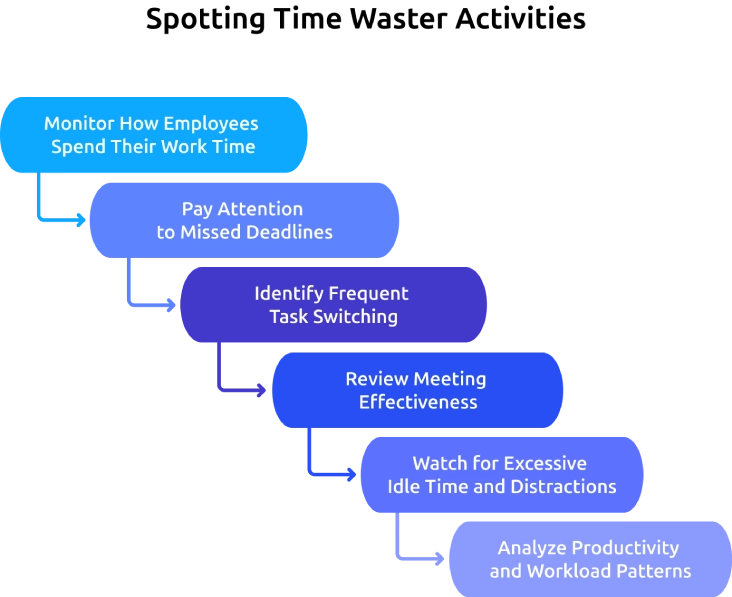
1. Monitor How Employees Spend Their Work Time
Check how employees spend their daily work hours and identify activities that consume excessive time without adding real value. If you notice a gap between hours worked and actual output, it may indicate hidden productivity issues.
2. Pay Attention to Missed Deadlines
Look for the tasks or projects that are consistently delayed without any clear reason. When employees regularly miss deadlines without having enough time, it often signals that productive hours are being lost somewhere during the workday.
3. Identify Frequent Task Switching
Notice if employees keep shifting between multiple activities throughout the day without completing them. Continuous task switching can reduce focus, slow down work completion, and impact overall performance.
4. Review Meeting Effectiveness
Analyze whether meetings help your teams make progress or simply consume productive work hours. If discussions regularly end without clear decisions or action items, it may be a sign that meeting time needs to be restructured.
5. Watch for Excessive Idle Time and Distractions
Notice patterns like long inactive periods, extended breaks, or unusual gaps in activity during work hours. Consistent idle time across employees can slowly reduce efficiency and affect overall team performance.
6. Analyze Productivity and Workload Patterns
Review employee workloads, productivity reports, and work completion patterns regularly. Uneven workloads, low output, or employees working long hours with minimal results may signal productivity and time management problems.
How Time Champ Helps Your Businesses Eliminate Workplace Time Wasters
Without proper visibility into daily work activities, you may struggle to identify where productive hours are being lost and why employee efficiency keeps dropping. Time Champ is employee time tracking and monitoring software that helps you identify productivity gaps, reduce workplace distractions, and improve overall team performance.
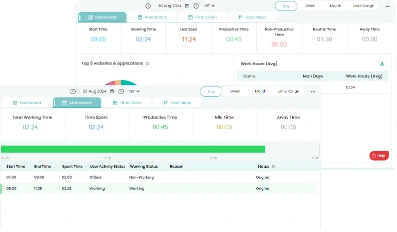
Time Champ also helps you track productive and unproductive work hours, monitor app and website usage, identify idle time, and understand employee work patterns in real time. Features like automatic time tracking, productivity monitoring, idle time detection, workload insights, attendance tracking, real-time reports, and productivity analytics help you reduce time wastage, improve accountability, and create a more focused and productive workplace.
Struggling to identify workplace productivity gaps?
Try Time Champ now and get real-time insights into employee work activities.
Conclusion
Workplace productivity is often affected by small distractions and inefficient habits that go unnoticed in daily operations. Activities like unnecessary meetings, constant interruptions, multitasking, and poor planning can slowly reduce employee focus and delay important work.
Identifying these time wasters early helps you improve efficiency, reduce productivity gaps, and create a more organized work environment. When employees have clear priorities, better workflows, and fewer distractions, they can manage work more effectively, complete tasks on time, and maintain consistent productivity across the workplace.

Anjali

Table of Content
 What Are Time Wasters in the Workplace?
- Top Time Wasters at Workplaces
- Why Time Wasting at Work Is a Serious Problem for Businesses
- How to Spot Time Waster Activities Before They Cost You?
- How Time Champ Helps Your Businesses Eliminate Workplace Time Wasters
- Conclusion
Related Blogs

Learn how to monitor employee idle time the right way with fair thresholds, transparent policies, and idle time monitoring software that builds trust.
Anjali | Apr 30, 2026
Implement a productivity tracking tool with clear steps, setup tips, and best practices to track employee productivity and improve team performance.
Thasleem Shaik | Apr 30, 2026
Explore employee performance monitoring types, effective methods, common mistakes, and practical ways to improve overall team performance for modern workplaces.
Anjali | May 08, 2026
Discover the real pros and cons of employee productivity tracking, how it impacts your team, and the right way to use it to support trust and performance.
Anjali | May 02, 2026
Learn the difference between productivity tracking and time tracking, how they work, and which approach helps improve team performance and visibility.
Guna Lakshmi | May 09, 2026
Explore the top 10 productivity monitoring software in 2026, comparing features, pricing, fit, and privacy. Find the right tool to match your team’s needs.
Anjali | May 07, 2026


 4.7/5 avg.
Ready to Manage Your Workforce Smarter?
Join our family of 1500+ companies using smart insights to redefine workforces!

Free Trial
No Credit Card Required