What Is Time Blocking? How to Use It for Greater Efficiency
What is time blocking? Learn how to plan focus blocks, choose a method that fits your day, and audit whether your blocks actually held to get more done.

It’s 4 PM, and you feel nothing is finished at work, but you were busy all day. I am sure you have been through it, because I did, and a lot of my coworkers too.
You answer messages, jump between tabs, sit in two calls, and somehow, the one task that actually mattered is still sitting there, completely untouched.
This happens when you don’t have a proper time blocking strategy.
In fact, research from the University of California, Irvine, found it takes about 23 minutes to fully refocus after a single interruption. Stack enough of those up, and a whole workday quietly disappears.
You might be new to this term, so here’s a definition.
What is Time Blocking?
Time blocking is a time management method where you divide your day into blocks and give each block one specific task or type of work. Instead of working from an open-ended to-do list, every task gets a planned slot on your calendar. It’s pretty simple, protect your attention so one thing gets your full focus at a time, not 10 priorities and 100% confusion.
A small example: Think of your calendar as real estate. A time block will be you deciding, in advance, what each hour is for. Like a 9 am email block, a 10 am deep work block, and a 2 pm meetings block. When the hour arrives, the decision is made, so you stop negotiating with yourself about what to do next.
Time Blocking vs Time Boxing vs Task Batching: What is the Difference?
People always think these terms mean the same, here’s a detailed split for you so that you don’t end up getting them wrong.
- Time blocking assigns slots to tasks
- Time boxing caps how long a task can take
- Task batching groups similar work together
You can, and often should, use all three at once.
| Method | What it Does | Best For |
|---|---|---|
| Time blocking | Assigns a slot on your calendar to a task or type of work | Protecting focus across a full day |
| Time boxing | Sets a hard limit on how long you will spend on a task | Tasks that drag on or feel never-ending |
| Task batching | Groups similar small tasks into one block | Emails, calls, admin, and quick replies |
If you want a deeper look at the time-cap approach, we have a full guide to time boxing.
Which Time Blocking Method Fits How You Work?
There is no single right way to block time. The trick is matching the method to your work and energy, not forcing yourself into someone else's perfect schedule. Here is a quick picker. Find the row that sounds like your day, and start there.
Here are some methods you can use to block time, because one method is never fit for all, so choose what sounds more like you, or mix and match a few if needed.
| If Your Day Looks Like... | Try This Method | How it Works |
|---|---|---|
| Pulled in ten directions | Traditional time blocking | Set fixed slots for each task and defend them |
| You lose track of time on tasks | Pomodoro | Work 25 minutes, break 5, repeat, then a long break |
| Your energy swings through the day | Energy-based blocking | Hard tasks at your peak hours, easy tasks at the dips |
| Death by small tasks | Task batching | Group emails, calls, and admin into one block |
| Every day feels scattered | Day theming | Give each day a focus, like Monday for planning |
You do not have to pick just one, most people I know mix two or three. Batch your admin, protect a deep work block at your peak hour, and theme your week loosely. Start with the row that fits you, and then you can always adjust if it does not work the way you want.

Did You Know?
According to research from the American Psychological Association, 55% of people who manage their time effectively use time blocking to improve focus and boost productivity.
How to Start Time Blocking? (a realistic sample day)
Starting is simple, but the first attempt usually fails for one reason: people block every single minute, miss the plan by 10 am, and quit it by lunch. So, we will do it the realistic way, of course, with breathing room built in. Here is the five-step version.
- List your tasks, then circle the two or three that actually matter for you today.
- Find your peak focus hours and put your hardest task there, not whenever a gap appears.
- Block your important tasks first, then fit the smaller stuff around them.
- Add a buffer block and an overflow block, because real days run over.
- Block personal time too, so work does not overlap with your family dinner time.
- Tip: You can use time blocking templates if you are just getting started, to get a gist of it
Here is what a survivable day actually looks like. Notice it is not packed wall to wall, the gaps are the point.
| Time | Block | Why it is Here |
|---|---|---|
| 9:00 to 9:30 | Plan + email triage | Clear the noise before deep work, not during it |
| 9:30 to 11:00 | Deep work (top task) | Peak energy goes to the thing that matters most |
| 11:00 to 11:15 | Buffer | Catch up, breathe, and handle anything that ran over |
| 11:15 to 12:30 | Meetings (batched) | Calls grouped so focus time stays unbroken |
| 1:30 to 3:00 | Deep work (second task) | Second priority gets a protected block too |
| 3:00 to 3:30 | Overflow/admin | A safety net for the work that always appears |
| 3:30 to 4:00 | Review the day | The step almost everyone skips (I have covered it below) |
Want to start time blocking the right way?
Time Champ helps you understand where your time is actually going!
Why Does Time Blocking Fail, and How to Fix It?
Most guides sell time blocking like it always works, but it does not, at least not for first-timers. When it falls apart, it is usually one of the four reasons:
The bright side is that each one has a simple fix, and none of them mean the method is completely wrong for you.
1. Blocking every minute on day one feels very productive at first, and collapses by 10 am.
Fix: protect only your top two or three tasks and leave the rest of the day open until the habit sticks.
2. Real days bring last-minute calls and urgent requests. A rigid plan breaks the moment one lands.
Fix: build a buffer block and an overflow block into every day, so surprises have somewhere to go other than your calendar.
3. We are all terrible at estimating, a task you blocked for 30 minutes actually takes 90, and for the rest of the day, you struggle to manage.
Fix: track how long tasks really take for a week, then block based on reality, not I hope it’s enough time.
4. This is the big one, and it leads straight into the next section. If you never review whether your blocks are held, you keep repeating the same broken plan.
Fix: run a two-minute audit at the end of the day.
Quick Gut Check
Can you say, right now, where your last three hours actually went? If the honest answer is 'not really,' that blind spot is exactly where time blocking is supposed to help, and exactly what the audit below fixes.
How to Audit Your Time Blocks: Did the Plan Actually Hold?
Here is the part that almost every time blocking guide skips (at least the ones I read skipped). Building a plan is quite easy, even ChatGPT does that, but knowing whether you followed it is what actually makes you better. An audit is just a two-minute review at the end of the day where you compare what you planned against what really happened, and adjust tomorrow based on that.
You do not need an app to do all of this. A quick glance at your calendar and an honest answer to these three questions is enough for you to get started.
- Which blocks held exactly as planned?
- Which blocks got hijacked, and by what?
- What would I move or resize if I ran today again?
Calculate Your Block Adherence Rate
If you want just one number to track, use your adherence rate. It is the share of your planned focus blocks that actually happened as intended. Blocks held divided by blocks planned, times 100. It sounds basic, but watching this number is what turns time blocking from a wish into a skill.
Notice how the target is not 100 percent. A perfect score usually means you under planned and gave yourself easy blocks. Somewhere around 70 to 80 percent is the healthy zone: ambitious enough to stretch you yet realistic enough to actually hit it. Once you can see the number, you stop guessing and start tuning in.
This is also where most people realize the same block gets hijacked every day, the 11 am one that always turns into Slack, for example. That pattern is invisible until you audit, and once you see it, you can move it, shrink it, or defend it harder.
Time Blocking for Teams, not Just Individuals
Time blocking is usually pitched as a solo habit, but it somehow falls apart in a team. Your perfect deep work block means nothing if a colleague drops a meeting on top of it, and for managers, the real win is making focus a team agreement, not a personal trick.
- Set a shared meeting-free window, like 9 to 11 am, where the whole team protects focus time.
- Respect each other's blocks. A block on someone's calendar is a strict no, not a soft maybe, or can be.
- Batch team meetings into set days so the rest of the week stays open for real work.
- Watch for toxic productivity, where people block every minute and burn out. Protected rest blocks count too.
When a team blocks time together, the calendar stops being a battlefield. That shared respect for focus is often the difference between a team that ships and one that just stays busy.
How Time Champ Helps Your Time Blocks Hold Up
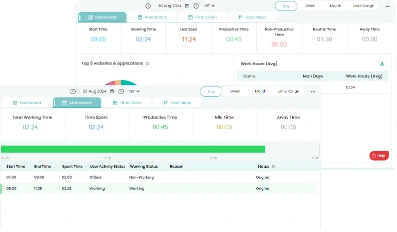
Time Champ is a time tracking and employee monitoring software. It shows you where your time actually went, so the audit we just talked about takes seconds instead of hours of guesswork. You plan in your calendar, you work your day, and Time Champ quietly records what really happened and shows you how things went, so that you can see opportunities to improve your time schedule.
In short, it does everything you expect from a time tracker.
Here is how that supports time blocking specifically.
Time Champ tracks real-time activity and app usage in the background, so when you ask, 'Did my 10 am deep work block hold?’, you will have an honest answer instead of a vague memory.
With heatmaps and time-usage trends, the pattern jumps out. If your deep work block keeps dissolving into chat every afternoon, you finally see it, and you can defend that block tomorrow.
Workload views flag who is overloaded before burnout sets in, so blocks are based on a realistic day, not a hopeful one.
Flexible tracking gives managers clarity on whether shared focus windows are holding, without hovering over anyone. Visibility, not micromanagement.
Most employee monitoring software just captures activity logs. Time Champ adds the workforce intelligence layer that tells you why your blocks held or did not, which is the exact missing piece in every 'I tried time blocking, and it did not work' story.
Want your focus blocks to actually hold?
Time Champ shows you what actually happened in your entire day!
Conclusion
Time blocking is not about scheduling every second or becoming a productivity robot. It is about deciding what matters before the day decides for you, and then protecting that decision. Pick the method that fits how you work, build a day with breathing room, and most importantly, review whether your blocks actually held.
Building the plan is the easy half. Checking it, learning from it, and adjusting is where the real change happens. Start small this week, block just your top two tasks, audit at the end of each day, and watch how quickly that 4 pm 'where did my day go' feeling starts to fade.

Shabana Shaik

Table of Content
 What is Time Blocking?
- Time Blocking vs Time Boxing vs Task Batching: What is the Difference?
- Which Time Blocking Method Fits How You Work?
- How to Start Time Blocking? (a realistic sample day)
- Why Does Time Blocking Fail, and How to Fix It?
- How to Audit Your Time Blocks: Did the Plan Actually Hold?
- Time Blocking for Teams, not Just Individuals
- How Time Champ Helps Your Time Blocks Hold Up
- Conclusion
Related Blogs

Struggling with employee shift scheduling? Explore the best types, benefits, and strategies to streamline shifts, boost productivity, and keep your team happy!
Tarun Kumar Reddy | Mar 13, 2025
Discover essential features of time tracking software and how Time Champ enhances project management, productivity, and accuracy.
Tarun Kumar Reddy | Aug 23, 2024
Unorganized work hours? Time tracking categories bring clarity, optimize workflows, and boost productivity. Learn how to set them up effectively.
Thasleem Shaik | Nov 08, 2024
Want to boost productivity? Uncover 20 time tracking best practices that can transform your workflow and help you achieve more with less effort.
Guna Lakshmi | July 01, 2025
Explore 17 frequently asked questions about time tracking tools, including productivity, remote work, payroll, monitoring, features, and business benefits.
Anjali | May 19, 2026
Explore the latest time tracking statistics for 2026, including productivity trends, AI insights, remote work data, and workforce analytics.
Thasleem Shaik | May 22, 2026


 4.7/5 avg.
Ready to Manage Your Workforce Smarter?
Join our family of 1500+ companies using smart insights to redefine workforces!

Free Trial
No Credit Card Required