What are the Pros and Cons of Remote Employee Monitoring
Learn why remote employee monitoring matters, its key pros and cons, and how to overcome challenges with the right approach for better productivity and trust.

Managing a remote team isn’t just about assigning tasks and tracking deadlines. You need to see how work is progressing, but not in a way that makes your team feel uncomfortable or watched. When you lack visibility, deadlines slip, and workloads become uneven. But if you monitor too much, it can hurt employee trust and motivation. That’s why remote employee monitoring has become an important part of managing remote teams today, bringing both clear benefits and real concerns you need to handle carefully.
In this blog, you’ll learn why remote employee monitoring matters, along with its key pros and cons, and how they impact productivity and trust. You’ll also discover practical strategies to overcome challenges and implement remote monitoring in a way that supports both performance and team confidence.
Why is Remote Employee Monitoring Important?
Remote employee monitoring is crucial for maintaining accountability and productivity when your team works from different locations. It gives you a clear view of how time is spent, so you can track project progress, identify delays early, and keep work moving without constant follow-ups.
It also helps you understand where work slows down. With better visibility, you can spot bottlenecks, improve workflows, and support your team before small issues turn into bigger problems. At the same time, monitoring adds a layer of protection by keeping work within secure systems, which helps reduce risks around sensitive company data.
When you use it the right way, remote employee monitoring helps you stay in control of work quality, protect your business, and keep teams aligned without creating unnecessary pressure.
Pros of Remote Employee Monitoring
You don’t just gain visibility, but can also gain control over how work actually gets done. When you use it the right way, monitoring reveals work patterns, highlights underutilized hours, identifies delays, and helps your team perform better without constant follow-ups. The real advantage lies in how it turns everyday work data into clear, actionable improvements.
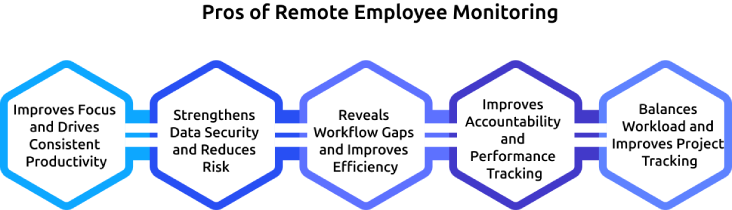
Improves Focus and Drives Consistent Productivity
Remote employee monitoring provides a clear view of how your team spends their work hours and where attention shifts during the day. Without just relying on assumptions, this approach provides real insights into work patterns, making it easier to guide employees toward better focus. With clear visibility into work, employees stay focused, reduce distractions, and maintain consistency in their tasks. It also helps you identify where time gets wasted and address those gaps early.
Over time, this leads to steady productivity improvements without constant follow-ups or pressure. When used effectively, remote employee monitoring gives you the clarity needed to keep work moving efficiently.

Did You Know?
According to Owl Labs research, 90% of remote employees say their productivity has either improved or stayed the same while working remotely, showing how the right visibility and structure can support consistent performance.
Strengthens Data Security and Reduces Risk
Better visibility into digital activity helps you protect sensitive business information, especially when teams work across different locations and devices. This approach ensures employees access only the systems they need and reduces the chances of data misuse. It also allows you to identify unusual behavior early and take action before issues increase.
For businesses handling confidential data, this level of control becomes essential. Remote employee monitoring offers a proactive way to maintain security while allowing teams to work without disruption.
Reveals Workflow Gaps and Improves Efficiency
A clearer understanding of how work flows across your team helps you identify delays, repetitive tasks, and inefficiencies. Without guessing where problems exist, you can rely on actual data to make improvements. This visibility allows you to streamline processes, allocate resources better, and ensure tasks move smoothly from start to finish.
As a result, teams work more efficiently, and projects stay on track. Remote employee monitoring gives you actionable insights that help improve overall workflow and performance.
Improves Accountability and Performance Tracking
A structured view of tasks and timelines makes it easier to track progress and understand individual contributions. This visibility offers clear performance insights without the need for repeated check-ins. You can rely on actual data to evaluate work, which brings more clarity and consistency to expectations. It also supports fair evaluations, as feedback is based on measurable outcomes rather than opinions.
With better clarity, communication improves, and teams stay aligned on goals. Remote employee monitoring helps to create an environment where accountability grows naturally, and everyone understands their role in delivering results.
Balances Workload and Improves Project Tracking
Better visibility into workload distribution helps you ensure that no one feels overburdened while others remain underutilized. This balance supports a healthier work pace and reduces the risk of burnout. At the same time, tracking how time is spent on tasks improves project planning and billing accuracy.
You gain a clearer picture of effort, timelines, and resource use. Remote employee monitoring provides the insights needed to maintain both operational accuracy and a more balanced work environment.
Struggling to track productivity without affecting your team’s trust?
Time Champ helps you track work clearly and improve performance without adding pressure.
Cons of Remote Employee Monitoring
Remote employee monitoring gives you better visibility into work, but it can also create challenges around trust, privacy, and team experience. Understanding these issues helps you handle them in a way that avoids negative impact on your team.
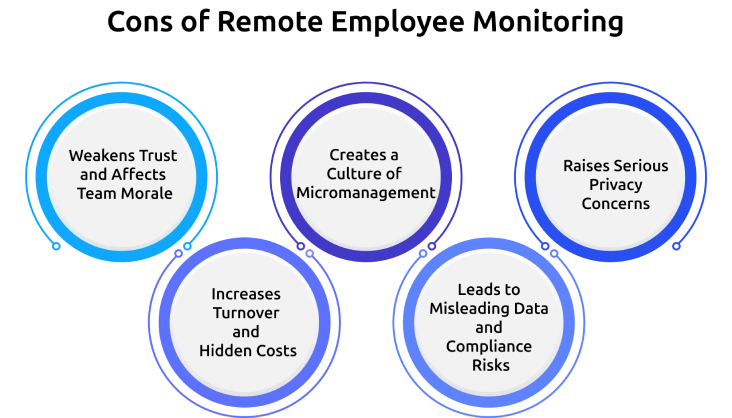
Weakens Trust and Affects Team Morale
When employees feel constantly observed, they can become cautious and less confident in their daily work. A lack of transparency often creates doubt, making employees question how their actions are judged. This change pulls attention away from meaningful work and affects overall morale. Over time, it can weaken the relationship between managers and employees.
A work environment built on trust encourages better performance, while excessive monitoring can make it feel restrictive. Remote employee monitoring needs clear communication and intent, or it can slowly impact team culture and engagement.
Creates a Culture of Micromanagement
Tracking every small action can make employees feel like they have less control over how they work. This reduces their sense of ownership and limits independent thinking. As a result, they may focus more on appearing active than delivering real results. This affects creativity, slows decision-making, and lowers overall engagement.
Teams perform better when they have space to manage their work effectively. Remote employee monitoring needs to support autonomy and flexibility, or it can create unnecessary pressure and reduce productivity.
Did You Know?
According to WorldatWork, 1 in 9 U.S. employees have left a job due to excessive monitoring, highlighting the impact it can have on trust, morale, and retention when not implemented carefully.
Raises Serious Privacy Concerns
Tracking digital activity can feel uncomfortable when boundaries are not clearly defined. Employees may feel uncomfortable if monitoring extends beyond work-related tasks, especially in remote setups where personal and professional spaces overlap. A lack of clarity about what gets tracked and why can lead to confusion and resistance.
Maintaining privacy while ensuring visibility becomes essential in this setup. Monitoring practices work best when they include clear guidelines that help employees feel secure and respected.
Increases Turnover and Hidden Costs
Poorly implemented monitoring can lead to dissatisfaction, which may push employees to look for better work environments. When people feel disconnected or undervalued, retention becomes a challenge. Replacing employees increases the hiring, onboarding, and training costs, which can also affect the team stability.
Frequent turnover disrupts workflows and slows down progress. Monitoring needs to support employee engagement and experience, or it can lead to long-term costs that become greater than the short-term benefits of control.
Leads to Misleading Data and Compliance Risks
Time spent on a screen does not always reflect actual productivity or quality of work. Relying only on activity-based data can lead to inaccurate conclusions and unfair evaluations. In addition, different regions have strict rules around employee monitoring, and non-compliance can lead to legal complications.
Clear policies and responsible data usage are essential to avoid these risks. Remote employee monitoring becomes effective only when insights are used carefully and within proper legal boundaries.
Strategies to Overcome Remote Employee Monitoring Challenges
Handling monitoring the right way makes all the difference in how your team experiences it. A thoughtful approach helps you maintain visibility without affecting trust or morale. When you focus on clarity, communication, and balance, monitoring becomes a support system, not just a source of pressure.
Focus on Outcomes, not Just Activity
Set clear goals, deadlines, and expected results for each role, so your team knows what matters most. When you measure performance based on outcomes, employees focus on meaningful work without trying to stay constantly active. This approach reduces pressure and encourages better productivity. It also gives you a more accurate way to evaluate performance and progress.
Be Transparent About What You Track
Explain what you track, why it matters, and how the data will be used. Clear communication removes confusion and helps employees feel more comfortable with the monitoring process. When people understand the purpose behind it, they are more likely to accept it. Sharing this information openly builds trust and keeps expectations clear across the team.
Use Regular Check-ins to Stay Aligned
Schedule regular conversations to understand progress, challenges, and workload. Monitoring data gives you insights, but discussions provide the full context behind it. These check-ins help you support employees better and address issues early. They also strengthen communication and keep everyone aligned with goals.
Use the Right Tools to Keep Monitoring Balanced
The tools you choose shape how remote employee monitoring is experienced by your team. A solution like Time Champ helps you track productivity, analyze workflows, and identify gaps without creating unnecessary pressure. It gives you clear insights into how work happens while keeping the focus on outcomes. With features designed for visibility and ease of use, Time Champ helps you maintain control, improve efficiency, and build trust at the same time.
Finding it hard to balance work visibility and employee comfort?
Time Champ gives you simple insights to monitor work while keeping your team comfortable.
Conclusion
Remote employee monitoring can bring real value when you use it with the right intent and approach. It gives you the visibility needed to manage productivity, track performance, and improve workflows. At the same time, it requires careful handling to avoid issues around trust, privacy, and team experience. When you focus on outcomes, communicate clearly, and use the right tools, monitoring becomes a support system. The key lies in balance, using insights to guide your team while creating a work environment where people feel trusted and motivated. When monitoring is done in the right way, it helps both your team and your business grow together.

Anjali

Table of Content
-
 Why is Remote Employee Monitoring Important?
-
Pros of Remote Employee Monitoring
-
Cons of Remote Employee Monitoring
-
Strategies to Overcome Remote Employee Monitoring Challenges
-
Conclusion
Instant Signup
Thank you for your request!
We have received your signup request and our team will get back to you soon. In the meantime, you can book a demo to see Time Champ in action.
Book a DemoFree trial. No credit card required. Prefer a walkthrough? Book a demo.
Related Blogs

Companies are watching remote workers more than ever. But is it ethical? We break down where monitoring is justified and where it crosses the line.
Guna Lakshmi | Apr 16, 2026
Learn the key ethical considerations in employee monitoring. Know what to track, how to stay transparent, and how to build trust with your team.
Thasleem Shaik | Apr 15, 2026
Understand employee monitoring legal compliance, key laws, and best practices to track work activity while protecting privacy and avoiding legal risks.
Thasleem Shaik | Apr 14, 2026
Learn how to address employee monitoring concerns with transparency, clear policies, and trust-building practices that improve engagement and reduce resistance.
Anjali | Apr 17, 2026
Boost team productivity and performance with effective tracking methods. Enhance productivity through data-driven insights and actionable strategies.
Shabana Shaik | March 17, 2025
Productivity Tracking Software helps remote teams stay on top, track progress, streamline workflows & boost efficiency effortlessly. Learn more!
Shabana Shaik | March 15, 2025


 4.7/5 avg.
Ready to Manage Your Workforce Smarter?
Join our family of 1500+ companies using smart insights to redefine workforces!

Free Trial
No Credit Card Required