10 Hybrid Workforce Best Practices for Better Team Performance
Use these hybrid workforce best practices to improve communication, support collaboration, strengthen culture, and help teams stay productive.

Hybrid work can be a great way to give teams more flexibility, but it also needs the right structure to work well. When some employees work from the office, and others work remotely, small gaps in communication, collaboration, or expectations can quickly affect team performance.
That’s why hybrid workforce best practices are important. They help you create clarity, keep people connected, and make sure everyone has what they need to do their best work, no matter where they are working from. In this guide, we’ll look at simple and practical ways to improve teamwork, productivity, and employee experience in a hybrid workplace.
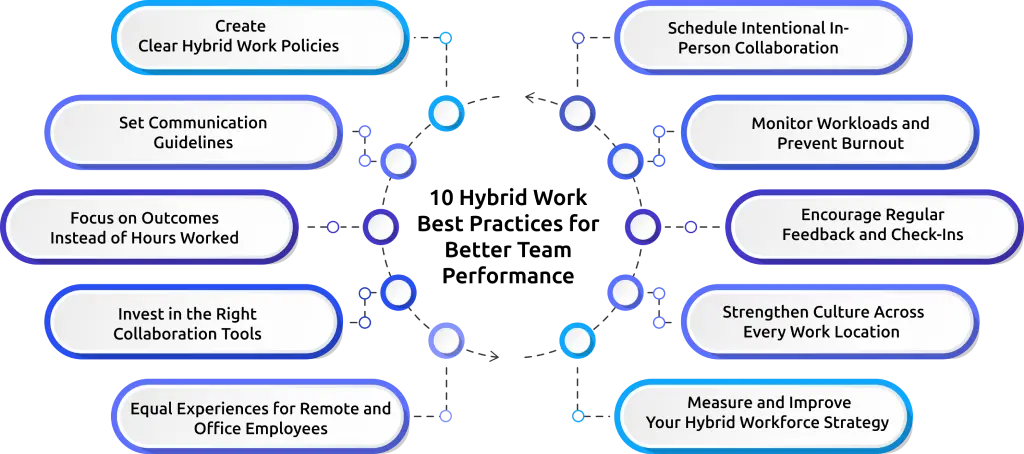
1. Create Clear Hybrid Work Policies
One of the biggest reasons hybrid workplaces struggle is uncertainty. When expectations are not clearly defined, teams can end up following different schedules, communication habits, and work processes. A clear hybrid work policy helps everyone stay aligned by setting consistent guidelines for how teams complete work across different locations.
Your policy should clearly explain who can work remotely and how often team members should visit the office. It should also define work schedules, communication and collaboration expectations, meeting guidelines, and the performance and security standards everyone should follow. When you document these guidelines and make them easy to access, you reduce confusion and prevent misunderstandings. Everyone understands their responsibilities and knows how you evaluate success.
Pro Tip
Instead of creating a policy from scratch, start with our free hybrid policy template and adapt it to match your team's unique needs and work style.
2. Set Communication Guidelines
When your team splits time between home and office, communication gaps can happen quickly. One person may think a quick Slack message is enough, while another expects a follow-up email, which can lead to missed information and misunderstandings.
That's why you need to set clear communication guidelines that everyone follows, no matter where they're working from. Define which channels teams should use for different types of communication. Set expectations for response times and meeting schedules. Also, clarify when team members should share updates through messages or project management tools instead of meetings. This helps reduce confusion and saves time.
Pro Tip
To strengthen team communication, explore our guide on communication tools and find solutions designed for modern workplaces.
3. Focus on Outcomes Instead of Hours Worked
In a hybrid workforce, it is easy to fall into the habit of measuring productivity based on hours logged, online status, or office attendance. However, these metrics do not always reflect the value employees create. A better way to evaluate performance is to look at whether teams meet their goals, move projects forward, and contribute to business success.
According to Deloitte, 43% of employees spend more than 10 hours each week trying to look productive rather than focusing on meaningful results. Instead of measuring how busy employees appear, focus on the goals they achieve, the projects they complete, and the value they deliver. This encourages teams to spend more time on meaningful work and less time trying to prove they are working.
4. Invest in the Right Collaboration Tools
Even the best hybrid work strategy can fall apart when teams struggle to communicate, share information, or coordinate tasks. The right tools help bring everything together by making collaboration easier, regardless of where team members are working.
Your technology stack should support daily work without making processes more complicated. For example, communication tools like Slack, Microsoft Teams, and Zoom help employees stay connected and collaborate in real time. Document-sharing platforms such as Google Drive and SharePoint make it easy to access and update files from anywhere.
For planning, assigning, and tracking work across teams, project management platforms such as Time Champ, Asana, ClickUp, and Jira provide a centralized space to manage tasks, follow project timelines, and keep everyone informed about ongoing work. When the right tools are in place, hybrid teams can work more efficiently and stay aligned on priorities.
Looking for a smarter way to manage hybrid teams?
Try Time Champ to track project progress, improve productivity, and keep your hybrid teams aligned.
5. Ensure Equal Experiences for Remote and Office Employees
A successful hybrid workforce depends on creating a consistent experience for everyone, regardless of where they work. When important discussions happen only in the office, or you offer opportunities more often to employees who are physically present, it can create disconnects and make some team members feel excluded.
Research from Gallup found that hybrid employees are more likely to feel connected to their organization when they receive fair treatment and equal access to resources and opportunities. To avoid this, make sure information, meetings, resources, and growth opportunities are accessible to everyone. Creating a consistent experience across locations helps strengthen engagement, collaboration, and trust.
Pro Tip
Learn how treating remote and office employees fairly can improve engagement, inclusion, and performance in employee rights in the hybrid work blog.
6. Schedule Intentional In-Person Collaboration
One of the biggest mistakes in a hybrid workforce is asking teams to come to the office without a clear purpose. When employees come into the office but spend most of the day working independently on tasks they could easily do from home, the time spent commuting and being on-site may not feel worthwhile. SurveyMonkey’s workforce research found that 29% of remote and hybrid employees would consider quitting if forced back into the office full-time.
Instead, use your hybrid work schedule to bring teams together for activities that benefit from face-to-face interaction. Brainstorming, project planning, workshops, team-building activities, and complex discussions are often easier and more productive when team members can collaborate in person. This helps strengthen relationships and improve collaboration across the team.
7. Monitor Workloads and Prevent Burnout
In a hybrid workforce, workload issues are not always immediately visible. Without regular visibility into workloads, certain team members may take on too much work while others have capacity available. Over time, this imbalance can lead to stress, reduced productivity, and disengagement.
Constant meetings, messages, and task switching can quickly contribute to workplace stress and make burnout prevention in hybrid work more difficult. The best way to address this is to regularly review workloads, project assignments, and deadlines. This helps you identify bottlenecks early, redistribute work when needed, and ensure expectations remain realistic.
Spot workload imbalances before they impact performance.
Use Time Champ to support burnout prevention and productivity.
8. Encourage Regular Feedback and Check-Ins
When teams work across different locations, it becomes easier for challenges, concerns, and roadblocks to go unnoticed. Regular feedback and check-ins help you stay connected with your team, identify issues early, and make sure everyone has the support they need to do their best work.
These conversations do not need to be long or formal. A quick one-on-one meeting, weekly check-in, or feedback session can help uncover workload concerns, communication gaps, and project challenges before they become bigger problems. Consistent check-ins also help employees feel heard and supported, which can improve engagement and job satisfaction.
9. Strengthen Culture Across Every Work Location
Building a strong culture becomes more challenging when you divide your teams between home and office locations. Without intentional effort, your remote employees may feel disconnected from company values, team relationships, and day-to-day interactions. That is why you need to actively integrate culture into the way your hybrid workforce operates rather than limiting it to the office environment.
A strong workplace culture comes from consistent communication, recognition, shared goals, and opportunities for connection. Simple actions such as celebrating achievements, recognizing contributions, sharing company updates, and creating spaces for informal conversations can help employees feel more connected regardless of location.
10. Continuously Measure and Improve Your Hybrid Workforce Strategy
There is no perfect hybrid work strategy that works forever. Team needs, business priorities, and work patterns change over time. That is why one of the most important hybrid workforce best practices is regularly evaluating what is working and what needs improvement.
Instead of relying on assumptions, use data and employee feedback to assess the effectiveness of your approach. Look at key metrics such as productivity, engagement, attendance patterns, workload distribution, project completion rates, and employee satisfaction. These insights can help you identify gaps and make informed decisions.
How Time Champ Helps Hybrid Teams Stay Productive and Connected
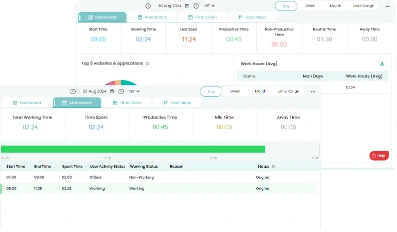
Following hybrid workforce best practices is easier when you have the right visibility into how work is progressing. While communication tools help teams stay connected, you also need a way to track productivity, monitor workloads, manage projects, and understand how teams complete work across different locations.
Time Champ helps you bring all of this together in one place. It provides real-time insights into productivity, attendance, project progress, task completion, work patterns, and team performance. This makes it easier to identify bottlenecks, balance workloads, and keep projects moving forward without disrupting employee flexibility.
With Time Champ, you can:
- Track productivity across remote, in-office, and hybrid teams
- Monitor project progress and task completion in real time
- Analyze workloads to prevent employee burnout
- Measure performance based on outcomes and results
- Gain visibility into attendance and work patterns
- Access workforce analytics and detailed performance reports
- Identify productivity trends and improvement opportunities
- Keep teams aligned with clear project and work insights
Whether you are improving communication, managing workloads, measuring performance, or refining your hybrid workforce strategy, Time Champ provides the visibility and data needed to make informed decisions and support long-term success.
Struggling with productivity gaps and hybrid workforce challenges?
Use Time Champ to improve accountability and achieve better outcomes.
Conclusion
Building a successful hybrid workforce requires more than flexibility. It takes clear expectations, effective communication, balanced workloads, meaningful collaboration, and continuous improvement. When you apply these hybrid workforce best practices, you can create a more connected, productive, and engaged workplace. With the right insights into productivity, performance, and project progress, Time Champ helps you stay aligned with your goals and make hybrid work more effective for everyone.

Thasleem Shaik

Table of Content
 1. Create Clear Hybrid Work Policies
- 2. Set Communication Guidelines
- 3. Focus on Outcomes Instead of Hours Worked
- 4. Invest in the Right Collaboration Tools
- 5. Ensure Equal Experiences for Remote and Office Employees
- 6. Schedule Intentional In-Person Collaboration
- 7. Monitor Workloads and Prevent Burnout
- 8. Encourage Regular Feedback and Check-Ins
- 9. Strengthen Culture Across Every Work Location
- 10. Continuously Measure and Improve Your Hybrid Workforce Strategy
- How Time Champ Helps Hybrid Teams Stay Productive and Connected
- Conclusion
Related Blogs
Discover the best hybrid work tools in 2026 to improve collaboration, communication, productivity, and team management across your distributed teams.
Anjali | Jun 13, 2026
Hybrid work tax implications can affect payroll, tax residency, employer compliance, and multi-state obligations. Get key insights and risks in one guide.
Thasleem Shaik | Jun 11, 2026
Protect sensitive business data in hybrid work environments with strong security controls and practical strategies to prevent data breaches.
Guna Lakshmi | Jun 10, 2026
Hybrid work offers savings, but hidden costs can erode ROI. Explore 9 expenses and practical ways to identify them before they grow.
Guna Lakshmi | Jun 06, 2026
Learn about employee rights in hybrid work, including pay, benefits, overtime, privacy, workplace safety, promotions, accommodations, and compliance laws.
Anjali | Jun 05, 2026
See what the data says about hybrid work productivity gains, including productivity, retention, engagement, cost savings, and long-term business impact.
Thasleem Shaik | Jun 08, 2026


 4.7/5 avg.
Ready to Manage Your Workforce Smarter?
Join our family of 1500+ companies using smart insights to redefine workforces!

Free Trial
No Credit Card Required