Hidden Costs of Hybrid Work: 9 Expenses You Often Miss
Hybrid work offers savings, but hidden costs can erode ROI. Explore 9 expenses and practical ways to identify them before they grow.

If your company has adopted hybrid work, you may be overlooking some hidden costs. While they may not appear immediately in budgets or reports, they can add up over time. Underused office space, communication gaps, onboarding challenges, and reduced visibility into daily work can all create unexpected expenses.
The challenge is that these costs often go unnoticed until they start impacting business performance. To help you identify and address them early, we've outlined 9 hidden costs of hybrid work that you should be aware of.
Why Hidden Costs Get Missed in Hybrid ROI
When you evaluate the ROI of hybrid work, it's easy to focus on visible benefits like lower office costs and greater flexibility. However, some costs are harder to spot and often get left out of the calculation.
Here are some common reasons hidden costs are overlooked:
- Costs Are Spread Across Different Departments: You may track technology expenses, onboarding challenges, and productivity issues separately, making it harder to understand their overall impact.
- Some Costs Don't Show Up as Direct Expenses: Meeting overload, communication challenges, and gaps in mentorship can reduce performance without appearing on a financial report.
- The Impact Often Builds Over Time: You might not notice these costs until they begin affecting productivity, employee engagement, or project delivery.
- Root Causes Are Often Misidentified: Delays and productivity issues are often seen as team or workload problems, when they may actually be caused by gaps in the hybrid work setup.
- Some Costs Are Challenging To Quantify: Unlike office rent or software subscriptions, factors such as visibility, workplace culture, and employee development are harder to quantify.
Are hidden hybrid work costs quietly reducing your ROI?
Use Time Champ to gain real-time visibility into hybrid teams' productivity before small issues become expensive problems.
The 9 Hidden Costs of Hybrid Work and How to Reduce Them
Hybrid work offers flexibility, but it also creates hidden costs that can affect your productivity, collaboration, and employee experience. Understanding these expenses helps you make smarter decisions about your hybrid work strategy. Here are nine costs you may be underestimating.

1. Underused Office Space
If your organization adopted hybrid work but kept the same amount of office space, you may still be paying for office space, utilities, and maintenance even when desks sit empty for much of the week. Over time, these underused resources can become a significant hidden expense.
How to Overcome It: Review office usage regularly and consider downsizing, subleasing unused space, or adopting flexible workspaces that better match employee attendance patterns.
2. Technology Stipends and Home Office Costs
Supporting your hybrid workforce often requires additional investments in laptops, monitors, software licenses, internet reimbursements, and home office stipends. While each expense may seem small on its own, the total cost can add up quickly as your team grows.
How to Overcome It: Establish a standardized remote work equipment policy, clearly define which equipment the company will provide or reimburse, and buy equipment in bulk when possible to help reduce technology stipends and home office costs.
3. The Mentorship and Onboarding Gap
In a traditional office, your employees learn through everyday interactions with colleagues. In a hybrid environment, these learning opportunities are less frequent, making onboarding and skill development more challenging. This can lead to longer ramp-up times and slower employee growth.
How to Overcome It: Establish structured onboarding programs, mentorship initiatives, and regular check-ins to ensure employees receive the guidance they need.

Did You Know?
85% of leaders say hybrid work has made it challenging to have confidence that employees are being productive.
4. The Context-Switching Tax
Your employees may frequently switch between home and office environments, virtual and in-person meetings, and multiple communication channels throughout the day. These constant shifts can disrupt focus and reduce the amount of time available for meaningful work.
How to Overcome It: Set clear expectations for when employees should collaborate and when they should focus on individual work, minimize unnecessary interruptions, and encourage employees to block dedicated focus time on their calendars.
5. Reduced Visibility Into Where Work Is Stuck
When your teams work across different locations, it becomes harder for you to spot bottlenecks and delays early. You may not realize a project is off track until deadlines are missed, leading to reduced efficiency. Without clear visibility into progress, small issues can quickly grow into larger problems that are more costly and time-consuming to resolve.
How to Overcome It: Use project management and productivity tracking tools to monitor progress, identify bottlenecks early, and keep teams aligned.
6. Meeting Sprawl
To keep your hybrid workforce connected, you may rely heavily on meetings. Unfortunately, this often leads to crowded calendars and less time for focused work. As meetings increase, productivity can decline, and employee fatigue can rise.
How to Overcome It: Audit recurring meetings, encourage asynchronous communication where possible, and ensure every meeting has a clear purpose and agenda.
7. Cybersecurity and Data Loss Prevention (DLP) Risks
Hybrid work expands the number of devices, networks, and locations your employees use to access company data. This creates additional security challenges and may require you to invest in employee monitoring tools, security training, and data protection measures.
How to Overcome It: Implement strong security policies, provide employee security training, enable multi-factor authentication, and use DLP solutions to protect sensitive data.
8. Culture Erosion and Engagement Drift
Building strong workplace relationships can be more difficult when your employees spend less time together in person. Without strong team connections, employees may feel disengaged, which can negatively affect morale and retention.
How to Overcome It: Schedule regular team-building activities, encourage meaningful interactions, and gather employee feedback through surveys and one-on-one conversations.
9. The Productivity Measurement Tax
In a hybrid working environment, it's more difficult to understand if tasks and projects are progressing as expected because employees are not always working from the office. To maintain accountability and performance, you may need new systems, processes, and tools to track productivity effectively. While necessary, these investments represent an additional cost of operating a hybrid workforce.
How to Overcome It: Invest in productivity and workforce analytics tools that provide visibility into work patterns, performance trends, and resource utilization without micromanaging employees.
Did You Know?
In a poll of HSM Advisory’s Redefining Productivity webinar attendees, 61% agreed that hybrid work has had a positive effect on productivity.
Step-by-Step Process to Build a Hidden Cost Audit for Hybrid Work
Finding hidden hybrid work costs starts with understanding where they exist and how they affect your business. A structured hybrid cost audit helps you move from awareness to action while giving you a clear picture of where money is quietly leaking and what to do about it.
Here's a practical framework to get started:
Step 1: Review Costs Across Departments
Start by looking at all the departments affected by hybrid work, such as HR, IT, Finance, Operations, and Facilities. Ask each team to identify expenses that have increased or changed since adopting a hybrid model, including technology purchases, software subscriptions, office space costs, and employee reimbursements.
Step 2: Identify Direct and Indirect Costs
Some costs are easy to measure, while others are harder to track.
- Direct costs: Technology stipends, office space expenses, software licenses, and cybersecurity tools.
- Indirect costs: Productivity loss, onboarding delays, meeting overload, and employee disengagement.
Review both types of costs to get a more accurate picture of your hybrid work expenses.
Step 3: Assign Responsibility
Make sure each cost category has a clear owner. For example, IT can track technology and security expenses, HR can monitor onboarding and turnover costs, and operations teams can manage office space utilization. This helps ensure costs are reviewed regularly instead of being overlooked.
Step 4: Compare Your Costs With Industry Benchmarks
Compare your costs and performance metrics with organizations of a similar size or industry. This can help you identify areas where your expenses are unusually high or where improvements may be needed.
Step 5: Review Costs Regularly
Hybrid work costs can change over time. Schedule quarterly or biannual reviews to monitor trends and identify new challenges before they become larger problems.
Step 6: Focus on High-Impact Improvements
Once you've identified your hidden costs, prioritize the areas that have the biggest financial impact. Addressing issues such as underused office space, overlapping software tools, or inefficient processes can often deliver quick and measurable results.
Identify Hidden Hybrid Work Costs Early With Time Champ
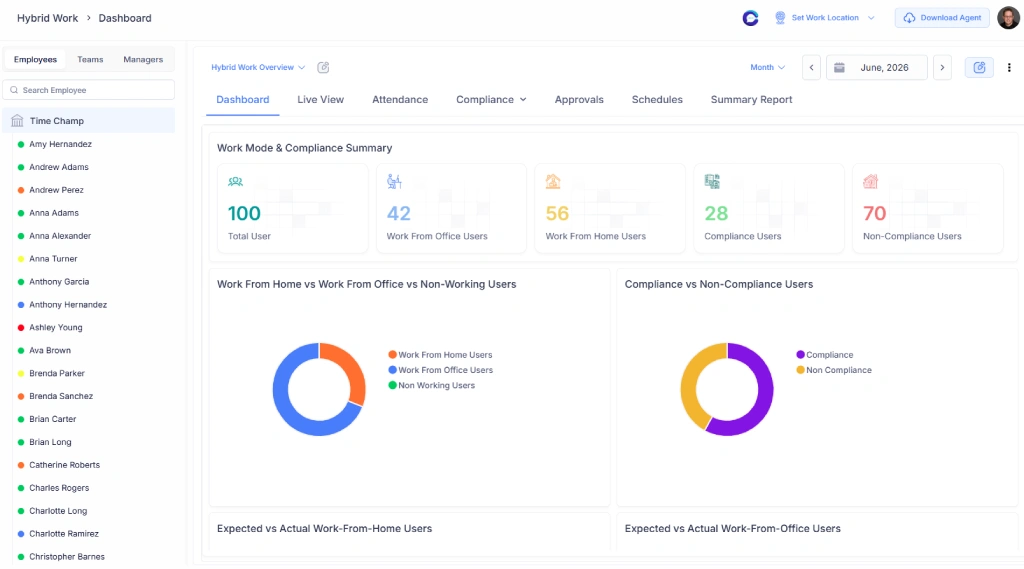
Many hidden hybrid work costs become expensive because they're discovered too late. Delayed projects, declining productivity, excessive meetings, and employee disengagement often go unnoticed until they start affecting business performance and profitability.
Time Champ helps you identify these issues early by providing real-time visibility into how work is progressing across your organization. With hybrid work management features like productivity tracking, project monitoring, attendance management, app and website usage tracking, and workforce analytics, you can quickly spot inefficiencies before they become costly problems.
Here's how Time Champ helps reduce hidden hybrid work costs:
- Hybrid Work Compliance helps reduce compliance-related costs by improving adherence to assigned work-from-home and office schedules.
- Attendance Tracking helps prevent attendance gaps and policy violations that can affect productivity and operational efficiency.
- Live View reduces productivity blind spots by providing real-time visibility into employee activity and work progress.
- Approvals reduce administrative costs by simplifying attendance, leave, and hybrid work approval workflows.
- Schedules help avoid staffing gaps and workload imbalances that can lead to productivity losses.
- Dashboards help identify hidden productivity costs faster by providing a centralized view of workforce performance and work patterns.
- Summary Reports uncover inefficiencies early by highlighting productivity, attendance, and performance trends.
- Planned vs. Actual Work Comparisons improve accountability and workforce planning, helping prevent resource allocation issues.
- Compliance Monitoring helps identify policy violations early before they become costly operational problems.
The sooner you identify hidden costs, the easier it becomes to improve efficiency, reduce unnecessary expenses, and maximize your hybrid work ROI.
Ready to build a more cost-effective hybrid workforce?
Time Champ helps you identify hidden hybrid work costs early, giving you the visibility needed to protect your ROI.
Conclusion
Hybrid work can deliver significant benefits, but hidden costs can reduce its value if they're left unchecked. From underused office space and technology expenses to onboarding challenges and productivity blind spots, these costs can gradually impact your bottom line.
The key is to identify and address them early. With regular reviews, clear processes, and the right tools like Time Champ, you can gain better visibility into work patterns, control hidden costs, improve efficiency, and maximize the ROI of your hybrid work strategy.

Guna Lakshmi

Table of Content
 Why Hidden Costs Get Missed in Hybrid ROI
- The 9 Hidden Costs of Hybrid Work and How to Reduce Them
- Step-by-Step Process to Build a Hidden Cost Audit for Hybrid Work
- Identify Hidden Hybrid Work Costs Early With Time Champ
- Conclusion
Instant Signup
Thank you for your request!
We have received your signup request and our team will get back to you soon. In the meantime, you can book a demo to see Time Champ in action.
Book a DemoFree trial. No credit card required. Prefer a walkthrough? Book a demo.
Related Blogs

Discover the hybrid work model, which blends office and remote environments for greater flexibility and productivity.
Thasleem Shaik | Oct 25, 2024
Learn 10 essential hybrid workforce best practices to boost productivity, improve communication, and foster team morale for success in a flexible work setup.
Tarun Kumar Reddy | Nov 12, 2024
Learn how to create and implement a successful hybrid work policy with our top 7 tips. Boost productivity and keep your team engaged.
Sai Keerthi Uppala | Nov 14, 2024
Explore the pros and cons of remote vs. hybrid work models, and learn how to choose the best setup for your team
Tarun Kumar Reddy | Oct 25, 2024
Learn to design an effective hybrid work schedule that balances flexibility and productivity, with best practices to fit your team’s needs.
Jahnavi Pulluri | Oct 26, 2024
Explore the challenges and benefits of hybrid work and discover strategies for effective team management to enhance flexibility, productivity, and smooth communication.
Thasleem Shaik | Oct 25, 2024


 4.7/5 avg.
Ready to Manage Your Workforce Smarter?
Join our family of 1500+ companies using smart insights to redefine workforces!

Free Trial
No Credit Card Required