What Are the Benefits and Challenges of Hybrid Work
Balance flexibility, productivity, and collaboration with hybrid work. Discover key benefits, common challenges, and proven solutions for team success.

You may adopt hybrid work to give employees more flexibility while keeping teams productive. But have you ever wondered why some organizations make hybrid work look effortless while your teams still struggle with communication gaps, collaboration issues, or inconsistent performance? Understanding the benefits and challenges of hybrid work is the key to building a model that supports both employee satisfaction and business success.
From improved work-life balance and greater flexibility to communication barriers and collaboration issues, hybrid work comes with both opportunities and obstacles. Here, you'll discover its key benefits, common challenges, practical solutions, and how the right tools can help build a more productive and connected hybrid workplace.
What is a Hybrid Work Environment?
A hybrid work environment is a flexible workplace model that combines remote and in-office work, allowing employees to divide their time between different work locations. It helps you balance flexibility, collaboration, and productivity while giving employees greater control over how and where they work.
Benefits and Challenges of Hybrid Work At a Glance
Hybrid work offers significant advantages, but every benefit comes with a challenge that you must manage effectively. The table below provides a quick overview of the most common benefits and challenges of hybrid work and what they mean for your team and business.
| Benefits of Hybrid Work | Challenges of Hybrid Work |
|---|---|
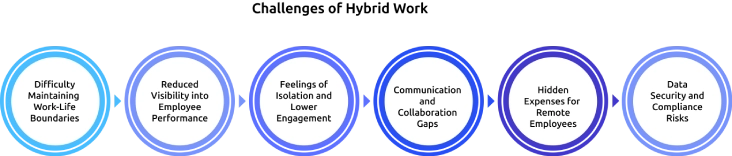
| Greater flexibility and work-life balance | Difficulty maintaining work-life boundaries |
| Improved productivity and focused work time | Reduced visibility into employee performance |
| Increased employee autonomy and trust | Feelings of isolation and lower engagement |
| Access to a wider talent pool | Communication and collaboration gaps |
| Reduced office and operational costs | Hidden expenses for remote employees |
| Location-independent work opportunities | Data security and compliance risks |
Struggling to maintain productivity and visibility across your hybrid workforce?
Use Time Champ to monitor productivity, track performance, and manage hybrid teams with ease.
What Are the Key Benefits of Hybrid Work?
Hybrid work has become a preferred model for many organizations because it combines workplace flexibility with business efficiency. When implemented effectively, it can help you improve employee satisfaction, productivity, and long-term organizational performance.

1. Greater Flexibility and Work-Life Balance
Hybrid work gives employees more control over when and where they work. This flexibility makes it easier to manage personal responsibilities while maintaining professional commitments.
Employees can adjust their schedules around family needs, appointments, and other priorities without sacrificing productivity. As a result, they often experience lower stress levels and a healthier work-life balance.
2. Improved Productivity and Focused Work Time
Working remotely allows your employees to complete tasks in an environment with fewer workplace distractions. This can help them concentrate better on projects that require deep focus and critical thinking.
At the same time, office days provide opportunities for collaboration, brainstorming, and team discussions. The combination of focused individual work and in-person interaction often leads to higher overall productivity.
3. Increased Employee Autonomy and Trust
Hybrid work encourages employees to take ownership of their responsibilities and manage their time effectively. Their performance is often assessed based on the results they deliver and the goals they achieve.
This approach helps build a culture of trust between you and your employees. When employees feel trusted, they are more likely to stay engaged, motivated, and committed to their work.
4. Access to a Wider Talent Pool
You can hire talented professionals without being restricted by geographic location. Hybrid work allows you to attract skilled professionals from different cities, regions, and even countries.
This larger talent pool helps you find the right talent for specialized roles more quickly. It also brings diverse perspectives and experiences that can strengthen innovation and decision-making.
5. Reduced Office and Operational Costs
With fewer employees working in the office every day, you can reduce spending on office space, utilities, and workplace resources. You can further lower real estate expenses by adopting shared workspaces and flexible seating arrangements.
These savings can be redirected toward employee development, technology investments, and business growth initiatives. Over time, this makes hybrid work a cost-effective operating model.
6. Location-independent Work Opportunities
Hybrid work allows your employees to remain productive from different locations without being tied to a single office. This flexibility can support travel, relocation, or temporary remote work arrangements when needed.
For businesses, location-independent work improves workforce continuity and resilience. Your teams can continue operating effectively even when employees are distributed across multiple locations.

Did You Know?
Gallup found that 60% of employees prefer hybrid work, while fewer than 10% prefer fully on-site jobs. This highlights the growing demand for workplace flexibility.
What Are the Main Challenges of Hybrid Work?
While hybrid work offers many advantages, it also introduces challenges that can affect productivity, collaboration, and employee experience. Recognizing these challenges early can help you create a more balanced, productive, and sustainable hybrid work environment.
1. Difficulty Maintaining Work-Life Boundaries
Hybrid work can make it harder for employees to separate their professional and personal lives. When work is accessible from anywhere, it becomes easy to answer emails, attend meetings, or complete tasks outside regular working hours.
Over time, this lack of separation can lead to stress, fatigue, and burnout. Employees may feel pressure to stay constantly available, making it difficult to fully disconnect from their work.
2. Reduced Visibility into Employee Performance
In a hybrid setting, you often have fewer opportunities to observe employees’ daily work activities. This can make it challenging to understand progress, identify obstacles, and provide timely support.
Without clear performance metrics, some employees may feel overlooked while others may struggle to demonstrate their contributions. As a result, performance evaluations can become less consistent and objective.
3. Feelings of Isolation and Lower Engagement
Employees who spend less time in the office may miss out on informal conversations and social interactions. This can create a sense of disconnection from colleagues and the broader organization.
Over time, isolation can reduce engagement, motivation, and team morale. Employees who feel disconnected are also more likely to experience lower job satisfaction and decreased loyalty.
4. Communication and Collaboration Gaps
Hybrid teams often rely on a mix of virtual and in-person communication channels. Important information can sometimes be missed when conversations happen across multiple platforms or time zones.
Differences in work schedules can also make collaboration more difficult. Delayed responses and limited real-time interaction may slow decision-making and project progress.
5. Hidden Expenses for Remote Employees
Although remote work offers flexibility and convenience, you may also face additional expenses. Internet upgrades, electricity usage, home office equipment, and workspace setup costs can add up over time.
If these expenses are not addressed, employees may feel that the financial burden has shifted to them. This can affect satisfaction and create concerns about fairness within the workforce.
6. Data Security and Compliance Risks
Hybrid work increases the number of locations and devices used to access company data. Employees may connect through personal networks or use devices that do not meet organizational security standards.
This expanded digital environment creates more opportunities for cyber threats and unauthorized access. You must also ensure that remote work practices comply with industry regulations and data protection requirements.
How to Overcome Hybrid Work Challenges and Maximize Benefits?
Successfully managing hybrid work is not about eliminating every challenge. It is about putting the right practices, policies, and tools in place to reduce risks while maximizing the benefits that make hybrid work effective.
Establish Clear Work Boundaries
Set clear working hours and encourage employees to disconnect once their workday ends. Defining availability expectations helps prevent employee burnout and supports a healthier work-life balance. Create a healthy work culture by respecting non-working hours and avoiding unnecessary after-hours communication.
Measure Performance by Outcomes
Focus on goals, results, and project completion, not just monitoring how much time employees spend online. An outcome-based approach promotes accountability while giving employees greater autonomy in managing their work. Regular performance appraisals and one-on-one meetings can help you track progress and provide necessary support.
Strengthen Employee Engagement and Connection
Create opportunities for employees to interact through team meetings, virtual events, and occasional in-person gatherings. Consistent engagement helps your remote and office-based employees feel connected to the organization and their colleagues. A strong sense of belonging improves motivation, collaboration, and long-term employee retention.
Improve Communication and Collaboration Practices
Establish clear communication guidelines, so employees know which channels to use for different types of discussions and updates. Encouraging documentation and asynchronous communication helps keep everyone informed no matter their location or work schedule. This reduces misunderstandings and improves collaboration across hybrid teams.
Support Employees with Remote Work Resources
Provide employees with the tools, equipment, and resources they need to work effectively from home. Offering reimbursements for the internet, office equipment, or workspace setup can help you reduce the financial burden of remote work. This support creates a more productive and equitable hybrid work environment.
Strengthen Security and Compliance Measures
Implement strong security policies that cover remote access, device management, and data protection practices. Employees should receive regular training on cybersecurity risks and compliance requirements to minimize vulnerabilities. Using measures such as VPNs, multi-factor authentication, and access controls helps you protect sensitive business information.
Use Technology to Support Hybrid Work Success
Invest in technology that improves visibility, collaboration, and productivity across distributed teams. Workforce management, communication, and project tracking tools help organizations streamline hybrid work operations and maintain accountability. When combined with effective leadership and clear policies, these tools help you maximize the benefits of hybrid work while reducing common challenges.
How Does Time Champ Support a Successful Hybrid Work Environment?
Managing hybrid teams often becomes challenging due to limited visibility, communication gaps, inconsistent performance tracking, and difficulties in maintaining accountability across different work locations. Time Champ is a smart employee monitoring software with dedicated hybrid work management features that help you manage hybrid teams with greater clarity and efficiency. Combining the productivity insights, attendance tracking, workforce visibility, and compliance management in one platform, it helps you maximize the benefits of hybrid work while minimizing common challenges.
Here are the key Time Champ features that help you manage hybrid teams more effectively and efficiently:
- Hybrid Workforce Visibility: Get real-time visibility into employee work activities, locations, and progress to improve accountability and team oversight.
- Location Tracking and Work Schedule Management: Track employee locations and manage work schedules with greater clarity. Coordinate hybrid teams more effectively while ensuring the right people are in the right place at the right time.
- Productivity and Performance Insights: Track productivity trends and performance metrics to understand work patterns and support better decision-making.
- Attendance and Work Hour Management: Monitor attendance, work hours, and employee availability accurately across remote and in-office teams.
- Schedule and Shift Management: Organize hybrid work schedules and shifts efficiently to ensure smooth collaboration and resource planning.
- Compliance and Workforce Accountability: Maintain transparency with detailed work records and reporting to support compliance and accountability.
- Data-Driven Decision Making: Use actionable workforce analytics to identify trends, address challenges, and optimize hybrid work strategies.
Ready to maximize the benefits of hybrid work without the management challenges?
Use Time Champ to manage hybrid teams with ease and confidence.
Conclusion
Hybrid work offers you the opportunity to improve flexibility, productivity, employee satisfaction, and access to top talent. However, achieving these advantages requires addressing challenges such as communication gaps, performance visibility, employee engagement, and data security. Understanding the benefits and challenges of hybrid work is essential for building a work model that supports your business goals and employee well-being. With clear policies, effective collaboration practices, and the right technology, you can create a balanced and successful hybrid workplace. Start evaluating your current hybrid strategy today and invest in the tools and processes that help your teams perform at their best.

Anjali

Table of Content
 What is a Hybrid Work Environment?
- Benefits and Challenges of Hybrid Work At a Glance
- What Are the Key Benefits of Hybrid Work?
- What Are the Main Challenges of Hybrid Work?
- How to Overcome Hybrid Work Challenges and Maximize Benefits?
- How Does Time Champ Support a Successful Hybrid Work Environment?
- Conclusion

Related Blogs

Find the best employee engagement software for 2026. Compare features, pricing, pros & cons to improve culture, retention, and team productivity ROI.
Thasleem Shaik | Apr 02, 2026
Explore our top 9 strategies to enhance remote employee engagement, tackle common challenges, and keep your team motivated and connected.
Shabana Shaik | Oct 25, 2024
As an HR manager, you’ve likely seen how remote work is transforming the workplace. But the big question remains: How does working from home impact employee
Mounika Sai | May 30, 2023
See what the data says about hybrid work productivity gains, including productivity, retention, engagement, cost savings, and long-term business impact.
Thasleem Shaik | Jun 08, 2026
Struggling with remote work productivity challenges? Learn what’s slowing your team down and how to improve focus, communication, and performance.
Guna Lakshmi | Apr 15, 2026
Struggling to keep your remote team connected? Explore 10 proven strategies to boost engagement, strengthen teamwork, and build a thriving remote culture!
Tarun Kumar Reddy | Mar 14, 2025


 4.7/5 avg.
Ready to Manage Your Workforce Smarter?
Join our family of 1500+ companies using smart insights to redefine workforces!

Free Trial
No Credit Card Required