What Is the Impact of Remote Work on Employee Productivity?
See the impact of remote work on employee productivity, including key benefits, productivity factors, and practical ways to improve remote performance.

Employee productivity is no longer tied to a desk, a cubicle, or a fixed office schedule. Today, you can get your best work done from a quiet room, a home setup, or even a different city. But remote work also raises an important question. Does greater flexibility really improve performance, or can it make work harder to manage?
The answer depends on both the freedom remote work gives you and the challenges it can create. In this article, you’ll see how remote work affects productivity, what can improve or reduce it, and what you can do to create a more productive remote work environment.
Understanding Remote Work and Productivity
Remote work changes where you work, but it does not automatically change how productive you are. To judge its impact fairly, you first need to define productivity and separate the work arrangement from the results you expect.
What Productivity Really Means
Productivity is about the relationship between your output and the resources you use to produce it. The U.S. Bureau of Labor Statistics defines labor productivity as output compared with the hours worked to produce that output.
For your team, that means productivity should go beyond counting hours online or tracking how long someone stays active. Look at what your team actually delivers, whether the work meets the expected quality, and whether your team reaches its goals within a reasonable amount of time.
This distinction matters because working longer does not automatically mean producing more. BLS notes that productivity can fall even when total output rises if the additional output requires a larger increase in hours worked.
Remote, Hybrid, and In-Office Work at a Glance
The biggest difference between these work models comes down to where you complete your work and how much flexibility you have.
- Remote work means you complete your work outside a traditional office, often from home or another location.
- Hybrid work combines remote and in-office work, giving you time in both settings.
- In-office work means you complete your work primarily from a shared workplace where your team works together physically.
Each model creates a different working environment. Remote work can give you more control over your workspace and reduce commuting. In-office work can make face-to-face collaboration easier. Hybrid work combines elements of both.
That is why remote vs office productivity is not a simple comparison. The more useful question is whether your chosen work model gives your team the right conditions to produce quality work and reach its goals.
Not sure where your remote team is losing valuable work time?
Use Time Champ to spot productivity gaps and make better decisions.
Positive Impacts of Remote Work on Productivity
Remote work can create conditions that make it easier for you to focus, manage your time, and get meaningful work done. The benefits do not come from working away from the office alone. They come from having fewer interruptions, more control over your schedule, and a work environment that fits the way you work.
Here are the key ways remote work can support better productivity when you have the right structure in place.
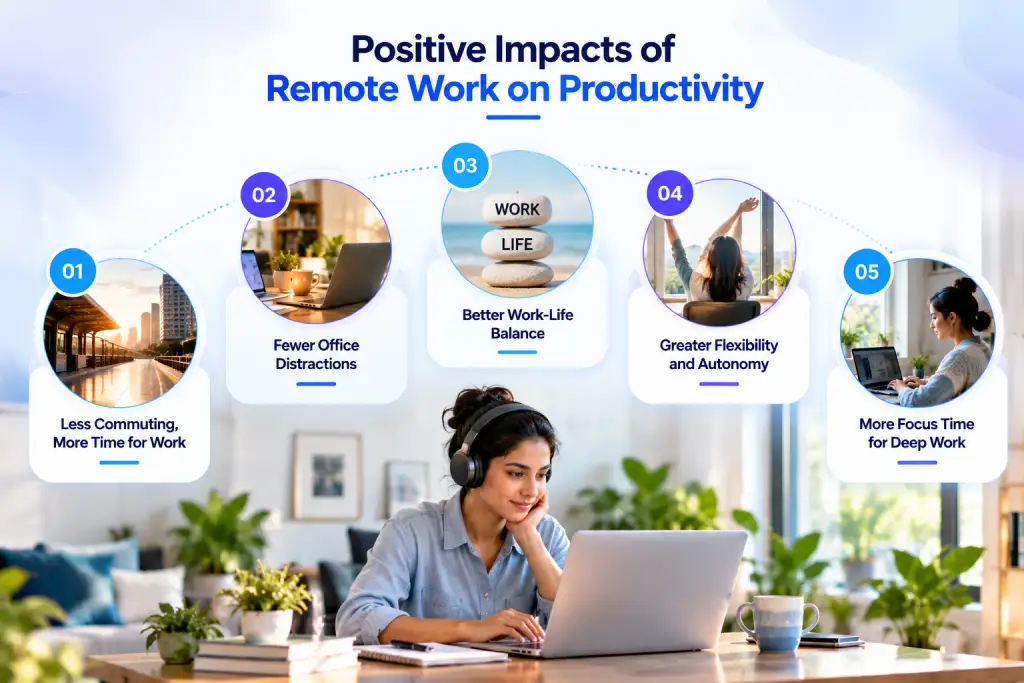
1. Less Commuting, More Time for Work
Remote work can give you back the time you would normally spend traveling to and from the office. You can use that time for rest, planning, personal responsibilities, or starting your workday with more energy.
A NBER study using UK time diary data found that remote workers spent more than an hour less commuting each day than on-site workers. The study also found that remote work gave them greater flexibility in how they arranged their time.
The time saved does not automatically become productive work. Still, removing a long commute can give you more control over how you use your day.
2. Fewer Office Distractions
A busy office can make it difficult to protect your attention. Conversations, interruptions, unexpected questions, and background activity can break your concentration and make simple tasks take longer.
Your home workspace can give you more control over these interruptions. In a FlexJobs survey, 74% of respondents said that fewer distractions and fewer interruptions from colleagues were among the top reasons they felt more productive while working remotely.
When you can protect your attention, you can spend more time on work that requires sustained concentration. If distractions are affecting your remote workday, see our tips on how to manage work-from-home distractions.
3. Better Work-Life Balance
A healthier balance between work and home life can help your team stay focused and energized. According to Pew Research, 71% of remote workers report a better work-life balance, largely because flexible hours give them more room to manage personal responsibilities without disrupting their workday.
When your team can handle work and personal responsibilities with less conflict, they can return to their tasks with more energy and fewer mental distractions.
4. Greater Flexibility and Autonomy
Giving your team more control over when and how they work can build trust and support better results. Remote work allows your team to structure the workday around priorities, focus periods, and individual working styles.
When you focus on outcomes instead of constant activity, your team has more freedom to decide how to complete their work. This flexibility can help your team manage their time better, stay focused on important tasks, and take greater ownership of their results.
5. More Focus Time for Deep Work
Some tasks need your full attention. Writing, coding, research, analysis, design, and strategic planning become harder when you constantly switch between tasks, messages, and conversations.
Remote work can give you more control over your environment and make it easier to set aside uninterrupted time for focused tasks. When you reduce unnecessary meetings and notifications, you can spend more time on work that requires deeper concentration. The key is to use that flexibility wisely.
Not sure which tasks require deep concentration? Check our blog on deep work vs. shallow work for a clear breakdown.
Negative Impacts of Remote Work on Productivity
Remote work can give you more flexibility and control over your workday, but it can also create challenges that affect how your team works together. A quiet workspace may support focus, while poor communication, constant notifications, or unclear boundaries can make work harder to coordinate.
Here are the main challenges that can reduce productivity when you do not have the right remote work practices in place.
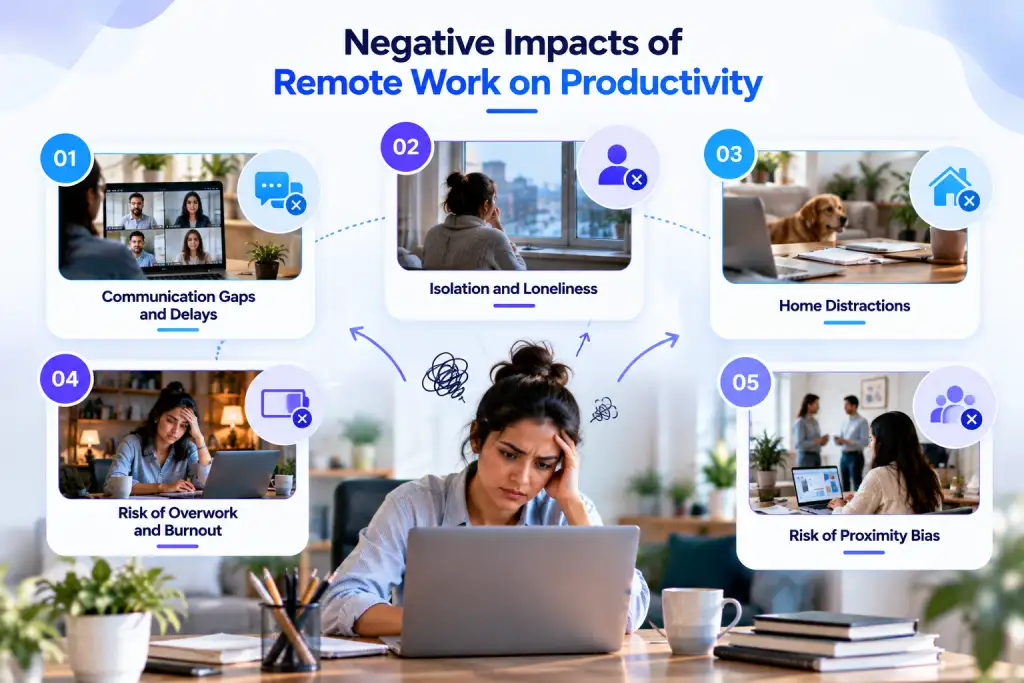
1. Communication Gaps and Delays
When your team works from different locations, quick conversations can turn into messages, emails, or scheduled calls. A simple question may take longer to resolve, especially when your team works across different schedules or relies heavily on asynchronous communication.
These delays can slow decisions, create misunderstandings, and make collaboration harder. You can reduce this risk by setting clear communication practices and choosing the right channel for each type of work.
2. Isolation and Loneliness
Remote work can reduce the everyday interaction that naturally happens in a shared workplace. Without regular conversations and face-to-face connection, your team may feel less connected to coworkers and the wider team.
A review of 65 peer-reviewed studies found that reduced social interaction in remote work can contribute to loneliness and isolation, which can affect engagement, collaboration, and work performance. Regular team check-ins, informal conversations, and opportunities to connect can help your team maintain a stronger sense of connection while working remotely.
3. Home Distractions
Working from home removes many office interruptions, but it does not remove distractions altogether. Household responsibilities, family activity, deliveries, personal devices, and unexpected interruptions can pull your attention away from important tasks.
These interruptions can become especially difficult when you need long periods of concentration. Setting clear work boundaries, creating a dedicated workspace, and protecting focused work blocks can help your team stay on track.
4. Risk of Overwork and Burnout
Without a commute or a clear boundary between your workspace and personal time, work can easily extend beyond your normal hours. Constant messages, late meetings, and the habit of checking work after hours can make it harder for your team to switch off. Eagle Hill Consulting reported burnout among 61% of fully remote employees, compared with 57% of hybrid employees and 55% overall.
Long working hours do not necessarily produce better results. Fatigue can increase mistakes, slow progress, and eventually affect retention. Set clear working hours, discourage after-hours messages, and pay attention to consistently long work periods without enough breaks.
5. Risk of Proximity Bias
Proximity bias can create an uneven experience when some of your team works from the office while others work remotely. You may naturally notice and interact more with those who work nearby, while remote team members can receive less visibility, feedback, or access to important conversations.
This can affect how you recognize contributions, assign opportunities, and evaluate performance. To reduce proximity bias, give your team equal access to information and evaluate their work based on results rather than where they work.
Are you relying on assumptions to judge remote productivity?
Try Time Champ to replace guesswork with clearer productivity insights.
How to Improve Remote Work Productivity
Here are practical ways to create a remote work setup that helps your team stay focused, connected, and productive.
- Set Clear Goals and Expectations: Make sure your team knows what they need to deliver, when they need to deliver it, and what good work looks like. Clear goals shift attention from staying online to achieving meaningful results.
- Strengthen Async Communication: Use written updates for information that does not require an immediate discussion. Keep important decisions and project details documented so your team can access the same information without relying on repeated meetings or messages.
- Give Your Team the Right Tools: Provide collaboration tools that make communication, teamwork, and daily tasks easier. Give your team quick access to the information they need so they can spend less time searching for updates, switching between tools, or waiting for basic information.
- Support Wellbeing and Prevent Burnout: Encourage reasonable working hours, regular breaks, and a healthy work-life balance. Pay attention to consistently long work periods so you can address workload issues before they affect performance.
- Recognize Results: Focus recognition on the quality and impact of the work your team delivers. When you reward meaningful outcomes rather than online presence or activity alone, you create a clearer connection between effort and results.
How Time Champ Supports Remote Work Productivity
When your team works from different locations, you need clear visibility into work patterns to understand what supports productivity and where challenges may arise. The right remote work software can give you this visibility while allowing your team to maintain the flexibility of remote work.
Time Champ gives you practical insights that can help you make better decisions about productivity, focus, and workload.
- Timeline View: See how work progresses throughout the day and identify patterns in how time gets spent.
- Idle Time Detection: Spot periods of inactivity so you can identify unusual gaps in work patterns and understand where productivity may drop.
- App and Website Usage: See which applications and websites your team uses during work hours to understand where time and attention go.
- Productivity Classification: Categorize activities based on their relevance to work so you can get a clearer view of productive and unproductive patterns.
- Workload Reports: Review workload patterns across your team and identify uneven workloads or signs that someone may be taking on too much work.
With these insights, you can address productivity gaps before they become bigger challenges. You can adjust workloads, improve work practices, and support your team based on actual data rather than assumptions. This helps you create a remote work environment where flexibility and productivity can work together.
Do you have the visibility you need to improve remote productivity?
Try Time Champ and make productivity decisions with real work data.
Conclusion
The impact of remote work on employee productivity can go in either direction. Your team may gain more flexibility and focus, but communication issues, home distractions, and overwork can affect results. The difference often comes down to how well you structure and support remote work.
Instead of judging productivity by hours online, focus on meaningful outcomes, work quality, progress, and sustainable work habits. This gives you a more accurate picture of what is working and where your team needs support. When you need more clarity around remote work patterns, Time Champ can give you useful insights to support better productivity decisions.

Thasleem Shaik

Table of Content
 Understanding Remote Work and Productivity
- Positive Impacts of Remote Work on Productivity
- Negative Impacts of Remote Work on Productivity
- How to Improve Remote Work Productivity
- How Time Champ Supports Remote Work Productivity
- Conclusion
Related Blogs
Discover if remote workers are truly less productive. Explore key insights, challenges, and benefits of remote work in boosting employee productivity.
Shabana Shaik | May 30, 2023
Struggling to improve your remote workplace? Uncover six powerful strategies to boost productivity, enhance collaboration, and keep your team engaged!
Tarun Kumar Reddy | Mar 14, 2025
Wondering why meetings are essential in remote work? Uncover 10 key reasons they improve communication, teamwork, and efficiency for your remote team!
Tarun Kumar Reddy | Mar 14, 2025
Explore tips to establish your value as a remote worker. Learn how communication, time management, and proactivity help you stand out and build trust.
Tarun Kumar Reddy | Mar 13, 2025
Avoid common remote work mistakes that hurt productivity and teamwork. Learn how to overcome challenges and create a more efficient remote work setup.
Thasleem Shaik | Mar 13, 2025
Remote work is the secret sauce for more loyal employees. Discover how virtual collaboration and flexible hours transform teams into powerhouses.
Sai Keerthi Uppala | Feb 21, 2025


 4.7/5 avg.
Ready to Manage Your Workforce Smarter?
Join our family of 1500+ companies using smart insights to redefine workforces!

Free Trial
No Credit Card Required