Performance Evaluation in Remote Workforces: A Complete Guide
Performance evaluation in remote workforces: 7 metrics that matter, common biases to avoid, and how to run reviews your team trusts.

How do you fairly evaluate someone you never see working? Performance evaluation in remote workforces is the practice of measuring team output, work habits, engagement, and growth using objective data rather than physical presence. It replaces the hallway-conversation instinct with structured metrics, so a quiet developer in Manila gets the same honest review as the marketer who sits next to you in the office.
That shift matters more every quarter. Gallup's 2025 State of the Global Workplace report shows 52% of remote-capable U.S. employees work hybrid and 27% are fully remote, nearly 8 in 10 knowledge workers now operating outside traditional office oversight.
In this blog, you will learn what makes remote evaluation different from office reviews, the seven metric categories that actually predict performance, how to avoid proximity bias, and the common mistakes that make remote reviews feel unfair. You will also see how the right employee monitoring software turns raw activity data into fair, defensible review conversations your team actually trusts.
What Makes Remote Performance Evaluation Different from Office Reviews?
Evaluating remote employees is not the same as evaluating office teams. In an office, you can observe behavior naturally. You notice who is focused, who needs help, and who is actively contributing. But in remote work, you do not have that visibility. Employees working from the office often get more attention than remote workers. This can lead to unfair evaluations. It is a common issue known as proximity bias in remote work.schema
In-Office vs. Remote Performance Evaluation: A Direct Comparison
| Evaluation Criteria | In-Office Teams | Remote Workforces |
|---|---|---|
| Visibility | Managers can clearly see how employees work, interact, and handle tasks throughout the day. | Work is not physically visible, so managers rely on tools, reports, and data. |
| Work Tracking | Work progress is easy to understand through physical presence and regular interactions. | You need digital tools to track time, tasks, and productivity effectively. |
| Feedback Speed | Feedback is shared instantly during conversations, helping employees improve quickly. | Feedback is often delayed, so you may find it harder to guide improvements at the right time. |
| Communication | Face-to-face conversations make it easier to clarify tasks and resolve issues quickly. | Communication depends on messages and calls, which can sometimes lead to delays or misunderstandings. |
| Performance Basis | Performance is evaluated based on effort, participation, and final results. | More focus is placed on measurable results, completed work, and clear performance metrics. |
| Accountability | Following up on tasks is easier, and employee responsibility is visible in real time. | Clear goals, tracking systems, and regular updates are needed to maintain accountability. |
| Bias Risk | Regular interaction reduces the chances of unfair assumptions or misjudgements. | Limited visibility can lead you to rely on assumptions, increasing the risk of bias. |
| Review Approach | Reviews are usually less frequent and based on overall observation. | More frequent and structured reviews are required to ensure fairness and accuracy. |
Key Challenges in Evaluating Remote Employees

Remote performance evaluation comes with its own set of challenges. When these are not handled properly, your reviews can become unclear, inconsistent, or even unfair. Understanding these remote work performance challenges helps you build a more reliable and balanced evaluation process.
No Clear View of Work Patterns
In a remote setup, there is no direct visibility into how employees spend their day. You cannot easily see what tasks they are working on, how they manage their time, or where they might be struggling. According to SHRM research, 42% of managers admit they sometimes forget about remote workers entirely when assigning tasks, because out of sight genuinely does become out of mind. Without this clarity, it becomes difficult to understand whether low performance is due to lack of effort, unclear tasks, or external challenges.
Hours Worked Do Not Equal Results
Spending more time online does not always mean better performance. Some employees may stay logged in longer but produce less meaningful work, while others complete tasks efficiently in fewer hours. If you focus only on hours worked, you may end up rewarding effort instead of outcomes. A strong evaluation process always prioritizes results, quality, and impact over time spent.
Communication Gaps
Remote teams often work across different locations and time zones. This makes real-time communication harder and delays important conversations. As a result, feedback is not shared when it matters most. Small issues can go unnoticed for longer, and employees may feel unsure about expectations or performance. PwC's 2024 employee research found that 80% of employees now prefer ongoing feedback over traditional annual reviews, a clear signal that delayed feedback actively reduces engagement.
Overdependence on Self-Reporting
Many remote teams rely heavily on employees to report their own work through updates or self-reviews. While this can provide some insights, it is not always reliable. Some employees may unintentionally miss details, while others may present their work more positively. Without supporting data, it becomes difficult to verify performance accurately, leading to biased or incomplete evaluations.
Using Office-Based Review Methods
Performance review systems designed for office environments do not always work for remote teams. Factors like physical presence, participation in office activities, or visibility in meetings do not apply the same way. Applying the same evaluation criteria can create gaps in assessment. Remote performance needs to be measured based on deliverables, outcomes, and clearly defined expectations.
Hidden Bias in Reviews
Bias can affect remote performance reviews without you noticing it. For example, you might remember only the recent work an employee did and forget their consistent efforts from earlier. Employees who talk more in chats or meetings can appear more active, even when their actual work is similar to others. Because of this, some employees may get higher ratings for being more visible, not for doing better work. This can make reviews feel unfair and reduce trust in the process.
Struggling to understand how your remote team really works?
Time Champ gives you the clear workforce visibility and data you need to manage work better.
What Metrics Should You Track in Remote Workforces?

To evaluate remote employees fairly, you need clear and reliable data. When you track the right performance metrics, you understand how work is getting done and where support is needed. A good evaluation looks at both results and work habits. This helps you make better decisions, support your team, and improve overall remote workforce productivity. Mainly focus on these four key areas:
1. Output Metrics
This is the foundation of performance evaluation. It focuses on what employees actually complete during their work time. Instead of looking at effort or time spent, this shows the real outcomes of their work. Track things like:
- Tasks completed
- Deadlines met
- Quality of work
- Goals or targets achieved.
Why it matters:This tells you who is getting real work done. It keeps your evaluation focused on results instead of time spent online. You can also review how consistent the output is over time. Someone who delivers steady results is often more reliable than someone who performs well only occasionally.
2. Activity & Productivity Metrics
These metrics help you understand how employees spend their working hours throughout the day. They give you a closer look at daily work patterns and help you see what happens behind the results. Track:
- Active working hours
- App and website usage
- Idle time
- Time spent on different tasks
Why it matters: This gives you context behind the results. If performance drops, you can see whether it is due to distractions, workload issues, or something else. It also helps you guide employees in managing their time better and staying focused on important work.
3. Engagement & Collaboration Metrics
Remote work depends heavily on communication and teamwork. These metrics show how well employees stay connected and contribute to team activities. Measure:
- Meeting attendance
- Response time
- Participation in discussions
- Contributions to shared tasks
Why it matters: Employees who stay engaged with the team usually perform better over time. Low engagement can be an early sign that someone is feeling disconnected or unclear about their work.
4. Attendance & Availability Metrics
These metrics focus on how reliably employees show up and stay available during their working hours. They are especially important for roles that depend on timing or coordination. Track:
- Login and logout times
- Shift adherence
- Availability during work hours
- Break patterns
Why it matters: This helps you understand how dependable an employee is. It ensures that work runs smoothly without delays caused by unavailability.
5. Consistency Metrics
Consistency looks at how stable an employee’s performance is over a period of time. It helps you see patterns instead of judging based on one good or bad week. Track metrics like:
- Daily or weekly performance trends
- Missed deadlines over time
- Regularity in completing tasks
Why it matters: An employee who performs steadily is easier to trust and plan around. Sudden changes in performance can point to issues that need attention.
6. Improvement & Growth Metrics
This area focuses on how employees develop over time. It shows whether they are learning from feedback and improving their skills. Performance is not fixed, and employees who grow steadily become more valuable to your team. Track:
- Skill development
- Feedback implementation
- Progress after reviews or training
- Ability to handle more responsibility over time
Why it matters: Deloitte's 2024 Human Capital Trends research found that only 20% of C-suite leaders strongly agree that their HR function actually improves worker performance. Growth metrics help you close that gap by making development visible and trackable rather than assumed.
7. Quality Metrics
Quality focuses on how well the work is done. It helps you maintain standards and avoid repeated mistakes. Track:
- Error rates
- Rework required
- Client or peer feedback
- Attention to detail in tasks
Why it matters: Good quality work saves time, builds trust, and improves overall efficiency. You can also look at how often work needs revisions. Frequent corrections may indicate gaps in understanding or a lack of clarity in tasks.
How Employee Monitoring Software Helps in Remote Performance Evaluation
Without data, performance evaluation becomes unclear and inconsistent. Employee monitoring tools like Time Champ bring structure to the process by giving you clear visibility into how work actually happens across your remote team. They help you understand how work is being done, which makes your evaluations more balanced and reliable.
Real-Time Visibility
One of the biggest gaps in remote work is the lack of day-to-day visibility. Monitoring tools fill this gap by showing how employees spend their time during working hours.
You can view active work time, application usage, and task flow throughout the day. This makes it easier to understand working patterns, identify distractions, and see where employees might need support. It also reduces the need for constant check-ins, allowing your team to work more independently.
Accurate Timesheets
Tracking work hours manually often leads to missing or inconsistent data. Over time, this affects payroll accuracy and performance reviews. With employee monitoring software like Time Champ, timesheets are generated automatically based on real activity.
Every working hour is recorded with clarity, giving you dependable data for attendance, productivity tracking, and performance discussions. It also saves time for employees who no longer need to log their hours manually.
Task and Project-Level Insights
Understanding how much effort goes into each task is important for fair evaluation. Monitoring tools connect time tracking with tasks and projects, giving you a clearer picture of individual contributions.
Time Champ helps you see how long tasks take, how workloads are distributed, and how each employee contributes to project progress. This helps you recognize high performers, support overloaded team members, and set realistic expectations for future work.
Early Problem Detection
Small performance issues can easily go unnoticed in remote environments. Changes in work patterns, reduced activity, or delays in task completion often build up over time.
By continuously analyzing activity data, Time Champ highlights these changes early. You can quickly spot when someone is struggling, disengaged, or overwhelmed. This gives you the chance to step in, have a conversation, and offer support before the situation gets worse.
Improved Accountability Across the Team
Clear visibility creates a sense of accountability. When employees know their work patterns and progress are visible, they tend to stay more focused and organized.
At the same time, this visibility works both ways. Employees can also view their own data, helping them understand their performance, manage their time better, and take ownership of their work. This creates a more transparent and responsible work culture.
Better Workload Balance
In remote teams, it is not always easy to see who is overloaded and who has capacity. This can lead to burnout for some employees while others remain underutilized.
With insights from an employee monitoring tool, you can easily distribute workloads across your team, preventing burnout and ensuring that everyone is working at a sustainable pace.
Stronger and More Meaningful Reviews
When you have clear data, your performance reviews become more structured and meaningful. You can have focused conversations backed by real insights rather than general observations.
This helps employees understand exactly where they stand, what they are doing well, and where they can improve. It also builds trust, as evaluations feel fair and transparent.
Common Mistakes to Avoid During Performance Evaluation
Even when you have a solid process in place, remote performance evaluations can still go wrong. Small mistakes can lead to unfair reviews, low morale, and poor decisions. These mistakes can directly impact your remote employee assessment process. Here are the key ones to watch out for:
- Judging employees based on hours worked instead of results
Being online all day does not mean meaningful work is getting done. Always focus on outcomes, not screen time. - Conducting reviews only once a year
Waiting 12 months to give feedback is too late. By then, issues have already grown. Regular check-ins help you fix problems early. - Using the same metrics for every role
Every role is different. A developer, marketer, and support agent cannot be measured the same way. Tailor your performance metrics to match the job. - Confusing communication activity with productivity
Sending more messages or attending more meetings does not equal better performance. Look at actual contributions and results. - Ignoring time zone differences
Expecting everyone to work in the same hours can create unnecessary pressure. Respect different schedules and set realistic expectations. - Relying only on self-reported data
Self-reviews are helpful, but they are not enough. Combine them with real data to get a complete and accurate picture. - Giving feedback too late
Delayed feedback loses its value. Address issues when they happen so employees can improve quickly. - Over-monitoring employees
Tracking every small activity can feel like micromanagement. This can reduce trust and motivation. Use data wisely, not excessively.
Ready to see how your remote team truly performs?
Try Time Champ to track each employee’s productivity accurately and evaluate performance fairly!
Conclusion
Performance evaluation in remote workforces may feel complex at first, but it becomes much simpler when you follow the right approach. When your team knows they are being evaluated based on real work and clear expectations, it builds trust and confidence. When you evaluate performance the right way, you drive better productivity, stronger collaboration, and happier employees. With the right tools, clear metrics, and a fair process, you can turn remote performance evaluation into a powerful advantage for your business.

Guna Lakshmi

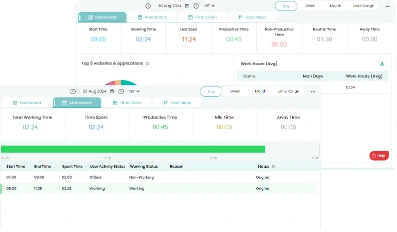
Table of Content
-
 What Makes Remote Performance Evaluation Different from Office Reviews?
-
H2: Key Challenges in Evaluating Remote Employees
-
What Metrics Should You Track in Remote Workforces?
-
How Employee Monitoring Software Helps in Remote Performance Evaluation
-
Common Mistakes to Avoid During Performance Evaluation
-
Conclusion
Related Blogs
Discover the secrets of a remote workforce management with maximum efficiency. Our expert guide offers proven strategies to boost productivity and success.
Mounika Sai | Jun 06, 2023
Learn effective tips to know if your remote employees are working for ensuring productivity and accountability.
Shabana Shaik | Oct 26, 2024
Busting Employee Monitoring Myths: Uncovering the truth behind common misconceptions. Learn why these myths are far from accurate in the modern workplace
Tarun Kumar Reddy | May 30, 2023
Discover the best ways to introduce productivity monitoring in your organization smoothly and effectively.
Thasleem Shaik | Mar 18, 2025
Productivity vs. Efficiency, Are you focusing on the wrong one? Discover the key difference and how to master both and strike the perfect balance!
Tarun Kumar Reddy | Jun 06, 2023
Operational efficiency helps you get more value from time, money, and resources. See how to measure it, reduce waste, and improve daily workflows.
Thasleem Shaik | Oct 09, 2026


 4.7/5 avg.
Ready to Manage Your Workforce Smarter?
Join our family of 1500+ companies using smart insights to redefine workforces!

Free Trial
No Credit Card Required