30 Team Building Activities (Fun, Virtual & Office Ideas)
Find 30 team building activities for work, including fun, virtual, and office ideas to boost collaboration, engagement, and stronger workplace connections.

Workplaces started to feel too depressing these days, hiring, firing, re-hiring that’s all employees are seeing. Amid all this chaos, there’s no way your employees are going to feel better and more motivated. Even team collaboration is a hard thing to expect because no one’s really interested.
And when you have virtual teams, coordination is the least you can expect from people without setting up proper team building, don’t ask me about the lame card games and forced fun on the teams, no one’s really having fun with that.
FYI: 86% of employees and managers say that lack of collaboration leads to major work failures
You can beat this madness by incorporating a few team building activities in your workspaces, whether it is in-office or virtual teams.
Because,
“Engaged Employees Work Better”
In this blog, I have shared 30 ideas you can use to make your teams more lively.
What Are Team Building Activities?
Team building activities are structured exercises (usually fun) that help coworkers connect, communicate, and work better together. They range from five-minute icebreakers to full-day outings, and they all share one goal: turning individuals into a team that trusts each other and collaborates well. The best team building activity fits your team’s size, personality, and the specific thing you want to improve.
Why Team Building Activities Matter at Work
A distant employee is a least productive employee, because people do their best work when they feel connected. Team building activities break down silos, build trust, improve communication, and make work a little more enjoyable, which shows up directly in engagement and results. In a world of remote and hybrid teams, they’re often the only thing recreating those natural office bonds.
In fact, Gallup’s research shows the most engaged teams are around 23% more profitable and far less likely to leave than disengaged ones. A few good team activities for team building won’t fix everything, but they’re a cost-efficient way to build the trust that everything else depends on. If you have a remote team, then this article will help you engage your remote employees.
How to Choose the Right Team Building Activity
Now you know how important team building activities are for a healthy workplace, so see how you can choose the right one, because the best fit beats the default.
Match the activity to what your team actually needs, and it stops feeling like forced fun and starts feeling like genuine bonding.
| If Your Team’s Challenge is… | Try This Type of Activity | Examples |
|---|---|---|
| New team, people don’t know each other | Icebreakers | Two Truths and a Lie, Show and Tell |
| Poor or unclear communication | Communication & trust games | Form the Order, Blind Retriever |
| Collaboration gap between departments | Mixed large-group games | Scavenger Hunt, Treasure Hunt |
| Low creativity or stuck thinking | Creative challenges | Shark Tank Pitch, Build Challenge |
| Remote or hybrid disconnect | Virtual activities | Virtual Happy Hour, Team Bingo |
| Burnout and low morale | Low-pressure fun | Company Field Day, Board Games |
30 Team Building Activities for Work
Here I have brought together 30 team building activities for work, I have also grouped them, so that you can jump straight to what you need by the name of it. I have personally conducted a few of these activities in my workplace, and the employee response and involvement were everything we needed. (I am trying to steal a few ideas from this blog too) :> These are the categories you see as we move deep into the blog:
- Quick Icebreakers (perfect for meetings and new teams)
- Fun and Funny Team Building Activities
- Indoor and Office Team Building Activities
- Outdoor and Large-Group Company Team Building Activities
- Virtual Team Building Activities (for remote and hybrid teams)
1. Two Truths and a Lie
Best For: Breaking the ice
Group Size: Any
Time: 15–20 min
This is a classic icebreaker and the fastest way to get a new team talking.
Each person shares three statements about themselves, two true and one made up, and everyone else guesses which one is the lie.
It sounds simple, but it sparks curiosity, laughter, and surprisingly real conversation as people defend their stories. You’ll get to know something genuine about coworkers you thought you already knew, and that small spark of connection is exactly what helps a team start to click.
2. What’s My Name
Best For: Fun interaction
Group Size: Any
Time: 10–20 min
This guessing game pulls out your employees heads and into conversation. Write the name of a famous person or character on a sticky note and place it on each teammate’s back without them seeing it. Rest is pure communication chaos until they figure out who they are.
Trust me, this is going to be too much fun for your employees. It’s light, active, and full of laughs, and because everyone has to talk to everyone, it quietly breaks down the little cliques that form in almost every team.
3. Build a Storyline
Best for: Creativity
Group Size: 4–10
Time: 15–30 min
This creative exercise turns your team into accidental storytellers.
One person opens with a single sentence, and each teammate adds the next line, building an unpredictable story together as it travels around the group.
Active listeners and quick thinkers are most likely to win this game, which are the very skills that make everyday collaboration work.
It also gives quieter team members an easy, low-pressure way to contribute, and you almost always end up somewhere hilariously unexpected that everyone remembers.
4. Show and Tell
Best For: Personal connection
Group Size: 5–10
Time: 20–30 min
Show and Tell isn’t just for kids, it’s a simple way to help coworkers see each other as real people.Ask everyone to bring one object that means something to them, it can be a photo, a souvenir, or anything that holds a memory for them, and ask them to share the story behind it.The stories reveal hobbies, history, and personality you’d never uncover in a status meeting. It takes almost no effort to run, yet it builds the kind of empathy and trust that makes a team communicate openly.
5. Balloon Questions
Best For: Sparking conversation
Group Size: Any
Time: 15–30 min
This activity adds a playful twist to getting to know one another. Write fun or mind-tingling questions on slips of paper, tuck them inside balloons, and let your team members pop one and answer whatever they find. That little burst of surprise lowers everyone’s guard, so even shy or new teammates join in without feeling put on the spot. It works beautifully as a warm-up before a meeting or workshop, and it reliably turns a quiet, stiff room into an actual conversation.
6. Office Trivia
Best For: Friendly Competition
Group Size: Any
Time: 30–45 min
A little friendly competition is all you need sometimes, and trivia is one of the easiest ways to create it. You don’t need to keep them truly technical, the questions can be as simple as “Whose desk has the most sticky notes?” or something about the company too, like “What year did we launch?”Split people into small teams so they can collaborate on answers, then tally the scores. It’s quick to set up, works in person or over a call, and always ends in good-natured arguing over the answers, which is half the fun and a sneaky way to build team rapport.
7. Board Game Tournament
Best For: Strategy and bonding
Group Size: 4–40
Time:1–3 hrs
Board games are a relaxed way to see how your team thinks, strategizes, and handles a bit of competition. Set up a simple bracket, make sure you choose games that reward teamwork and clever tactics, and let different departments join this face-off. Even a few rounds of dice rolls and friendly rivalry dissolve the usual work hierarchy, so it’s like the intern and the director are suddenly just two players trying to win. Also, don’t forget to keep the snacks on hand and the mood light, because you will have an easy noon that builds genuine camaraderie across the team.
8. Cook-Off Challenge
Best For: Creative collaboration
Group Size: 5–20
Time: 2–3 hrs
This is an unexpected one, I know, but few activities like cooking bond people, (of course, under a bit of pressure).Split the group into small teams, give everyone the same set of ingredients and most importantly give them a time limit, and challenge them to create the best dish. They have to plan, divide tasks, and improvise ON THE SPOT, this is exactly the skills good collaboration depends on, all while having fun. At the end, everyone tastes and votes, so you finish with a shared meal and a bunch of inside jokes. This activity works as an in-office kit or a full offsite, and it always leaves people talking.
9. Lip Sync or Talent Battle
Best For: Laughs
Group Size: Any
Time: About 1 hr
When you want pure laughter, nothing beats a talent battle. Split everyone into teams and give them time to prepare a short lip-sync, skit, or hidden-talent act to perform for everyone. It brings people out of their comfort zones in the best possible way, and watching your usually serious colleagues ham it up is a fast track to bonding. Record the performances (with permission), and they become inside jokes your team references for months. It’s silly, memorable, and exactly the kind of shared fun that builds a lasting team spirit.
10. Office Sports League
Best For: Ongoing team spirit
Group Size: Any
Time: Recurring
You can also set up a sports league in your office (can be a quarterly or half-yearly thing),Team spirit grows best through regular, low-key moments, and a friendly sports league delivers exactly that. Set up ongoing matches in something easy to join, table tennis, foosball, carrom, or five-a-side, with mixed teams from different departments. Because it runs over weeks rather than a single event, it keeps everyone’s energy high and cross-team friendships alive between your bigger activities. The stakes stay low, and the trash talk stays friendly, which makes it a simple, sustainable way to keep people connected without doing much planning on your part.
11. Skill Swap Workshop
Best For: Learning and appreciation
Group Size: 5–30
Time: 1–2 hrs
This activity builds skills and appreciation at the same time. Invite team members to run short sessions teaching something they’re genuinely good at, an Excel shortcut, basic design, public speaking, or it can even be making great coffee. Everyone gets to learn something new, and just as importantly, people feel seen and valued for talents that usually go unnoticed at work. It’s a refreshing change from top-down training, encourages knowledge sharing across the team, and often reveals hidden strengths you can lean on long after the session ends.
12. Escape Room (or in-office kit)
Best For: Problem-solving under pressure
Group Size: 2–6
Time: About 1 hr
An escape room is a team building activity that is also disguised as an adventure. Whether you book a venue or use a portable in-office kit, teams get dropped into a themed scenario with 60 minutes to solve puzzles and “escape.” The ticking clock forces fast, clear communication and quick decision-making, and it quickly reveals how your team handles pressure, who leads, who listens, and how well everyone shares information. It’s genuinely thrilling, ideal for small groups, and gives people a collective win to celebrate together afterward.
13. Bridge or Tower Build Challenge
Best For: Creativity and Resourcefulness
Group Size: 10–50
Time: 1–2 hrs
This hands-on challenge turns limited supplies into a lesson in creativity and teamwork. Give each team the same modest materials, straws, paper, tape, or dry spaghetti, and a clear goal: build the tallest tower or the strongest bridge before time runs out. Teams have to plan, assign roles, and problem-solve on the go, and watching people create something from almost nothing tells you a lot about how they collaborate. It’s competitive, budget-friendly, and a great fit for larger groups all working in parallel.
14. Group Jigsaw Puzzle Race
Best For: Teamwork under time
Group Size: 2–10 per team
Time: 30–60 min
A puzzle race looks calm on the surface but quietly builds real coordination. Give each team an identical large, complex jigsaw and challenge them to finish first. To win, they have to organize, divide the work, and communicate constantly, sorting edges, calling out pieces, and adjusting their approach as they go. It naturally shows you who takes charge and who tries to keep everyone in sync, with zero pressure and embarrassment. It’s a relaxed, focused activity that suits teams who prefer steady collaboration over high-energy games.
15. Vision Board Creation
Best For: Goal Alignment
Group Size: Small groups
Time: 1–2 hrs
This creative activity helps a team get on the same page about where it’s headed. Hand out magazines, markers, glue, and poster boards, and have small groups build a visual board of their shared goals, values, and vision for the year. The act of your employees choosing images and words together sparks honest conversation about priorities and what success actually looks like. You end up with a piece of art the team genuinely cares about, and a clearer, shared sense of direction to hang on the wall.
16. Office Makeover
Best For: Ownership and morale
Group Size: 10–50
Time: 2–4 hrs
Giving your team a hand in shaping their own space builds ownership and pride. Set aside time for everyone to redecorate or reorganize a shared area together, it can be a break room, a blank wall, or a tired corner, using a small budget and a lot of ideas. You can see your employees negotiate, compromise, and create something as a group, which is team building in its purest form. The actual payoff lasts, too: every time they use the space they helped design together, it becomes a quiet reminder that their input matters and that the workplace is theirs as much as anyone’s.
17. Shark Tank Pitch
Best For: Innovation
Group Size: 10–50
Time: 1–2 hrs
Let’s borrow the format of the famous show to unlock your team’s creativity. Create small groups, and your teams start inventing a product or business idea, then pitch it to a panel of colleagues who will be playing the role of "investors." They have to brainstorm, build a case, and present together, of course, under a little bit of pressure, which sharpens communication and quick thinking. It’s a brilliant way to surface your creative thinkers and give quieter people a real moment to shine. Make sure to keep the judging playful and the feedback kind, and you’ll be genuinely surprised by the ideas your team comes up with.
18. Scavenger Hunt
Best For: Energy and Collaboration
Group Size: 10–50
Time: 1–2 hrs
A scavenger hunt is pretty fast, competitive, and gets people to collaborate almost instantly. Give your teams a list of items to find or photo challenges to complete within a set time, indoors, around the office, or across the neighborhood. Within minutes, they begin to strategize, splitting up tasks and racing the clock together, which builds fast communication and quick decision-making without anyone realizing they’re “doing team building.” It scales easily for large groups, suits most fitness levels, and the photos become great memories and helpful for social content afterward.
19. Treasure Hunt
Best For: Breaking silos
Group Size: 10–100
Time: 1–2 hrs
A treasure hunt takes the scavenger hunt up a notch with riddles and a satisfying payoff at the end. Your teams solve a chain of clues, each one leading to the next location, until they reach a hidden prize. Because the clues require thinking together, it rewards collaboration and problem-solving, and it’s perfect for breaking down silos, since you can deliberately mix people from different departments into each team. It works across a large office or campus, keeps energy high throughout, and gives everyone a shared goal to chase.
20. Company Field Day or Picnic
Best For: Relaxed bonding
Group Size: Any
Time: Half or full day
Sometimes the best team building is simply time together outside of work mode. Organize an outdoor day built around classic games, tug-of-war, sack races, relays, plus good food and no agenda. Seeing colleagues laugh, compete, and relax in a casual setting builds the kind of genuine friendship that makes everyday collaboration smoother back at the desk. It’s inclusive, easy for large companies to run, and can welcome families too if you like. No forced exercises here, just shared fun that quietly strengthens your whole company culture.
21. Volunteer Day
Best For: Purpose and connection
Group Size: 10–100
Time: Half or full day
Giving back together is one of the most meaningful ways to bond a team. Spend a day on a cause you care about, planting trees, packing meals, cleaning a beach, or building homes, working side by side toward something bigger than a quarterly target. Shared purpose creates connection faster than almost any game, and it reinforces the values that make people proud of where they work. It lifts employee morale, strengthens your employer brand, and leaves everyone feeling a sense of fulfillment and genuinely good about how they spent the day.
22. Blind Retriever
Best For: Trust and communication
Group Size: 10–20
Time: 30–45 min
This trust exercise makes the value of clear communication impossible to ignore. Pair people up, blindfold one partner, and have the other guide them by voice alone to navigate a simple course or retrieve objects. Success depends entirely on speaking clearly, listening carefully, and trusting your partner, which is exactly what real teamwork asks of us every day. It’s a simple but powerful lesson in clear communication, and teams keep referencing it long after, whenever instructions get muddled. Swap roles so everyone can experience both sides.
23. Story Circle
Best For: Empathy
Group Size: 5–20
Time: 30–60 min
When you want depth over noise, a story circle delivers that. Gather your team in a circle and invite each person to share a short personal story around a gentle theme, a challenge they overcame, a proud moment, or a lesson they learned the hard way. Hearing each other’s experiences builds real empathy and reminds everyone there’s a whole person behind the job title. It’s calm, inclusive, and often the exact moment a team truly connects, which makes it especially valuable for groups that have worked together for a while but never really opened up.
24. Virtual Happy Hour
Best For: Remote social bonding
Group Size: 5–100
Time: 30–60 min
This is for remote teams: a virtual happy hour recreates the casual after-work unwind that distance steals. Everyone hops on a video call with a drink or snack of choice, and the only rule is no work talk allowed. Add a light theme, a shared playlist, or a quick game to keep things flowing, and let normal conversation do the talking. It’s one of the simplest virtual team building activities to organize, and those relaxed, off-topic chats are exactly where remote colleagues turn into real besties.
25. Online Gaming Competition
Best For: Remote fun and strategy
Group Size: Any
Time: 30–90 min
Games are a natural, low-pressure way for remote teams to bond. Pick a team-based multiplayer game, anything from a trivia app to a co-op puzzle or a casual battle game, and let people squad up across departments. Playing together builds communication, strategy, and a healthy dose of friendly rivalry, all without the awkwardness some virtual events can create. Because it’s genuinely fun, people actually look forward to it, which makes it one of the easiest ways to keep a distributed team feeling like a team.
26. Virtual Coffee Roulette
Best For: Cross-team connection
Group Size: Any
Time: 15–20 min
This can be your simple team building ritual: each week, randomly pair team members for a short, casual video chat with no set agenda, just coffee and conversation. Over time, these small one-on-ones connect people who’d never otherwise cross paths, breaking down silos across teams and locations. It takes almost no effort to set up, a simple tool or a spreadsheet does the pairing, and it steadily builds the web of everyday relationships that holds a remote culture together.
27. Virtual Office Tour
Best For: Personal connection
Group Size: 3–30
Time: 10–15 min each
This activity brings a personal touch to distributed teams who have never met in person. Invite each person to give a quick tour of their workspace, home setup, favorite mug, or the view from their window. These little glimpses into each other’s worlds spark conversation and make teammates feel like real, three-dimensional people rather than names on a screen. It’s quick, warm, and easy to slot into a regular call, and it’s a lovely, low-key way to welcome new hires into a remote team.
28. Group Puzzle Solving
Best For: Focus and collaboration
Group Size: 2–6
Time: 15–30 min
Solving a puzzle together is a focused, satisfying way to build collaboration. Pick a shared challenge, a tricky crossword, a logic puzzle, or a group round of online Sudoku, and work through it as a team, in the room or over a call. It encourages people to think out loud, pool their ideas, and build on each other’s reasoning, the quiet mechanics of genuinely good teamwork. It suits both in-person and remote groups, and the shared “aha!” moment at the end is a small but real win worth celebrating.If you love numbers, printable and online Sudoku puzzles are available at Sudokubliss to get started right away.
29. Online Trivia or Escape Room
Best For: Remote energy
Group Size: Any
Time: 45–60 min
When a remote team needs an energy boost, a hosted virtual event does the trick. Book an online escape room or run a live trivia night where your teams compete to solve challenges together against the clock. Both give distributed colleagues a shared goal, plenty of laughs, and a real reason to communicate quickly and work as one. They’re easy to schedule across time zones, need no special equipment, and reliably turn a routine week into something people actually chat about later.
30. Team Bingo Challenge: Energizing Connections and Collaboration
Time: 30 minutes – 1.5 hours (flexible based on customization)
Group Size: 4 – 2000+ (highly scalable for in-person or online play)
Objective: Team bonding, enhanced communication, collaboration, engagement, ice-breaking.
More than a simple icebreaker, the team Bingo challenge is a strategic team building tool that sparks interaction and boosts collaboration. It uses customizable team building bingo templates, personalized via a card generator with unique team activities or goals, to support active participation. This engaging format suits a ton of settings, from workshops to large meetings, and supports online games for up to 2000 participants. As players connect to complete their cards, they build strong workplace communication and team spirit that make these exercises so effective for creating aligned and engaged teams.
Want to know how engaged your team is?
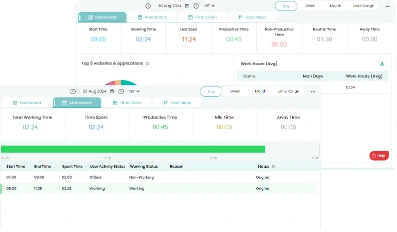
Time Champ shows you engagement and productivity levels, so you plan activities accordingly.
How to Tell If Your Team Building Actually Worked
I have only seen blogs talk about the activities and say goodbye, but how do you know if those activities really worked in practice?
Here’s how you know it:
- Participation: Did people actually show up and get involved, or count the minutes?
- Communication: Are cross-team messages, help offers, and casual chatter picking up?
- Collaboration: Are people reaching across silos on projects more than they used to?
- A Quick Pulse Survey: A two-question “did you enjoy it / do you feel more connected?” tells you a lot.
- The Trend that Matters: Over a quarter, are engagement, focus, and retention nudging in the right direction?
This is where a little data beats gut feelings. Time Champ is an efficient employee monitoring software with a workforce intelligence layer, so instead of guessing, you can watch the trends that tell the real story, focus time, collaboration patterns, and early signs of burnout, before and after your team building efforts. If an activity truly helped, you’ll usually see it show up in how the team works, not just in the group photo. See how workforce analytics and productivity tracking make that visible.
Common Team Building Mistakes to Avoid
Here are the common mistakes most people make unknowingly. I am listing them so you can avoid them:
- Forcing it: Make participation genuine, not mandatory-with-a-smile. Offer opt-outs and varied activities.
- One and Done: Connection is built with small, regular moments, not one big annual event.
- Ignoring Quieter People: Balance loud, high-energy games with calmer ones so everyone gets a way in.
- No Follow-through: Tie the takeaways back to how you actually work, or it stays “that fun day.”
Want to see if your team building activities are actually working?
Time Champ shows you detailed focus, collaboration, and engagement trends.
Conclusion
Team building doesn’t have to be a cringe thing, and it definitely isn’t a waste of time. When you do it with a little intention, these 30 team building activities for work can turn a group of individuals into a team that trusts each other, communicates openly, and genuinely enjoys showing up, whether they’re in the office, fully remote, or somewhere in between.
Find out what challenges your teams are having and orchestrate targeted activities, don’t forget to keep it regular, otherwise it will be more of an Independence Day kind of thing (I mean, once-a-year thing). Implement these and watch what happens, not just in the moment, but in how your team works together long after the fun is over.
Table of Content
 What Are Team Building Activities?
- Why Team Building Activities Matter at Work
- How to Choose the Right Team Building Activity
- 30 Team Building Activities for Work
- How to Tell If Your Team Building Actually Worked
- Common Team Building Mistakes to Avoid
- Conclusion
Related Blogs
Explore our top 9 strategies to enhance remote employee engagement, tackle common challenges, and keep your team motivated and connected.
Shabana Shaik | Oct 25, 2024
Revitalize remote teams with engaging and fun activities for employee engagement, fostering stronger bonds and enhancing employee productivity.
Shabana Shaik | Mar 20, 2024
Explore how employee engagement impacts productivity with real data insights, trends, and what teams should focus on to improve performance.
Thasleem Shaik | May 06, 2026
12 proven methods to improve employee productivity. Diagnose your biggest time leak first, then fix it with clarity, trust, focus, and the right tools.
Shabana Shaik | Jun 18, 2026
Stay ahead with 10 workforce management trends that are redefining business success. From digital tools to staff growth, see what’s driving the future of work.
Guna Lakshmi | September 25, 2025
Remote workforce management, also called virtual workforce management, helps teams stay engaged. Explore its definition, benefits, challenges & tools.
Thasleem Shaik | September 16, 2025


 4.7/5 avg.
Ready to Manage Your Workforce Smarter?
Join our family of 1500+ companies using smart insights to redefine workforces!

Free Trial
No Credit Card Required