CASB vs DLP: Comparing Two Data Security Solutions
See how CASB vs DLP differ in securing cloud applications and sensitive data. Compare key features, benefits, use cases, and when to use each solution.
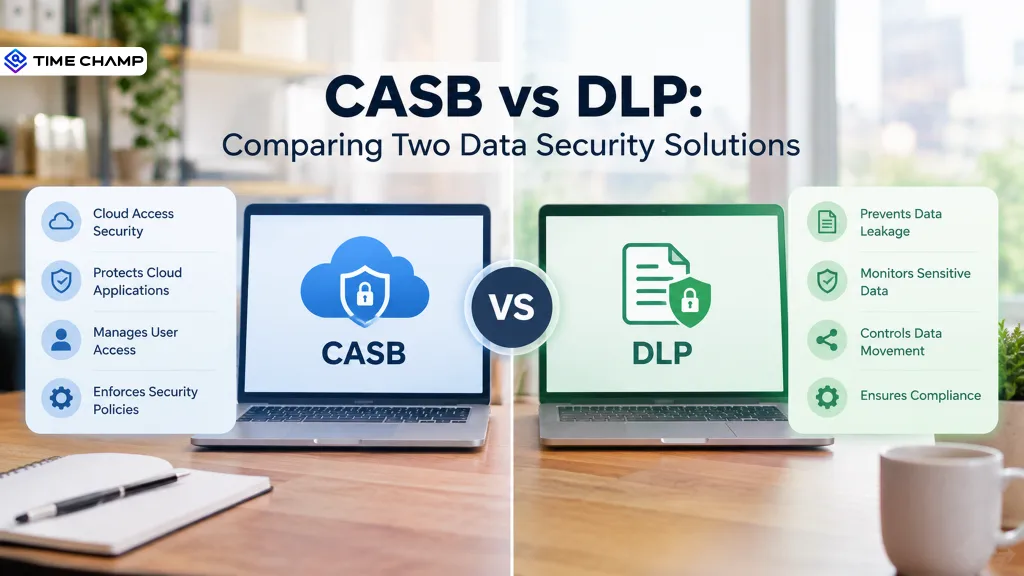
Data security is not just about stopping hackers anymore. It is also about making sure sensitive information does not leave your organization through the wrong app, wrong user, or wrong action. CASB and DLP both help with this, but their roles are not the same. One focuses more on securing cloud access, while the other focuses on preventing sensitive data from being exposed or misused. Let’s compare CASB vs DLP in a clear and practical way.
What Is CASB (Cloud Access Security Broker)?
A CASB (Cloud Access Security Broker) works as a checkpoint between you and the cloud apps your team uses every day. It gives you visibility, compliance, data security, and threat protection across the cloud apps your business runs on. Instead of trusting each individual app to handle security on its own, you get one enforcement point that watches what moves in and out of Microsoft 365, Google Workspace, Salesforce, Slack, and every other SaaS tool your team touches.
Key Features of CASB
A Cloud Access Security Broker provides several capabilities that help you secure cloud applications and reduce data security risks.
- Cloud Visibility: CASB helps you see every cloud application your team uses, including approved and unauthorized apps. This visibility makes it easier to identify shadow IT and understand where your data travels.
- Access Control: You can define who can access specific cloud applications, from which devices, and under what conditions. This helps prevent unauthorized access and strengthens your overall cloud security.
- Data Protection: CASB applies security policies to sensitive data stored or shared through cloud applications. It can block risky file sharing, restrict downloads, and prevent sensitive information from leaving approved platforms.
- Threat Detection: CASB continuously monitors cloud activity for unusual behavior, compromised accounts, and suspicious actions. When it detects a potential threat, it alerts you so you can respond before the issue grows.
- Compliance Management: Meeting compliance requirements becomes easier with CASB. It helps enforce security policies across cloud services and supports regulations such as GDPR, HIPAA, PCI DSS, and SOC 2 by providing detailed monitoring and reporting.

Did You Know
The Cloud Access Security Broker (CASB) Market will reach US$ 51.31 billion by 2034, rising from US$ 11.3 billion in 2025. The market will grow at a CAGR of 18.31% from 2026 to 2034.
What Is DLP (Data Loss Prevention)?
Data Loss Prevention (DLP) is a security solution that identifies, monitors, and protects sensitive data from unauthorized access, sharing, or transfer. Whether your data lives on employee devices, cloud applications, email, or networks, DLP helps you keep it secure by applying policies that control how sensitive information moves.
For a complete breakdown of how DLP works, check out our data loss prevention guide.
Key Features of DLP
Here's what you actually get when you deploy DLP software.
- Sensitive Data Discovery: DLP scans endpoints, cloud storage, email, and other locations to identify sensitive data. This gives you a clear view of where critical data resides before you apply protection policies.
- Content Inspection: DLP analyzes the content of files and messages instead of relying only on file names or locations. It detects sensitive information such as personally identifiable information (PII), financial records, healthcare data, and confidential business documents.
- Policy Enforcement: You define rules that control how sensitive data should be handled, and DLP actively enforces them. It automatically blocks, warns, encrypts, or monitors actions that violate those policies.
- Data Movement Protection: DLP helps prevent sensitive information from leaving your environment through email, USB devices, cloud storage, file transfers, or other unauthorized channels.
- Compliance Support: DLP helps you meet regulatory requirements by protecting sensitive information and maintaining detailed logs that support standards such as GDPR, HIPAA, PCI DSS, and SOC 2.
CASB vs DLP: What are the Differences?
A CASB controls how users interact with cloud applications, while DLP protects sensitive data wherever it moves. One focuses on cloud access and visibility, and the other focuses on identifying and protecting confidential information. Understanding these differences helps you choose the right solution based on your security priorities instead of assuming one can replace the other.
The table below highlights the key differences between CASB vs DLP at a glance.
| Aspect | CASB | DLP |
|---|---|---|
| Focus | Controls where your data goes by governing access to cloud apps | Controls what your data is by inspecting and classifying its content |
| Scope | Covers your cloud and SaaS platforms, with little visibility beyond them | Follows your data across endpoints, networks, email, and cloud |
| Deployment | Connects through cloud APIs or a proxy, so you get cloud coverage fast | Needs agents on your devices for full protection, which takes more setup |
| Data handling | Controls how your users interact with an app, but may not look inside the files | Reads file contents directly, so it catches sensitive data even when access looks normal |
| Shadow IT | Finds cloud apps your team uses without approval, including ones you don't know about | Watches known data flows through channels you've already defined |
| Best use cases | Fits cloud app inventory, shadow IT control, and cloud compliance enforcement | Fits sensitive data classification, exfiltration prevention, and insider threat detection |
Not sure where your biggest data security risk exists?
Try Time Champ to gain better visibility into sensitive data and reduce the risk of unauthorized data movement.
When Should You Use CASB vs DLP?
Your choice between CASB and DLP comes down to where your risk actually sits. If your biggest blind spot is which cloud apps your team uses, CASB deserves priority. If your biggest blind spot is what happens to your data once someone has access to it, DLP deserves priority. Understanding where your risks exist helps you invest in the solution that delivers the greatest value.
When to Use CASB
Reach for CASB first when these apply to you.
- You use multiple SaaS applications such as Microsoft 365, Google Workspace, Salesforce, or Slack and want to monitor access from one place.
- You need to discover unauthorized cloud applications and reduce the risks associated with shadow IT.
- You want to enforce consistent security policies across all approved cloud services.
- You are adopting a zero trust security model and need stronger control over cloud application access.
- You want to connect cloud activity with your SIEM platform for centralized security monitoring and faster incident response.
When to Use DLP
Prioritize DLP when these describe your business instead.
- You want to prevent data exfiltration through email, USB devices, cloud storage, or file transfers.
- You handle customer information, financial records, intellectual property, or other confidential business data that requires continuous protection.
- You need stronger insider threat detection to reduce the risk of intentional or accidental data exposure.
- You must comply with regulations such as GDPR, HIPAA, PCI DSS, or SOC 2 by controlling how sensitive data moves.
- You want to reduce the chances of a costly data breach by identifying and blocking risky data transfers before they happen.
Did You Know
17% of sensitive AI exposures happened through personal or free accounts, which sit outside company visibility and audit trails.
How Do CASB and DLP Work Together?
CASB and DLP solve different security needs, but together they give complete protection across cloud and data.
CASB Protects Cloud Applications: It helps you see and control how users access SaaS tools, so cloud usage stays safe and compliant.
DLP Protects Sensitive Data: It monitors and protects business data across endpoints, email, networks, storage, and cloud apps.
Together, They Close Security Gaps: CASB controls cloud access, while DLP protects the actual data moving through those apps. This reduces blind spots and improves overall visibility.
Using both helps you stop data leaks, detect risky activity early, and maintain stronger security across all systems.
How Time Champ Strengthens Your Data Security Strategy
If you already use CASB, DLP, or both, you still need visibility into what happens on employee devices. That is where Time Champ adds value. While CASB secures cloud application access and DLP protects sensitive data, Time Champ helps you monitor user activity at the endpoint and identify risky actions before they become security incidents.
Time Champ gives you a closer look at what happens to sensitive files after they reach an endpoint. You can track file activity, monitor transfers to external devices and websites, and review unusual actions that could put sensitive data at risk. This endpoint visibility adds another layer to your security setup and helps you investigate potential data loss with greater context.
Here are some of the ways Time Champ supports your CASB and DLP strategy.
Monitor Sensitive File Activity: Track file creation, access, modification, and transfer from employee devices. This helps you identify unusual file activity early and investigate potential security incidents with greater confidence.
Control USB and External Devices: Restrict or monitor file transfers through USB drives and other removable media to reduce the risk of unauthorized data movement outside your environment.
Track Cloud and Website Activity: Monitor access to websites and cloud platforms, identify unauthorized usage, and gain better visibility into how business data interacts with online services.
Support Compliance Requirements: Maintain detailed activity logs that help demonstrate compliance with standards such as GDPR, HIPAA, PCI DSS, and SOC 2 during audits and security reviews.
Improve Incident Investigations: Access detailed activity history to understand what happened, when it happened, and which actions took place. This helps you investigate security events more efficiently and respond with the right corrective actions.
Are unauthorized apps quietly pulling data out of your business?
Use Time Champ to monitor application usage and restrict access to risky websites.
Conclusion
Choosing between CASB vs DLP depends on the security challenges you need to solve. CASB helps you control access to cloud applications, while DLP protects sensitive data wherever it moves. Many businesses benefit from using both because they address different parts of a strong security strategy and help reduce gaps that a single solution cannot cover.
If you want to strengthen the endpoint side of your security strategy, Time Champ adds valuable visibility into file activity, user actions, and potential data risks. It works alongside your existing security tools to help you protect sensitive information and respond to incidents more effectively.

Thasleem Shaik

Table of Content
 What Is CASB (Cloud Access Security Broker)?
- What Is DLP (Data Loss Prevention)?
- CASB vs DLP: What are the Differences?
- When Should You Use CASB vs DLP?
- How Do CASB and DLP Work Together?
- How Time Champ Strengthens Your Data Security Strategy
- Conclusion
Instant Signup
Thank you for your request!
We have received your signup request and our team will get back to you soon. In the meantime, you can book a demo to see Time Champ in action.
Book a DemoFree trial. No credit card required. Prefer a walkthrough? Book a demo.
Related Blogs
Learn the difference between data leak prevention vs. data loss prevention and explore effective strategies to protect sensitive business information.
Sai Keerthi Uppala | Jan 22, 2025
Stealth and transparent monitoring work very differently for teams. See the key differences, legal implications, and which approach fits your organization.
Jahnavi Pulluri | Apr 21, 2026
MDM and employee monitoring software are not the same tool. See what each one does, where they overlap, and whether your organization needs one or both.
Shabana Shaik | Apr 23, 2026
Protect your business from data theft by understanding key risks and prevention strategies. Learn how to secure sensitive information effectively.
Sai Keerthi Uppala | Mar 12, 2025
Discover effective data loss prevention strategies to protect sensitive information, enhance security, and safeguard your business from data breaches.
Shabana Shaik | Jan 22, 2025
Enhance your security with endpoint data loss prevention solutions that guard against data breaches and protect your most valuable assets.
Shabana Shaik | Jan 23, 2025


 4.7/5 avg.
Ready to Manage Your Workforce Smarter?
Join our family of 1500+ companies using smart insights to redefine workforces!

Free Trial
No Credit Card Required