Employee Performance Monitoring: Types and Methods
Explore key types and strategies for employee performance monitoring to boost productivity and align team goals with company success.
Monitoring the performance of employees is important in any organization that seeks to
maximize the productivity of its
workforce. The concept of employee performance monitoring has evolved significantly and is now more about building
up the employees and improving their performance on the job.
If you want to improve your team’s productivity,
you have come to the right place.
Let us discuss the various types and strategies in which one can monitor the performance of the employees.
What is Employee Performance Monitoring?
Employee performance monitoring is the act of observing, evaluating, and managing the performance of employees in an organization. This involves the use of various methods and approaches to gather information on the productivity, and efficiency of the employees.
Why is Employee Performance Monitoring Important in the Current Workplace?
1. Improves Productivity
When an employee’s performance is measured, you can identify the areas where they are lacking, which helps to improve their performance. Best performers can be rewarded and their strategies copied throughout the organization. This systematic approach eventually improves the productivity of employees.
2. Boosts Employee Engagement
When you give performance feedback and recognition based on performance, it can improve engagement and motivation among employees. It is important for employees to feel appreciated, as this ensures their loyalty.
3. Enhances Goal Alignment
Performance monitoring helps evaluate how well employees’ activities align with the organization’s goals and objectives. It offers a good perspective of how each person’s effort contributes to the achievement of organizational goals.
4. Adapt to Remote Work
In today’s world, where remote work is increasing rapidly, performance monitoring enables you to track productivity effectively. It ensures that you and your team perform tasks efficiently and that business operations remain smooth, even when you are not physically present.
Different Types of Employee Performance Monitoring
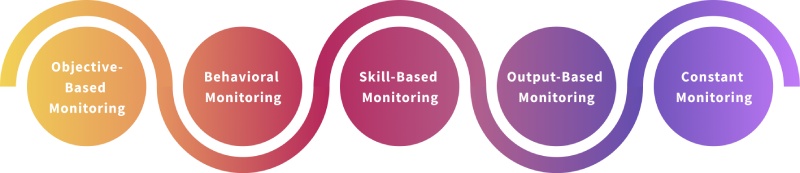
1. Objective-Based Monitoring
This involves setting clear goals that employees are supposed to achieve. These goals are used against the performance of employees whether they met or not. It clearly gives the performance of individual employees.
For example, if an employee has a target to increase sales by up to 10% which can be used to measure his/her performance.
2. Behavioral Monitoring
This is something that one couldn’t find unless you have deep knowledge of performance
monitoring.
Yes!!
This monitoring focuses on the behavior of the employees
in the workplace. It includes active participation in teamwork and how they are communicating, etc. everything will
be monitored. The goal is to understand patterns and assess how behaviors align with organizational standards and
objectives.
3. Skill-Based Monitoring
Skill-based monitoring focuses on the performance of employees in their core activities
that are expected from them.Linking these efforts with an employee recognition program can further
motivate individuals by rewarding consistent growth and excellence in their core skills.
For instance, it
might be technical skills from IT employees, analytical skills from analysts, etc.
4. Output-Based Monitoring
This type of monitoring involves tracking both the amount and quality of work produced
by an employee.
For instance, the number of tasks completed, the amount of money earned, etc. It helps in the
assessment
of their work output and efficiency.
5. Constant Monitoring
This involves continuously observing and assessing employees’ activities in real-time using tools such as time-tracking software or project management systems. Balancing constant monitoring with privacy is crucial to maintain a positive work environment.
Methods of Employee Performance Monitoring
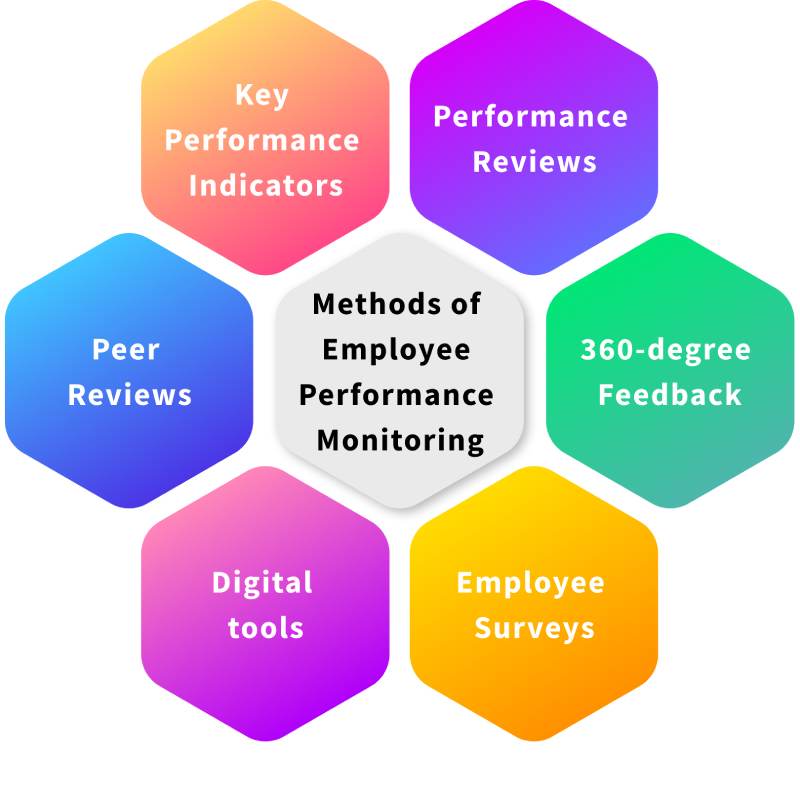
There are various methods to monitor employee performance that not only track
productivity but also promote growth and improvement.
Let’s have a look at them:
1. Key Performance Indicators (KPIs)
These are specific targets that are used to define the level of achievement of the expected performance. For instance, if the goal is to increase sales by 15% in a year, KPIs show the contribution of each salesperson toward achieving this target.
2. Performance Reviews
A performance review is a process that involves the assessment of how an employee is performing in their job. These reviews can be done annually or more frequently. In an appraisal, managers evaluate what has been done, what can be done, and what needs to be done in the future. This helps ensure that employees stay focused and helps in the development of the employees.
3. 360-degree Feedback
This involves gathering feedback from the employee’s co-workers, and the employee themselves. It gives a balanced view of an employee’s performance since it is done from different perspectives.
4. Employee Surveys
These questionnaires are used to get information from the employee on the level of satisfaction with the job, the amount of work done, and the areas that need to be changed.
5. Digital tools
Tools like monitoring software track the time spent by employees on projects and tasks, providing information about their performance, productivity, time usage, and areas of improvement.
6. Peer Reviews
Peer reviews provide external feedback on each team member’s contribution. Employees are usually asked to give feedback on their co-worker’s work to know more about their performance.
7. Effective Strategies to Monitor Employee Performance
Monitoring employees
is important for keeping things on track. When you have effective strategies at the workplace, then employees are
likely to hit goals and help the organization move forward.
Let’s have a look at this in more detail:
8. Setting Clear Objectives and Expectations
The goals and expectations set should be clear and should follow the SMART goals and objectives, which are Specific, Measurable, Achievable, Relevant, and Time-bound so that the employees understand what is expected from them in terms of their performance. When all these expectations are clear, it provides a good platform for handling performance issues well.
9. Regular Feedback
Communicate to the employees frequently about their performance. This helps them in knowing their strengths and areas of weakness so that they can work on them.
10. Professional Development Opportunities
Provide education and training to improve the skills and abilities of the employees. Training is a way of enhancing performance and satisfaction among employees in the organization. It creates a positive atmosphere for everyone to perform and improve the organization’s growth.
Challenges of Employee Monitoring
1. Privacy
When you monitor things such as emails, computer usage, or GPS locations, the employees may feel that their privacy is being infringed. This can make them uncomfortable and stressed. They may feel that they are under surveillance, and this may demoralize them besides reducing their efficiency.
2. Trust and Morale
Monitoring can be perceived by the employees as the organization’s lack of confidence in them. This perception can make the employees feel unmotivated and stressed up since they feel that they are not valued. If the monitoring is seen as being too invasive or unfair, this can lead to a breakdown in trust and overall job satisfaction.
3. Impact on motivation
Monitoring gives the employees the impression that they are being watched at all times, this puts pressure on them. When they feel this way, they are not able to come up with new ideas easily. They may spend more time doing nothing. It can make them unhappy because they feel that they are being monitored a lot.
4. Technology and Infrastructure
Performance monitoring systems include the use of tools and cameras to monitor the work and productivity of the workers. Tools can be expensive to purchase, install, and maintain and it consumes a lot of time.
Monitor your Employee Performance with Time Champ
To manage the performance of the employees, it is necessary to utilize tools that will enhance the performance and give the right information. In the area of employee management, Time Champ offers numerous features and an easy-to-use interface. This is because it offers real-time tracking of employee activity, which assists organizations in monitoring work progress, and productivity. It allows the managers and owners to easily review the performance information. Besides, it focuses on data security, ensuring that the data is secure to prevent the disclosure of sensitive information.
Maximize Your Team’s Productivity with Time Champ!
Track performance, gain real-time insights and empower your workforce to reach their full potential. Start boosting efficiency today!
Conclusion
It is important to monitor the performance of the employees to increase productivity and identify training needs and quality assurance. Goal setting, feedback, and use of the right tools are crucial for the growth of the employees and the achievement of the company’s objectives. It is important to determine the right level of monitoring privacy and trust to maintain a proper organizational climate and to motivate employees. Performance monitoring is a technique that, when applied correctly, improves organizational performance and results.

Jahnavi Pulluri

Table of Content
-
 What is Employee Performance Monitoring?
-
Why is Employee Performance Monitoring Important in the Current Workplace?
-
Different Types of Employee Performance Monitoring
-
Methods of Employee Performance Monitoring
-
7. Effective Strategies to Monitor Employee Performance
-
Challenges of Employee Monitoring
-
Monitor your Employee Performance with Time Champ
-
Conclusion
Related Blogs
Analyze and improve employee performance with ‘Lifetime Heat Maps’ for detailed insights and data-driven results.
Thasleem Shaik | 18 March 2025
Explore Time Champ’s new Audio Tracking feature. Monitor employee activity with audio and screen recording for detailed insights.
Shabana Shaik | 18 March 2025
Discover the best ways to introduce productivity monitoring in your organization smoothly and effectively.
Thasleem Shaik | 18 March 2025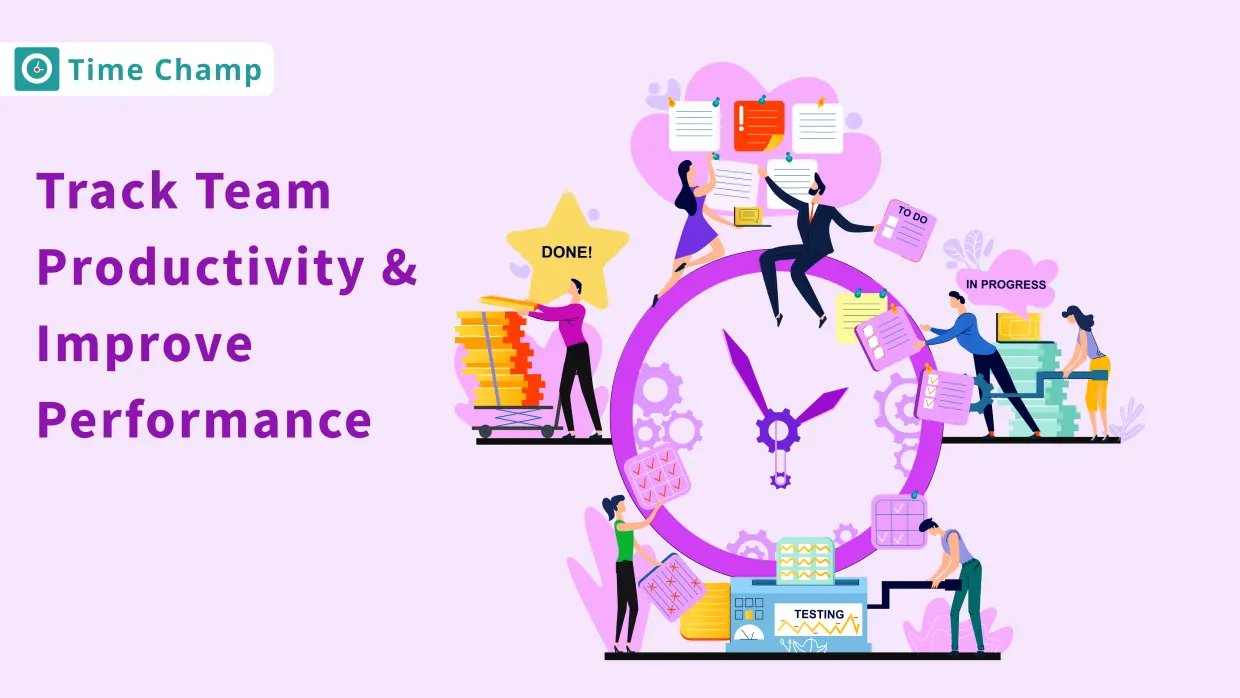
Boost team productivity and performance with effective tracking methods. Enhance productivity through data-driven insights and actionable strategies.
Shabana Shaik | 17 March 2025
Learn how to boost productivity by finding the right balance in employee monitoring, focusing on key indicators, and maintaining transparency
Tarun Kumar | 14 March 2025
Explore the best remote employee management software systems for productivity, collaboration, and performance tracking.
Jahnavi Pulluri | 12 March 2025


 4.7/5 avg.
Ready to Manage Your Workforce Smarter?
Join our family of 1100+ companies using smart insights to redefine workforces!

Free Trial
No Credit Card Required