User Activity Monitoring Tools: A Complete Guide
Discover the best user activity monitoring tools to track employee activity, boost productivity, and keep your data secure. Find the right fit for your team.
Managing employees across devices, apps, and remote locations makes it hard to know what is actually happening during work hours. Without the right visibility, you miss data breaches, insider threats, compliance gaps, and productivity problems until it is too late to act on them. The detail here sits inside a wider conversation covered in our enterprise employee monitoring guide.
User activity monitoring software gives you that visibility. These tools track and analyze what employees do on company systems, from app usage and website visits to file access and login activity, helping your team stay secure, compliant, and productive. This guide covers the best user activity monitoring tools available today, how to pick the right one, and how to put it to work in your organization.
What is User Activity Monitoring (UAM)?
User activity monitoring (UAM) is the process of tracking and recording what users do on company devices, networks, and applications. It captures data like which apps employees use, which websites they visit, which files they open or transfer, and how much time they spend on each task. Think of it as operational visibility. You are not reading personal messages or invading privacy. You are tracking work activity on work systems, so you have an accurate record of how your team uses company resources.
UAM software covers three core areas:
- Security: By detecting unusual behavior like unauthorized file access or suspicious data transfers.
- Compliance: By maintaining detailed audit logs that prove your organization meets regulatory requirements.
- Productivity: By showing you where time actually goes across your team, you can spot inefficiencies early.
How Does UAM Work?
User activity monitoring works by running a lightweight agent on company devices that silently collects data on what employees do during work hours. That data flows into a central dashboard where managers and IT teams can view reports, set alerts, and review specific sessions when needed. Here is a breakdown of how the process works from start to finish:
- Data Collection: The agent records app usage, website visits, file transfers, login and logout times, and keyboard and mouse activity. It runs in the background without interrupting the employee's workflow.
- Activity Analysis: The activity monitoring system organizes incoming data into clear, readable insights. You can see which applications your team uses most, how much time goes toward productive versus non-productive time, and whether anyone is accessing systems outside their normal scope.
- Behavior Analytics: Advanced UAM software layers automated behavior detection on top of raw data. If an employee downloads a large volume of files at an unusual hour or accesses a restricted folder, the system flags it and sends you a real-time alert.
- Audit Logs and Reporting: The system timestamps and stores every action as a detailed log, giving you a verifiable record of user activities across your systems. This comes in especially useful during compliance audits or security investigations.
- Deployment Options: Most user activity monitoring solutions offer two options: cloud-based for faster setup and easier scaling, or on-premise for organizations that need tighter control over where their data lives.
What are the Top User Activity Monitoring Tools?
Finding the right user activity monitoring tool depends on what your organization actually needs, whether that is security, productivity visibility, compliance, or all three. Here are ten tools to help you make that decision, starting with Time Champ.
| S. No. | Software | Key Features | Ideal Solution For | Free Trial |
|---|---|---|---|---|
| 1. | Time Champ |
| Mid-size to enterprise teams that need complete user activity monitoring with security and compliance controls | Yes |
| 2. | Teramind |
| Enterprises with serious insider threat detection and compliance requirements | Yes |
| 3. | ActivTrak |
| Teams focused on productivity analytics with a privacy-friendly monitoring approach | Yes |
| 4. | Hubstaff |
| Remote teams, freelancers, and field service businesses that need time tracking alongside activity data | Yes |
| 5. | Veriato |
| Security-focused organizations managing insider threats and regulatory compliance | Yes |
| 6. | Insightful |
| Remote and hybrid teams that need project-level visibility alongside user activity tracking | No |
| 7. | InterGuard |
| Compliance-driven organizations that need web activity monitoring across all employee channels | No |
| 8. | Monitask |
| Small businesses and startups that need simple user activity tracking without complex setup | Yes |
| 9. | Kickidler |
| Call centers, BPOs, and support teams that need real-time visual oversight of agent activity | Yes |
| 10. | SoftActivity |
| IT and security teams that need forensic-level detail and on-premise data storage | Yes |
1. Time Champ
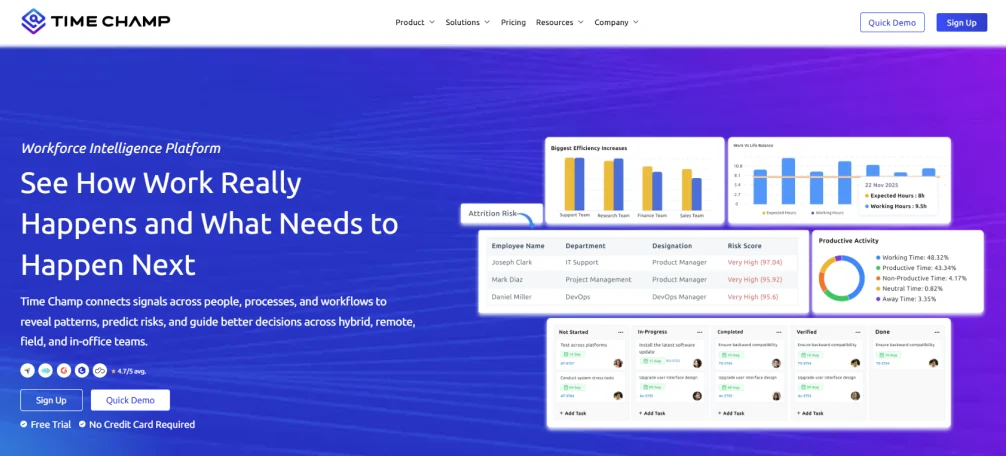
Time Champ is an employee monitoring software that gives you complete visibility into how employees use their time on company devices and systems. It brings user activity monitoring, time tracking, productivity analytics, and data loss prevention together in one platform. That means your IT teams, operations leaders, and HR managers can stay on top of security, compliance, and team performance without switching between tools.
Pros
- Gives you a clear view of app usage, idle time, and active hours across your entire team in real time.
- Combines user activity tracking, attendance, and project management into one platform instead of spreading them across separate tools.
- Flags security risks through USB monitoring, file activity alerts, and unauthorized website access detection.
- Works reliably for distributed teams that need visibility across locations and time zones.
Cons
- The dashboard carries a lot of data, so users who prefer a minimal interface may need some time to get comfortable with it.
- Some users report occasional slowdowns during navigation that can disrupt workflow.
Features
- Real-time user activity monitoring across apps, websites, and tasks throughout the workday.
- Automated screenshot capture and screen recordings that trigger on unusual activity spikes.
- Web activity monitoring that logs every website visited during work hours with time-spent details.
- Keystroke and mouse activity tracking that measures engagement levels without capturing personal content.
- Activity tracking software that classifies apps and websites as productive, non-productive, or neutral.
- Idle time detection that flags inactivity and sends alerts when thresholds exceed set limits.
- Detailed user activity logs with timestamps for every action taken on company systems.
- Customizable reports that give you a full breakdown of user activities for audits, compliance reviews, and performance tracking.
Use Cases
- Works well for organizations that need to monitor employee computer activity across remote, hybrid, and in-office teams from one place.
- A strong fit for compliance-driven industries that need detailed user activity logs and audit trails to meet regulatory requirements.
- Useful for IT and security teams that need real-time alerts on file access violations, unauthorized USB usage, and suspicious behavior.
- Suits HR and operations leaders who want to identify productivity gaps and attendance patterns without manual reporting.
Pricing
Time Champ offers a 7-day free trial so teams can evaluate the platform before committing.
- Starter: $3.9 per user per month
- Professional: $6.9 per user per month
- Enterprise: $13.9 per user per month
Pricing scales with the features you need and the size of your team, making it a practical fit for growing organizations as well as larger enterprises.
Reviews
- G2: 4.8/5
- Capterra: 4.9/5
Ready to get full visibility into how your team works?
Let Time Champ track user activity, flag risks, and give you the data to make faster, smarter decisions.
2. Teramind
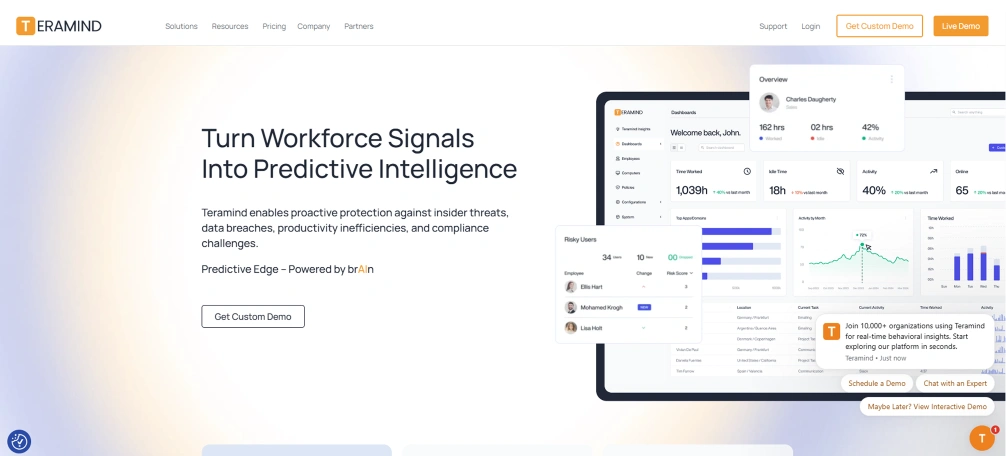
Teramind is a user activity tracking and insider threat detection platform built for organizations with serious security requirements. It captures a wide range of endpoint activity and uses behavior analytics to detect risk before it escalates.
Pros
- Strong insider threat detection with AI-driven behavior analytics.
- Comprehensive monitoring across apps, emails, file transfers, and network activity.
- Highly customizable rules engine for automated alerts and policy enforcement.
Cons
- Complex initial setup that requires time and technical expertise.
- Pricing sits on the higher end, which may not suit smaller teams.
Features
- Full-motion screen recording with OCR-enabled playback.
- Real-time behavior analytics with automated risk scoring.
- Data loss prevention with policy-based blocking capabilities.
- Detailed forensic investigation tools for incident response.
Use Cases
- Best for enterprises that prioritize security and insider threat management.
- Fits industries like finance, healthcare, and government with strict compliance needs.
Pricing
- Starter: Starts at $15 per user per month
- UAM: Starts at $30 per user per month
- DLP: Starts at $35 per user per month
- Enterprise: Custom pricing
Reviews
- G2: 4.6/5
- Capterra: 4.7/5
3. ActivTrak
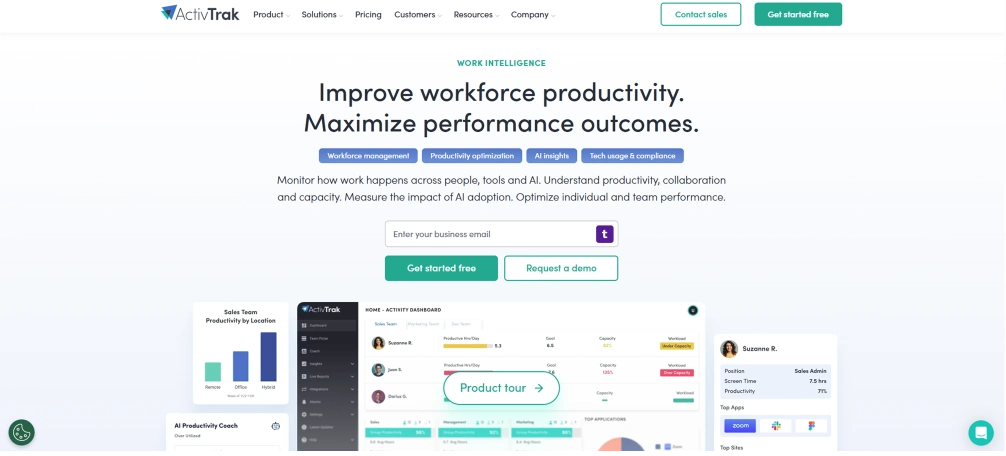
ActivTrak is a workforce analytics platform that focuses on productivity measurement and work pattern analysis. It takes a less invasive approach to monitoring user activity, making it a popular choice for teams that prioritize employee trust alongside oversight.
Pros
- Clean, intuitive dashboard that managers can navigate without technical training.
- Strong productivity benchmarking and workflow efficiency reports.
- Privacy-friendly approach with no keystroke logging or screen recording.
Cons
- Limited security and DLP features compared to dedicated security-focused tools.
- Some advanced features sit behind higher pricing tiers.
Features
- App and website usage tracking with productive versus non-productive classification.
- Workload balance insights to identify overworked and underused employees.
- AI-powered productivity coaching suggestions based on activity patterns.
- Automated alerts for policy violations and unusual activity.
Use Cases
- Best for teams focused on productivity analytics rather than security monitoring.
- Fits organizations that want user activity monitoring without heavy monitoring features.
Pricing
- Free: $0 for up to 3 users
- Essentials: $10 per user per month
- Essentials Plus: $15 per user per month
- Professional: $19 per user per month
Reviews
- G2: 4.3/5
- Capterra: 4.5/5
4. Hubstaff
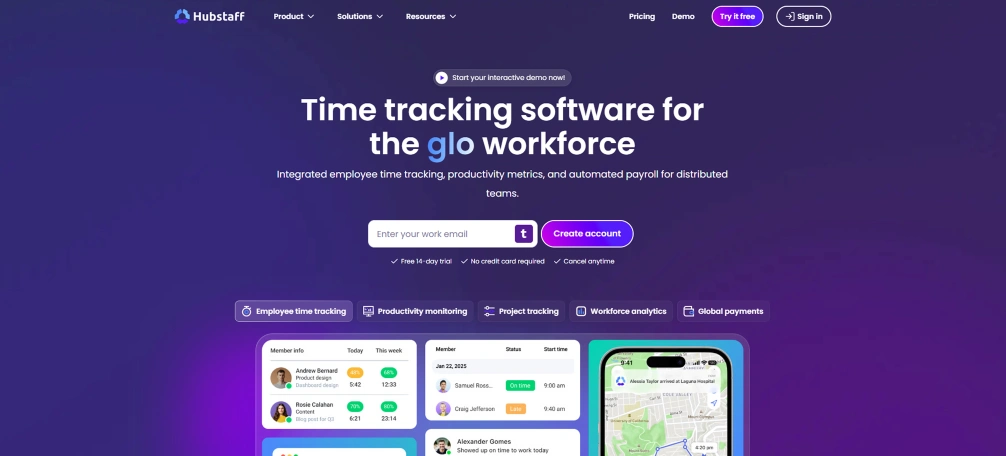
Hubstaff is a time tracking and user productivity monitoring tool designed primarily for remote and field teams. It combines time capture with activity monitoring to give managers a practical view of how distributed teams spend their work hours.
Pros
- Easy to set up and use, even for non-technical teams.
- Strong GPS tracking features for field and mobile employees.
- Integrates with over 30 project management and payroll tools.
Cons
- Activity monitoring features are less deep compared to dedicated UAM software.
- Occasional bugs and software glitches are reported by users.
Features
- Automated time tracking with activity level measurement.
- Random screenshot capture at configurable intervals.
- GPS location tracking for remote and field employees.
- App and URL tracking during work sessions.
Use Cases
- Best for remote teams, freelancers, and field service businesses.
- Fits agencies and professional services teams that bill clients by the hour.
Pricing
- Starter: $4 per user per month
- Grow: $7 per user per month
- Team: $10 per user per month
- Enterprise: $25 per user per month
Reviews
- G2: 4.4/5
- Capterra: 4.6/5
5. Veriato
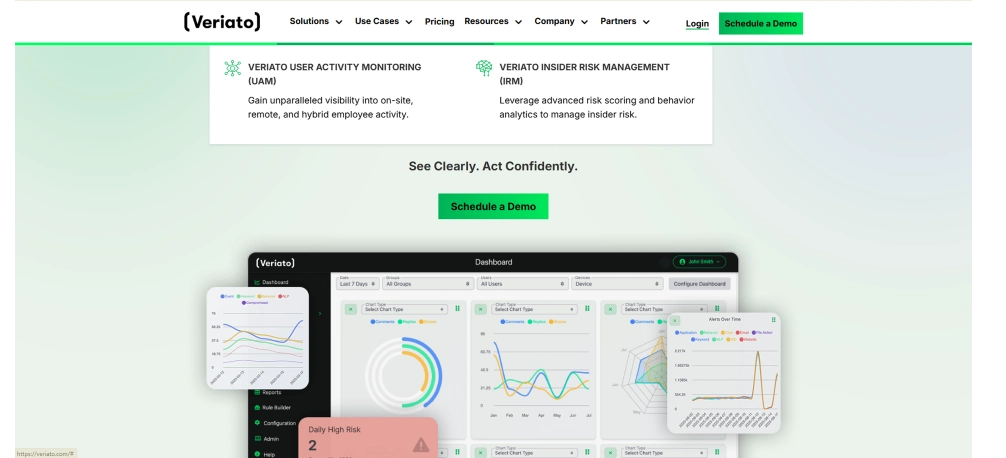
Veriato is a UAM solution that specializes in AI-powered behavior analytics and insider threat detection. It captures deep endpoint data and uses machine learning to identify risk patterns before they turn into incidents.
Pros
- Strong AI-driven anomaly detection that identifies subtle behavioral shifts.
- Broad cross-platform support across Windows, Mac, and Linux.
- Detailed session replay and video playback for easy activity review.
Cons
- Steep learning curve for teams without dedicated IT or security staff.
- Initial setup and configuration take significant time and effort.
Features
- Continuous endpoint monitoring across apps, websites, emails, and file movements.
- AI-powered risk scoring that updates in real time based on user behavior.
- Data loss prevention tools with policy-based controls.
- Detailed compliance reporting and audit trail generation.
Use Cases
- Best for security-focused organizations managing insider threat risk.
- Fits compliance-heavy industries that need verifiable audit trails and behavioral evidence.
Pricing
- UAM: $15 per user per month
- IRM: Custom pricing
Reviews
- G2: 4.3/5
- Capterra: 4.2/5
6. Insightful
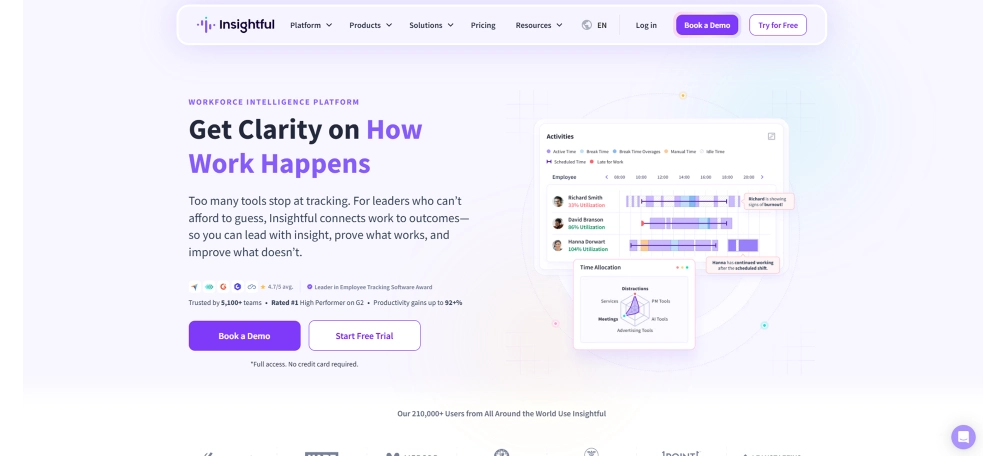
Insightful is a workforce analytics and activity tracking platform built for teams that want clear visibility into productivity without heavy oversight. It focuses on giving managers actionable data about how time is spent across projects and tasks.
Pros
- Simple, clean interface that teams can get comfortable with quickly.
- Strong project-level time tracking alongside activity monitoring.
- Good balance between employee visibility and privacy.
Cons
- Limited security and DLP capabilities compared to enterprise-grade tools.
- Reporting customization options are relatively basic.
Features
- Real-time activity monitoring across apps and websites.
- Automatic time tracking tied to specific projects and tasks.
- Productivity classification with customizable app categories.
- Attendance tracking with shift scheduling support.
Use Cases
- Best for remote and hybrid teams that need project-level visibility alongside activity data.
- Suitable for growing companies seeking simple user activity tracking without complex setup.
Pricing
- Productivity Management: $6.40 per user per month
- Time Tracking: $8.00 per user per month
- Process Improvement: $12.00 per user per month
Reviews
- G2: 4.6/5
- Capterra: 4.8/5
7. InterGuard
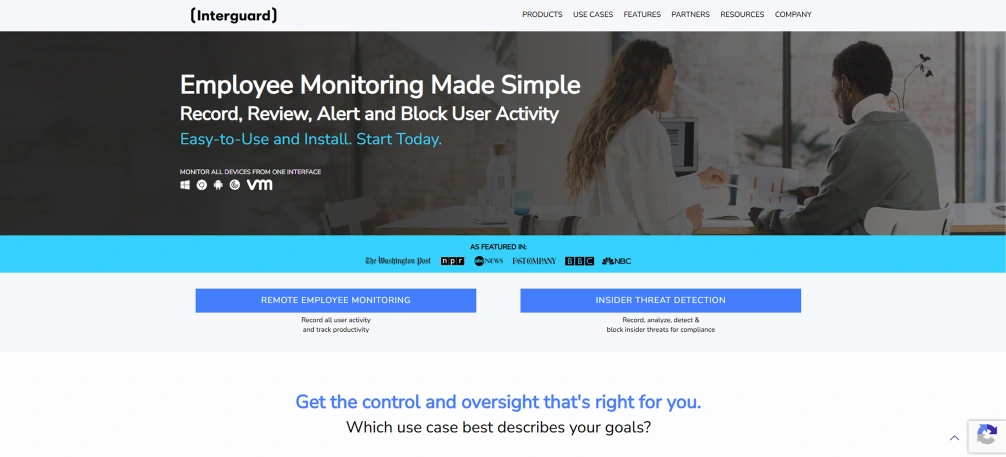
InterGuard is a user monitoring software that covers employee activity monitoring, web filtering, and data loss prevention in one platform. It works across both on-premise and remote devices, making it a practical option for organizations managing mixed work environments.
Pros
- Covers monitoring, web filtering, and DLP without needing separate tools.
- Works well for both in-office and remote employees on a single platform.
- Detailed audit logs suitable for compliance and legal investigations.
Cons
- The interface feels dated compared to newer tools on the market.
- Setup and configuration require technical knowledge.
Features
- Keystroke logging and screenshot capture for detailed activity records.
- Web filtering with category-based blocking and access controls.
- Email monitoring across major email platforms.
- Social media and cloud storage activity tracking.
Use Cases
- Best for organizations that need web activity monitoring alongside employee oversight.
- Fits compliance-driven industries that require detailed records of user behavior across all channels.
Pricing
- Contact InterGuard directly to know about their pricing.
Reviews
- G2: 3.2/5
- Capterra: 3.9/5
8. Monitask
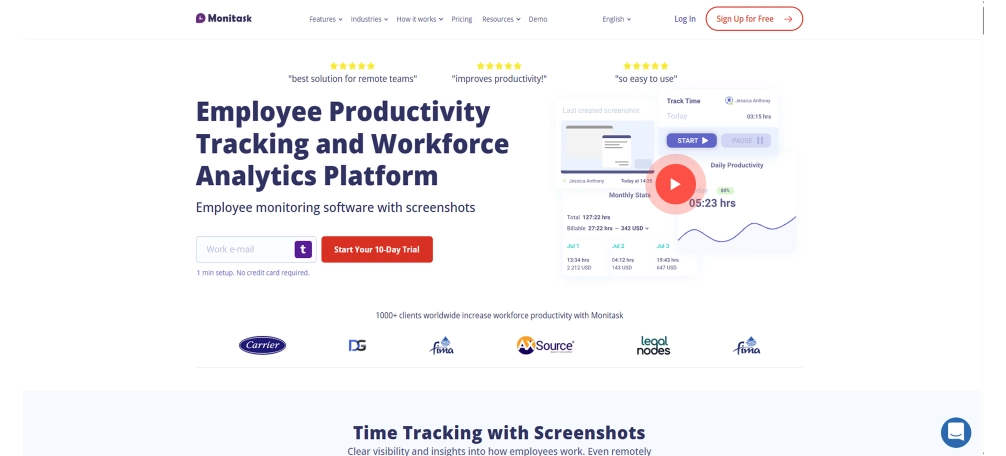
Monitask is a lightweight software to track user activity built for small to mid-size teams that need basic employee monitoring and time tracking without the complexity of enterprise platforms. It is straightforward to set up and easy for non-technical managers to use on a daily basis.
Pros
- Very easy to set up and use with minimal onboarding required.
- Affordable pricing that suits smaller teams and growing businesses.
- Screenshot monitoring and activity tracking work reliably without performance issues.
Cons
- Limited advanced features compared to more dedicated UAM tools.
- Not suitable for organizations with complex security or compliance requirements.
Features
- Automated time tracking with activity level measurement.
- Random screenshot capture at manager-defined intervals.
- App and website usage tracking during work sessions.
- Project and task-based time logs with exportable reports.
Use Cases
- Best for small businesses and startups that need simple user activity tracking without heavy configuration.
- Fits freelance teams and agencies that need basic oversight and time records for client billing.
Pricing
- Pro: $6.99 per user per month
- Business: $8.99 per user per month
- Business Premium: $12.99 per user per month
Reviews
- G2: 4.8/5
- Capterra: 4.8/5
9. Kickidler
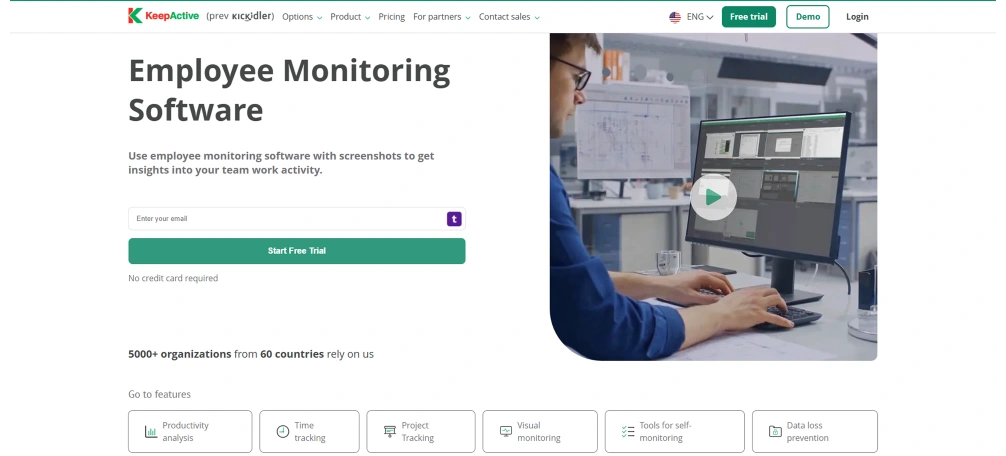
Kickidler is a user activity monitor that combines real-time screen monitoring with productivity tracking and violation detection. It gives managers a live view of what every employee is doing on their screen at any given moment, which makes it a strong fit for teams that need direct visual oversight.
Pros
- Real-time screen viewing across multiple employees simultaneously.
- Violation alerts trigger automatically when employees break defined usage policies.
- Self-monitoring mode lets employees track their own productivity, which improves transparency.
Cons
- The level of visual monitoring can feel intrusive for employees if not communicated clearly.
- Advanced reporting features take time to configure properly.
Features
- Live screen monitoring with multi-screen viewing from a single dashboard.
- App and website usage analytics with time-spent breakdowns.
- Employee self-monitoring portal for personal productivity tracking.
- Video recording of work sessions with searchable playback history.
Use Cases
- Best for call centers, BPOs, and support teams that need direct visual oversight of agent activity.
- Fits security-conscious organizations that require real-time monitoring of user activity with immediate alert capabilities.
Pricing
- Contact Kickidler directly to know about their pricing.
Reviews
- G2: 4.8/5
- Capterra: 4.8/5
10. SoftActivity
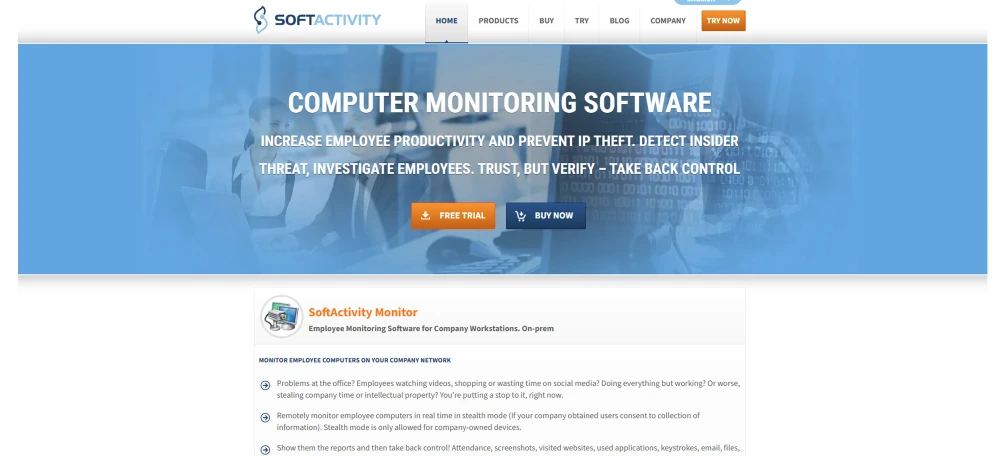
SoftActivity is a dedicated employee activity monitoring solution that focuses on deep forensic visibility and stealth operation. It offers both cloud-based and on-premise deployment options, giving organizations full control over how and where their monitoring data gets stored.
Pros
- Stealth mode runs completely invisibly, making it suitable for internal investigations.
- Available as both SaaS and on-premise, giving flexibility to compliance-driven organizations.
- Deep forensic detail, including browser history recovery even after deletion.
Cons
- Interface is functional but lacks the modern design of newer platforms.
- Better suited for security and forensic use cases than general productivity monitoring.
Features
- Continuous screen recording and live screen viewing across all monitored devices.
- Keystroke logging and browser history tracking with deletion recovery.
- Real-time alerts for policy violations and suspicious behavior.
- Role-based access controls to limit who can view sensitive monitoring data.
Use Cases
- Best for IT and security teams that need forensic-level detail for investigations.
- Suitable for organizations in regulated industries requiring on-premise data storage and strict access controls.
Pricing
- Contact SoftActivity directly to know about their pricing.
Reviews
- G2: 3/5
- Capterra: 4.6/5
Not sure which user activity monitoring tool is right for you?
Try Time Champ free for 7 days and see the difference visibility makes.
H2: How to Choose the Right UAM Tool?
Not every user activity monitoring tool fits every organization. The right choice depends on your team size, industry, security needs, and how you plan to use the data. Before you commit to any platform, here are the key factors to evaluate.
1. Define Your Primary Use Case
Start by identifying why you need a UAM platform in the first place. Are you trying to prevent data breaches, meet compliance requirements, or understand how your team spends their time? Security-focused organizations need behavior analytics and DLP capabilities. Teams focused on productivity need clear dashboards and app usage reports.
2. Consider Your Team Size and Structure
A tool that works for a small team will not necessarily scale for a large enterprise. If you manage remote, hybrid, or field employees across multiple locations, you need a user monitoring software that handles all of them from one place. Look for platforms that support cross-location reporting and role-based access controls.
3. Evaluate Deployment Options
Most UAM software comes in two deployment models, cloud-based or on-premise. Cloud-based tools are faster to deploy and easier to maintain. On-premise solutions give you more control over where your data lives, which matters in industries like healthcare, finance, and government, where data governance is a hard requirement.
4. Check the Depth of Monitoring Features
Not all activity tracking software covers the same ground. Some tools stick to app usage and screenshots, while others go deeper with keystroke logging, file transfer monitoring, and real-time behavior alerts. Match the feature depth to your actual needs because over-monitoring creates employee trust issues and under-monitoring leaves security gaps.
5. Look at Integration and Ease of Use
A user tracking tool that does not connect with your existing systems creates more friction than it removes. Check whether the platform integrates with your HR, payroll, or project management tools. Also, make sure you can use it day to day without extensive training.
6. Review Pricing Against Long-Term Value
Pricing structures vary widely across activity tracking platforms, from per-user monthly plans to feature-based tiers and custom enterprise quotes. Do not just compare base prices. Factor in what sits behind higher tiers and whether pricing scales reasonably as your team grows.
How to Implement User Activity Monitoring the Right Way?
Deploying a user activity monitoring tool is only half the job. How you roll it out determines whether it builds trust or breaks it. The user activity monitoring market is on track to reach USD 7.65 billion by 2031, growing at a 16.23% CAGR from USD 3.1 billion in 2025, which tells you how fast organizations are moving in this direction. But adoption alone does not guarantee results. Here is how to implement it the right way.
1. Set Clear Goals Before You Deploy
Before you install anything, define what you need to achieve. Are you trying to reduce security incidents, meet compliance requirements, or improve productivity visibility? Your goals shape which features you turn on and what data you collect. Without a clear purpose, you risk collecting more than you need and creating confusion about what the tool is actually for.
2. Be Transparent with Your Employees
Tell your team what you are monitoring, why you are monitoring it, and how you plan to use that data. A clear, written employee monitoring policy shared before the tool goes live removes ambiguity and reduces pushback. Employees who understand the purpose of monitoring user activity are far more likely to accept it without it affecting morale or trust.
3. Start with the Right Level of Monitoring
Do not turn on every feature from day one. Start with the level of visibility your use case requires and scale up from there. If productivity is your focus, app usage reports and idle time detection may be enough. If security is the priority, file monitoring, USB controls, and real-time alerts become more relevant.
4. Set Up Alerts and Review Data Regularly
A user activity monitoring solution only delivers value if you are actively reviewing the data. Configure real-time alerts for behaviors that matter most, whether that is unusual file access, policy violations, or extended idle time. Schedule regular data reviews so patterns and anomalies do not go unnoticed for weeks.
5. Stay Compliant with Privacy Laws
User activity monitoring sits at the intersection of security and employee privacy, and legal requirements vary by region. GDPR in Europe, HIPAA in healthcare, and state-level laws in the US all have specific requirements around how you collect, handle, and store employee data. Make sure your monitoring policies align with the regulations that apply to your industry and revisit them as laws continue to change.
Stop guessing who's overloaded and who has capacity.
Try Time Champ for free and get real visibility into how work happens.
Conclusion
User activity monitoring tools help you move from assumptions to clear, data-backed decisions about how your team works. When you clearly see how your team uses time, spot where distractions happen, and understand how workflows operate, you can fix inefficiencies early, support your team better, and keep projects on track. Choosing the right tool is not just about tracking activity, it is about giving you clarity, improving accountability, and helping you build a more focused and productive work environment.

Thasleem Shaik


Table of Content
-
 What is User Activity Monitoring (UAM)?
-
How Does UAM Work?
-
What are the Top User Activity Monitoring Tools?
-
H2: How to Choose the Right UAM Tool?
-
How to Implement User Activity Monitoring the Right Way?
-
Conclusion
Related Blogs
Uncover the power of User Behavior Analytics (UBA) in fortifying security: Explore benefits and real-world use cases for a proactive defense strategy.
Mounika Sai | 28 December 2023
Learn how to spot and handle suspicious activity to keep your organization secure. Discover essential tips and strategies for effective response.
Thasleem Shaik | 09 August 2024
Find the best team communication apps for 2026. Compare features, pricing, pros & cons to improve collaboration, productivity, and team alignment.
Guna Lakshmi | 08 April 2026
Find the 10 best performance management software for 2026. Compare features, pricing, pros & cons to boost employee performance.
Tarun Kumar Reddy | 02 April 2026
Find the best project resource management software for 2026. Compare features, pricing, pros & cons to optimize resources and deliver projects on time.
Thasleem Shaik | 02 April 2026
Find the best employee goal-setting software for 2026. Compare features, pricing, pros & cons to track goals, boost performance, and align teams.
Anjali | 08 April 2026


 4.7/5 avg.
Ready to Manage Your Workforce Smarter?
Join our family of 1500+ companies using smart insights to redefine workforces!

Free Trial
No Credit Card Required