Stakeholder Management: What It Is, Process, and Strategies
A practical guide to stakeholder management: map interests, build a solid plan, and apply 7 strategies that keep every project moving forward smoothly.
When project priorities keep shifting, you may struggle to keep everyone aligned. Delays can also occur when stakeholders have different expectations or communication needs. Stakeholder management gives you a structured way to identify stakeholder needs, set expectations, and maintain clear communication. It helps you build stronger working relationships while keeping projects focused on shared goals.
In this guide, you’ll understand what stakeholder management means, its key benefits, and how to create an effective management plan. You’ll also learn practical strategies, common challenges, and ways to improve collaboration with stakeholders.
What Is Stakeholder Management?
Stakeholder management is the practice of identifying people affected by a project or business decision, understanding their interests and influence, and building productive relationships with them. It involves clear communication, expectation setting, and ongoing engagement so stakeholders can share concerns, contribute to decisions, and support agreed goals throughout the work.
Benefits of Stakeholder Management
Effective stakeholder management builds trust, improves collaboration, and keeps projects aligned with business goals. It also reduces misunderstandings and helps resolve issues early. Here are the key benefits of effective stakeholder management.
- Better Decision-Making: Understanding different stakeholder perspectives helps your teams evaluate options, address concerns, and make decisions that support project goals.
- Stronger Communication: Regular updates and open discussions keep stakeholders informed, reduce misunderstandings, and create a shared understanding of project priorities.
- Improved Collaboration: Clear roles and shared expectations encourage stakeholders to work together, exchange ideas, and coordinate their efforts more effectively.
- Faster Issue Resolution: Identifying stakeholder concerns early helps teams address disagreements, remove obstacles, and prevent minor issues from affecting project progress.
- Greater Stakeholder Support: Involving stakeholders in relevant decisions builds trust and encourages their participation throughout the project.
- Reduced Project Risks: Understanding stakeholder interests and expectations helps you identify potential risks early and prepare suitable responses.
- Smoother Project Execution: Aligning priorities, responsibilities, and expectations helps teams manage changes, maintain progress, and deliver project outcomes more efficiently.
- Stronger Long-Term Relationships: Consistent communication and reliable follow-through strengthen stakeholder trust and create opportunities for future collaboration.

Did You Know?
PMI’s Pulse of the Profession found that 31% of complex projects fail to achieve their full intended benefits. Clear stakeholder alignment can help teams address competing priorities and keep project work connected to expected outcomes.
How to Create a Stakeholder Management Plan
A stakeholder management plan helps you organize relationships, understand expectations, and decide how to engage the people involved in your project. It gives your team a clear approach to communication, collaboration, and issue resolution.
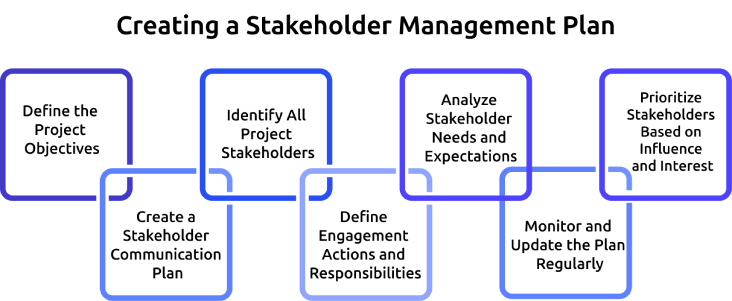
1. Define the Project Objectives
Start by identifying what your project aims to achieve and what stakeholder support it needs. Clear objectives help you decide who to involve and what their contributions should be.
Document the project scope, expected outcomes, major milestones, and decisions that require stakeholder input. This gives everyone a shared understanding of the project’s direction.
2. Identify All Project Stakeholders
List everyone who can influence the project or may be affected by its outcome. Include both internal and external stakeholders to avoid overlooking important groups.
Your list may include:
- Project sponsors and senior leaders
- Project managers and team members
- Clients and customers
- Suppliers and business partners
- Department heads
- Regulatory bodies or other relevant external groups
Create a stakeholder register with names, roles, responsibilities, contact details, and their connection to the project.
3. Analyze Stakeholder Needs and Expectations
Identify stakeholders’ expectations, interests, concerns, and influence on project decisions. Gather insights through meetings, interviews, or surveys. Record their needs and potential concerns to address different priorities early and prevent misunderstandings or delays.
4. Prioritize Stakeholders Based on Influence and Interest
Use a power-interest matrix to prioritize stakeholders based on their influence and interest. Manage highly influential and interested stakeholders closely, keep influential stakeholders satisfied, and keep interested stakeholders informed. Monitor others and adjust engagement as priorities change.
5. Create a Stakeholder Communication Plan
Decide how and when you will communicate with each stakeholder group. A clear communication plan helps people receive relevant information without unnecessary updates.
For each stakeholder, define:
- Information they need
- Preferred communication channel
- Frequency of updates
- Person responsible for communication
- Feedback and response process
6. Define Engagement Actions and Responsibilities
Decide how to involve stakeholders, address concerns, and encourage participation. Assign responsibilities for communication, feedback, and issue resolution. Set escalation steps for conflicts or delayed approvals to ensure consistent engagement throughout the project.
7. Monitor and Update the Plan Regularly
Review your stakeholder management plan at key milestones and whenever project priorities change. Gather feedback, assess engagement methods, and update communication schedules or responsibilities. Regular reviews help maintain strong stakeholder relationships and keep expectations aligned.
Finding it hard to keep project priorities and responsibilities aligned?
Use Time Champ to track tasks, clarify ownership, and keep your team moving toward shared goals.
Stakeholder Management Strategy: 7 Strategies That Work
Managing stakeholders requires understanding their expectations, building trust, and keeping everyone aligned as priorities change. These seven stakeholder management strategies can help you strengthen relationships, improve collaboration, and keep projects moving toward shared goals.
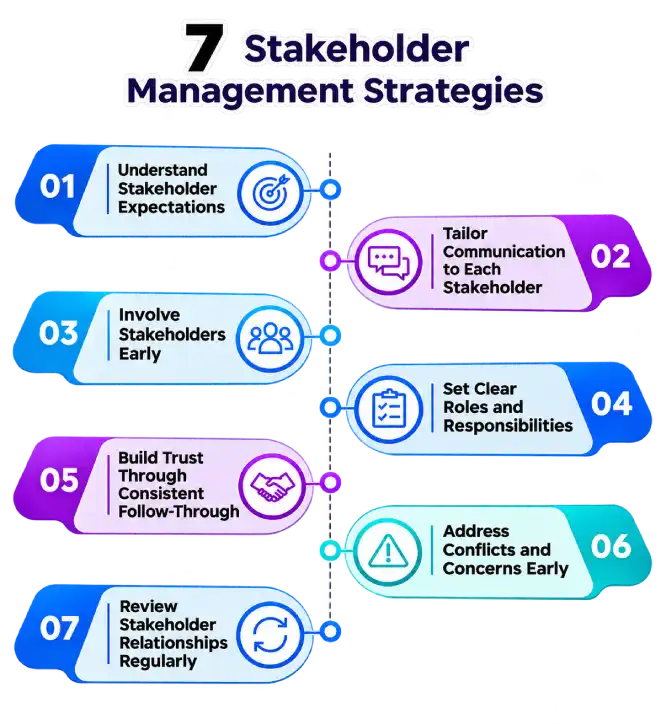
1. Understand Stakeholder Expectations
Start by identifying what each stakeholder expects from the project. Discuss their priorities, concerns, and desired outcomes before work progresses too far. Clear expectations help you identify differences early, avoid misunderstandings, and keep project goals aligned with stakeholder needs.
2. Tailor Communication to Each Stakeholder
Different stakeholders need different types of information. Senior leaders may prefer brief progress summaries, while project teams need task details and timelines. Choose suitable communication channels, update frequency, and message formats based on each stakeholder’s role and information needs.
3. Involve Stakeholders Early
Engage relevant stakeholders during project planning and decision-making. Their early input can reveal concerns, requirements, or risks that your team may otherwise overlook. Involving them at the right stages also gives them opportunities to share feedback and contribute to project direction.
4. Set Clear Roles and Responsibilities
Make sure stakeholders understand their responsibilities, decision-making authority, and expected contributions. Define who approves deliverables, provides feedback, shares updates, and resolves issues. Clear ownership reduces confusion, prevents duplicated efforts, and helps teams move forward without unnecessary delays.
5. Build Trust Through Consistent Follow-Through
Build stakeholder trust by keeping commitments, sharing accurate updates, and responding to concerns promptly. If a deadline or project requirement changes, communicate the reason and explain its impact. Consistent follow-through shows stakeholders that their input matters and helps maintain productive working relationships.
6. Address Conflicts and Concerns Early
Stakeholders may have different priorities, expectations, or opinions about project decisions. Listen to their concerns, identify the underlying issue, and discuss possible solutions openly. Focus on shared project objectives and agree on practical next steps to prevent disagreements from affecting progress.
7. Review Stakeholder Relationships Regularly
Stakeholder needs and influence can change throughout a project. Schedule regular check-ins to gather feedback, review engagement levels, and identify new concerns. Update your communication and engagement approach when needed to maintain alignment and respond to changing project requirements.
Common Challenges in Stakeholder Management and How to Solve Them
Stakeholder management can become difficult when people have different priorities, expectations, and communication needs. Here are five common challenges and ways to address them.
Conflicting Stakeholder Priorities
Stakeholders may have competing goals, making it difficult to agree on project priorities, timelines, or decisions.
How to Avoid It: Identify shared project goals and discuss competing needs early. Use clear criteria to evaluate options, document decisions, and agree on priorities that support the project’s objectives.
Poor Communication
Inconsistent updates or unclear messages can leave stakeholders confused about project progress, responsibilities, and changes.
How to Avoid It: Create a stakeholder communication plan that defines what information each group needs, how often they need updates, and which channels to use. Keep messages clear and encourage two-way feedback.
Unclear Roles and Responsibilities
When stakeholders do not understand their roles or decision-making authority, approvals may stall, and responsibilities may overlap.
How to Avoid It: Define each stakeholder’s role, responsibilities, and approval authority at the beginning of the project. Document who owns key decisions, deliverables, and follow-ups.
Changing Expectations and Requirements
Stakeholders may introduce new requests or revise earlier decisions as project needs and priorities change.
How to Avoid It: Record agreed requirements and decisions, then use a clear change-control process for new requests. Explain how each change affects scope, resources, and timelines before approving it.
Low Stakeholder Engagement
Stakeholders may not provide feedback, attend meetings, or participate in decisions when they feel uninvolved or see little value in the project.
How to Avoid It: Involve stakeholders at relevant stages and explain how their input contributes to project outcomes. Offer convenient ways to share feedback and follow up on concerns or pending decisions.
How Time Champ Supports Stakeholder Management
You may struggle to keep stakeholders aligned when updates are scattered, workloads change, or project progress is unclear. These gaps can lead to missed expectations, delayed decisions, and communication issues. Time Champ is smart employee monitoring software that provides project tracking and workforce insights that help you monitor progress, share clear updates, and keep stakeholders informed throughout the project.
Here are the key features of Time Champ that help you improve project visibility, coordinate responsibilities, and keep stakeholders aligned:
- Project and Task Tracking: Tracks project progress, task status, and deadlines in one place, helping you share clear updates and identify delays early.
- Task Assignment and Ownership: Assigns tasks with defined responsibilities, priorities, and timelines, helping everyone understand who is responsible for each deliverable.
- Workload and Capacity Visibility: Shows employee availability and workload capacity before assigning work, helping you balance responsibilities and set realistic expectations.
- Project Time Tracking: Tracks time spent on projects and tasks, helping you understand how team effort contributes to project progress.
- Project Reports and Performance Insights: Generates reports on project progress, time logs, and resource usage, helping you provide stakeholders with relevant information for project reviews.
- Real-Time Workforce Dashboards: Provides attendance, productivity, and work patterns through dashboards, helping you identify issues and discuss project needs using current workforce insights.
Struggling to keep stakeholders updated on project progress?
Use Time Champ to track tasks, monitor progress, and share clearer project insights.
Conclusion
Effective stakeholder management helps you align expectations, strengthen collaboration, and keep projects moving toward shared goals. Identifying stakeholder needs, creating a clear communication plan, and addressing concerns early can help you reduce misunderstandings and build stronger working relationships. Use these strategies to improve how you manage stakeholders and keep everyone informed. Start by reviewing your current stakeholder relationships and take one practical step to improve engagement today.

Anjali

Table of Content
 What Is Stakeholder Management?
- Benefits of Stakeholder Management
- How to Create a Stakeholder Management Plan
- Stakeholder Management Strategy: 7 Strategies That Work
- Common Challenges in Stakeholder Management and How to Solve Them
- How Time Champ Supports Stakeholder Management
- Conclusion
Related Blogs

Learn what a work plan is, why it matters, examples, benefits, and steps to create one, plus how it differs from a project plan and aligns with goals.
Tarun Kumar | Apr 08, 2026
Discover how remote team communication and accountability improve with time tracking, helping teams build trust, visibility, and better work habits.
Anjali | May 19, 2026
Learn how to integrate productivity tracking with project management without broken workflows or manual exports. A practical step-by-step guide.
Guna Lakshmi | May 06, 2026
Learn what a project management framework is, its components, importance, popular methodologies, benefits, and challenges for organizations.
Guna Lakshmi | Apr 08, 2026
Explore workplace communication, its types, styles, benefits, challenges, and practical tips to improve collaboration, performance, and employee success.
Anjali | Apr 08, 2026
Compare top collaboration tools for remote teams based on features, use cases, pricing, and strengths to choose the right platform for your workflow.
Thasleem Shaik | Feb 28, 2025


 4.7/5 avg.
Ready to Manage Your Workforce Smarter?
Join our family of 1500+ companies using smart insights to redefine workforces!

Free Trial
No Credit Card Required