What is Work Plan? How to Create, Examples & Benefits
Learn what a work plan is, why it matters, examples, benefits, and steps to create one, plus how it differs from a project plan and aligns with goals.

A lack of direction often leads to missed deadlines, duplicated work, and shifting priorities. Even the most talented teams cannot remain focused on organizational objectives without a systematic strategy. A work plan solves this by mapping tasks, responsibilities, and timelines in a clear and actionable format. For the broader picture across this topic, our best project management software guide brings the moving parts together.
In this blog, you will know what a work plan is, why it is important, see practical examples and learn how to create an effective work plan. At the end, you will be in a position to develop work plans that improve clarity, boost productivity, and keep your team focused on achieving measurable results.
What Is a Work Plan?
A work plan is a structured document that identifies tasks, responsibilities, schedules and expected outcomes of a team or a project. It breaks down goals into action plans and offers a road map so that everybody is aware of what to do, who does it, and when each activity finishes.
The purpose of a work plan is to give clarity and direction. It enables team members to prioritize tasks, prevent duplication, coordinate efforts, and track progress effectively. Work plans may include daily tasks, weekly deliverables, or long-term initiatives, and they provide a practical framework that lets teams monitor progress and make adjustments when needed. It also helps them by ensuring they remain aligned, focused, and on track by mapping the tasks and responsibilities in a clear format.
Why Is the Work Plan Important?
A strong work plan is important since poor planning leads to real and measurable failure. Research indicates that 39% of projects fail due to poor planning, often because teams lack clear direction, clear ownership of tasks, and visibility into progress. A work plan closes these gaps by bringing structure to day-to-day work, aligning efforts, and helping teams move forward with clarity instead of reacting to issues as they arise.
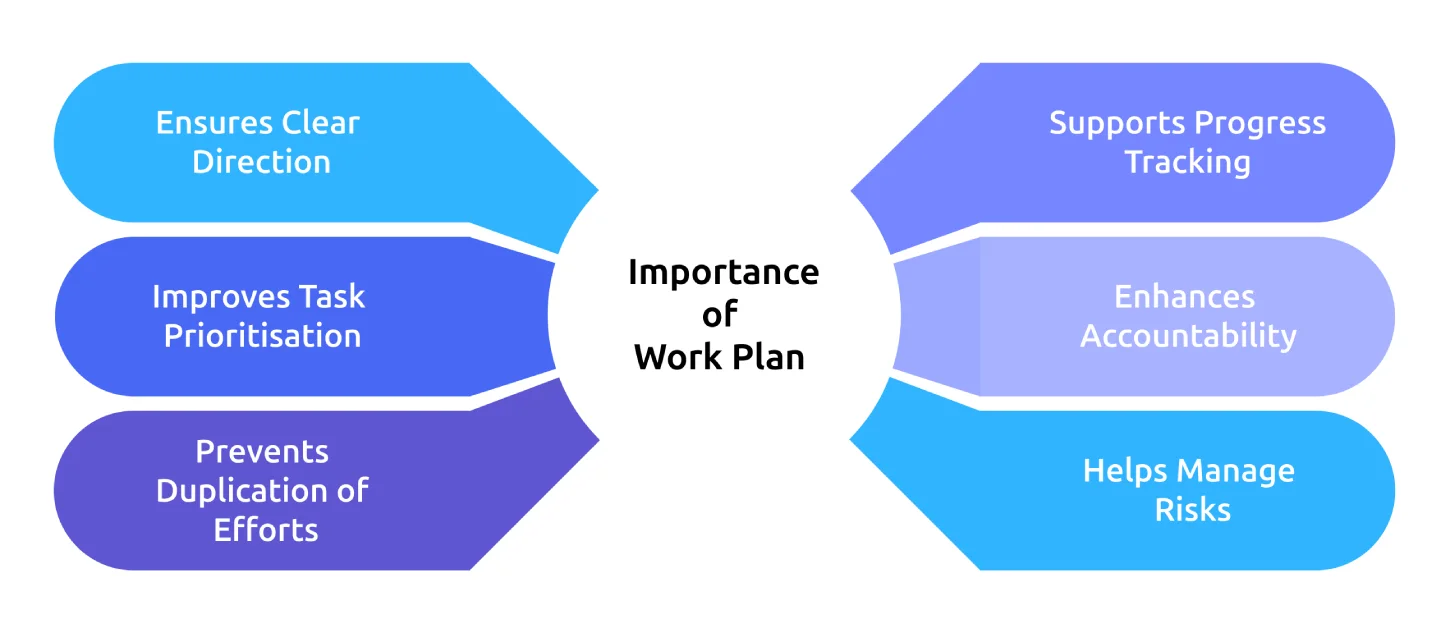
Here is why a work plan becomes essential for keeping work organized, teams aligned, and outcomes on track.
- Ensures Clear Direction: A work plan clearly defines the tasks. It keeps everyone focused on the most important goals and stops team members from wasting time on unnecessary work.
- Improves Task Prioritization: When you have a clear outline of responsibilities, you can prioritize tasks. Teams identify which activities are urgent and critical, and they meet deadlines without last-minute stress.
- Prevents Duplication of Efforts: A work plan helps to ensure that no one repeats work unnecessarily by mapping out tasks and responsibilities. This saves time, reduces confusion, and optimizes the team's productivity.
- Supports Progress Tracking: A work plan enables you to monitor progress at each stage. You can identify delays or obstacles early and make adjustments immediately to ensure that the work continues moving forward efficiently.
- Enhances Accountability: With clearly assigned tasks and responsibilities, each team member knows what they are responsible for. This improves accountability and encourages ownership of work, leading to more reliable results.
- Helps Manage Risks: A work plan highlights possible bottlenecks and challenges in advance. By anticipating risks, you can prepare contingencies and ensure your team maintains momentum even when issues arise.
What Are the Examples of a Work Plan?
Below are two realistic work plan examples that show how you can structure tasks, ownership, timelines, and outcomes in a simple and actionable way.
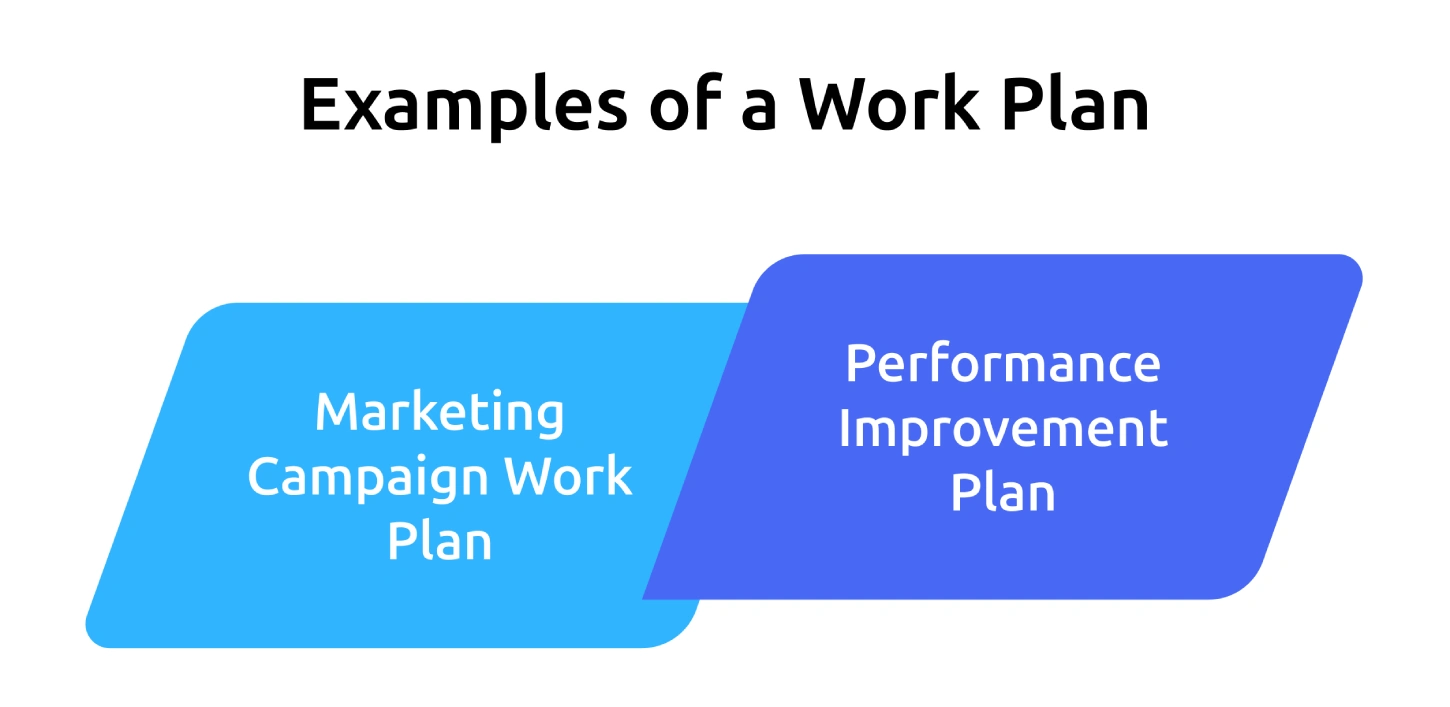
1. Marketing Campaign Work Plan
This work plan helps you plan and execute a marketing campaign with clear responsibilities, timelines, and measurable outcomes. It keeps everyone focused on delivery rather than assumptions.
Goal:
Launch a digital marketing campaign to increase qualified leads by 25% within three months.
Scope:
Campaign planning, content creation, channel execution, and performance tracking.
| Task | Responsibility | Timeline | Expected Outcome |
|---|---|---|---|
| Define campaign objective and target audience | Marketing Lead | Week 1 | Clear campaign direction. |
| Create campaign messaging and content plan | Content Team | Week 1 to Week 2 | Approved content roadmap |
| Design creatives and landing pages | Design Team | Week 2 to Week 3 | Campaign assets ready |
| Launch campaign across selected channels | Marketing Team | Week 4 onwards | Improved lead conversion |
| Monitor performance and optimize | Marketing Lead | Week 4 onwards | Improved lead conversion |
| Review results and report outcomes | Marketing Lead | End of campaign | Measured campaign impact |
This work plan ensures that every activity supports the campaign goal and that progress remains visible throughout execution.
2. Performance Improvement Plan
This work plan helps you address performance gaps with clarity and structure. It focuses on improvement through defined actions, support, and measurable progress.
Goal:
Improve employee performance to meet role expectations within 60 days.
Scope:
Skill development, task improvement, and performance tracking.
| Task | Responsibility | Timeline | Expected Outcome |
| Identify performance gaps | Manager | Week 1 | Clear improvement areas |
| Set performance expectations | Manager | Week 1 | Shared understanding |
| Define improvement tasks and milestones | Manager and Employee | Week 1 | Actionable improvement plan |
| Provide training and support | Manager | Week 2 to Week 6 | Skill and confidence improvement |
| Review progress regularly | Manager | Weekly | Visible performance changes |
| Evaluate final outcome | Manager | End of period | Performance meets expectations |
This work plan creates accountability, provides guidance, and gives you a clear way to track improvement without ambiguity.
Struggling to turn work plans into real progress?
Organize tasks, track progress, and keep work aligned with priorities using Time Champ.
How to Create a Work Plan?
Creating a work plan is the process of transforming goals into organized, actionable work. A clear process helps you move from ideas to execution without confusion, delays, or wasted effort. You can construct a work plan by following the steps below to define priorities, assign responsibility, anticipate challenges, and keep work progressing in a controlled and focused way.
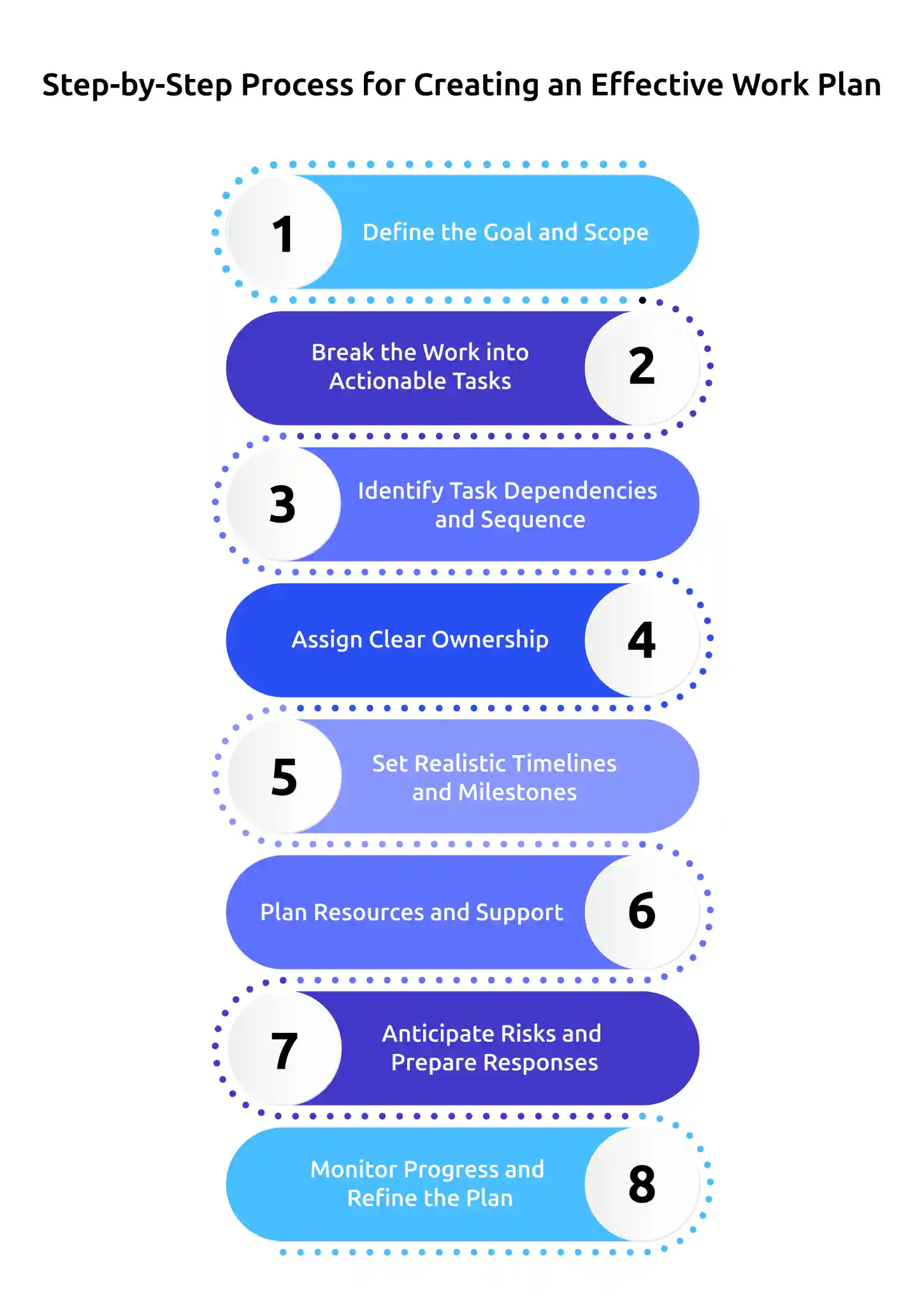
1. Define the Goal and Scope
Start by clearly explaining the outcome that you want to achieve. This goal must be specific, measurable and connected to an actual business requirement. At the same time, define the scope by describing what the work plan will and will not cover. A clear scope prevents unnecessary work and protects the team from changing expectations during the process.
2. Break the Work into Actionable Tasks
Break the goal into a list of clear tasks, and make sure each task describes a single piece of work that the team can start and finish without uncertainty. Clear tasks reduce the confusion, make progress visible, and assist the team members in estimating effort accurately.
3. Identify Task Dependencies and Sequence
Review the task list and determine the dependent activities. Some tasks require a fixed sequence, while others can progress in parallel. Mapping this sequence avoids idle time, reduces bottlenecks, and ensures that the team works on the right tasks at the right time.
4. Assign Clear Ownership
Assign each task to a single owner who is responsible for completing it. Ownership does not mean working alone, but it means accountability. When responsibility is clear, follow-ups become easier, decisions happen faster, and work doesn’t get stuck because of assumptions.
5. Set Realistic Timelines and Milestones
Estimate timelines based on task complexity, dependencies, and available capacity. Do not use optimistic deadlines that cause pressure in the future. Milestones assist you in tracking the progress at significant stages and ensure that the work is proceeding as intended or requires correction.
6. Plan Resources and Support
Identify the tools, data, approvals, and support needed in every task. Confirm availability in advance to prevent delays in execution. Resource planning ensures the team can focus on delivery rather than waiting to access or seek clarification.
7. Anticipate Risks and Prepare Responses
Consider what might slow down or disrupt the work plan. This may include dependency delays, workload imbalance or external approvals. The team remains prepared rather than reactive by determining the response actions in advance and agreeing on them.
8. Monitor Progress and Refine the Plan
Monitor task completion, timelines, and issues during execution. A work plan must be dynamic because priorities change or new information arises. Regular review keeps the plan realistic and helps to maintain focused and efficient work.
What Are the Benefits of a Work Plan?
A work plan is not just a means of organizing tasks. It provides you with control, direction and clarity over how work proceeds. A clear work schedule eliminates confusion, improves time management, and keeps everyone focused on the outcomes that matter most. Here, you can see the main advantages of applying a work plan in daily execution.
Improved Clarity and Focus
A work plan breaks down the work into tasks, schedules them, and assigns responsibilities to the right people. This transparency eliminates guesswork in daily work and ensures that everyone is working on agreed priorities. Clear goals and visible tasks reduce distractions and keep work moving forward.
Better Time and Effort Management
Planning tasks based on team effort, deadlines, and priority helps you stay organized. You avoid rushing at the last minute since the plan allocates work realistically over time. Knowing what to expect next allows you to spend time more wisely, reduce unwarranted stress, and make sure that you work on something that actually moves results forward.
Stronger Accountability and Ownership
Assigning clear responsibility to each task strengthens accountability. When ownership is visible, people take their commitments seriously and deliver on what they promise. This clarity minimizes delays due to assumptions and simplifies follow-ups. Consequently, workflows without frequent reminders and misunderstandings.
Early Identification of Risks and Delays
A structured work plan enables you to identify the possible problems before they turn into real problems. Reviewing dependencies, timelines, and resources ahead of time, you can identify risks early and respond to them. This proactive strategy will assist you in maintaining momentum and preventing small delays from turning into major setbacks.
Consistent Progress Tracking
Planning work effectively provides you with a simple method of tracking progress against approved goals and milestones. You can see what is complete, what is pending and what requires attention. Regular monitoring makes the plan realistic and enables you to make changes promptly so that work remains in line with the evolving priorities or new information.
Better Alignment with Organizational Goals
A work plan links daily tasks to bigger objectives. When everyone understands how their work supports larger objectives, alignment improves naturally. This clarity increases purpose, minimizes wasted effort, and makes teams use time and resources better for results that matter to the organization rather than isolated actions.
How Does Work Plan Differ from Project Plan?
People often confuse a work plan with a project plan, but they serve different purposes. The table below highlights how they differ in focus, scope, and how teams use them in practice.
| Aspect | Work Plan | Project Plan |
|---|---|---|
| Primary focus | Focuses on organizing and executing day-to-day tasks. | Focuses on planning and managing the full project lifecycle. |
| Purpose | Guides teams on what to do, who does it, and when. | Defines how the project moves from start to finish and ensures smooth delivery at every stage. |
| Scope | Covers specific tasks, activities, and responsibilities. | Covers objectives, timelines, budgets, risks, and deliverables. |
| Time frame | Often short-term or ongoing. | Usually fixed with a defined start and end time. |
| Flexibility | Allows easy adjustments as priorities change. | Follows a structured approach with controlled changes. |
| Ownership | Assigns clear responsibility for each task. | Defines roles for managing and governing the project. |
| Progress tracking | Tracks task completion and day-to-day progress. | Tracks milestones, phases, and overall project performance. |
Is the Work Plan Template Aligned with Organizational Objectives?
Yes, the work plan template aligns with organizational objectives when you define clear goals, assign responsibilities, and set measurable outcomes. It links day-to-day tasks to business priorities, so teams understand how their work supports larger results. Clear timelines and ownership keep execution focused, reduce wasted effort, and support steady progress even as priorities change.
Want better visibility into daily work and outcomes?
Try Time Champ today and create actionable work plans and stay on track with real-time insights!
Conclusion:
A work plan gives you a clear way to turn goals into focused action. When you define tasks, ownership, timelines, and outcomes upfront, you avoid confusion and stay in control of how work moves forward. With the right structure in place, you track progress easily, respond to risks early, and keep everyone aligned on what truly matters. Using a work plan consistently creates clarity in daily work and puts you in a strong position to deliver results that actually count.
Table of Content
-
 What Is a Work Plan?
-
Why Is the Work Plan Important?
-
What Are the Examples of a Work Plan?
-
How to Create a Work Plan?
-
What Are the Benefits of a Work Plan?
-
How Does Work Plan Differ from Project Plan?
-
Is the Work Plan Template Aligned with Organizational Objectives?
-
Conclusion:
Related Blogs
Discover the meaning, benefits, and types of work plan templates. Learn how to create one step-by-step and what to include for effective project planning.
Shabana Shaik | August 08, 2025
Discover what work streams are, how they differ from workflows, their benefits, and best practices to help you manage projects efficiently and succeed.
Thasleem Shaik | August 08, 2025
Explore free downloadable employee work log templates, including daily, weekly, and project logs in excel, word, and pdf for efficient time tracking.
Shabana Shaik | November 07, 2025
Explore efficient work scheduling methods, types, design factors, benefits, and tools for effective management.
Tarun Kumar Reddy | May 24,2024
Find the best task timer apps for 2026. Compare features, pricing, pros & cons to boost productivity, track time accurately, and manage tasks efficiently.
Guna Lakshmi | Apr 02, 2026
Examine the evidence-based strategies to overcome work fatigue to include its causes, as well as the practical day-to-day ways to improve productivity.
Hima Bindhu Nara | Feb 22, 2024


 4.7/5 avg.
Ready to Manage Your Workforce Smarter?
Join our family of 1500+ companies using smart insights to redefine workforces!

Free Trial
No Credit Card Required