Remote Team Productivity: 9 Best Practices to Improve
Boost remote team productivity with practical management tips, proven best practices, key metrics, and tools that help your remote teams perform better.

Remote teams can deliver great results, but communication gaps, limited visibility, and varying schedules often make it difficult for you to keep everyone aligned and consistently productive. Without the right approach, your high-performing teams can struggle to stay focused and meet their deadlines. In such cases, improving the productivity of remote teams is essential to overcoming these challenges and driving better results.
Here you'll understand what remote team productivity means and why it matters. You'll also get to learn practical strategies, common challenges, and proven best practices to improve productivity while managing remote teams effectively.
What is Remote Team Productivity?
Remote team productivity is the ability of employees working from different locations to consistently complete meaningful work, collaborate effectively, and achieve business goals while maintaining high levels of efficiency and accountability. It relies on clear communication, structured workflows, the right technology, and measurable performance to help teams stay aligned, deliver quality work, and achieve expected outcomes no matter where they work.
Why Remote Team Productivity Matters
Remote team productivity directly impacts how efficiently your business operates and how well the teams achieve their goals. When employees have the right processes, communication, and tools, they can stay productive while contributing to better business outcomes across remote work environments.
- Improves Team Performance: Productive remote teams complete tasks on time, maintain consistent work quality, and contribute to faster project delivery without compromising collaboration.
- Strengthens Communication and Collaboration: Clear communication practices and collaborative workflows help your remote employees stay aligned, reduce misunderstandings, and work together more effectively.
- Increases Employee Engagement: When employees have clear goals, regular feedback, and the right support, they stay motivated, take ownership of their work, and remain committed to team objectives.
- Supports Better Business Results: Higher productivity helps you improve operational efficiency, optimize resource utilization, reduce unnecessary delays, and achieve business goals more consistently.
- Makes Performance Easier to Measure: Remote productivity encourages organizations to focus on measurable outcomes, making it easier for you to evaluate progress, identify improvement areas, and support employees with timely guidance.

Did You Know?
According to Gallup’s 2025 U.S. workplace research, only 31% of employees are engaged at work, which is the lowest level in a decade. This highlights that low engagement directly impacts collaboration, productivity, and overall team performance, making effective remote management essential.
What Does Managing Remote Teams Actually Require?
Managing remote teams successfully takes more than assigning tasks and scheduling virtual meetings. To keep your team productive, engaged, and aligned with business goals, you need the right processes, communication practices, and visibility into daily work. Here are the key elements you should focus on to manage remote teams effectively.
Clear Goals and Expectations
Your team should understand what needs to be accomplished, when it needs to be completed, and how success will be measured. Setting clear priorities helps your employees stay focused and reduces confusion about responsibilities.
Consistent Communication
Regular check-ins, team meetings, and transparent communication keep everyone informed and connected. Encouraging open discussions also helps resolve issues quickly and strengthens collaboration across your remote workforce.
The Right Collaboration and Productivity Tools
Providing reliable communication, project management, time tracking, and document-sharing tools helps your team work efficiently. The right technology keeps projects organized and allows employees to collaborate without unnecessary delays.
Visibility into Work Progress
You need a clear view of project status, task completion, and team productivity to identify bottlenecks early and provide timely support. Real-time visibility helps you make informed decisions and keep projects moving forward.
Trust and Accountability
Remote teams perform better when employees are trusted to manage their responsibilities while remaining accountable for results. Creating a culture of transparency, ownership, and regular feedback encourages consistent performance and stronger team relationships.
Continuous Feedback and Employee Support
Frequent feedback helps employees understand their strengths, improve their performance, and stay engaged with their work. Recognizing achievements, addressing challenges early, and providing ongoing support contribute to long-term productivity and employee satisfaction.
How to Boost Remote Team Productivity: 9 Best Practices
Improving remote team productivity requires a combination of effective leadership, clear processes, and the right technology. Adopting the following best practices will help your team stay focused, collaborate efficiently, and consistently achieve business goals.

1. Focus on Results, Not Hours Worked
Evaluate your team based on the quality of work, project completion, and business outcomes, not just the number of hours they spend online. Setting outcome-based goals gives employees the flexibility to manage their schedules while keeping everyone accountable for delivering expected results.
2. Equip Your Team with the Right Productivity Tools
Give your employees access to communication, project management, time tracking, and collaboration tools that simplify their daily work. Using a connected set of tools helps your team share information quickly, stay organized, and complete tasks more efficiently.
3. Establish Clear Communication Guidelines
Define how your team should communicate for different types of work. Set expectations for response times, meeting schedules, status updates, and collaboration channels so everyone knows where to share information and how to stay connected throughout the workday.
4. Schedule Regular Team and One-on-One Check-ins
Hold recurring team meetings to review priorities, discuss progress, and resolve challenges. Along with team discussions, conduct one-on-one meetings to provide feedback, understand employee concerns, and support individual growth without creating unnecessary oversight.
5. Protect Time for Deep, Focused Work
Help your employees dedicate uninterrupted time to important tasks by reducing unnecessary meetings and distractions. Encouraging focused work sessions allows your team to complete complex assignments faster while maintaining the quality of their work.
6. Promote Healthy Work-Life Boundaries
Encourage employees to take regular breaks, disconnect after working hours, and maintain realistic workloads. Supporting a healthy work routine reduces burnout, improves job satisfaction, and helps your team sustain high performance over the long term.
7. Build Strong Team Connections
Remote employees can feel disconnected when they rarely interact beyond work tasks. Create opportunities for informal conversations, virtual team-building activities, and knowledge-sharing sessions to strengthen relationships and foster a collaborative team culture.
8. Recognize and Celebrate Employee Contributions
Acknowledge achievements, appreciate outstanding work, and celebrate important milestones. Regular recognition motivates employees, improves engagement, and reinforces the behaviors that contribute to higher team productivity.
9. Collect Feedback and Continuously Improve
Ask your team for regular feedback on workflows, communication, tools, and challenges they experience while working remotely. Use their input to refine your processes, remove productivity barriers, and create a work environment that supports continuous improvement.
Finding it hard to keep your remote team productive?
Track work, improve accountability, and boost performance with Time Champ.
Common Challenges of Remote Team Productivity Management
Managing a remote team comes with unique challenges that can affect productivity, collaboration, and employee engagement. Recognizing these obstacles early helps you take proactive steps to keep the team aligned, motivated, and focused on achieving business goals.
Difficulty Measuring Performance
When employees work from different locations, it can be difficult to understand how work is progressing. Relying only on online status or hours worked gives an incomplete picture. Defining clear goals, tracking deliverables, and reviewing outcomes help you evaluate performance more accurately.
Communication Gaps
Without regular in-person conversations, important updates can be missed, and misunderstandings can increase. If communication channels and expectations are not clearly defined, your team may struggle to collaborate efficiently. Establishing structured communication practices keeps everyone informed and aligned.
Distractions in the Work Environment
Remote employees often manage work alongside household responsibilities, unexpected interruptions, or workspace limitations. These distractions can reduce focus and delay important tasks. Supporting effective time management and encouraging dedicated work routines help employees stay productive.
Employee Isolation and Lower Engagement
Limited face-to-face interaction can make employees feel disconnected from their colleagues and the organization. Over time, this can reduce collaboration, motivation, and team morale. Creating opportunities for regular interaction and recognizing employee contributions help strengthen engagement.
Burnout from Poor Work-Life Balance
Many remote employees find it difficult to separate work from personal time, leading to longer working hours and increased stress. You should encourage healthy work schedules, regular breaks, and realistic workloads to help your team maintain long-term productivity.
Coordinating Teams Across Different Time Zones
Managing employees across multiple locations can make scheduling meetings and collaborating on projects more challenging. Limited overlapping work hours may slow decision-making and project progress. Planning communication carefully, documenting key updates, and encouraging flexible collaboration help your team work together more effectively.
How to Measure Remote Team Productivity
Measuring remote team productivity helps you understand whether your team is achieving business goals, maintaining consistent performance, and using time effectively. Tracking the right metrics gives you clear insights into progress, highlights areas that need attention, and helps you make better management decisions.

1. Track Goal and Task Completion
Define clear goals and assign measurable tasks to your team. Regularly review completed work against planned objectives to ensure projects stay on track. Identify delays early and provide support where needed.
2. Monitor Time Spent on Productive Work
Use time tracking tools to understand how employees spend their working hours. Analyze productive time, idle time, and time spent on specific tasks to uncover inefficiencies and improve workflow management.
3. Measure Work Quality
Evaluate the quality of deliverables by reviewing accuracy, customer feedback, revision frequency, and error rates. Ensure your team maintains high standards while completing tasks efficiently.
4. Evaluate Team Collaboration
Assess how effectively your team communicates and collaborates. Monitor participation in meetings, responsiveness, and coordination on shared tasks to ensure smooth teamwork and reduce communication gaps.
5. Review Project Delivery Performance
Track whether projects are completed on time and within budget. Consistent on-time delivery indicates strong planning, prioritization, and execution across your team.
6. Analyze Employee Engagement and Work Patterns
Conduct regular check-ins, review activity reports, and gather feedback through surveys. Identify trends in engagement and performance to address issues early and maintain consistent productivity.
How Time Champ Helps Improve Remote Team Productivity
Managing a remote team becomes challenging when you don’t have clear visibility into work progress, productivity trends, or project performance. Without the right insights, it becomes difficult to identify bottlenecks, support employees at the right time, and keep projects on schedule. Time Champ is smart employee monitoring software with workforce productivity features that give real-time visibility into your remote team’s work while helping to improve efficiency, accountability, and overall performance.
Below are some of the key features of Time Champ that help you manage remote teams effectively.
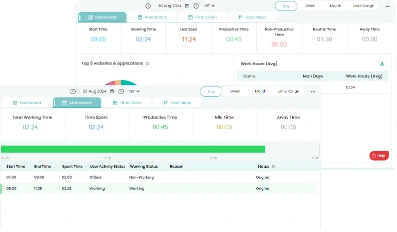
- Automatic Time Tracking: Tracks productive time, idle time, breaks, and working hours automatically to understand how your team spends their workday without relying on manual timesheets.
- Real-Time Productivity Monitoring: Monitors employee productivity with detailed activity insights, productivity scores, and work patterns, helping you identify improvement opportunities across remote teams.
- Project and Task Time Tracking: Measures the time spent on projects and individual tasks to improve workload distribution, monitor project progress, and ensure deadlines are met.
- App and Website Usage Insights: Helps to see the applications and websites that employees use during work hours, helping you understand their work habits, eliminate distractions, and encourage productive tool usage.
- Comprehensive Productivity Reports and Dashboards: Provides access to real-time reports and customizable dashboards that combine productivity, attendance, time tracking, and project data, making it easier for you to evaluate team performance and make informed decisions.
- Attendance and Workforce Analytics: Monitors attendance, work schedules, and employee availability while using workforce analytics to identify productivity trends, optimize resource allocation, and improve remote team management.
Want better visibility into your remote team's productivity?
Use Time Champ to monitor progress, measure performance, and keep every project on track.
Conclusion
Building a productive remote workforce requires clear communication, defined goals, the right technology, and consistent performance tracking. Addressing common challenges, adopting proven management practices, and measuring the right metrics help you create an environment where employees stay engaged, collaborate effectively, and deliver better results. Investing in reliable tools also gives you greater visibility into daily work and helps you make informed decisions that support long-term success. With the right strategy and solutions in place, improving remote team productivity becomes an achievable goal that benefits both the employees and your organization.
Table of Content
 What is Remote Team Productivity?
- Why Remote Team Productivity Matters
- What Does Managing Remote Teams Actually Require?
- How to Boost Remote Team Productivity: 9 Best Practices
- Common Challenges of Remote Team Productivity Management
- How to Measure Remote Team Productivity
- How Time Champ Helps Improve Remote Team Productivity
- Conclusion
Related Blogs
Protect your remote team's data with essential remote work security policies, risk mitigation strategies, and trends. Boost your setup and keep data safe.
Tarun Kumar Reddy | Oct 16, 2024
Compare hybrid and remote work models to determine which improves your team's productivity, collaboration, flexibility, and long-term business performance.
Anjali | Jun 16, 2026
Build a strong remote work culture with practical strategies that improve communication, collaboration, accountability, and connection across your team.
Thasleem Shaik | Sep 29, 2026
Learn how to choose the right remote employee monitoring software with the right features, scalability, and usability to manage remote teams effectively.
Guna Lakshmi | Apr 14, 2026
Remote workforce management, also called virtual workforce management, helps teams stay engaged. Explore its definition, benefits, challenges & tools.
Thasleem Shaik | September 16, 2025
Track the right remote worker productivity metrics to understand performance, improve output, and avoid micromanagement with clear insights.
Thasleem Shaik | Apr 24, 2026


 4.7/5 avg.
Ready to Manage Your Workforce Smarter?
Join our family of 1500+ companies using smart insights to redefine workforces!

Free Trial
No Credit Card Required