Productivity Theater: Why Teams Fake Being Busy (and How to Stop It)
Productivity theater is looking busy over being productive, and your monitoring tool may be fueling it. Learn the signs, costs, and how to measure real work.
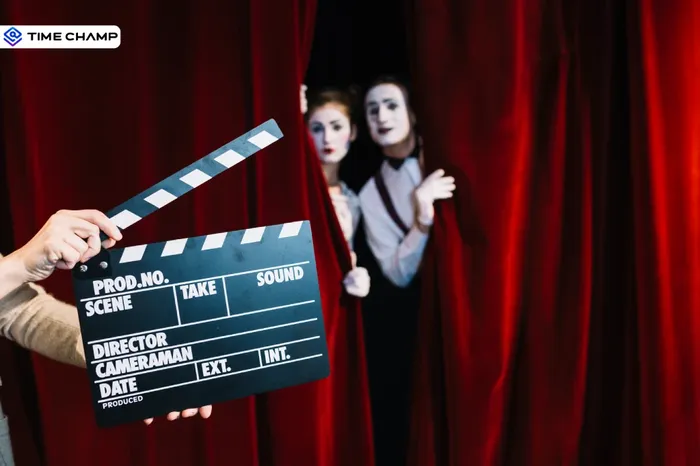
This is a situational thing:
It is 6 pm on a Tuesday, and half your team still shows a glowing green dot on Slack, replies almost immediately. You have a productivity monitoring tool, and the dashboard looks full of life, yet one project that really mattered hasn’t moved an inch.
I am sure you have been there with at least one employee.
This is called productivity theater.
It is a super quiet and exhausting performance of looking ultimately busy instead of really being productive.
As you read this, your team might be doing just it already.
The frustrating part is that the people doing it are usually not slacking. They are just anxious, and here is the twist most articles will not tell you: the tools we buy to catch it often make it worse.
FYI:
In a Visier survey of 1,000 US employees, 43% said they spend more than 10 hours a week on performative work just to look busy.
What is Productivity Theater?
Productivity theater is when employees prioritize work that makes them look busy over work that creates real value. Like instant replies, unnecessary meetings, staying online late, or nudging a mouse to keep the status green. It is performance for an audience of managers, not actual output. This term was popularized by the analytics company Visier in 2023.
Productivity theater is not laziness, it is impression management. People spend genuine effort and energy trying to appear productive, often because they believe that their visible activity is what gets judged, not their real output. It builds on older ideas like presenteeism, where simply being present gets mistaken for being useful.
What Does Productivity Theater Look Like?
Theater is where we can see performances, and productivity theater is where we can see employees perform productivity. This is not actually the useful one, that’s why you need to look after it:
Here’s how it might look at your workplace:
| What You Notice | What It is Usually Telling You |
|---|---|
| Replies land within seconds, all day | This person feels they are judged on responsiveness, so deep work never tastes right |
| The green status dot never goes dark | Availability is being treated as proof of work, even during real breaks |
| Emails sent at 11 pm and on weekends | Someone is signaling commitment because outcomes are not what gets noticed |
| Meetings full of people who never speak | Attendance is the performance, presence is mistaken for contribution |
| High tracked hours, thin actual output | Activity is being optimized because activity is what the dashboard rewards |
| Mouse jigglers and idle-blocking tools | The metric (cursor movement) has become the goal, so people game the metric |
If you see the pattern, none of these behaviors is about doing the work. They are all about being seen doing the work, and that’s the whole problem.
Why do Employees Perform Productivity Theater?
You might be thinking, why are your employees performing after all, it’s because of fear:
The fear of unclear expectations.
Here are a few reasons that hit the exact possibility for this extreme performativeness:
- Fear of Being Seen as Unproductive: In the Visier data, most workers believed their performative behavior was important to their career. When jobs feel uncertain, looking busy feels like insurance.
- Visibility is Rewarded Over Outcomes: If the loudest calendar and the fastest reply get praised, people see that, and they crave that praise.
- Unclear Expectations: When nobody has defined what good actually looks like, employees depend on one thing they can control, which is appearing busy.
- Surveillance Pressure: This is a big one, and we will spend a whole section on it. The more closely activity is watched, the more people perform for the watcher, it’s a human tendency.
- Comparison and Competition: Six in ten workers in the Visier survey worried about how they stacked up against coworkers, so the theater becomes a group habit nobody wants to be the first one to drop.
What Does Productivity Theater Actually Cost Your Team?
Productivity theater costs you actual money, focus, and real people. The hours spent performing are hours not spent creating value, the constant availability shreds deep work, and the pretending quietly burns people out. Worst of all, it pollutes your data, so the decisions you make on top of it are wrong too.
Starting with the obvious cost: If a chunk of the week goes to looking busy, that is output you paid for but did not get.
Now add the focus cost: a person who replies almost instantly can never protect a long, uninterrupted block, which is exactly where the valuable work happens.
Then the human cost, because performing all day is draining, and exhaustion plus pretending is a pretty fast road to burnout and quiet disengagement.
Also, there’s a sneaky fourth cost too: When your dashboards are full of performed activity, your numbers lie to you. You end up rewarding the best performers of busyness instead of the best producers of work, which motivates everyone else to perform too.
If you want to track the metrics that actually matter instead, we have covered them in our guide on measuring employee productivity.
You can eliminate these costs with a productivity monitoring system!
Time Champ helps you identify theatrics and shows you what’s draining productivity
The Monitoring Trap: How Tracking Tools Cause the Theater They Try to Catch
The monitoring companies won’t show you the complete truth.
Watching activity more closely usually creates more productivity theater.
Personally, I would act more productive when someone is constantly watching me, and let’s be honest, who doesn’t.
When people feel surveilled, they perform for the surveillance, period.
Visier found that 61% of workers at companies using surveillance tools performed productivity theater, compared with just 12% of those who were not tracked that way. I believe you want to read that again. Heavy surveillance was linked to roughly five times more fake-busy behavior. The watching did not actually catch the theater, it most probably caused it.
Now the tool vs human race begins:
You track cursor movement, and employees bring in mouse jigglers,
You count active hours, people pad them,
And you monitor online status, people keep it green.
Usually, the metric you set up to track becomes the target, and the moment a metric becomes the target, it stops measuring anything real.
What you can do instead is change what you measure. When you judge people on outcomes they can be proud of, instead of activity they constantly have to fake, the urge to perform withers away.
Yes, monitoring still has a place, but as a way to understand how work actually flows, not to stare at a green dot. That is the difference between surveillance and intelligence.
Gut-check Time:
Question Yourself: If I could only see my team's outcomes and never their activity, would I still know who is doing great work?
If you think it’s a no, the problem is not your people, it’s what you are measuring. Here is how healthy monitoring differs from surveillance.
How Do You Tell Real Work From Performance?
You can tell real work from performance by looking at the outcomes and patterns, not at activity in the moment. Here is a simple self-audit you can run without becoming the surveillance people hate.
- Look for Output, Not Motion: Did something actually get finished, decided, shipped, or solved? Constant activity with no deliverables is the clearest tell.
- Check Activity Against Results: Long active hours paired with thin output is a red flag. So is high cursor movement with no files touched and no work to show.
- Watch the Rhythm: Real work has natural peaks and pauses. Perfectly steady activity for eight straight hours is probably not human, it is a tool.
- Notice Who Replies Instantly But Ships Slowly: The fastest responder is not always the biggest contributor. Sometimes it is the opposite.
The end goal here is not to catch and punish your employees. It is to spot where your own signals are pushing people toward performance, so you can fix the signal instead of blaming the person for it.
How to Design Productivity Theater Out of Your Culture
Follow these steps if you really want to remove productivity theater from your workspace:
Define What Good Looks Like: Give every role clear, outcome-based goals. People perform busyness when they do not know how else they will be judged.
Measure Outcomes, Not Optics: Shift focus from hours spent online and reply speed to real finished work, quality, and impact. What you measure is what you grow.
Protect Deep Work: Set shared focus blocks and make it normal to go offline during them. You cannot ask for deep work and punish people for being unavailable.
Make Availability Optional, Not Heroic: Stop praising late-night emails and instant replies. Praise the strategy doc that moved the business instead.
Lead by Example: If my leader performs theater, I do too, so does all the team, managers who log off after focused work give the whole team permission to do the same (often unsaid but true).
And give people real prioritization tools so they have something better to do than perform. Methods like the and the time management matrix help people focus on what matters, which is the natural antidote to looking busy.
Productivity Theater vs Paradox vs Presenteeism vs Paranoia
I have seen so many people mix up these terms before. Here’s a differentiation so that you don’t end up mixing them too:
| Term | What it Actually Means | Who’s Performing it |
|---|---|---|
| Productivity theater | Looking busy instead of being productive | Employees, for an audience of managers |
| Productivity paranoia | Leaders fearing teams are not working, despite output | Managers and leaders |
| Presenteeism | Being present (or online) is treated as being productive | Employees and the culture around them |
| Productivity paradox | Heavy tech spend that does not lift real output | The organization as a whole |
These terms feed each other in a loop:
Paranoia leads leaders to over-monitor,
Over-monitoring triggers theater,
And the theater pollutes the data that could have ended the paranoia.
If you want to know a little more about the productivity paradox, we’ve got you!
How Time Champ Helps You Measure Outcomes and Avoid Theater Drama
I have already told you that the fix for productivity theater is measuring real work instead of visible activity. Time Champ is employee monitoring software with a strategic workforce intelligence layer, which means it is built to show how work actually flows and where outcomes happen, not just whether a cursor or keyboard is moving. That is the difference between surveillance that fuels theater and intelligence that ends it at the roots.
For the theater problem specifically, these are the useful parts of Time Champ:
- Activity Tied to Real Apps and Output: App and website usage is categorized as productive, unproductive, or neutral, so high activity with no real work stops looking like productivity.
- Focus Time and Context Switching: See whether people get real deep-work blocks or are stuck in reply-instantly mode, which is theater's natural habitat.
- Idle and Active Patterns, in Context: Steady, robotic activity with no output reads very differently from genuine human work rhythms.
- Outcome-friendly Reports and Dashboards: Pair activity with results at the team level so you reward producers, not performers.
- Workload and Burnout Signals: Spot the person performing all day and quietly burning out before it becomes attrition.
Most monitoring tools stop at activity logs, which is exactly what people learn to fake. Time Champ adds the workforce intelligence layer that connects activity to outcomes, so the smartest move for your team is doing real work, not performing it.
Reward real work, not the unnecessary drama!
Time Champ shows you outcomes and real work patterns, not just a green dot.
A Few Final Words
Productivity theater is not a people problem, it is a measurement problem wearing a people costume. Teams are often fake busy because somewhere along the way, we taught them that being seen working matters more than the work itself. You don’t need a sharper magnifying glass to cure this, just find a tool that shows you what actually happened.
A final checklist:
- Define good outcomes
- Measure those
- Protect focus
- And stop applauding the late-night email.
Do that, and the drama curtain comes down on its own, because nobody performs for an audience that only claps for real results.

Shabana Shaik

Related Blogs
Table of Content
 What is Productivity Theater?
- What Does Productivity Theater Look Like?
- Why do Employees Perform Productivity Theater?
- What Does Productivity Theater Actually Cost Your Team?
- The Monitoring Trap: How Tracking Tools Cause the Theater They Try to Catch
- How Do You Tell Real Work From Performance?
- How to Design Productivity Theater Out of Your Culture
- Productivity Theater vs Paradox vs Presenteeism vs Paranoia
- How Time Champ Helps You Measure Outcomes and Avoid Theater Drama
- A Few Final Words
- Related Blogs
Related Blogs

Discover the hidden cost of low productivity in business. Learn how to calculate productivity loss, reduce inefficiencies, and improve profitability in 2026.
Guna Lakshmi | May 13, 2026
Find out the causes of low productivity, the warning signs to watch for, how to identify the root cause, and proven ways to fix it to improve performance.
Jahnavi Pulluri | Jun 11, 2026
Deep work vs shallow work explained with key differences, practical examples, productivity tips, and strategies to improve focus and achieve better results.
Thasleem Shaik | Jun 25, 2026
Boost team productivity and performance with effective tracking methods. Enhance productivity through data-driven insights and actionable strategies.
Shabana Shaik | Mar 17, 2025
Learn how to introduce productivity monitoring with clear policies, employee communication, rollout planning, and trust-focused implementation steps.
Anjali | May 12, 2026
The best virtual assistant software for every job, from Time Champ for task tracking to Calendly for scheduling, find perfect tools to delegate every task.
Shabana Shaik | May 27, 2026


 4.7/5 avg.
Ready to Manage Your Workforce Smarter?
Join our family of 1500+ companies using smart insights to redefine workforces!

Free Trial
No Credit Card Required