Employee Surveillance vs Monitoring: Impact on Team Morale
Employee surveillance vs employee monitoring: see the 8 key differences, how surveillance damages morale, and when transparent monitoring builds trust instead.
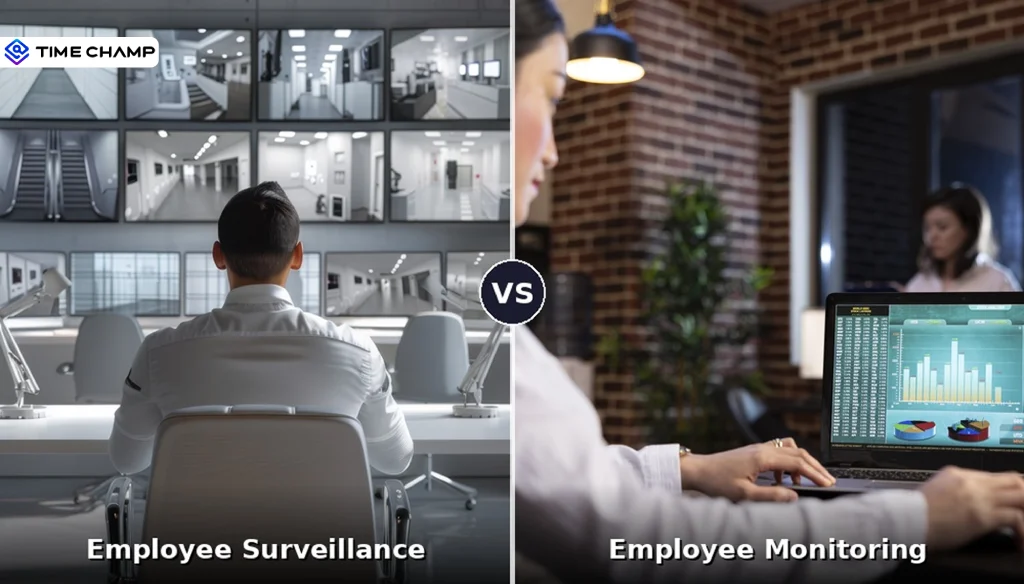
Employee surveillance and employee monitoring might sound similar, but they’re actually very different in how they work and how people feel about them. For the broader picture across this topic, our enterprise employee monitoring guide brings the moving parts together.
Surveillance is about watching behavior, usually for control or investigation. Monitoring, on the other hand, focuses on work and performance to help teams improve. That difference might seem small, but it has a big impact on trust, morale, and even how useful your data really is.
In this guide, I’ll walk you through what makes these two approaches different, why surveillance often backfires, and how to use monitoring in a way your team is comfortable with and actually supports.
What is Employee Surveillance
Employee surveillance is the practice of closely watching and tracking employees’ behavior, often to control, detect, or investigate their activities at work. Surveillance focuses less on improving how work gets done and more on keeping tabs on what employees do.
This type of surveillance often involves continuous observation through tools like video recording, badge access logs, GPS tracking, or keystroke logging. In many cases, companies deploy surveillance without clear communication, making it feel covert or excessive.
What is Employee Monitoring
Employee monitoring is the practice of tracking and analyzing employees’ work and performance to help improve how tasks are completed and how teams operate.
Unlike surveillance, monitoring focuses on work-related data, such as productivity levels, project progress, or time spent on tasks, rather than trying to control behavior. It’s typically done using tools like time tracking, performance dashboards, or workflow analytics.

Did You Know?
According to ExpressVPN, 45% of workers in highly surveilled environments report high stress levels, compared to 28% in workplaces with less monitoring.
What Is the Difference Between Surveillance and Monitoring?
The difference between employee surveillance and employee monitoring comes down to three main things: intent, transparency, and how the data is used.
Surveillance is mainly about control, security, or investigation. It focuses on watching employee behavior, often without full disclosure, to detect issues, enforce rules, or gather evidence. The data collected is usually kept by management and used to evaluate individuals. When employees later find out they were being watched without their knowledge, it often leads to a loss of trust, even if no problems are found.
Monitoring is about operational visibility and productivity improvement. It tracks work activity data: application usage, active time, productivity scores, attendance, task progress, transparently, with employees aware of what is tracked and why. The data is used to improve how the team works, to identify workload imbalances, to find declining trends before they become performance problems, and to give employees the information they need to manage their own productivity.
Interestingly, the tools used for both can be the same. The difference lies in how they are implemented, whether employees are informed, whether they can access their own data, and whether the information is used to support them or to scrutinize them.
This is why the debate about 'employee monitoring hurting morale' is often answered incorrectly: the problem is not monitoring, it’s surveillance that is disguised as monitoring.
Surveillance vs Monitoring: Side-by-Side Comparison
Both approaches differ across eight key factors that influence team morale and overall workplace outcomes, as shown in the table below.
| Factor | Employee Surveillance | Employee Monitoring |
|---|---|---|
| Primary intent | Control, maintaining security, or investigation. Data is collected to catch or prevent misconduct. | Operational visibility and productivity improvement. Data is used to support better work outcomes. |
| Employee awareness | Often covert or minimally disclosed. Employees may not know what is being tracked or why. | Employees are informed of what is tracked, why it is tracked, and how the data is used. |
| Data focus | Behavior-based: keystrokes, communications, physical movements, screen content. | Performance-based: active time, productivity scores, app usage, attendance, task progress. |
| Employee access to data | Employees typically cannot see their own data. It is held exclusively by management. | Employees can view their own activity, productivity, and attendance through a personal dashboard. |
| Impact on morale | Negative when used broadly. Produces anxiety, performative busywork, and disengagement. | Neutral to positive when applied transparently. Supports self-management and accountability. |
| Trust effect | Reduces trust if discovered unexpectedly. Creates an adversarial dynamic between staff and management. | Builds trust when the purpose is clear, and data is used supportively rather than punitively. |
| Legal risk | High in GDPR jurisdictions and several US states, without specific justification and disclosure. | Low, when employees are notified, data collection is proportionate, and policy is documented. |
| Best use case | Specific security investigations, insider threat detection, and high-security industry compliance. | Everyday team management across remote, hybrid, in-office, and field teams. |
The most important difference in the table is whether employees can access their own data.
When employees can view their own activity, productivity, and attendance through a personal dashboard, monitoring no longer feels like something being done to them. Instead, it becomes a tool they can use to understand and improve their own work.
This simple design choice clearly separates systems meant for open visibility from those meant for hidden tracking. It also shows whether a tool is built with transparency in mind or is closer to surveillance.
Want to Implement Monitoring Without Hurting Team Trust?
See how transparent monitoring boosts productivity and keeps your team engaged.
How Surveillance Affects Team Morale
The morale damage from workplace surveillance is not theoretical. It produces specific, measurable behavioral changes that show up in the monitoring data itself. Understanding these patterns matters, as it helps you identify when a monitoring approach is working against you rather than for you.
| Signal | What It Looks Like in Monitoring Data | What Is Actually Happening |
|---|---|---|
| Performative busyness | Active time is high but task completion rate is low. Employees are logged in and clicking, but not delivering output. | Employees focus on looking productive rather than being productive. They know what is tracked and optimize for the metric. |
| Engagement decline | Productivity score drops steadily over 3 to 4 weeks without a workload change or team event to explain it. | Surveillance anxiety is eroding motivation. Employees disengage gradually rather than through a visible event. |
| Avoidance behavior | Late logins increase. Short sessions replace full-day presence. Idle time rises after a monitoring change. | Employees minimize time on monitored devices to reduce exposure. This is a direct behavioral response to perceived surveillance. |
| Rising attrition signals | Attrition risk scores rise across multiple employees simultaneously, not just one. | A cultural problem rather than an individual problem. Multiple employees reached the same conclusion that the environment is not worth staying in. |
Surveillance Creates Busywork, Not Better Work
When employees know exactly what is being tracked and feel the data may be used against them, they start focusing on the metric instead of the actual work. For example, if “active time” is being measured, they may keep their mouse moving or switch between apps more often just to look active.
As a result, their “activity” scores go up, but real output stays the same or even drops. You can often see this in data, active time increases, but task completion does not. This gap shows how much “fake productivity” is being created.
Hidden Monitoring Breaks Trust Quickly
When employees find out they were being watched without their knowledge, it affects trust more than the data itself. It raises a bigger concern, that the damage is hard to fix.
The stress is not from monitoring itself, it is from monitoring that employees do not understand, did not consent to, or believe is being used against them.
Surveillance Pushes Out Top Performers First
When surveillance lowers trust in a team, it doesn’t affect everyone in the same way. Over time, employees can become less engaged, and the chances of attrition risk increase.
The bigger problem is that the best performers usually leave first. They have more job options and can quickly notice when the work environment is becoming negative. This leads to a huge loss of skilled people.
What Transparent Monitoring Looks Like in Practice
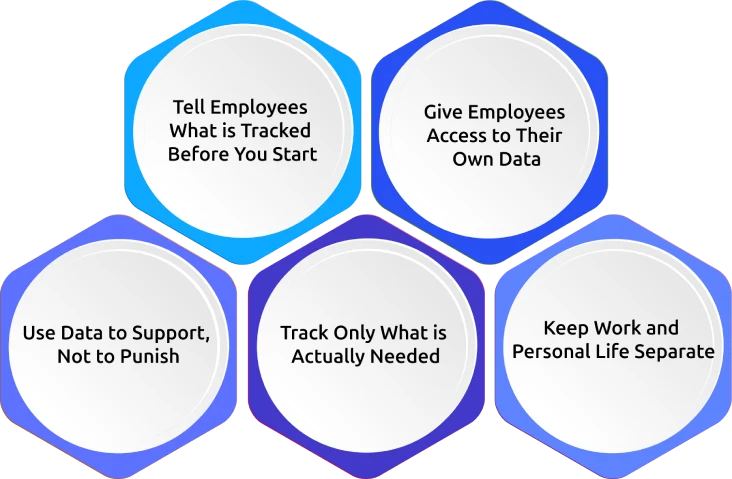
Transparent monitoring isn’t about not tracking work. It’s about tracking work in a clear and fair way, where employees understand what is being collected, why it is being collected, and how it will be used. The focus is on improving performance and supporting teams, not watching or controlling people.
Here are five simple practices that define transparent monitoring when it is done properly:
1. Tell Employees What is Tracked Before You Start
Monitoring should never come as a surprise. It should be explained during onboarding and clearly written in the company policy.
Employees should know:
- What data is collected (like active time, app usage, attendance, or productivity trends)
- Why it is collected (to manage workload, improve planning, support performance)
- Who can see it
When employees are informed from the beginning, it feels like a standard part of how the workplace operates. When they learn about it later, it feels like a breach of trust.
2. Give Employees Access to Their Own Data
Employees should be able to see their own performance data through a personal dashboard. This helps them understand their own patterns, like changes in productivity or workload pressure, and fix issues without waiting for a manager. This is one of the clearest signs of a transparent system.
3. Use Data to Support, Not to Punish
Use monitoring data to improve work, not to blame people.
For example:
- A drop in productivity during a heavy project week may be normal
- A steady decline over several weeks may need a supportive check-in
The goal is to understand what is happening, not to penalize normal changes in work pace.
4. Track Only What is Actually Needed
Good monitoring collects only the data required for work management.
For most companies, this means:
- Work activity during office hours
- Usage of work tools
- Basic productivity and attendance data
Going beyond this starts to feel like surveillance rather than monitoring. Different use cases, like security or data protection, may require different levels of tracking, but productivity tracking should stay focused and limited.
5. Keep Work and Personal Life Separate
Monitoring should apply only to work devices and work hours. It should not extend to personal devices, private accounts, or time outside of work. Clear boundaries reduce stress and help your employees focus on work without feeling constantly watched.
How Time Champ Builds Trust with Transparent Employee Monitoring
Time Champ is a workforce intelligence and employee monitoring software designed with transparency at its core. Employees have access to their own dashboards, where they can view activity, productivity scores, and attendance data. The monitoring setup is visible, not hidden, and is limited to work activity on company devices during defined working hours. Access to data is controlled, so only authorized people can view individual employee information.
For remote teams, where concerns about being monitored are often higher, this transparent approach creates shared visibility instead of one-sided oversight. You can see how the team is performing, and employees can see their own performance too. Everyone works from the same data, which removes the uncertainty that often leads to mistrust.
Time Champ also highlights important trends like changes in productivity, work-life balance signals, and attrition risk. This helps you to take action early without needing to constantly watch individual activity. Team-level insights make it easier to find uneven workloads before they lead to burnout or disengagement.
Reports can be easily exported in formats like XLSX, CSV, and PDF for reviews and compliance needs. The software also meets key standards, including GDPR, ISO 27001:2022, HIPAA, and SOC 2 Type I, ensuring data is handled securely and responsibly.
Ready to Build Trust with Smarter Employee Monitoring?
Start using Time Champ to track performance, support your team, and make better decisions with real data.
Conclusion
Surveillance and monitoring may look similar on the surface, but the impact they create inside a team is completely different. When monitoring is transparent, clearly communicated, and focused on improvement, it builds trust, strengthens engagement, and leads to more meaningful performance insights. When it crosses into surveillance, it does the opposite, lowering morale and distorting behavior. In the end, the approach you choose determines whether your monitoring system becomes a source of clarity and growth or a cause of resistance and disengagement.

Jahnavi Pulluri


Table of Content
-
 What is Employee Surveillance
-
What is Employee Monitoring
-
What Is the Difference Between Surveillance and Monitoring?
-
Surveillance vs Monitoring: Side-by-Side Comparison
-
How Surveillance Affects Team Morale
-
What Transparent Monitoring Looks Like in Practice
-
How Time Champ Builds Trust with Transparent Employee Monitoring
-
Conclusion
Instant Signup
Thank you for your request!
We have received your signup request and our team will get back to you soon. In the meantime, you can book a demo to see Time Champ in action.
Book a DemoFree trial. No credit card required. Prefer a walkthrough? Book a demo.
Related Blogs
Stealth and transparent monitoring work very differently for teams. See the key differences, legal implications, and which approach fits your organization.
Jahnavi Pulluri | Apr 21, 2026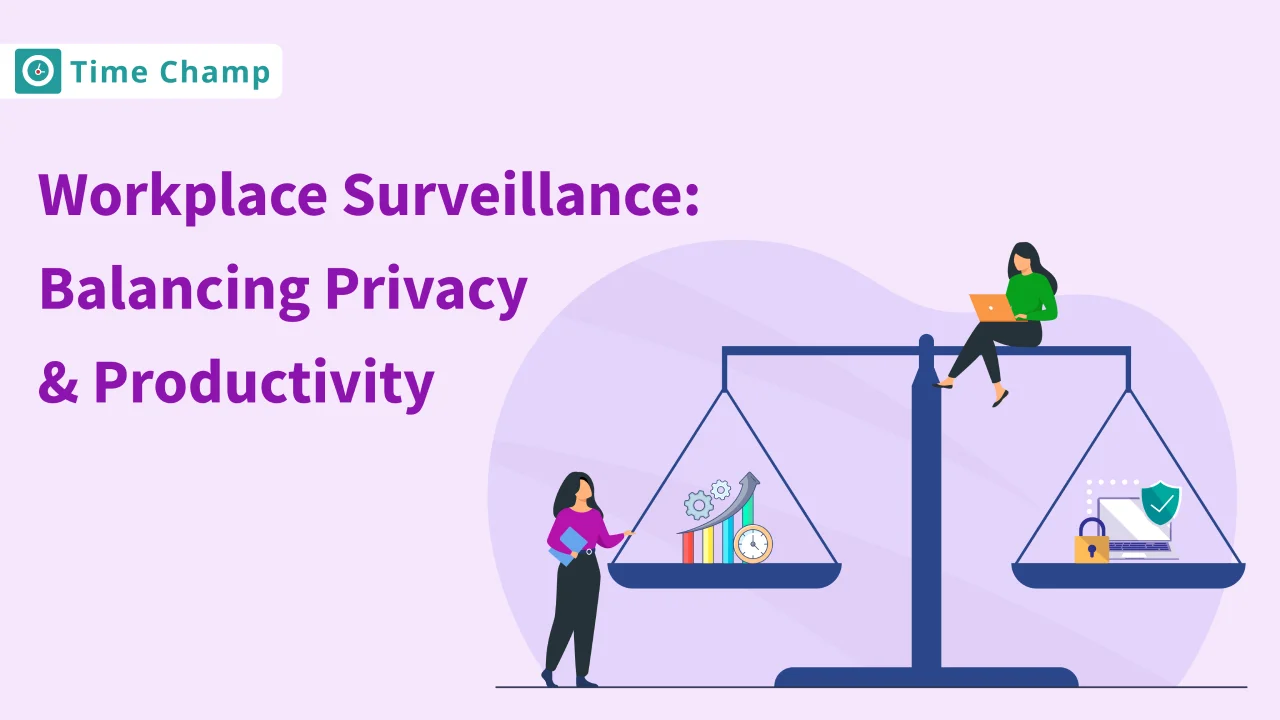
Explore the delicate balance between privacy and productivity in navigating workplace surveillance. Learn strategies for effective monitoring.
Shabana Shaik | Dec 20, 2023
Explore the possible ethical considerations of monitoring employee's activities to increase their productivity while respecting their privacy.
Jahnavi Pulluri | Jul 15, 2024
Track the right employee monitoring metrics to understand work patterns, improve performance, and make data-driven decisions with confidence.
Thasleem Shaik | Apr 22, 2026
Learn about the detailed pros and cons of employee monitoring to better understand its overall impact on employees and employers.
Shabana Shaik | Oct 16, 2024
Get answers to the most asked questions about employee monitoring laws, including legal considerations and privacy rights for compliant workplace monitoring.
Thasleem Shaik | Aug 17, 2024


 4.7/5 avg.
Ready to Manage Your Workforce Smarter?
Join our family of 1500+ companies using smart insights to redefine workforces!

Free Trial
No Credit Card Required