Time Champ > Blog > What is Work Management? Importance, Benefits & Process > Content
What is Work Management? Importance, Benefits & Process
Learn what work management is, why it matters, how it differs from project management, its types, process, benefits, and workforce challenges.

Work breaks down when priorities shift, ownership remains unclear, and execution relies on follow-ups instead of visibility. Teams stay busy while outcomes slip, timelines extend, and effort disperses without clear direction. This gap is where work managemen
Work management gives you a structured way to plan, assign, track, and review work across teams, so effort connects directly to outcomes. It replaces scattered updates and disconnected tools with a clear work management process that shows what is happening, who owns it, and what needs attention next.
In this blog, you will learn what work management is, why it has become essential across leadership roles, how the right system supports everyday execution, and how it differs from traditional project management in real operating environments.
What Is Work Management?
Work management is the systematic process of organizing, coordinating, and tracking tasks and projects to drive strategic goals. This work management process addresses your team’s daily to-do lists, coordinates workflows across departments, and ensures every effort aligns with larger business goals. In practice, work management clarifies who does what and when, turning scattered work into a coherent plan that delivers real results.
As a leader, you use work management to align operations with strategy. You set goals (budgets, deadlines, KPIs) and then have visibility over how day-to-day work stacks up against those targets. The primary purpose of work management software is to connect every activity to strategic objectives and give you clear progress and resource tracking. In other words, you eliminate guesswork and handoffs in the dark.
Teams follow standardized processes, and you see in real time when projects fall behind or when teams stretch resources too thin. This level of visibility helps you act early, keep work on track, and maintain control without constant manual follow-ups.
Why Is Work Management Important?
You have numerous tasks and deadlines each day. Work management brings structure to that complexity by connecting priorities, people, and progress, so your focus stays on execution, not constant coordination. Here’s why it matters in practice.
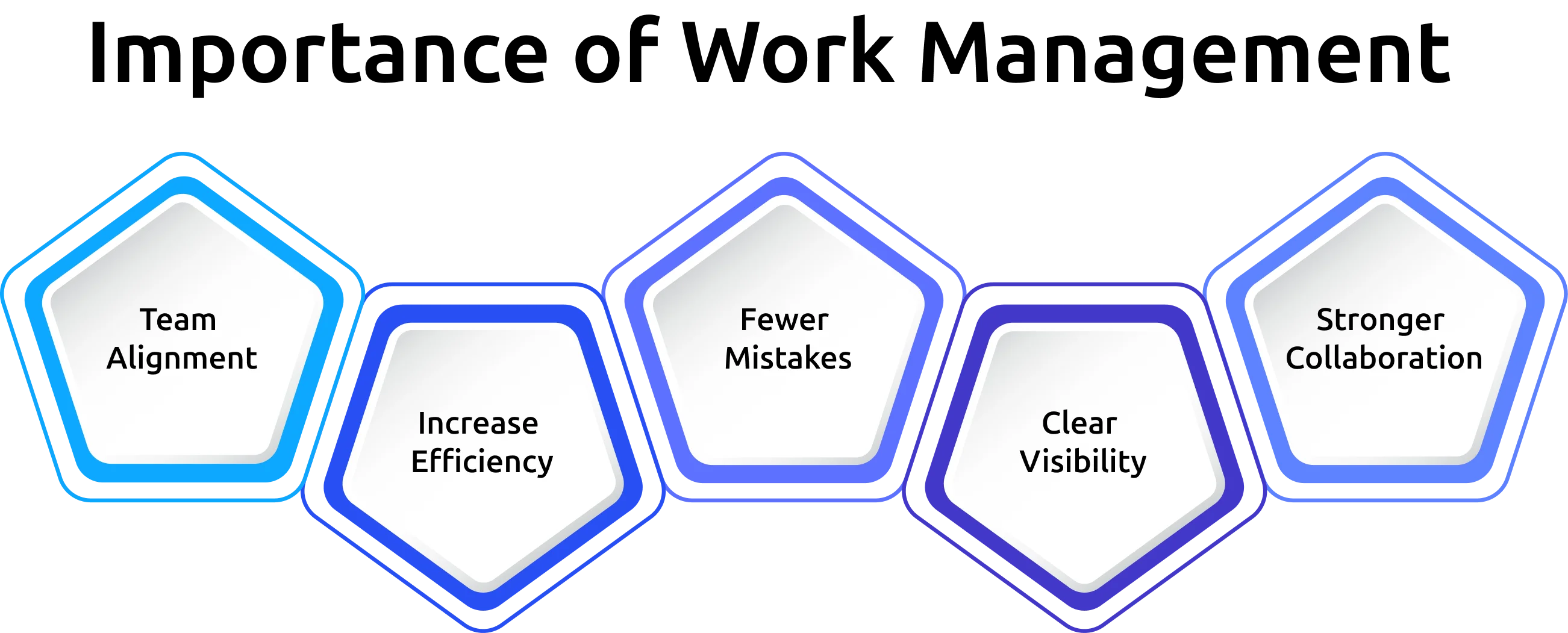
- Team Alignment: Work management assists in ensuring that you and your team are on the same page regarding goals, so that everyone on your team knows what to do and why it is important.
- Increases Efficiency: It assists you in making work processes more efficient and completing tasks faster. Meeting deadlines and boosting productivity become much easier.
- Fewer Mistakes: Clear task ownership makes sure no one duplicates work unnecessarily, so you avoid the “I thought you were handling that” moments that derail progress.
- Clear Visibility: You see real-time progress through shared updates and dashboards, which show what’s moving, what’s stuck, and where teams need to focus.
- Stronger Collaboration: Even when teams use different workflows and tools, you can share information easily. Such collaborations will assist you in escaping silos and ensuring smooth cross-departmental project flows.
Each of these helps to keep your work organized, on track and on target so that you can concentrate on what is important.
Is Work Management the Same as Project Management?
No, they’re related but not identical. Work management is a broad field that includes the continuous movement of tasks, processes and resources across your organization. Project management, on the other hand, is concerned with the planning and actual accomplishment of one project with a definite scope, schedule and deliverables. In essence, project management is one focused, finite effort within the larger practice of work management.
| Aspect | Work Management | Project Management |
|---|---|---|
| Scope | Covers daily tasks, workflows and multiple initiatives across the organization. | Focuses on one project with specific objectives, defined scope, timeline, and budget. |
| Timeframe | Work is ongoing with no fixed end date. | Each project has a defined start and end date, with fixed deadlines. |
| Goals & Deliverables | Goals focus on continuous improvement and efficiency, while deliverables take the form of routine outputs such as regular reports. | Goals are project-specific and measurable. Deliverables are unique outputs defined by the project’s scope. |
| Structure/Process | Processes and plans adapt over time, and work management often uses iterative workflows. | Follows a formal project lifecycle (initiation, planning, execution, closure). |
| Ownership/Team | Each team or department manages its own ongoing work. | Led by a project manager and a dedicated team, with clear accountability. |
| Metrics/Success | Measures success through efficiency, throughput, and smooth ongoing operations. | Success is meeting the project’s scope, schedule, and budget. |
Struggling to manage ongoing work beyond project timelines?
Use Time Champ to bring clarity to everyday work and keep execution on track.
What Are the Different Types of Work Management?
Work management takes different forms depending on what you are organizing. Some types focus on daily execution, others on capacity, time, or consistency. Together, these approaches help you keep work structured, predictable, and aligned with outcomes. Below are the core functional types you rely on to manage work effectively.
1. Task Management
Task management deals with the individual units of work that drive execution. Break large goals into clear tasks, assign clear ownership, set timelines, and track progress as work moves forward. This process gives teams a very clear picture of their own specific task priorities without the need to make assumptions or depend on constant follow-ups on tasks.
2. Resource Management
Resource management focuses on how you allocate budgets and tools across work. Distribute workloads based on capacity, priority, and availability to keep delivery realistic. When resources shift or constraints appear, adjustments help prevent overload, delays, or wasted effort.
3. Time Management
Time management focuses on organizing work around available time and deadlines. You can set priorities, shape schedules around critical tasks, and use timelines to guide execution. This creates predictability, reduces last-minute pressure, and keeps progress steady across teams.
4. Process Management
Process management defines how work moves from start to finish. Document steps, clarify handoffs, and remove unnecessary friction from recurring activities. Consistent processes reduce rework, improve coordination, and help teams follow the same clear path every time work repeats.
What Are the Steps Involved in the Work Management Process?
Work management follows a clear sequence that turns plans into measurable outcomes. Each step builds on the previous one to keep work structured, visible, and accountable. Here are the key steps that shape an effective workflow management process.
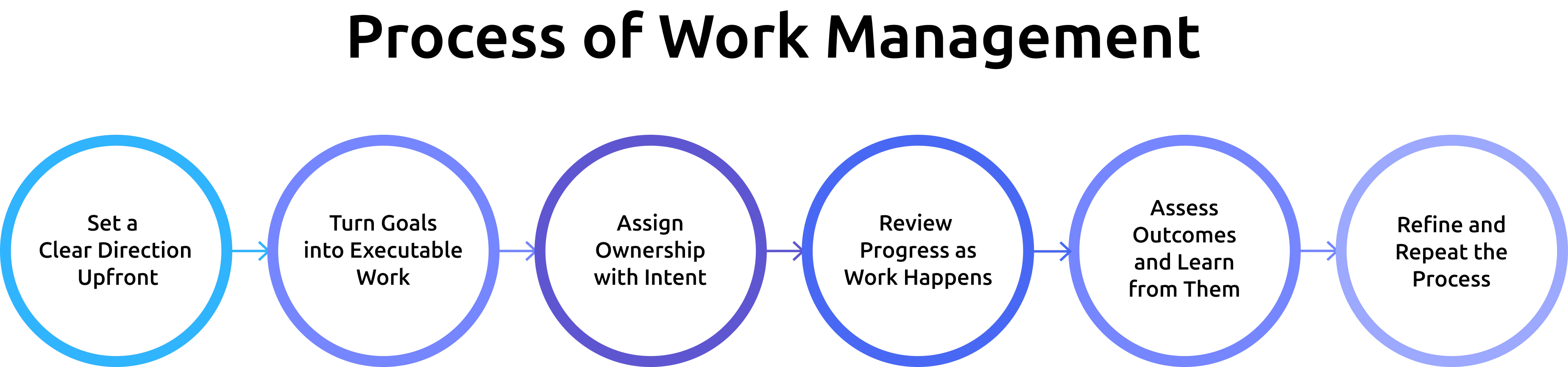
Step 1: Set a Clear Direction Upfront
Start by defining what needs attention and why it matters now. Establish clear goals, expected outcomes, and boundaries before work begins. This step sets direction early and prevents teams from moving fast without knowing where they are going.
Step 2: Turn Goals into Executable Work
Next, break down goals into particular pieces of work that the teams can take action on without any delay. Define tasks with a clear purpose, realistic timelines, and visible priorities. When work is clear, teams know where to begin, what comes next, and what matters most. This reduces back-and-forth questions, increases work pace, and keeps progress moving without delays.
Step 3: Assign Ownership with Intent
Decide who owns what before execution starts. Assign responsibilities based on capability, workload, and context, not assumptions. Clear ownership limits unnecessary handoffs, prevents duplicated effort, and keeps accountability visible throughout the work cycle.
Step 4: Review Progress as Work Happens
Do not wait until the end to check progress. Review work regularly to know what is moving and where delays are accumulating. Early visibility makes it easier to shift priorities, rebalance effort, or remove blockers before timelines slip.
Step 5: Assess Outcomes and Learn from Them
After teams complete the task, compare the results with the expectations. Analyze the successful aspects, and those that delayed the work and caused friction. Such reflections provide a basis for effective planning in the future and help teams follow a clearer, more effective path forward.
Step 6: Refine and Repeat the Process
Utilize insights from the accomplished tasks to enhance the planning and implementation of future works. Change task layouts, the way of choosing owners, or the frequency of the reviews according to the actual results. Gradually, these form a work management process that gets more robust with each execution cycle.
What Are the Benefits of Work Management?
82% of companies use work and project management software to improve operational efficiency, showing how structured work management directly supports better execution at scale. When you plan and coordinate work effectively, you can speed up execution, allocate resources wisely, and reduce delays across functions. The following are the major advantages of implementing work management systematically.

1. Improves Work Scheduling and Resource Use
Work management helps you allocate people and time where they create the most value. Clear task planning and workload visibility make schedules more realistic and prevent uneven distribution of work, allowing you to sustain steady progress without unnecessary pressure.
2. Increases Productivity and Efficiency
Disordered workflows and unclear responsibilities cause confusion and waste time. When roles are clear, and work flows smoothly, productive time continues without interruption. Efficient work management reduces work turnaround time, and it also helps you avoid work duplication and deliver results faster.
3. Enhances Collaboration Across Teams
It eliminates silos by providing teams with shared visibility of work, due dates, and dependencies. Cross-functional work becomes easier to coordinate, conversations stay focused on outcomes, and teams collaborate with fewer misunderstandings or delays.
4. Better Decision-Making with Transparency
With work management, you see progress, bottlenecks, and capacity in real time. This transparency gives you the data you need to make quicker, more informed decisions instead of reacting to surprises or last-minute crises.
5. Higher Delivery Consistency
Standardized planning, tracking and review practices help to make execution more predictable. Reliable timelines and consistent quality become easier to maintain, which builds trust with stakeholders and creates stability across ongoing operations.
Want better control over how work flows across teams?
Use Time Champ to bring clarity to execution and keep work moving without friction.
What Are the Challenges of Implementing Work Management?
Even with clear intent, work management does not always run smoothly in practice. Execution often breaks down due to gaps in visibility, adoption, or decision support. Below are the most common challenges teams face, along with practical ways to overcome them using workforce intelligence and AI.
1. Lack of Visibility into Real Work
One of the biggest challenges is not knowing how work actually flows across teams. Plans look good on paper, but you may struggle to see progress, bottlenecks, or hidden dependencies in real time.
Workforce intelligence provides a solution by revealing the flow of work between tasks and teams over time. AI enables the detection of behaviors, interruptions, and overloads of work at a very early stage, thus providing a better understanding of the areas that require focus before the problems become serious.
2. Resistance to Change from Teams
Work management fails frequently when teams perceive it as additional reporting or control. Low adoption leads to incomplete data, inconsistent updates, and unreliable outcomes.
Overcoming this should begin with reducing the manual work and removing friction. AI-driven insights limit the need for constant updates, automatically reveal patterns, and help you demonstrate value without making teams feel watched, which gradually builds trust and participation.
3. Poor Workload Distribution
Without accurate data, work gets unevenly distributed. Some teams remain overloaded while others stay underutilised, leading to burnout, missed deadlines, and frustration.
Workforce intelligence brings clarity into capacity and effort across roles and teams. When the focus of work is clearly visible, it becomes much easier to redistribute the workload by following the real patterns rather than guessing.
4. Delayed or Reactive Decision-Making
Many organizations react only after delays or cost overruns appear. When issues appear late, recovery becomes expensive and disruptive. Workforce intelligence platforms highlight early warning signs such as slowing task progress, recurring delays, or uneven effort. These indications give you an opportunity to get started responding and making changes to prevent problems from affecting delivery.
5. Inconsistent Execution Across Teams
It is common for different teams to have their own ways of working, but that leads to confusion and diverse results. This inconsistency makes it difficult to scale work management across the organization. To fix this, workforce intelligence helps you see which workflows consistently deliver better results across teams. These insights help you to enhance and standardize the processes while still granting the teams the freedom to operate in those ways that suit them best.
How Can Workforce Intelligence Improve Everyday Work Management?
Work management only works when you clearly see how plans turn into execution. With Time Champ’s workforce intelligence, you understand how time, effort, and focus flow across tasks and teams. You can analyze progress as work happens, spot overloads before they cause delays, and realign priorities without waiting for manual updates or end-of-week reports.
This visibility helps you manage work more effectively from start to finish. You plan with real data, guide teams using clear signals, and improve outcomes through continuous insight. Instead of reacting to problems after they appear, you stay in control of work as it moves, ensuring teams stay aligned, productive, and focused on what truly drives results.
Conclusion
Work management assists you in organizing your daily work more effectively by clarifying plans, setting clear actions, and tracking measurable progress. When you manage work with the right structure and visibility, you reduce confusion, use resources wisely, and help teams stay focused on meaningful outcomes. As work grows more complex, clear insights into time and effort become essential to guide decisions and keep everything aligned. With the right approach, you stay in control of work, support your teams better, and deliver results with consistency and confidence.
Still relying on updates and follow-ups to manage work?
Try Time Champ to see work progress clearly and guide execution with confidence.

Thasleem Shaik


Table of Content
-
 What Is Work Management?
-
Why Is Work Management Important?
-
Is Work Management the Same as Project Management?
-
What Are the Different Types of Work Management?
-
What Are the Steps Involved in the Work Management Process?
-
What Are the Benefits of Work Management?
-
What Are the Challenges of Implementing Work Management?
-
How Can Workforce Intelligence Improve Everyday Work Management?
-
Conclusion
Related Blogs
Learn the benefits of a work time tracker, from boosting productivity to improving accuracy and streamlining workflow for better efficiency.
Thasleem Shaik | March 13 2025
Get the complete guide on contingent workforce management: strategies, benefits, challenges, and how to optimize cost & performance with the right system.
Chethana Choudary | September 01 2025
Explore the 10 workforce management reports to master your business. They unlock key insights to boost productivity, cut costs & drive business growt
Chethana Choudary | September 30 2025
Discover the ultimate clock-in and out app to track work time for your business. Find out why our solution is the best choice for your time tracking needs.
Shabana Shaik | July 26 2023
Examine the evidence-based strategies to overcome work fatigue to include its causes, as well as the practical day-to-day ways to improve productivity.
Hima Bindhu Nara | February 22 2024
Boost your productivity with the top 5 work timers! These easy tools help you manage your time and stay focused, so you get more done every day!
Jahnavi Pulluri | October 10 2024


 4.7/5 avg.
Ready to Manage Your Workforce Smarter?
Join our family of 1500+ companies using smart insights to redefine workforces!

Free Trial
No Credit Card Required