HR Compliance: Challenges and Training Guide (2026)
Tackle HR compliance challenges with practical guidance on compliance areas, training, and proven strategies that help reduce risks and support compliance.

One missed compliance requirement can lead to costly penalties, legal disputes, and a loss of employee trust. Compliance in HR gives you the structure needed to meet legal requirements, protect employees, and build a consistent, well-governed workplace.
Here you’ll understand what HR compliance is, why it matters, the key areas it covers, and the common challenges you face. It also outlines practical strategies, training approaches, and best practices to build and maintain an effective compliance program.
What is HR Compliance?
HR compliance is the process of ensuring an organization’s HR policies and workplace practices follow applicable employment laws and regulations. It covers hiring, payroll, employee records, workplace safety, and other legal requirements. Strong compliance reduces legal risks and promotes a fair, compliant workplace.
Why Does HR Compliance Matter?
HR compliance helps businesses meet legal obligations while creating a fair, safe, and consistent workplace. Strong compliance reduces the risk of fines, lawsuits, and regulatory penalties. It also protects employee rights, builds trust, and ensures HR policies and employment practices remain aligned with changing labor laws and business requirements.

Did You Know?
In fiscal year 2025, the U.S. Department of Labor’s Wage and Hour Division recovered more than $259 million in back wages for nearly 176,957employees nationwide. This shows how compliance failures can lead to significant financial losses for employers.
Key Areas Every HR Compliance Program Should Cover
Building a strong HR compliance program needs more focus on employment laws. Covering the right areas helps you reduce legal risks, protect employee rights, and keep your workplace aligned with changing employment laws.
| HR Compliance Area | Why It Matters |
|---|---|
| Employment Laws & Labor Regulations | Ensures HR policies and employment practices comply with federal, state, and local labor laws to reduce legal risks. |
| Wage, Hour & Payroll Compliance | Maintains accurate payroll, overtime calculations, minimum wage compliance, tax deductions, and employee classifications. |
| Recruitment & Hiring Compliance | Promotes fair hiring practices through equal employment opportunities, lawful background checks, and proper hiring documentation. |
| Employee Records & Documentation | Maintains accurate employee files, contracts, tax forms, performance records, and other required documents for legal compliance. |
| Workplace Health & Safety | Provides a safe work environment by following occupational health and safety standards and documenting workplace incidents. |
| Anti-Discrimination & Anti-Harassment | Prevents workplace discrimination and harassment through clear policies, reporting procedures, and employee awareness. |
| Employee Benefits & Leave Compliance | Administers employee benefits and legally required leave programs according to applicable employment laws. |
| Data Privacy & Employee Information | Protects employees’ personal data through secure recordkeeping, controlled access, and compliance with privacy regulations. |
| Performance Management & Workplace Policies | Applies workplace policies consistently while ensuring performance reviews and disciplinary actions are fair and well documented. |
| Termination & Offboarding Compliance | Manages employees' exits lawfully by completing final settlements, maintaining required records, and protecting company information. |
What Are the Major HR Compliance Challenges?
Keeping up with HR compliance is becoming more difficult as workplace regulations evolve and workforce models continue to change. If these challenges are not addressed early, they can increase legal risks, create operational issues, and affect employee trust.
1. Staying Updated with Evolving Employment Laws
Employment laws frequently change at the federal, state, and local levels. Staying informed and updating HR policies on time can be difficult, especially for organizations operating across multiple locations.
2. Maintaining Accurate Employee Records
Incomplete or outdated employee records can lead to compliance issues during inspections or internal reviews. Missing employment documents, payroll records, or leave information can increase legal and administrative risks.
3. Employee Classification and Payroll Errors
Misclassifying employees or making payroll mistakes can result in wage disputes, tax issues, and regulatory penalties. Correctly managing overtime, benefits, and employee status is essential for maintaining compliance.
4. Managing Remote and Hybrid Work Compliance
Remote and hybrid workforces introduce new compliance challenges related to working hours, attendance, data security, and location-specific employment laws. Applying consistent policies across distributed teams requires careful oversight.
5. Inconsistent Policy Enforcement
Even well-written policies lose their value if they are applied inconsistently. Unequal enforcement of workplace rules, disciplinary actions, or leave policies can create legal concerns and reduce employee confidence.
6. Lack of Employee Compliance Awareness
Employees really cannot follow policies they do not understand. Without regular communication and training, you may face a higher risk of policy violations, workplace misconduct, and accidental non-compliance.
How to Overcome HR Compliance Challenges Effectively
Overcoming compliance challenges requires a proactive approach without reacting after problems arise. Strengthening your HR compliance practices and following consistent processes can help to reduce legal risks, improve accountability, and create a more compliant workplace.
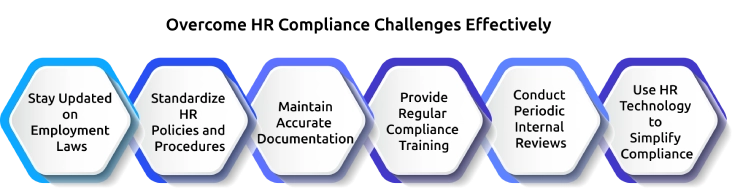
Stay Updated on Employment Laws
Review employment regulations regularly and update HR policies whenever legal requirements change. Assign responsibility for monitoring regulatory updates to ensure your organization remains compliant.
Standardize HR Policies and Procedures
Create clear, documented policies for hiring, attendance, payroll, leave management, workplace conduct, and employee records. Consistent processes reduce confusion and help you make fair decisions.
Maintain Accurate Documentation
Keep employee records complete, organized, and up to date. Accurate documentation supports compliance efforts, simplifies internal reviews, and provides evidence when questions arise.
Provide Regular Compliance Training
Train your employees on workplace policies, legal responsibilities, anti-discrimination practices, data privacy, and reporting procedures. Ongoing training helps you prevent violations before they occur.
Conduct Periodic Internal Reviews
Review HR processes regularly to identify compliance gaps before they become larger issues. Internal compliance checks help verify that policies are being followed consistently across the organization.
Use HR Technology to Simplify Compliance
Use workforce management and HR software to automate recordkeeping, track attendance, manage documentation, and generate accurate reports. Automation reduces manual errors and helps you maintain consistent compliance practices.
Finding it difficult to keep your workforce compliant every day?
Time Champ simplifies compliance with automated workforce management.
How to Build an Effective HR Compliance Training Program
A well-planned compliance training program helps your employees understand their responsibilities and follow workplace policies with confidence. Taking the right approach can help to reduce compliance risks, improve policy awareness, and build a culture where compliance becomes part of everyday work.

1. Identify Your Compliance Priorities
Identify the employment laws, workplace regulations, and internal policies that apply to your business. Focus on understanding which requirements are most relevant to your organization so you can build training that addresses the actual compliance needs.
2. Set Clear Training Goals
Define what employees want to learn after each training session. Establish clear objectives so that you can deliver focused training and evaluate whether employees can apply compliance requirements in their daily work.
3. Customize Training for Different Roles
Assess the compliance responsibilities of different roles within your organization. Create role-specific training for HR teams and employees, so each group receives information that is directly relevant to their job.
4. Make Training Practical and Engaging
Incorporate real workplace scenarios, short learning modules, interactive discussions, and quizzes into your training. Use practical examples to help employees understand better and retain compliance concepts.
5. Make Training Easily Accessible
Provide employees with convenient access to training materials. Ensure they can complete training during onboarding and throughout their employment to encourage consistent participation and compliance.
6. Track Completion and Maintain Training Records
Monitor training completion for all employees and maintain accurate records of participation. Keep documentation organized so you can demonstrate compliance and identify individuals who may need additional training.
7. Review and Update Training Regularly
Review your training content regularly. Update materials to reflect changes in employment laws and workplace policies, ensuring your program remains accurate and relevant.
How Time Champ Helps to Stay Audit-Ready and HR Compliant
Keeping up with changing workplace regulations, maintaining accurate records, and ensuring employees follow company policies can quickly become overwhelming. Time Champ is a comprehensive employee monitoring software with workforce management features that helps you simplify compliance by combining time tracking, attendance management, productivity monitoring, workforce analytics, and automated reporting in one platform.
Here are the key features of Time Champ that improve productivity, ensure compliance, and simplify workforce management:
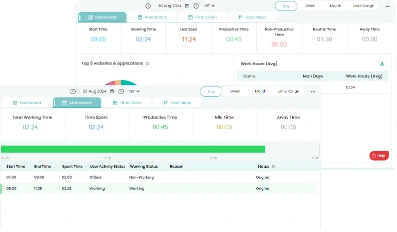
- Maintains Accurate Time and Attendance Records: Automatically captures work hours, attendance, breaks, and timesheets to reduce manual errors and maintain reliable compliance records.
- Tracks Employee Activities with Complete Visibility: Monitors application usage, website activity, productive and idle time to ensure employees follow workplace policies and company standards.
- Generates Audit-Ready Reports Instantly: Delivers comprehensive workforce reports that help you verify compliance, prepare for audits, and access important records whenever required.
- Standardizes Workforce Policies Across Teams: Applies consistent attendance rules, work schedules, and productivity expectations across remote, hybrid, and in-office employees from a single platform.
- Monitors Productivity Without Manual Oversight: Provides real-time visibility into work patterns and identifies compliance or productivity concerns early, helping you take corrective action before they affect business operations.
- Strengthens Documentation and Workforce Accountability: Helps you stay organized and confident by keeping all employee activities, timesheets, attendance, and productivity data in one place, making compliance easier and improving accountability across your organization.
Still relying on manual processes to manage HR compliance?
Use Time Champ to automate tracking, record, and report on one platform.
Conclusion
Building a compliant workplace requires more than meeting legal requirements. It involves maintaining accurate records, training employees, enforcing consistent policies, and adapting to changing regulations. A strong HR compliance program helps you reduce legal risks, protect employee rights, and create a workplace built on fairness and accountability. Following the right practices and using technology to streamline compliance tasks can improve operational efficiency while staying prepared for future regulatory changes. Investing in compliance today strengthens your organization, supports long-term business growth, and builds greater confidence among your employees and stakeholders.

Anjali

Table of Content
 What is HR Compliance?
- Why Does HR Compliance Matter?
- Key Areas Every HR Compliance Program Should Cover
- What Are the Major HR Compliance Challenges?
- How to Overcome HR Compliance Challenges Effectively
- How to Build an Effective HR Compliance Training Program
- How Time Champ Helps to Stay Audit-Ready and HR Compliant
- Conclusion
Related Blogs
Employee attendance tracker helps businesses maintain accurate work hour records, ensure labor law compliance, manage overtime, and prevent legal issues.
Thasleem Shaik | Mar 15, 2025
See how employee monitoring strengthens accountability, improves transparency, and helps teams perform better without crossing into workplace surveillance.
Anjali | Jul 01, 2026
Download our free Attendance Policy Template to set clear attendance guidelines for your team. Customize it to fit your business and ensure smooth operations.
Sai Keerthi Uppala | Sep 13, 2024
Looking for the best business optimization tools? Compare the top solutions for automating workflows, improving efficiency, and accelerating business growth.
Anjali | Jul 06, 2026
What is legal and what is risky when monitoring employee personal devices? A 2026 compliance guide covering consent, BYOD law, state notices, and global rules.
Shabana Shaik | May 14, 2026
Explore how an employee monitoring privacy policy protects employee rights, maintains compliance, and supports transparent workplace monitoring.
Anjali | Apr 25, 2026


 4.7/5 avg.
Ready to Manage Your Workforce Smarter?
Join our family of 1500+ companies using smart insights to redefine workforces!

Free Trial
No Credit Card Required