How Employee Monitoring Enhances Accountability (2026 Guide)
See how employee monitoring strengthens accountability, improves transparency, and helps teams perform better without crossing into workplace surveillance.
How do you know whether employees remain accountable without constantly monitoring them? You may struggle to balance trust with visibility, especially in remote and hybrid workplaces. The real question isn't whether you should monitor employees, but how you do it. Employee monitoring enhances accountability when it focuses on transparency, clear expectations, and meaningful work insights without constant surveillance.
Building accountability doesn't require watching every move your employees make. It requires the right approach to monitoring. Here you’ll explore practical ways to use monitoring fairly, avoid common mistakes, and build a workplace based on trust.
What Is Employee Accountability?
Employee accountability is the responsibility of employees to complete their work, meet expectations, and take ownership of their decisions and results. It involves being dependable, following through on commitments, and accepting responsibility for both successes and mistakes while contributing to individual, team, and organizational goals.
The Crucial Distinction: Accountability vs Surveillance
Although accountability and surveillanceinvolve monitoring employee work, their purpose and impact are very different. Accountability encourages your employees to take ownership of their responsibilities, while surveillance focuses on observing employee activities without necessarily improving performance. Understanding this difference helps you build trust while maintaining visibility.
| Aspect | Accountability | Surveillance |
|---|---|---|
| Primary Goal | Encourage ownership, responsibility, and better performance. | Closely observe employee activities and behavior. |
| Focus | Work outcomes, progress, and commitments. | Employee actions, screen activity, and time spent. |
| Employee Experience | Builds trust, confidence, and engagement. | Can create stress, fear, and discomfort when overused. |
| Transparency | Employees understand what is monitored and why. | Monitoring often feels unclear or excessive. |
| Manager's Role | Coach, support, and remove obstacles. | Constantly watch and control employee activities. |
| Performance Evaluation | Uses data to guide feedback and development. | Often emphasizes compliance over improvement. |
| Decision-Making | Based on context, goals, and performance trends. | Based on isolated activities or monitoring records. |
| Long-Term Impact | Strengthens accountability, trust, and collaboration. | May reduce morale, trust, and employee engagement. |
5 Specific Ways Monitoring Creates Accountability
Accountability doesn't happen automatically, it develops when your employees know what's expected, receive timely feedback, and understand how their work contributes to team goals. The following practices show how you can use employee monitoring to create a workplace where accountability becomes part of everyday work.
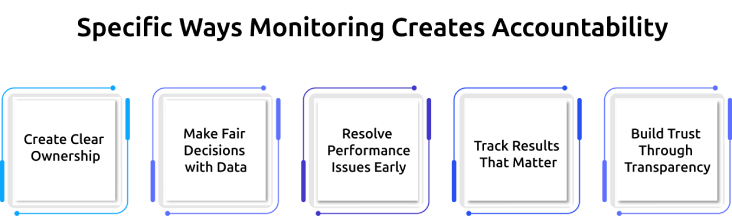
1. Create Clear Ownership
Start by making responsibilities, deadlines, and priorities visible to every employee. When people know exactly what they own and how their progress is tracked, they naturally take greater responsibility for completing their work. Clear visibility reduces confusion and helps your team stay focused on shared goals.
2. Make Fair Decisions with Data
Support performance conversations with measurable work data. Review productivity trends, completed tasks, attendance, and work hours to evaluate performance consistently. Employees are more likely to trust your decisions when feedback is based on clear evidence and applied fairly across the team.
3. Resolve Performance Issues Early
Monitor work progress regularly to spot delays, missed deadlines, or workload imbalances early. Addressing issues quickly allows you to train employees, remove obstacles, and keep projects moving forward. Early intervention strengthens accountability because employees receive support before small problems affect overall performance.
4. Track Results That Matter
Define measurable goals and track progress consistently. Monitor project milestones, completed tasks, productivity, and work quality so employees always understand how they are performing. Regular progress tracking encourages your employees to stay focused, improve continuously, and remain accountable for their results.
5. Build Trust Through Transparency
Explain what information you monitor, why you collect it, and how it will be used. Open communication builds trust and encourages employees to accept monitoring as a tool for improvement. At the same time, it keeps you accountable for setting fair expectations, providing constructive feedback, and supporting your team's success.
8 Real-World Scenarios Where Monitoring Creates Accountability
Employee monitoring delivers the best results when it helps you solve real workplace challenges. The following scenarios show how organizations use visibility, performance insights, and transparent monitoring practices to improve accountability while maintaining employee trust.
Managing Hybrid Teams with Greater Visibility
Managing hybrid teams becomes easier when you have clear visibility into employee work without constant follow-ups. According to Gallup's Hybrid Work Indicator, managers who focus on work progress and outcomes can support flexibility while maintaining accountability. Productivity insights and task tracking help you understand contributions and keep teams aligned.
Replacing Assumptions with Performance Insights
Many managers struggle to understand employee productivity when teams work remotely. Microsoft's Work Trend Index highlights a growing productivity confidence gap between leaders and employees. Monitoring meaningful performance metrics gives you reliable insights into work progress, helping you make informed decisions and provide timely support.
Training Employees Before Performance Declines
Small performance issues can quickly become larger challenges if they are unnoticed. The Microsoft Work Trend Index Annual Reportemphasizes the importance of using workforce intelligence to identify workload patterns and productivity trends early. This allows you to train employees proactively and improve accountability before performance is affected.
Improving Employee Engagement Through Fair Accountability
Employees are more likely to stay accountable when they receive clear expectations, regular feedback, and recognition for their work. Gallup's State of the Global Workplace highlights the strong connection between effective management and employee engagement. Performance insights help you recognize achievements, support employee development, and build a more accountable team.
Building Trust Through Transparent Monitoring
Employee monitoring strengthens accountability only when employees understand its purpose. A workplace analysis published by Le Monde highlights how excessive surveillance can reduce trust and create resistance. Clearly communicating what you monitor, why you monitor it, and how the information is used encourages transparency and helps your employees take greater ownership of their work.
How to Build an Accountability Framework (5-Step Process)
Building accountability requires more than setting expectations or tracking work. You need a clear framework that helps employees understand their responsibilities, measure progress consistently, and use performance insights to improve. Follow these five steps to create an accountability system that strengthens employee trust and drives better results.

1. Set Clear Accountability Expectations
Start by defining what accountability looks like for each role in your organization. Set clear responsibilities, measurable goals, deadlines, and performance expectations. When employees know exactly what is expected, they can take ownership of their work and stay focused on achieving results.
2. Measure the Right Performance Metrics
Track metrics that reflect meaningful work and business outcomes. Focus on task completion, project progress, productivity, work quality, and goal achievement. Reviewing the right metrics helps you evaluate performance fairly and identify opportunities for improvement.
3. Create a Transparent Accountability Policy
Document your accountability expectations and share them with your team. Clearly explain what will be monitored, why it matters, and how performance data will be used. Encourage employee feedback to create a policy that promotes trust, transparency, and shared responsibility.
4. Use the Right Monitoring Tools
Choose a monitoring solution that supports accountability through visibility and actionable insights. Time Champ combines employee monitoring with workforce intelligence to help you track productivity, attendance, work hours, task progress, and performance trends from a single dashboard. This gives you the context needed to make informed decisions, support employees effectively, and improve accountability without creating a culture of surveillance.
5. Turn Insights into Employee Coaching
Review performance insights regularly and use them to guide meaningful conversations with your employees. Recognize achievements, address challenges early, and provide practical training that helps your employees improve productivity and work quality. Consistent feedback encourages continuous growth and strengthens accountability across your team.
Not sure how accountable your team really is?
Time Champ gives you clear insights to manage teams with confidence.
6 Common Mistakes That Turn Accountability into Surveillance
Even the best employee monitoring strategy can damage trust when it's implemented incorrectly. Avoiding the following mistakes will help you create accountability while maintaining transparency, fairness, and employee confidence.
Mistake 1: Monitoring Employees Without Clear Communication
Monitoring employees without explaining what is tracked or why often creates uncertainty and resistance. Employees may feel they are being watched without purpose, which weakens trust and engagement.
How to Overcome It: Clearly communicate your monitoring policy before implementation. Explain what information is collected, how it supports productivity and accountability, and who can access the data. Open communication helps employees understand the purpose behind monitoring and builds confidence in the process.
Mistake 2: Using Monitoring to Find Employee Faults
Using monitoring only to identify mistakes creates a culture of fear. Employees become more concerned about avoiding errors than improving their performance, which results in reduced motivation and openness.
How to overcome it: Use monitoring data to recognize achievements, provide training, and identify opportunities for improvement. Regular feedback and constructive conversations encourage accountability while supporting employee growth.
Mistake 3: Measuring Activity Instead of Performance
Tracking mouse movements, keystrokes, or online time alone doesn't reflect the quality or impact of an employee’s work. Employees may stay busy without making meaningful progress toward business goals.
How to overcome it: Measure performance using meaningful indicators such as completed tasks, project milestones, work quality, goal achievement, and collaboration. These metrics provide a clearer picture of employee contributions.
Mistake 4: Holding Employees Accountable but Not Managers
Accountability becomes one-sided when only employees are expected to meet standards. You also play a critical role in setting expectations, providing guidance, and removing obstacles that affect performance.
How to overcome it: Hold yourself accountable for setting clear goals, providing regular feedback, removing roadblocks, and making fair performance decisions. Accountability should start with leadership.
Mistake 5: Using Monitoring to Punish Employees
When monitoring is associated only with disciplinary action, employees lose trust in the process. They may avoid asking for help, hide challenges, or feel pressured to always appear productive.
How to overcome it: Position monitoring as a tool for training, recognition, and continuous improvement. Use performance insights to support employees, celebrate progress, and solve challenges before they affect results.
Mistake 6: Collecting More Data Than Necessary
Monitoring every activity creates information overload and increases employee concerns about privacy. Much of the data collected may never contribute to performance improvement or business decisions.
How to overcome it: Collect only the information needed to support accountability, productivity, and business objectives. Review your monitoring practices regularly to ensure they remain relevant, transparent, and aligned with organizational goals.
How Time Champ Employee Monitoring Supports Accountability Over Surveillance
You struggle to improve accountability without making employees feel constantly watched. The challenge is finding the right balance between visibility, trust, and fair performance management. Time Champ is smart employee monitoring software with built-in workforce intelligence features that provide you with the insights needed to build accountability through transparency, meaningful performance data, and fair decision-making.
Here are the key Time Champ features that strengthen accountability:
- Real-Time Productivity Dashboard: Gain a clear view of productive time, idle time, and work patterns so you can identify performance trends, provide timely training, and support employees with meaningful feedback.
- Task & Project Time Tracking: Track the time your employees spend on tasks and projects to measure progress, improve ownership, and ensure work stays aligned with deadlines and priorities.
- Automated Timesheets: Generate accurate timesheets automatically, giving you reliable work records for performance reviews, payroll, and accountability without manual effort.
- Attendance & Work Hour Tracking: Monitor attendance, work hours, breaks, and availability across remote, hybrid, and office teams to maintain consistency and address attendance issues early.
- Activity Timeline: Review a complete timeline of employee activities to understand work progress, identify bottlenecks, and conduct fair, evidence-based performance discussions.
- Workforce Analytics & Reports: Access detailed attendance, time utilization, and productivity reports that help you make informed decisions, recognize top performers, and support employees who need additional guidance.
Still finding it hard to balance employee trust and visibility?
Time Champ helps you monitor work with transparency and confidence.
Conclusion
The way you monitor employees determines whether you build accountability or lose trust. Employee monitoring enhances accountability when you use it to create clarity, encourage ownership, and support fair performance conversations. Focus on giving your team clear expectations, meaningful feedback, and the right level of visibility to help them succeed. When monitoring becomes a tool for guidance and improvement, you can make confident decisions, create a workplace where employees stay accountable, and the organization achieve better performance through trust and transparency.

Anjali

Table of Content
 What Is Employee Accountability?
- The Crucial Distinction: Accountability vs Surveillance
- 5 Specific Ways Monitoring Creates Accountability
- 8 Real-World Scenarios Where Monitoring Creates Accountability
- How to Build an Accountability Framework (5-Step Process)
- 6 Common Mistakes That Turn Accountability into Surveillance
- How Time Champ Employee Monitoring Supports Accountability Over Surveillance
- Conclusion
Related Blogs
Learn what employee monitoring is, the main types, how AI is reshaping it, and how to set it up with clear insights, compliance, and better team visibility.
Thasleem Shaik | May 06, 2026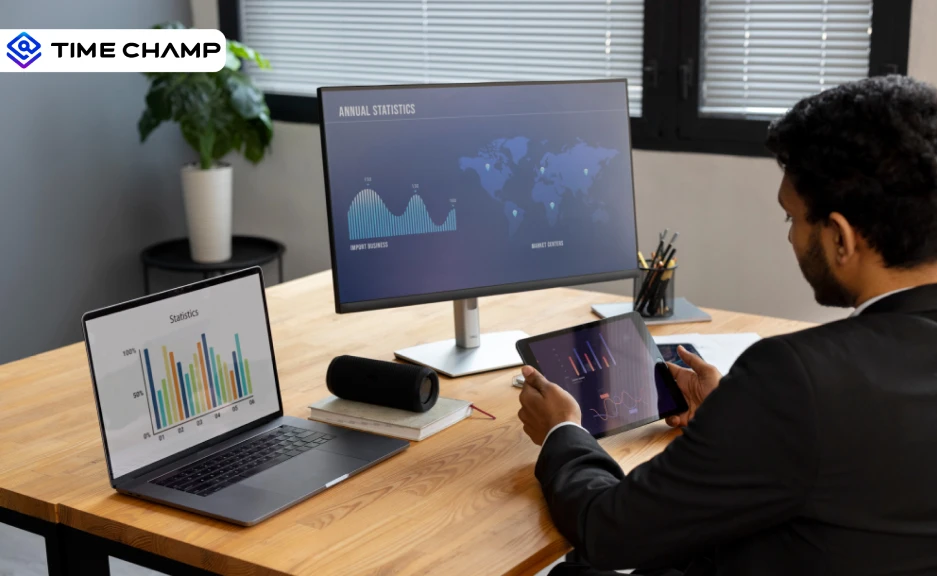
Explore how to implement employee monitoring software effectively with clear steps, legal tips, best practices, ROI metrics, and key pitfalls to avoid.
Anjali | Apr 15, 2026![What is Workforce Intelligence? A Complete Guide [2026]](https://www.timechamp.io/images/workforce-intelligence-feature-image.webp)
Discover what workforce intelligence is, why it
Guna Lakshmi | Feb 11, 2026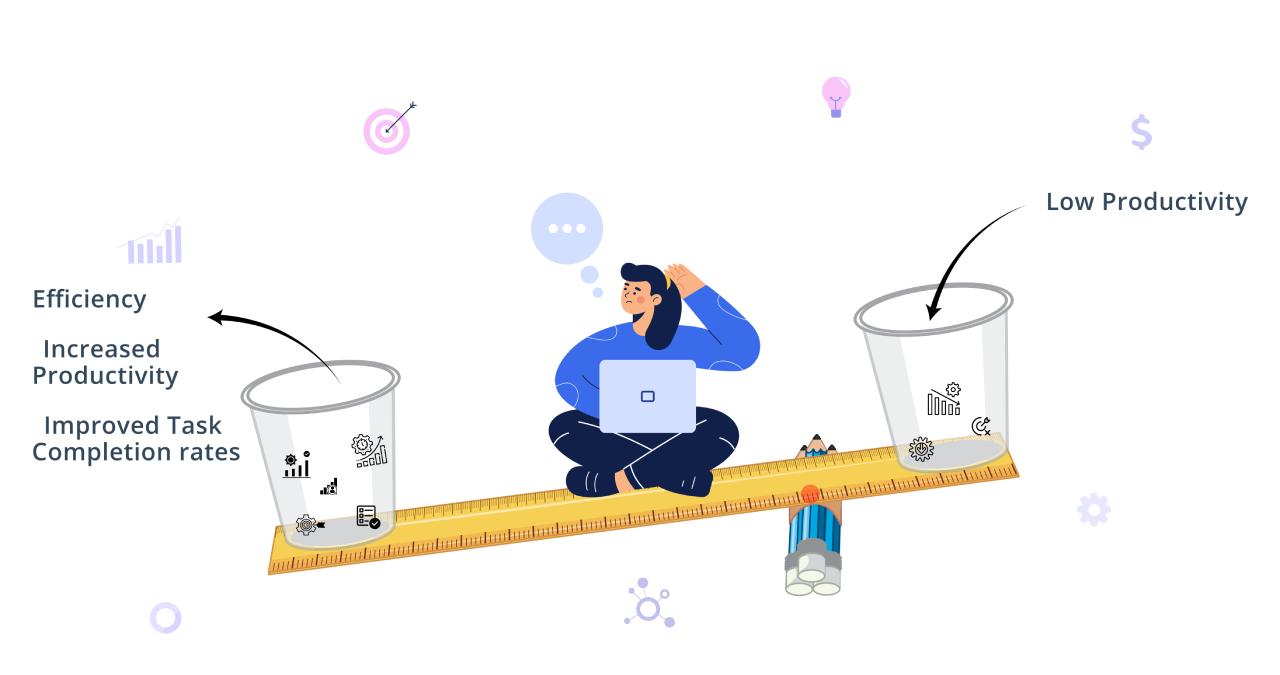
Transform your team's productivity with our guide. Discover benefits and strategies to measure and improve performance.
Shabana Shaik | Jun 21, 2024
Learn what business intelligence (BI) is, why it matters, how it works, explore key benefits, challenges & how AI is used to enhance business decisions.
Anjali | Feb 11, 2026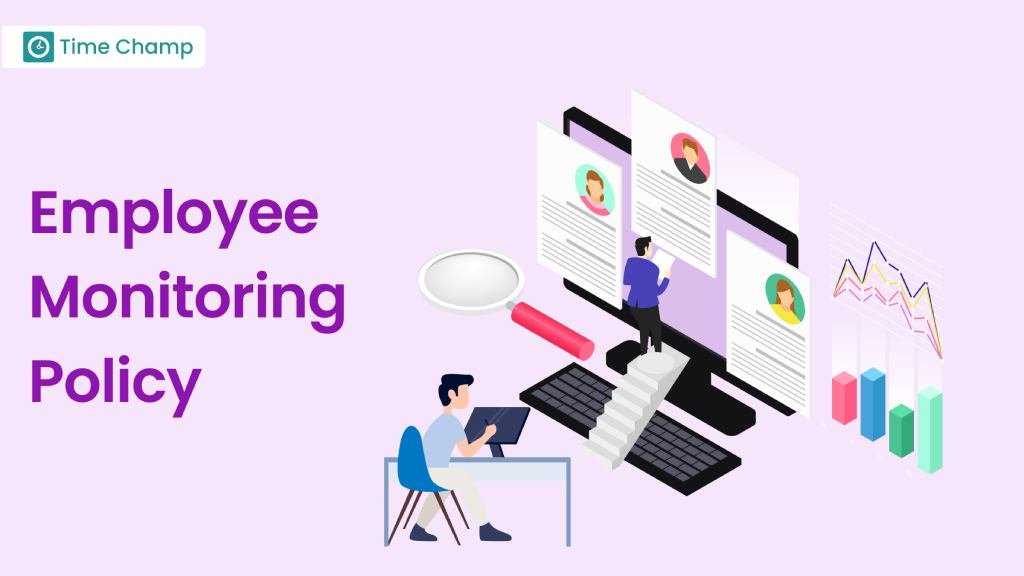
Discover how to create an effective employee monitoring policy with our comprehensive guide. Enhance productivity while respecting privacy. Learn best practices today!
Jahnavi Pulluri | Jul 31, 2024


 4.7/5 avg.
Ready to Manage Your Workforce Smarter?
Join our family of 1500+ companies using smart insights to redefine workforces!

Free Trial
No Credit Card Required