How to Improve ROI with Productivity Tracking Software
Improve ROI with productivity tracking software by reducing wasted time, recovering billable hours, and improving workforce efficiency.

Are hidden inefficiencies, missed billable hours, and wasted time quietly reducing your business ROI?
Your team works hard every day, but without clear visibility into how work happens across your organization, productivity gaps can easily go unnoticed. That is why more businesses use productivity tracking software to recover lost billable hours, reduce operational waste, and make smarter decisions with real data instead of assumptions.
You may think productivity is the problem, but the real issue is often visibility. If you cannot see where time gets wasted or where work slows down, improving ROI becomes difficult.
In this guide, you will see how productivity tracking software improves ROI, where the biggest returns come from, how to calculate its impact on your business, and what real companies achieved after implementing it.
How Does Productivity Tracking Software Improve ROI?
Productivity tracking software improves ROI by capturing lost billable hours, optimizing resource allocation, and reducing administrative overhead, often yielding strong annual returns by reclaiming lost productive time. These tools improve efficiency by identifying bottlenecks, automating reports, and improving billing accuracy.
Increases Billable Hours and Accuracy
You can increase revenue quickly when you track billable hours accurately. If your team still uses manual timesheets, you will lose revenue through missing entries, incorrect estimates, and forgotten work hours. Automated time tracking captures work activity in real time so you can invoice clients more accurately.
If you run an agency, consultancy, software company, or service business, accurate time tracking directly affects your profitability.
Key ROI benefits include the following:
- Capture more billable hours
- Reduce invoicing mistakes
- Improve client transparency
- Minimize manual entry errors
- Reduce billing disputes
If you manage remote or hybrid teams, productivity tracking also helps you verify progress on work without constantly following up with employees.

Did You Know?
According to IRS data, nearly 33% of employers make payroll mistakes, resulting in billions of dollars in penalties every year.
Reduces Operational Costs
You lose revenue when inefficient workflows, unnecessary meetings, idle time, and manual processes slow your team down.
Productivity tracking software helps you uncover exactly where productivity drops and operational costs increase. Instead of relying on guesswork, you can use real-time workforce data to identify inefficiencies and improve daily operations.
For example, you will notice:
- Employees spend too much time switching between apps
- Approval bottlenecks delay projects
- Repetitive tasks should be automated
- Poor workload planning creates overtime costs
- Payroll reviews take longer than necessary
When you automate timesheets, reporting, and attendance tracking, you can spend less time reviewing, correcting, and approving employee hours. This helps you simplify payroll processes and improve workflow accuracy.
Optimizes Resource Allocation
Poor resource allocation reduces your profitability. Overloading some employees while underutilizing others slows your projects, increases burnout, and raises labor costs.
Productivity tracking software helps you see:
- Team workload distribution
- Capacity availability
- Project progress
- Time spent on tasks
- Productivity trends across departments
With this data, you can assign the right people to the right tasks more effectively. When you balance workloads properly, you can improve efficiency while reducing employee stress. Your teams can complete projects faster without constantly hiring additional staff.
Improves Project Planning
Project planning becomes more accurate when you use actual productivity data rather than assumptions. Productivity tracking software helps you understand:
- How long projects actually take
- Which tasks consume the most time
- Where delays usually happen
- Which workflows reduce productivity
- Which teams perform most efficiently
Using historical productivity data can create better project estimates and more realistic timelines. Better planning helps you reduce missed deadlines, avoid budget overruns, and prevent rushed work. Over time, this improves your profit margins and makes your operations more predictable.
Reduces Turnover Costs
Employee turnover costs you time, money, and productivity. When an employee leaves, you need to spend extra time and money on hiring a replacement, training them, and managing the work left behind. In many cases, replacing an employee can cost up to twice their annual salary.
That is why reducing burnout and improving employee experience directly improves your ROI.
With the right insights, you can:
- Recognize top performers early
- Identify employees who feel overloaded
- Provide better coaching and support
- Create fairer workload distribution
- Reduce unnecessary overtime and stress
When you use tracking transparently, you can build accountability without making your team feel constantly watched, which creates a healthier and more balanced work environment.
Want to see where productivity losses affect your ROI?
Track billable hours, reduce operational waste, and improve workforce visibility with Time Champ.
Key Factors That Improve Productivity Tracking ROI
You can improve ROI from productivity tracking software when you implement it correctly. Clear communication, smooth workflows, and strong team adoption help you achieve faster results and long-term value.

Build Transparency with Your Team
Clearly explain what gets tracked, why tracking is used, and how the data benefits your team. Keep communication open from the beginning to reduce resistance and build trust. Position productivity tracking as a tool for improving workflows, balancing workloads, and supporting employees instead of monitoring every action.
Integrate With Existing Workflows
Connect your productivity tracking software with payroll systems, project management platforms, HR tools, and communication apps. Reduce duplicate work by automating data flow between systems. Use integrations to simplify reporting, improve accuracy, and save time across daily operations.
Focus on Actionable Productivity Insights
Use productivity data to identify bottlenecks, reduce idle time, and improve workload distribution. Monitor workflow patterns regularly and take action based on real operational data. Focus on solving inefficiencies instead of simply collecting reports.
Set Clear ROI Goals Early
Define measurable goals before implementation. Focus on outcomes like improving billable hour accuracy, reducing payroll errors, lowering administrative overhead, increasing productivity, or improving project delivery speed. Track these metrics consistently to measure ROI progress clearly.
Avoid Excessive Employee Monitoring
Track important metrics such as work patterns, productivity trends, and workflow efficiency. Help employees understand how productivity tracking improves workload management, reduces inefficiencies, and supports better performance. Use a balanced monitoring approach to improve accountability while maintaining employee trust and engagement.
Train Yourself to Use Data Effectively
Learn how to analyze productivity reports, identify workload issues, and use data fairly across your teams. Use productivity insights to improve workflows, support employees, and prevent burnout. When you use productivity data effectively, you can turn operational insights into measurable business improvements.
How Do You Calculate Productivity Tracking ROI?
You can calculate productivity tracking ROI by comparing the total value your business gains against the total cost of the software. A proper ROI calculation helps you understand whether the investment improves profitability, reduces operational costs, and saves valuable employee time.
The Basic ROI Formula:
ROI (%) = (Net Benefits − Total Cost) ÷ Total Cost × 100
Payback Period Formula:
Payback Period = Total Cost ÷ Monthly Net Benefit
These formulas help you understand:
- How long does it take to recover your software investment
- How much financial value do you gain
- Whether the software is worth the cost for your business
Costs to Include in Your Calculation
When you calculate ROI, include all major costs associated with implementation and usage. Your total costs may include:
1. Software subscription fees
2. Implementation costs
3. Employee training time
4. Ongoing administration costs
Key ROI Benefits You Should Track
To build a strong business case, you should quantify the biggest financial improvements your team can achieve.
Your largest ROI drivers may include the following:
- Time saved on manual reporting
- Reduced payroll corrections
- Recovered billable hours
- Faster project completion
- Reduced overtime waste
- Improved employee productivity
- Better resource utilization
Example ROI Calculation for a 50-Person Team
Here is a simple example showing how productivity tracking software can improve ROI for a 50-person team. This calculation helps you understand how operational savings and productivity improvements can quickly outweigh the software cost.
| ROI Factor | Calculation | Annual Value |
|---|---|---|
| Software cost | $5/user/month × 50 users × 12 months | $3,000 |
| Implementation + training | 20 hours × $50/hour | $1,000 |
| TOTAL COST | $4,000 | |
| Admin time saved | 2 hrs/week × $50/hr × 50 users × 50 weeks | $25,000 |
| Payroll error reduction | $500/error × 24 errors avoided/year | $12,000 |
| Recovered billable hours | 30 hrs/year × 50 users × $50/hr | $25,000 |
| TOTAL HARD BENEFITS | $62,000 | |
| NET BENEFITS | $62,000 − $4,000 | $58,000 |
| ROI | $58,000 ÷ $4,000 × 100 | 1,450% |
| Payback period | $4,000 ÷ ($58,000/12) | 0.8 months |
These numbers are illustrative, but they show how quickly you can generate measurable returns with productivity tracking software.
Ready to calculate your team’s productivity ROI?
Time Champ helps you track productivity and reduce operational overhead with real-time workforce insights.
How Time Champ Helped Businesses Improve Productivity ROI
Time Champ is an employee monitoring software with built-in workforce intelligence features that help you improve productivity, reduce operational inefficiencies, and make better business decisions using real-time performance data. Time Champ helps you understand how work actually happens across your organization.
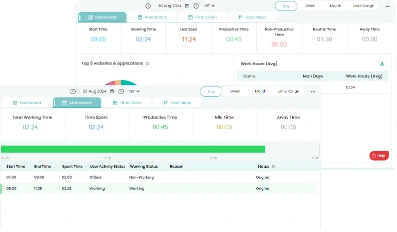
The platform gives you clear visibility into productivity trends, workload distribution, application usage, attendance patterns, and project progress so you can identify inefficiencies before they affect profitability. Time Champ combines multiple workforce management capabilities into one platform, including
- Productivity tracking
- Time tracking
- Workforce analytics
- Attendance monitoring
- Application and website usage tracking
- Automated productivity reports
- Real-time employee visibility
- Idle time detection
- Performance insights
- Project and task management
Time Champ also helps you improve ROI by making your daily operations more efficient and data-driven. The platform supports accurate payroll processing, better project planning, smarter resource allocation, and improved employee productivity by giving you real-time visibility into how work happens across teams. It also helps you reduce administrative overhead, balance workloads more effectively, speed up reporting and approvals, and maintain better visibility into remote and hybrid team performance.
A Real-Time Case Study
Vserve: 56% Productivity Increase and 32% Accountability Boost with Time Champ
Vserve improved ROI by replacing expensive third-party monitoring tools with a more efficient productivity tracking solution. The company increased productivity by 56% and improved accountability by 32% by gaining better visibility into employee workflows, time usage, and operational performance. Time Champ also helped teams improve compliance, reduce management overhead, and strengthen overall workflow consistency.
- Increased Productivity and Accountability:
Real-time tracking helped the Vserve team identify workflow gaps, improve employee accountability, and increase overall productivity across departments.
- Improved Operational Visibility:
The Vserve management team gained clearer insights into employee activities, workload distribution, and team performance, which helped them make faster and more informed decisions.
- Improved Time Management:
Vserve employees cut wasted time and sharpened task priorities using tracking data and maintained better workflow consistency across teams.
- Reduced Management Overhead:
Automated tracking and reporting reduced the time Vserve managers spent manually reviewing employee activity and performance updates.
- Strengthened Policy Compliance:
Improved visibility helped the Vserve team maintain better compliance with internal policies and operational standards.
Ready to Improve ROI Across Your Teams?
Time Champ helps you reduce inefficiencies, recover lost productive time, and improve workforce performance with real-time insights.
Conclusion
Improving ROI starts with understanding how your teams spend time, where productivity slows down, and which operational gaps affect profitability. Without clear visibility, small inefficiencies can quietly increase costs, reduce productivity, and impact business growth over time. If you want to improve operational efficiency and maximize ROI across your teams, productivity tracking software can help you turn workforce data into measurable business growth.

Guna Lakshmi

Table of Content
 How Does Productivity Tracking Software Improve ROI?
- Key Factors That Improve Productivity Tracking ROI
- How Do You Calculate Productivity Tracking ROI?
- Example ROI Calculation for a 50-Person Team
- How Time Champ Helped Businesses Improve Productivity ROI
- Conclusion
Related Blogs

Struggling with remote work productivity challenges? Learn what’s slowing your team down and how to improve focus, communication, and performance.
Guna Lakshmi | Apr 15, 2026
Learn what workforce productivity is, key factors, metrics, and ways to measure and optimize it. Discover AI’s role in improving workforce efficiency.
Chethana Choudary | October 01, 2025
Learn how employee productivity monitoring software can boost your company with key features, usage tips, and advantages of using tools like Time Champ.
Tarun Kumar Reddy | Jun 24, 2024
Explore the top benefits of productivity tracking software for better visibility, balanced workloads, smarter planning, and improved business decisions.
Guna Lakshmi | Apr 30, 2026
Implement a productivity tracking tool with clear steps, setup tips, and best practices to track employee productivity and improve team performance.
Thasleem Shaik | Apr 30, 2026
Employee screen monitoring captures work activity in real time. Learn all monitoring types, how they boost productivity, and how to implement them ethically.
Jahnavi Pulluri | Apr 17, 2026


 4.7/5 avg.
Ready to Manage Your Workforce Smarter?
Join our family of 1500+ companies using smart insights to redefine workforces!

Free Trial
No Credit Card Required