Top Benefits of Productivity Tracking Software for Businesses
Explore the top benefits of productivity tracking software for better visibility, balanced workloads, smarter planning, and improved business decisions.

Do you really know how your team spends their workday?
You assign tasks, set deadlines, and expect results, but deep down, you still wonder:
· Where is the time actually going?
· Why are some tasks taking longer than expected?
· Who needs help and who is overloaded?
When you don’t have clear answers, you start relying on guesswork. And guesswork often leads to delays, confusion, and missed opportunities. Over 85% of employers felt troubled, believing their employees were actually being productive. This is where productivity tracking software changes everything. It gives you a real-time, data-driven view of your team’s work, so you can manage smarter, support better, and improve results without constantly chasing updates.
In this guide, you will learn what productivity tracking software is, discover the key benefits of productivity tracking software, and find out how to choose the right solution for your business.
What Is Productivity Tracking Software?
Productivity tracking software is a digital tool that helps you monitor, measure, and improve how work is performed within your business. It gives you clear insights into how time is spent, how tasks are completed, and how efficiently your team works each day.
Instead of relying on manual updates or assumptions, you can see real-time data on task progress, time usage, and work patterns. This allows you to understand how effectively work gets done. You can identify where time is being used productively, where it is being wasted, and where processes may need improvement. Using productivity tracking software like Time Champ, you can track time spent on tasks, monitor app and tool usage, measure productivity, and identify distractions or inefficiencies. Over time, this data helps you recognize patterns such as repeated delays, uneven workloads, or areas where employees may need additional support or training.
More importantly, this clarity helps you take action at the right time. You can fix delays before they affect deadlines, balance workloads more effectively, and guide your team with real insights.

Did You Know?
The global productivity management software market was valued at $71.22 billion in 2024 and is projected to reach $264.48 billion by 2034 , growing at a CAGR of 14.02%.
What Are the Main Benefits of Productivity Tracking Software?
Productivity tracking software helps you move from guesswork to clarity. When you understand how time is spent and how work flows across your team, you can fix issues faster, plan better, and improve overall performance without constant follow-ups.
Let’s explore how this software directly improves your business operations.

1. Daily Work Visibility
Productivity tracking software gives you instant clarity into your team’s day-to-day work. You don’t have to depend on status updates or meetings to understand progress. Instead, you stay informed at all times, which helps you act quickly when something needs attention.
- View task progress as it happens
- Identify pending or incomplete work
- Reduce unnecessary status meetings
- Stay informed without interrupting employees
2. Better Workload Balance
Improper work distribution affects both performance and employee well-being. With clear insights, you can balance responsibilities across your team and make sure no one feels overburdened or underutilized.
- Detect workload gaps across team members
- Reassign tasks based on capacity
- Avoid over-dependence on specific employees
- Maintain a consistent work pace across teams
3. Stronger Project Planning
Good planning depends on accurate information. Productivity tracking helps you understand past performance, so you can plan future projects with more confidence and fewer risks.
- Use historical data for better planning
- Break projects into realistic timelines
- Assign resources based on actual performance
- Reduce last-minute deadline pressure
4. Faster Bottleneck Detection
Delays often go unnoticed until they become serious problems. Productivity tracking software allows you to spot slowdowns early and take action before they affect your entire workflow.
- Identify stages where work slows down
- Track recurring delays in processes
- Address inefficiencies early
- Keep workflows consistent and smooth
5. Improved Employee Support
When you understand how your team works, you can support them more effectively. Productivity tracking helps you take a more personalized approach instead of applying the same solution to everyone.
- Recognize individual performance patterns
- Provide role-specific guidance
- Offer timely feedback
- Improve team skill development
6. More Accurate Billing and Payroll
Handling payroll or client billing becomes much simpler when you have precise data. This removes confusion and gives you confidence in every calculation.
- Maintain clear work-hour records
- Simplify invoice generation
- Avoid disputes over time logs
- Improve financial transparency
7. Better Productivity Reports
Clear reports help you understand what’s working and what needs improvement. Instead of relying on opinions, you can base your decisions on real performance insights.
- Generate detailed performance summaries
- Track improvement over time
- Compare productivity across projects
- Support strategic planning
8. Improves Accountability Without Micromanagement
When your team can clearly see what they’re working on and how they’re progressing, it becomes easier for them to stay accountable. You don’t need to monitor every action because your team takes ownership when expectations are clear.
- Encourage self-management among employees
- Create clarity around responsibilities
- Reduce dependency on supervision
- Build trust within the team
Need a clear view of your team’s activity without constant check-ins?
Access real-time visibility and accurate tracking through Time Champ.
What Is the Difference Between Productivity, Production, and Project Tracking?
It’s easy to mix up productivity, production, and project tracking, but each one focuses on a different part of your work. One shows how efficiently work gets done, another shows how much output you produce, and the third tracks progress over time.
Understanding these differences helps you manage your team better and make clearer, more effective decisions.
| Aspect | Productivity Tracking | Production Tracking | Project Tracking |
|---|---|---|---|
| Main Focus | Efficiency of work | Quantity of output | Progress of tasks and projects |
| What It Measures | Time usage, effort, performance | Number of tasks or units completed | Task completion, deadlines, milestones |
| Purpose | Improve how work is done | Increase output and meet targets | Ensure projects stay on schedule |
| Key Insight | How well the work is done | How much work is done | When and how work gets completed |
| Use Case | Identifying inefficiencies and improving productivity | Tracking production goals and output volume | Managing timelines and project flow |
| Example | Time spent on tasks, app usage, and productivity levels | Number of items produced or tasks completed | Project deadlines, task status, and team progress |
In simple terms:
- Productivity tracking shows you how efficiently your team works
- Production tracking shows you how much work gets done
- Project tracking shows you how work progresses over time
Using all three together gives you a complete view of your business performance.
How to Choose the Right Productivity Tracking Software?
Choosing the right productivity tracking software can feel overwhelming because there are so many options available. But if you focus on your actual business needs instead of just features, the decision becomes much easier.
Here are some key factors to consider that will help you choose the right productivity tracking software for your business.
Identify Your Needs
Start by understanding what problem you want to solve. Every business has different challenges, so you need a tool that matches your specific goals. When you clearly define your needs, you avoid choosing software that looks good but doesn’t actually help your team.
- Decide if you need time tracking, productivity monitoring, or project visibility
- Identify gaps in your current workflow
- Focus on solving real problems, not adding extra features
- Prioritize features that directly impact your business
Consider Ease of Use
If your team finds the tool difficult to use, they won’t adopt it properly. A simple and user-friendly tool helps your team get started quickly and use it consistently without confusion or frustration.
- Choose a clean and intuitive interface
- Look for a minimal learning curve
- Simplify quick onboarding for your team
- Avoid tools that require constant training
Evaluate Compatibility
Your productivity tracking software should work well with the tools you already use. When everything connects smoothly, your team can work without interruptions or switching between too many platforms.
- Check integration with existing tools (CRM, project tools, etc.)
- Support smooth data sharing across systems
- Avoid tools that create workflow disruptions
- Look for automation between platforms
Scalability
As your business grows, your software should grow with you. A scalable tool allows you to add more users, handle larger workloads, and adapt to changing needs without switching systems later.
- Support increasing team size
- Handle more projects and data
- Offer flexible plans or upgrades
- Adapt to future business needs
Review Support and Training
Even the best tools can create challenges if support is not available. Strong customer support and proper training help your team use the software effectively and solve issues quickly.
- Check the response time of customer support
- Look for onboarding and training resources
- Provide access to guides or tutorials
- Choose tools with reliable assistance
Consider Data Security and Privacy
Since productivity tracking software handles sensitive work data, security should be a priority. You need to make sure your business and employee data remain safe and protected.
- Look for secure data storage and encryption
- Check access control and permissions
- Maintain compliance with data protection standards
- Protect employee privacy while tracking work
Test Before You Commit
Before making a final decision, it’s important to try the tool. A trial helps you understand whether the software actually fits your workflow and meets your expectations.
- Use free trials or demos
- Test features with your team
- Evaluate ease of use in real scenarios
- Confirm it solves your core problems
If you focus on these factors, you can choose a productivity tracking tool that fits your current needs and also supports your business as it grows. The right choice will help you improve efficiency, simplify management, and make better decisions every day.
How Time Champ Works as an Effective Productivity Tracking Software
Managing accountability becomes easier when you have clear visibility into how work is done. When you can clearly see how work is happening, it becomes easier to guide your team and maintain accountability. This is where Time Champ stands out as an effective productivity tracking solution.
Time Champ helps you gain complete visibility into your team’s work without making the process complicated. You can understand how time is spent, track daily activities, and identify areas where improvements are needed, all from one place. As an employee monitoring and productivity software, it gives you the clarity you need while keeping the experience simple for your team.
What makes it effective is its focus on clarity and ease of use. You don’t need complex setups or technical knowledge to get started. Your team can quickly adapt, and you can start seeing useful insights almost immediately.
With Time Champ, you can:
- Track work hours and task activity in real time
- Monitor productivity without constant follow-ups
- Identify inefficiencies and improve workflows
- Get clear productivity reports for better decision-making
- Manage both remote and in-office teams easily
As your business grows, Time Champ grows with you, helping you stay organized, improve performance, and keep everything moving in the right direction without added complexity.
Want better control over your team’s productivity?
Get actionable insights that help you improve productivity with Time Champ.
Conclusion
When you don’t have clear visibility into your team’s work, you rely on guesswork, which leads to delays and confusion. Productivity tracking software removes that uncertainty and gives you clear, real-time activity insights. It helps you plan better, support your team, and make smarter decisions based on data. It gives you the control and clarity you need to run your business more efficiently and keep your team moving in the right direction every day.

Guna Lakshmi

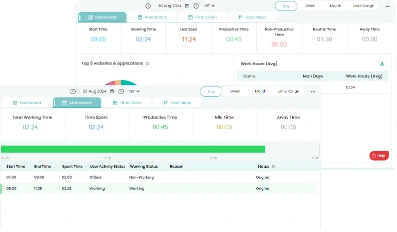
Table of Content
-
 What Is Productivity Tracking Software?
-
What Are the Main Benefits of Productivity Tracking Software?
-
What Is the Difference Between Productivity, Production, and Project Tracking?
-
How to Choose the Right Productivity Tracking Software?
-
How Time Champ Works as an Effective Productivity Tracking Software
-
Conclusion
Related Blogs

Struggling with remote work productivity challenges? Learn what’s slowing your team down and how to improve focus, communication, and performance.
Guna Lakshmi | Apr 15, 2026
Learn what workforce productivity is, key factors, metrics, and ways to measure and optimize it. Discover AI’s role in improving workforce efficiency.
Chetana Choudary | October 1, 2025
Workforce productivity analytics turns daily work data into clear decisions. Learn the key metrics, monitoring signals, and AI tools that improve team output.
Thasleem Shaik | Apr 21, 2026
Learn how employee productivity monitoring software can boost your company with key features, usage tips, and advantages of using tools like Time Champ.
Tarun Kumar | June 24, 2024
Find out the causes of low productivity in the workplace and find ways to enhance productivity and increase employee output.
Jahnavi Pulluri | June 28, 2024
Track the right remote worker productivity metrics to understand performance, improve output, and avoid micromanagement with clear insights.
Thasleem Shaik | Apr 24, 2026


 4.7/5 avg.
Ready to Manage Your Workforce Smarter?
Join our family of 1500+ companies using smart insights to redefine workforces!

Free Trial
No Credit Card Required