Data Security in BPO: Risks, Measures & Compliance
Data security in BPO requires strong safeguards against breaches, compliance risks, and data loss. See practical measures to protect sensitive client data.
One careless click by your BPO agent can expose customer records, payment details, health information, or confidential business data in seconds. When data is handled outside your organization, you may not know who can access it or how securely it is stored. A single breach can trigger compliance penalties, customer distrust, operational disruption, and lasting damage to your reputation. Data security in BPO helps you protect sensitive information throughout outsourced operations. It uses security measures and access controls to keep data safe, secure, and compliant.
This blog helps you understand the main security risks BPOs face and the compliance standards they must follow. You'll also learn 12 practical security measures and ways to protect remote BPO agents from common data threats.
What Is Data Security in BPO?
Data security in BPO combines policies, processes, and technical controls to protect customer and business information handled by an outsourcing provider. It covers data access, storage, transfer, and disposal, helping prevent unauthorized access, misuse, loss, or breaches while supporting applicable privacy and compliance requirements.
What Are the Biggest BPO Security Risks?
BPO operations handle large volumes of sensitive customer and business information, making security gaps especially costly. The biggest risks usually arise when access, employee behavior, technology, or third-party processes are not properly controlled.
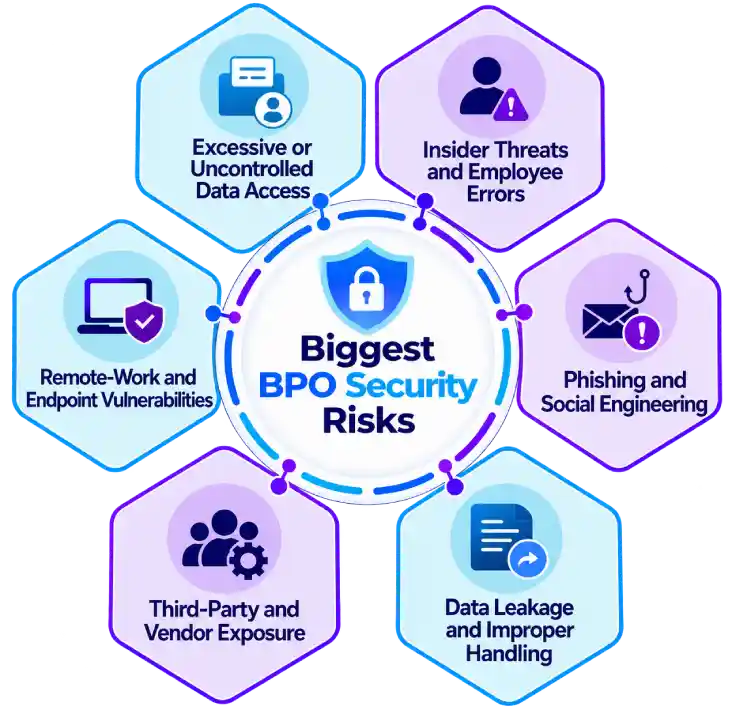
1. Excessive or Uncontrolled Data Access
Giving agents access to more information than their roles require increases the impact of compromised credentials or misuse. Without role-based permissions and regular access reviews, sensitive data can reach unauthorized users.
2. Insider Threats and Employee Errors
Employees can expose data intentionally or accidentally through careless sharing, weak passwords, improper downloads, or unauthorized use of applications. High employee turnover can make these risks harder to control.
3. Phishing and Social Engineering
Attackers can trick BPO agents into revealing credentials, opening malicious links, or sharing confidential information. The high volume of customer interactions and system access makes agents attractive targets for these attacks.

Did You Know?
Verizon’s 2025 DBIR found that phishing accounted for 16% of known initial access vectors, making employee security awareness and strong authentication important safeguards for BPO environments.
4. Data Leakage and Improper Handling
Sensitive information can be exposed when employees copy data to personal devices, use unauthorized applications, send files through insecure channels, or fail to dispose of information correctly. Poor data-handling practices can turn routine BPO operations into security vulnerabilities.
5. Third-Party and Vendor Exposure
BPOs often depend on cloud platforms, subcontractors, software providers, and other vendors. A weakness anywhere in this extended ecosystem can expose client information, making vendor oversight and security assessments essential.
6. Remote-Work and Endpoint Vulnerabilities
Remote BPO agents may access business systems from home networks or devices that are harder for you to control. Unsecured Wi-Fi, personal devices, screen exposure, and weak endpoint protections can increase the chances of unauthorized data access or leakage.
Which Compliance Standards Apply to Data Security in BPO?
The compliance standards that apply to a BPO depend on the type of data it handles, the industries it serves, and the locations involved. Rather than following one universal framework, you often need to meet a combination of security standards and privacy regulations.
1. ISO/IEC 27001
ISO/IEC 27001 provides a structured framework for establishing and maintaining an Information Security Management System (ISMS). It helps you manage security risks through documented policies, access controls, risk assessments, incident management, and continuous improvement.
2. SOC 2
SOC 2 evaluates how effectively a service provider’s controls address areas such as security, availability, processing integrity, confidentiality, and privacy. It is particularly relevant when you handle sensitive customer information through cloud-based systems and business applications.
3. GDPR
The General Data Protection Regulation (GDPR) applies when your BPO processes personal data covered by EU data protection rules. It places requirements around lawful processing, data protection, individual rights, security, and breach management, making it particularly important for BPOs serving European customers.
4. HIPAA
BPOs supporting healthcare organizations may need to comply with HIPAA when they handle protected health information (PHI). This includes implementing appropriate administrative, physical, and technical safeguards to protect electronic protected health information.
5. PCI DSS
BPOs that store, process, or transmit payment card information may need to meet the Payment Card Industry Data Security Standard (PCI DSS). It establishes security requirements for protecting cardholder data and is especially relevant to BPOs handling billing, payments, refunds, or card-related customer support.
6. India’s Digital Personal Data Protection Framework
BPOs operating in India or processing personal data within the scope of India's data-protection framework may also need to account for the Digital Personal Data Protection Act and applicable rules. The requirements focus on responsible handling and protection of digital personal data.
Choosing the Right Compliance Framework
These standards should not be treated as interchangeable certifications. A healthcare BPO may need HIPAA safeguards, a payment-support BPO may need PCI DSS controls, while a BPO handling broader business information may prioritize ISO 27001 or SOC 2. The right approach is to map each client's data, geography, contractual obligations, and industry regulations before determining the applicable requirements.
12 Data Security Measures in BPO That Actually Work
Protecting BPO data requires practical controls across agents, devices, applications, networks, vendors, and daily workflows. The following 12 measures help you control access, protect sensitive information, reduce risks, and respond to security incidents.
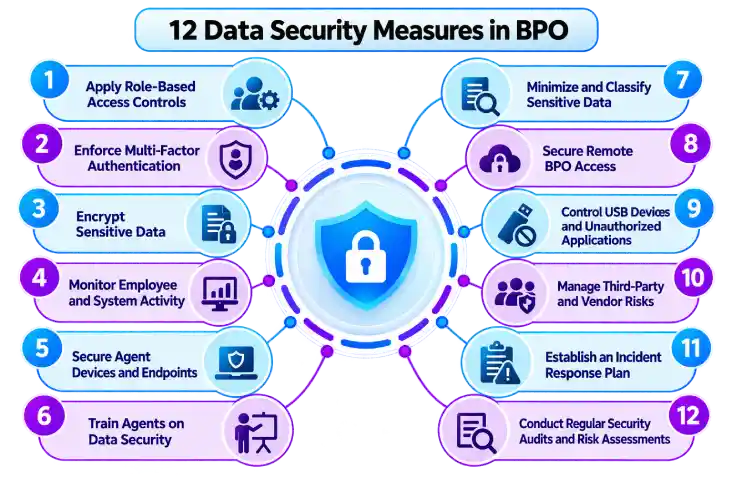
1. Apply Role-Based Access Controls
Give each BPO agent access only to the systems and information required for their assigned role. Review permissions regularly and remove unnecessary access when responsibilities change. This limits the amount of sensitive data exposed if an account is compromised or misused.
2. Enforce Multi-Factor Authentication
Require agents and administrators to verify their identity through multiple authentication factors before accessing sensitive systems. MFA adds another security layer when passwords are stolen through phishing, credential stuffing, or other attacks.
3. Encrypt Sensitive Data
Encrypt sensitive information while it is stored and while it moves between systems. This helps you prevent exposed files, intercepted communications, or compromised devices from revealing readable customer information.
4. Monitor Employee and System Activity
Maintain visibility into how sensitive information is accessed, downloaded, transferred, and used. Activity logs and security monitoring can help you identify unusual behavior, investigate incidents, and create an audit trail when something goes wrong.
Did You Know?
IBM’s research found that organizations detecting breaches internally saved an average of $900,000 compared with those whose breaches were disclosed by attackers, highlighting the value of faster detection and response.
5. Secure Agent Devices and Endpoints
Protect every workstation and endpoint used to access BPO systems. Keep operating systems and applications patched, enable device encryption, enforce automatic screen locks, restrict unauthorized software, and apply endpoint security controls across office and remote devices.
6. Train Agents on Data Security
Your agents are part of your security perimeter. Provide regular training on phishing, password hygiene, customer data handling, social engineering, suspicious downloads, unauthorized applications, and reporting security incidents. Refresh the training as threats and internal processes change.
7. Minimize and Classify Sensitive Data
Identify the information your teams handle and classify it according to its sensitivity. Give stronger controls to highly confidential data and collect, store, and retain only what your business actually needs. Data minimization reduces the amount of information available for accidental exposure or misuse.
8. Secure Remote BPO Access
Set clear requirements for agents working from home or other remote locations. Use approved devices, secure connections, MFA, endpoint controls, automatic screen locking, and restricted access to sensitive applications. These controls help you maintain security when agents operate outside your physical office.
9. Control USB Devices and Unauthorized Applications
Prevent agents from moving sensitive information to unapproved USB drives, personal devices, file-sharing platforms, or consumer applications. Application allowlists, USB restrictions, and clear usage policies can reduce common paths for accidental data leakage.
10. Manage Third-Party and Vendor Risks
Your security responsibilities extend to cloud providers, subcontractors, software vendors, and other third parties that can access your data. Assess their security controls, define data-handling requirements in contracts, review their security posture periodically, and maintain visibility into their sub-processors.
11. Establish an Incident Response Plan
Prepare for the possibility that a security incident will occur. Define who investigates, who escalates the issue, how affected systems are contained, when clients are notified, and how evidence is preserved. Run periodic exercises so your team knows what to do under pressure.
12. Conduct Regular Security Audits and Risk Assessments
Review your security controls regularly to identify weaknesses before they become incidents. Assess access permissions, endpoint security, employee practices, vendors, vulnerabilities, incident records, and compliance requirements. Use the findings to strengthen controls and keep your security program aligned with changing BPO operations.
Struggling to maintain visibility across employee activity and sensitive data?
Time Champ helps you monitor activity, detect risks, and protect data from one platform.
How to Secure Remote and Work-from-Home BPO Agents?
When your BPO agents work from home, sensitive client data leaves the controlled environment of your office and becomes exposed to new device, network, and physical-security risks. You need clear technical controls and work-from-home policies that protect data without disrupting your agents' daily workflows.
- Use Company-managed Devices: Provide approved, centrally managed devices with security software, encryption, automatic updates, and restricted administrative access.
- Require VPN and Secure Network Connections: Route access to business systems through a secure corporate VPN and require agents to use protected home Wi-Fi networks.
- Enforce MFA for Every Sensitive System: Require multi-factor authentication for customer databases, communication platforms, cloud applications, and other systems containing sensitive information.
- Create a Secure Home-Work Environment: Require private workspaces, locked screens, restricted household access, and clear rules against unauthorized cameras, recording devices, or screen viewing.
- Monitor Agent Activity and System Access: Track application usage, login activity, data access, and unusual behavior so you can identify potential security issues and investigate incidents quickly.
- Train Remote Agents on Security Practices: Regularly train agents to recognize phishing, protect credentials, handle customer information correctly, report suspicious activity, and follow your remote-work security policies.
How Time Champ Strengthens Data Security in BPO
When managing BPO teams, you need visibility into how agents use work systems without losing control of sensitive client information. Remote teams, unauthorized applications, file transfers, and unusual activity can make it difficult to spot potential data-security issues quickly. Time Champ is smart employee monitoring software with BPO time-tracking features to give you visibility into employee activity, work hours, applications, files, and productivity. Its data-loss protection capabilities help you identify and control risky activity across your workforce.
Here are the key Time Champ features that help you monitor activity, protect sensitive data, and manage BPO teams more effectively.
- Employee Activity Monitoring: Provides visibility into app usage, idle periods, timestamps, and activity patterns, helping you identify unusual behavior and maintain oversight across your BPO teams.
- Screen and Screenshot Monitoring: Lets you review live screens and configured screenshots to investigate activity and support quality assurance, while privacy controls help you protect sensitive information.
- Data Loss Prevention: Helps you restrict USB transfers and file uploads, reducing common channels for unauthorized data movement.
- File Access Logging: Records access to sensitive files, creating an audit trail that supports investigations and faster responses to security concerns.
- Website and Application Controls: Monitors website and application usage while blocking harmful or unauthorized destinations to reduce exposure to risky online activity.
- Real-time Activity Alerts: Notifies you about idle time, unauthorized applications, and unusual behavior so you can respond to potential issues promptly.
Worried about risky employee activity putting sensitive BPO data at risk?
Time Champ gives you real-time activity visibility and data-loss controls to strengthen security.
Conclusion
Data security in BPO is essential for protecting customer information, maintaining trust, and meeting regulatory obligations. Start by identifying the data your agents handle, assessing your key security risks, and applying controls such as access management, encryption, MFA, monitoring, and regular audits. Secure remote work environments and evaluate third-party risks as part of the same security strategy. Keep policies updated, train employees regularly, and test your incident response plan. A proactive, layered approach helps you reduce exposure, strengthen compliance, and build more secure BPO operations as your business grows.

Anjali

Table of Content
 What Is Data Security in BPO?
- What Are the Biggest BPO Security Risks?
- Which Compliance Standards Apply to Data Security in BPO?
- 12 Data Security Measures in BPO That Actually Work
- How to Secure Remote and Work-from-Home BPO Agents?
- How Time Champ Strengthens Data Security in BPO
- Conclusion
Related Blogs
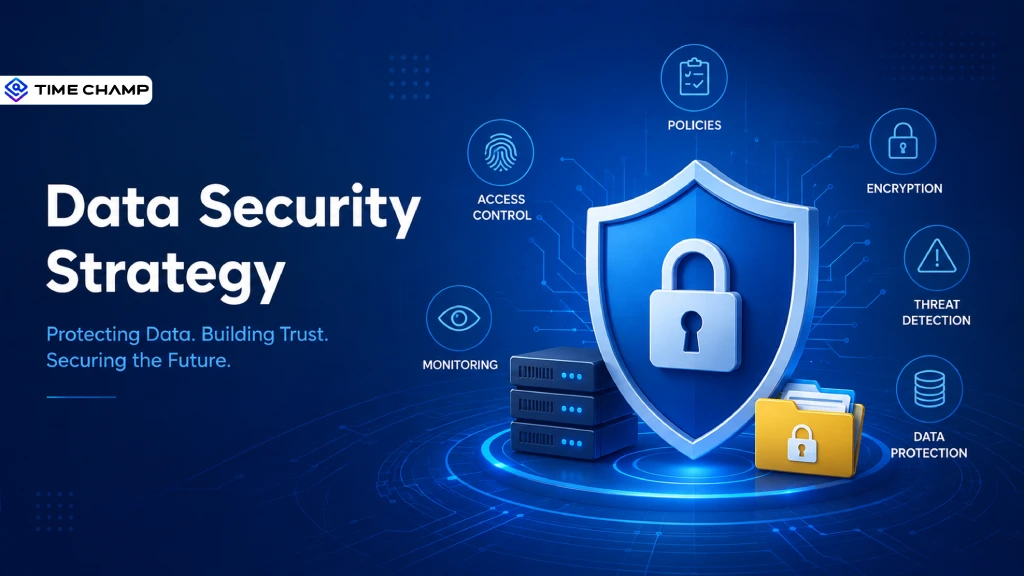
Learn how to build a data security strategy that protects sensitive information, reduces risks, ensures compliance, and strengthens your business security.
Guna Lakshmi | Aug 28, 2026
Learn how remote employee tracking and DLP work together to prevent data leaks, secure remote teams, and support privacy, compliance, and safer workflows.
Anjali | May 09, 2026
Employee monitoring software can catch insider data breaches early, if you configure it right. See what it catches, what it misses, and how to roll it out.
Jahnavi Pulluri | Apr 16, 2026
Explore how an employee monitoring privacy policy protects employee rights, maintains compliance, and supports transparent workplace monitoring.
Anjali | Apr 25, 2026
Learn how to monitor remote employees the right way, what to track, how to roll it out, and how to keep your team's trust through the whole process.
Thasleem Shaik | May 06, 2026
Data encryption in employee monitoring is non-negotiable. Learn the standards, certifications, and six questions to ask before signing with any vendor.
Sai Keerthi Uppala | May 07, 2026


 4.7/5 avg.
Ready to Manage Your Workforce Smarter?
Join our family of 1500+ companies using smart insights to redefine workforces!

Free Trial
No Credit Card Required