Types of Hybrid Work Models: Which One Fits Your Team?
Learn about the different types of hybrid work models and find the right balance of flexibility, collaboration, and structure for your team.

Understanding thedifferent typesof hybrid work models is essential for creating a workplace that supports employee flexibility and business success. Hybrid work often fails when the chosen modeldoesn'tfit your team's needs.
A setup that works for one company may create communication gaps and frustration for another.
In this guide, you’ll see 5 main types of hybrid work models, where each one works best, and how to choose the model that aligns with your team's needs, culture, and business goals.
Why Your Hybrid Model Choice Matters in 2026
Choosing a hybrid work model is a strategic decision that affects how your workforce operates. As you shape your workplace strategy, finding the right balance between flexibility and structure is crucial. Your employees want flexibility, but they also need clear expectations and opportunities to collaborate effectively. The right hybrid model helps you achieve both.
A well-designed hybrid model helps you:
- Improve employee satisfaction and retention.
- Support effective teamwork and communication.
- Maintain employee accountability and performance standards.
- Create a better balance between flexibility and structure.
- Optimize office space and operational costs.
The right model aligns with your company culture, team dynamics, and business objectives. Understanding the different types of hybrid work models can help you create a workplace strategy that balances flexibility, collaboration, and productivity.

Did You Know?
54%of employees globally work in a hybrid arrangement, making it the most common work model for remote-capable employees.
The 5 Types of Hybrid Work Models
Not every organization approaches hybrid work the same way. The right setup depends on your team's responsibilities, work style, and collaboration needs. Understanding these types of hybrid work models can help you choose a structure that supports both employee satisfaction and business performance.
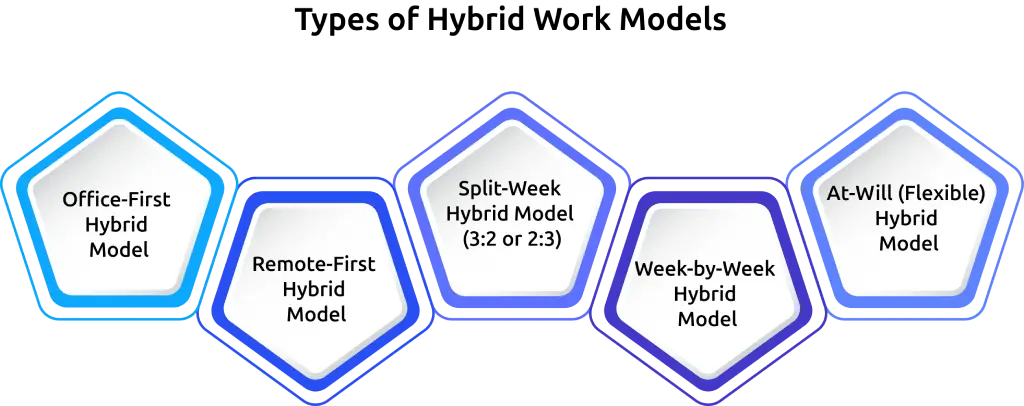
1. Office-First Hybrid Model
If you prefer employees to spend most of their time in the workplace while still offering some flexibility, an office-first hybrid model may be the right fit. In this setup, your employees typically work from the office four days a week and remotely for one day.
This model works best when face-to-face collaboration, client interactions, or compliance requirements are a regular part of your operations.
This model can be a good fit if you manage the following:
- Financial services teams
- Healthcare administration staff
- Legal professionals
- Customer-facing departments
- Organizations with a strong office culture
| Pros | Cons |
|---|---|
| Encourages face-to-face collaboration and faster decision-making | Offers less flexibility for employees |
| Strengthens workplace culture and team relationships | Can make it harder to attract remote talent |
| Makes mentoring, training, and supervision easier | Increases office and facility costs |
2. Remote-First Hybrid Model
If flexibility is a priority for your organization, a remote-first model may be a better choice. In this arrangement, your employees work most of the time remotely and come into the office only when collaboration, meetings, or team-building activities require it.
This model works well if you have:
- Distributed workforces
- Global employees across different locations
- Roles that require focused, independent work
| Pros | Cons |
|---|---|
| Gives employees greater flexibility and work-life balance | Employees may feel isolated over time |
| Allows you to hire talent from anywhere | Communication requires more planning and structure |
| Reduces office space and operational costs | Collaboration depends heavily on digital tools |
Did You Know?
According to Gallup research, 6 in 10 employees with remote-capable jobs prefer a hybrid work arrangement, while less than 10% prefer working fully on-site.
3. Split-Week Hybrid Model (3:2 or 2:3)
The split-week model is one of the most popular hybrid work arrangements because it offers a balance between flexibility and in-person collaboration.
With this approach, you divide the workweek between office and remote work using a fixed schedule.
For example:
- 3 days in the office and 2 days remote
- 2 days in the office and 3 days remote
Many organizations also designate specific office days so teams can collaborate effectively.
This model is ideal if you manage the following:
- Mid-sized businesses
- Enterprise organizations
- Teams that rely on regular collaboration
| Pros | Cons |
|---|---|
| Balances flexibility with in-person collaboration | Employees have less freedom than in fully flexible models. |
| Provides a predictable schedule for teams | Coordinating office days across departments can be challenging. |
| Makes meetings, teamwork, and planning easier | Office space may not be fully utilized every day. |
4. Week-by-Week Hybrid Model
If your team benefits from longer periods of focused work, a week-by-week hybrid model may be worth considering.
Instead of splitting each week between home and office, your employees alternate between full weeks in each environment.
For example:
- One week working from the office
- One week working remotely
This gives employees more uninterrupted time to focus while still maintaining regular in-person interaction.
This model works well for:
- Consulting firms
- Project-based teams
- Organizations with employees spread across multiple locations
| Pros | Cons |
|---|---|
| Reduces commuting frequency for employees | Team members spend less time together in person |
| Allows longer periods of focused work | Responding to urgent changes can be slower |
| Works well for project-based and distributed teams | Communication gaps can occur between office and remote weeks |
5. At-Will (Flexible) Hybrid Model
If you want to give employees maximum freedom, an at-will hybrid model offers the greatest flexibility. With this approach, your employees decide when they work remotely and when they come into the office.
This model may be right for you if you have:
- Highly experienced employees
- A strong culture of trust and accountability
- Teams that value autonomy and independence
| Pros | Cons |
|---|---|
| Offers maximum flexibility and autonomy | Team coordination can become difficult |
| Can improve employee satisfaction and retention | Office attendance may be unpredictable |
| Allows employees to choose the environment where they work best | Maintaining a strong company culture requires extra effort |
Are hidden productivity challenges affecting your hybrid workforce?
Time Champ helps you spot issues early and take action before they impact performance.
No single hybrid work model works for every organization. The right choice depends on your workforce, business goals, and operational requirements.
Consider the following factors before selecting a model:
Team Collaboration Requirements
Teams that frequently collaborate on projects, brainstorm ideas, or interact with clients often benefit from a more structured hybrid work model.
Teams performing independent work may thrive in remote-first or flexible arrangements.
Employee Experience Levels
Junior employees often benefit from in-person mentorship and learning opportunities. Organizations with a large number of early-career professionals may prefer office-first or split-week schedules.
More experienced teams can often operate successfully with greater flexibility.
Hiring Strategy and Workforce Distribution
If you hire employees from multiple cities, states, or countries, remote-first models offer greater scalability.
Structured hybrid schedules are often easier to implement when most employees work within the same geographic area.
Management and Operational Capacity
Some hybrid workplace models require more oversight than others. Flexible workforce models often demand strong communication processes, clear performance expectations, and reliable productivity tracking systems. Structured models can be easier to manage and coordinate.
Company Culture and Work Style
Choose a model that aligns with how your team prefers to work. Teams that value in-person collaboration may benefit from office-first or split-week models, while teams that prioritize flexibility may prefer remote-first or at-will arrangements.
Technology Readiness
Make sure your organization has the right tools for communication, collaboration, and productivity tracking. Strong technology support is especially important for remote-first and flexible hybrid models.
Common Challenges of Hybrid Work Models
While hybrid work offers flexibility, it also comes with challenges that can affect collaboration, communication, and employee engagement. Understanding these challenges can help you create a more effective hybrid workplace.
Maintaining Team Collaboration
When your employees work from different locations, spontaneous discussions and quick problem-solving opportunities become less common. Over time, this can make it harder for teams to stay aligned on projects and goals.
How can you solve it? Schedule regular team meetings, create dedicated collaboration days, and use project management tools to keep everyone connected and working toward the same objectives.
Ensuring Fair Visibility Across Employees
If some employees spend more time in the office than others, remote team members may feel overlooked when it comes to recognition, promotions, or career development opportunities.
How can you solve it? Focus on results rather than physical presence. Make sure you recognize achievements fairly and provide equal growth opportunities to both remote and in-office employees.
Managing Communication and Coordination
Different work schedules and locations can create communication gaps. Important updates may be missed if your team relies on inconsistent communication channels.
How can you solve it? Establish clear communication guidelines, use centralized collaboration platforms, and document important decisions, so everyone can access the same information.
Tracking Performance and Attendance
Without proper visibility, it can be difficult for you to understand productivity levels, attendance patterns, and overall team performance in a hybrid environment.
How can you solve it? Use time tracking and workforce management tools like Time Champ to monitor attendance, track work patterns, and measure performance based on outcomes rather than hours spent online.
Maintaining Company Culture
When employees don't interact in person regularly, building strong workplace relationships and a sense of belonging can become more challenging.
How can you solve it? Create opportunities for team bonding through virtual activities, in-person gatherings, and regular check-ins that help employees stay connected to your organization and each other.
Preventing Employee Burnout
Hybrid work can blur the boundaries between work and personal life. If expectations are unclear, your employees may find it difficult to disconnect and recharge.
How can you solve it? Set clear work-hour expectations, encourage employees to take breaks and use their time off, and promote healthy work-life balance practices across your organization.
Struggling to manage these hybrid work challenges effectively?
Use Time Champ to simplify hybrid work management and make smarter workforce decisions with confidence.
How Time Champ Helps You Overcome Hybrid Work Challenges
Choosing the right hybrid work model is only the first step. To make it successful, you need visibility into employee attendance, productivity, and employee work patterns across both office and remote environments. Time Champ makes that possible.
Time Champ is an employee monitoring and time tracking software with workforce intelligence features. It helps you manage hybrid teams more effectively by providing the data and insights needed to maintain accountability, improve performance, and support informed decision-making.
Monitor Attendance Across Locations
Whether your employees work from the office, remotely, or follow a split-week schedule, Time Champ helps you track attendance accurately. This gives you a clear view of who is working from where and whether employees are following your hybrid work policy.
Compare Productivity Across Work Environments
One of the biggest concerns in hybrid work is understanding how productivity differs between office and remote settings. Time Champ allows you to track productive hours, app usage, and work activity so you can identify trends and make data-driven decisions.
Improve Visibility and Accountability
When employees work from different locations, it can be difficult to maintain visibility across the team. Time Champ helps you monitor work patterns and performance metrics, ensuring everyone remains aligned with organizational goals regardless of where they work.
Support Better Workforce Planning
With detailed reports and workforce analytics, you can identify workload imbalances, attendance trends, and productivity patterns. This helps you make smarter decisions about scheduling, staffing, and resource allocation.
Ready to optimize your hybrid workforce?
/images/types-of-hybrid-work-models/choosing-the-right-hybrid-model-for-your-team.webp
Conclusion
The best hybrid work model is the one that aligns with your team's needs, work style, and business goals. While there are several types of hybrid work models to choose from, success comes from selecting the approach that works best for your organization. With the right strategy and tools, you can create a hybrid workplace that supports collaboration, productivity, and long-term success.

Guna Lakshmi

Table of Content
 Why Your Hybrid Model Choice Matters in 2026
- The 5 Types of Hybrid Work Models
- Common Challenges of Hybrid Work Models
- How Time Champ Helps You Overcome Hybrid Work Challenges
- Conclusion
Related Blogs
Discover the hybrid work model, which blends office and remote environments for greater flexibility and productivity.
Thasleem Shaik | Oct 25, 2024Explore the pros and cons of remote vs. hybrid work models, and learn how to choose the best setup for your team
Tarun Kumar Reddy | Oct 25, 2024
Learn to design an effective hybrid work schedule that balances flexibility and productivity, with best practices to fit your team’s needs.
Jahnavi Pulluri | Oct 26, 2024
Learn 10 essential hybrid workforce best practices to boost productivity, improve communication, and foster team morale for success in a flexible work setup.
Tarun Kumar Reddy | Nov 12, 2024
Learn how to create and implement a successful hybrid work policy with our top 7 tips. Boost productivity and keep your team engaged.
Sai Keerthi Uppala | Nov 14, 2024
Explore the challenges and benefits of hybrid work and discover strategies for effective team management to enhance flexibility, productivity, and smooth communication.
Thasleem Shaik | Oct 25, 2024


 4.7/5 avg.
Ready to Manage Your Workforce Smarter?
Join our family of 1500+ companies using smart insights to redefine workforces!

Free Trial
No Credit Card Required