Time Champ > Blog > How Do Workforce Analytics Strategies Drive Measurable ROI? > Content
How Do Workforce Analytics Strategies Drive Measurable ROI?
Learn why workforce analytics drives business value, how to measure ROI with formulas, strategies for measurable returns, challenges, & business impact.

Most organizations invest in workforce analytics, yet still struggle to prove how those efforts translate into real business value. You may have access to plenty of data, but it often fails to answer the one question that matters most. How do workforce analytics strategies drive measurable ROI?
The problem usually is not the lack of tools or reports. It is the absence of a clear workforce analytics strategy that connects people data to everyday decisions around productivity, utilization, and cost. When analytics directly shapes how teams plan, measure, and improve work, it moves beyond reporting and starts producing measurable ROI.
In this guide, you’ll see how workforce analytics strategies work in real business settings, where you lose value, and how workforce data connects to outcomes that operations and finance teams trust. You gain clarity on spotting inefficiencies early, making confident workforce decisions, and demonstrating ROI based on actual work, not assumptions or surface-level metrics.
Why Workforce Analytics Is a Key Driver in Business Value?
The global workforce analytics market is valued at USD 2,378.9 million in 2024 and is expected to grow to USD 9,160.2 million by 2034, reflecting a strong 14.4% CAGR over the decade. This rise shows a clear shift in how organizations approach workforce decisions and business planning. Here’s why workforce analytics directly contributes to business value.
- Clear Visibility into How Work Actually Happens: Workforce analytics reveals how teams spend time, which activities drive output, and which areas slow work down. This level of visibility replaces assumptions with facts, making it easier to identify inefficiencies early and understand how daily work affects results.
- Smarter Workload and Utilization Decisions: Shows where workloads feel unbalanced and where capacity goes unused. You can adjust staffing and priorities before delays, burnout, or sustained underutilization start inflating costs and lowering output.
- Tighter Control Over Workforce Costs: Clear visibility shows where paid hours do not translate into meaningful output. This insight helps you to reduce unnecessary overtime, idle time, and repeated work that quietly increases costs.
- Stronger Ownership and Performance Conversations: With clear data on work patterns, discussions focus on facts rather than opinions. You can address performance issues clearly and set expectations without constant follow-ups.
- Measurable ROI Leadership Can Trust: Workforce analytics connects productivity, utilization, delivery timelines, and cost impact in one view. This makes it easier to explain how workforce decisions influence business outcomes in terms that finance and operations teams trust.
This is what makes workforce analytics a real driver of business value. It gives clarity into how teams execute work and the confidence to act before problems grow.
How to Measure Workforce Analytics ROI?
Measuring the ROI of workforce analytics means connecting your employee data to real business outcomes. It is about understanding how insights from work patterns, productivity metrics, and utilization reports translate into tangible value like cost savings, efficiency gains, and improved delivery. Here’s a clear, step-by-step approach to calculate it.
Step 1: Define the Objective
Identify what you want to achieve with workforce analytics. Are you aiming to reduce overtime costs, improve team utilization, speed up project delivery, or decrease employee attrition? A clear goal sets the baseline for measuring results.
Step 2: Capture Relevant Metrics
Focus on collecting data that directly supports your objective by tracking measures such as hours worked compared to output, task completion rates, idle time, error rates, and team utilization. Make sure the data is consistent and reflects actual work.
Step 3: Calculate the Financial Impact
See how workforce analytics transforms the daily work and turns the transformation into numbers. Metrics such as reduced overtime, lower idle time, and faster task completion translate directly into payroll costs, billing rates, and project budgets. This approach shows how improvements in work patterns lead to real financial results.
Step 4: Apply the ROI Formula
Once the financial gains are clear, compare them against the total cost of using workforce analytics. Include software, implementation, and ongoing operational costs in this calculation. The formula turns operational improvements into a clear percentage that shows value.
ROI(%)=Financial Gains − Cost of Analytics/Cost of Analytics×100
Step 5: Example Calculation
Imagine that the implementation of workforce analytics would cost USD 50,000 per year. Six months later, you realize inefficiencies, and you cut down overtime to USD 80,000.
ROI=80,000−50,000/50,000×100 = 60%
This means your investment in workforce analytics generated a 60% return within six months.
This approach turns workforce data into a clear financial story. It shows exactly how insights improve operations, reduce costs, and support smarter decisions.
Not sure what workforce analytics is really delivering?
Use Time Champ to turn daily work patterns into measurable outcomes.
How Can Workforce Analytics Strategies Drive Measurable ROI?
You may invest in workforce analytics, but still struggle to see clear returns. The problem starts when data stays in reports instead of guiding decisions that affect cost, productivity, and risk. Workforce analytics delivers measurable ROI when you use it to shape how teams plan and improve work, and the section below explains how that happens.

1. Start with Business Questions, Not Dashboards
Most of the teams gather information about the workforce without having a clear understanding of what leadership should actually make decisions. ROI improves when you start analytics with specific business questions tied to cost, delivery, or risk.
2. Connect Workforce Data Across Functions
Employee data delivers limited insight when it remains separate from finance and operations. ROI increases when work patterns, payroll costs, utilization, and outcomes come together in one view. This connection shows how workforce decisions affect margins and timelines.
3. Turn Insights into Decisions You Can Act On
Analytics don’t help when they only highlight problems without showing what to do. You must have a clear idea of what, where, and why it should change. When team activity data shows workload gaps, avoidable overtime, or role-level mismatches, decisions move faster and stay consistent.
4. Focus on Factors That Affect Cost and Output
Not every metric influences ROI. Strong returns come from tracking areas like overtime, idle time, rework, and delivery delays. When these patterns connect to financial impact, improvements show in real results, not just charts.
5. Review and Adjust as Work Changes
Work patterns change as teams, priorities, and processes evolve. Regular reviews help confirm whether improvements still hold and where new gaps appear. Adjustments based on current data keep workforce analytics aligned with real work.
What Are the Common Challenges in Achieving Workforce Analytics ROI?
Achieving measurable ROI from workforce analytics is often more challenging than you expect. Gaps in data, execution, and alignment frequently prevent insights from translating into real business impact. Here are the main challenges that affect ROI.
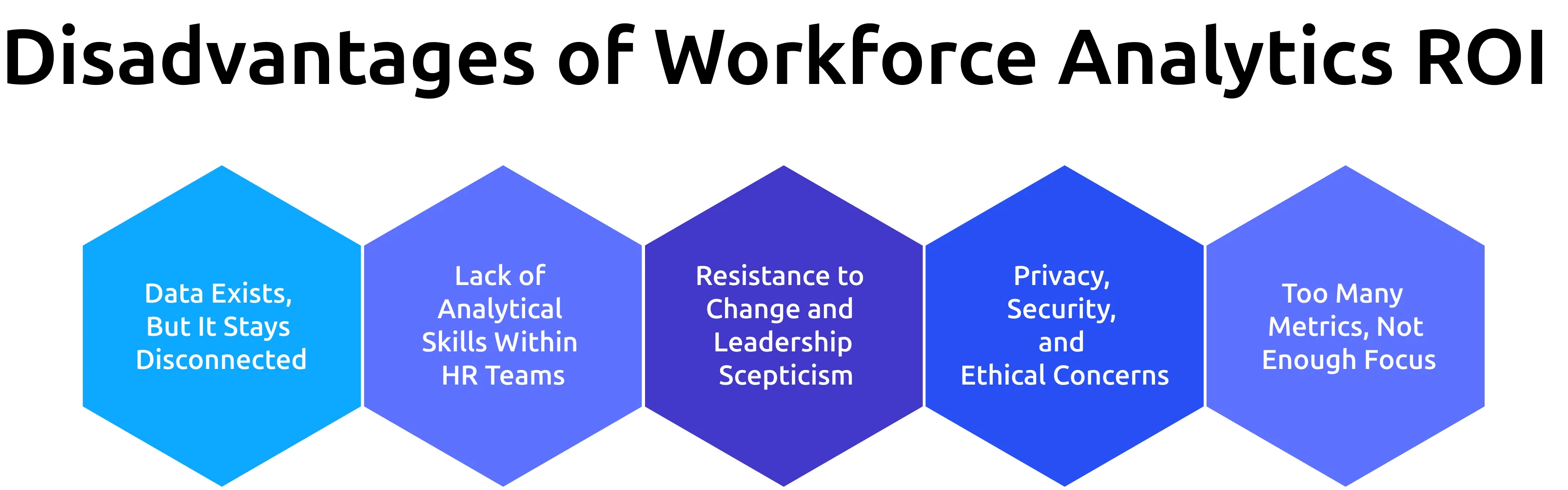
1. Data Exists, But It Stays Disconnected
Most organizations collect workforce data across multiple systems, but those systems operate in isolation. When time data, payroll, performance metrics and delivery outcomes exist in silos, it is difficult to observe the impact of workforce decisions on business outcomes. ROI suffers because insights remain incomplete and difficult to link.
2. Lack of Analytical Skills Within HR Teams
Many HR teams handle workforce analytics without proper training or understanding of the business context. As a result, insights remain descriptive and fail to influence decisions. Studies indicate that around 69% of organizations cite analytics skill gaps as a major blocker to real business impact.
3. Resistance to Change and Leadership Scepticism
It can feel difficult to start using workforce analytics when you make decisions mostly based on experience. It takes time to trust new insights and rely on data instead of instincts. Seeing small, early improvements in daily work helps you gain confidence and use analytics consistently for long-term results.
4. Privacy, Security, and Ethical Concerns
Using detailed employee data raises valid concerns around privacy and compliance. Fear of misuse or regulatory risk can limit how deeply you apply analytics. These constraints often slow initiatives, even when safeguards and governance frameworks are in place.
5. Too Many Metrics, Not Enough Focus
Tracking everything often leads to poor decision-making. When you measure dozens of workforce indicators without clear priorities, it becomes difficult to know what actually matters. ROI improves when analytics focus on the limited areas that directly influence cost, productivity, and delivery.
Still dealing with blind spots in workforce analytics?
Use Time Champ to gain a complete view of work.
How Workforce Analytics Transforms Business Performance?
Workforce analytics changes business performance when it moves beyond visibility and starts shaping daily decisions. It helps you understand how work actually flows, where teams waste effort, and what needs attention before results slip. Here’s how workforce analytics drives that impact.
1. Turns Workforce Visibility into Operational Clarity
Workforce analytics gives a transparent picture of the allocation of time, effort and capacity within the organization. This visibility helps you understand where work slows down, where teams stretch capacity too thin, and where resources remain underused. With this clarity, day-to-day operations become more predictable, enabling better workload planning and smoother execution.
2. Improves Productivity Without Increasing Headcount
Workforce analytics shows where output does not match effort. It is possible to redistribute workloads, eliminate bottlenecks, and shift priorities to achieve more with the existing staff. Productivity improves through better decisions, not with longer hours.
3. Strengthens Workforce Planning and Forecasting
Accurate workforce data allows you to plan ahead with confidence. Instead of reacting to shortages or overstaffing, you can anticipate future needs based on demand patterns and performance trends. This proactive strategy saves time on hiring, unnecessary cost savings and supports sustainable growth.
4. Reduces Risk and Improves Stability
Workforce analytics helps identify early signals of risk, such as rising fatigue, uneven workloads, or disengagement. Handling such indicators at an early stage helps to avoid bigger disruptions such as spikes in attrition or delivery failures. Over time, this creates a more stable workforce environment that supports consistent business performance.
5. Creates Accountability Through Facts, Not Opinions
Performance conversations become clearer when data shows how work moves across teams. You can address issues based on evidence instead of assumptions. This builds trust and keeps discussions focused on improvement.
How Can Workforce Intelligence Turn Workforce Analytics into Real ROI?
Workforce analytics delivers value only when insights are timely, reliable, and easy to act on. A strong workforce intelligence approach brings work activity, time usage, productivity signals, and team patterns into a single view, allowing you to understand how work actually happens across roles and departments. This clarity helps you move from reactive problem-solving to proactive performance management, making decisions based on evidence rather than assumptions.
A workforce intelligence platform like Time Champ supports this approach by continuously capturing work data and translating it into clear, actionable insights. You can identify inefficiencies and workload imbalances early and assess the risks to performance before they escalate.
Workforce behavior becomes visible in its impact on utilization, delivery consistency, and cost control. When workforce analytics becomes part of daily operations rather than an occasional review, you gain the clarity needed to improve execution, strengthen accountability, and turn work insights into measurable business results.
Conclusion
Workforce analytics delivers real ROI when it improves decision-making, strengthens execution, and helps address issues before they affect performance. The value comes from applying insights in ways that reduce inefficiencies, support workforce stability, and align daily work with business goals. When you apply analytics with intent and connect it to real work patterns, you gain the clarity needed to achieve measurable, long-term impact.
Looking to unlock the full ROI of workforce analytics?
Try Time Champ to uncover the insights that drive better performance and smarter decisions.

Thasleem Shaik

Table of Content
-
 Why Workforce Analytics Is a Key Driver in Business Value?
-
How to Measure Workforce Analytics ROI?
-
How Can Workforce Analytics Strategies Drive Measurable ROI?
-
What Are the Common Challenges in Achieving Workforce Analytics ROI?
-
How Workforce Analytics Transforms Business Performance?
-
How Can Workforce Intelligence Turn Workforce Analytics into Real ROI?
-
Conclusion
Related Blogs
Discover how to create an effective contingent workforce policy. Learn its importance, key steps, and what to include to ensure compliance & efficienc
Guna Lakshmi | September 25, 2025
Discover the ultimate guide to call center workforce management. Learn key functions, pros, cons, optimization tips, and how real-time WFM boosts ROI.
Thasleem Shaik | October 01 2025
Learn how to build, manage, and engage a multigenerational workforce. Explore tips, benefits, challenges, and the role of flexible workforce scheduling.
Guna Lakshmi | October 01 2025
Learn what workforce engagement management (wem) is, why it matters in contact centers, components, benefits, and how to choose the right software.
Shabana Shaik | October 01 2025
Discover the flexible workforce in 2025: Learn its definition, advantages, disadvantages, how to create and manage & how solutions help businesses grow.
Guna Lakshmi | October 01 2025
Understand workforce assessment: definition, types, and step-by-step process. Explore best practices, benefits, and tools to drive smarter talent decisions.
Chethana Choudary | September 16 2025


 4.7/5 avg.
Ready to Manage Your Workforce Smarter?
Join our family of 1500+ companies using smart insights to redefine workforces!

Free Trial
No Credit Card Required